Weston

Cichorium intybus

Available

Pay in 4 interest-free payments withSezzle

Delivery and pickup: view conditions

Product information
Advice adapted to Canada
Secure payment
Share

From seed to harvest

Heirloom
Common nameChicory
FamilyAsteraceae
GenusCichorium
Speciesintybus
CultivarCatalogna Frastagliate Esportazione
Typechicory
Botanical nameCichorium intybus
Heirloom varietytrue
Quantity per packet1500 seeds

Catalogna Frastagliate Esportazione Leaf Chicory Seeds (Cichorium intybus) Upright plants have long, deeply divided dark green leaves. Catalogna Frastagliate Esportazione supplies leafy chicory for cooked preparations.

Sow in spring and late summer for cool-season harvests. Sow about 3 mm deep. Keep the seedbed evenly moist through emergence. Allow 20 to 25 cm between plants. Provide sun to partial shade and avoid standing water. A germination temperature of 16 to 20°C is appropriate for this crop. Thin crowded seedlings early and harden indoor-started plants gradually before transplanting.

Make clean cuts when harvesting the deeply divided leaves. Water regularly to reduce excessive bitterness and bolting. Use clean tools and remove damaged material. Adjust watering to rainfall, wind and actual soil moisture, and keep enough space for air circulation.

Light and life cycle

In the garden

Exposure
Full sun
Life cycle
Annual or biennial depending on type
Sowing and germination

Sowing guide

Sowing & germination

Sowing depth

3 mm

Spacing / density

20 to 25 cm between plants

Germination temperature

16 to 20°C

Sowing period

Sow in spring and late summer for cool-season harvests

Propagation

Seed

Growing method

Prepare a clean seedbed or containers with light, fertile, moist, well-drained soil. Sow in spring and late summer for cool-season harvests. Sow about 3 mm deep unless the packet gives a more specific direction. Use the following spacing as the crop develops: 20 to 25 cm between plants. Keep the medium evenly moist during emergence without leaving it saturated. Provide sun to partial shade and good air movement. Thin crowded seedlings early so the remaining plants develop without unnecessary competition. Harden indoor-started plants gradually before transplanting them outdoors after the appropriate frost date. Water regularly to reduce excessive bitterness and bolting. For best results, label the row and observe the plants regularly as conditions change through the season. Adjust watering to rainfall, wind, container size, and the actual moisture at soil level. Good air circulation and adequate spacing help foliage dry normally after rain or irrigation. Keep the growing area free of weeds that compete for light, moisture, and nutrients. Use clean tools for harvest and remove damaged plant material when it appears. Always follow the packet information when a variety-specific direction differs from general guidance. A simple garden label makes the cultivar easy to identify from sowing through harvest or flowering. Check young plants frequently because small moisture or pest problems are easier to address early.
Soil and care

Soil and care

Soil & care

Soil pH

5.5 to 6.5

Watering

Water gently during establishment, then check moisture beneath the leaves.

Soil type

A fine seedbed without a compacted surface crust helps small seeds emerge.

Fertilization

Prepare the soil with mature compost when fertility is low. A light, balanced fertilizer may be used according to its label, but excessive feeding can cause weak or unbalanced growth. Observe leaf colour and plant development before adding more nutrients. Water after any application. For best results, label the row and observe the plants regularly as conditions change through the season. Adjust watering to rainfall, wind, container size, and the actual moisture at soil level.

Seasonal care

At sowing time, prepare light, fertile, moist, well-drained soil and follow this timing: Sow in spring and late summer for cool-season harvests. Keep the surface moist until emergence, label the row, and thin seedlings according to the recommended spacing. During active growth, provide sun to partial shade and monitor soil moisture, weeds, and leaf condition. Water regularly to reduce excessive bitterness and bolting. In warm or windy weather, check containers and exposed beds more frequently. Remove damaged material and keep enough space for air circulation. At harvest or after flowering, use clean tools and clear unhealthy debris. Healthy residue may be composted where appropriate. At the end of the season, clean containers and tools, record useful observations, and store remaining seed in a cool, dry, dark place. For best results, label the row and observe the plants regularly as conditions change through the season. Adjust watering to rainfall, wind, container size, and the actual moisture at soil level. Good air circulation and adequate spacing help foliage dry normally after rain or irrigation. Keep the growing area free of weeds that compete for light, moisture, and nutrients. Use clean tools for harvest and remove damaged plant material when it appears. Always follow the packet information when a variety-specific direction differs from general guidance. A simple garden label makes the cultivar easy to identify from sowing through harvest or flowering. Check young plants frequently because small moisture or pest problems are easier to address early. Avoid standing water around the roots, even when the crop prefers steady moisture.
Growing in containers

Container growing

Container growing

A sufficiently wide container makes the leaves easy to reach.
Growth and harvest

Size, flowering & harvest

Mature height

36 to 41 cm (14–16 in)

Width / spread

30 to 36 cm (12–14 in)

Edible parts

Leaves

Days to maturity

85 to 90 days

Harvest

Make clean cuts when harvesting the deeply divided leaves.
Garden companions

Garden associations

Companion plants & uses

Companion plants

Radishes or lettuce can border these greens when their seasonal growing needs are compatible.

Other recommended plants

KS Attraction Lettuce; Cherry Belle Radish; Bionda Ortolani Romaine Lettuce

Garden use

Place Catalogna Frastagliate Esportazione Leaf Chicory where its mature size and need for sun to partial shade can be accommodated. Prepare light, fertile, moist, well-drained soil and leave the recommended spacing so air and light reach each plant. It can be integrated into a vegetable bed, herb garden, ornamental border, or container according to its normal use. Keep paths accessible for watering, observation, and harvest or grooming. Group plants with neighbours that have comparable moisture needs, but avoid crowding that shades young growth. A labelled row or pot makes the cultivar easy to follow through the season. Rotate edible crops with unrelated botanical families when practical. For best results, label the row and observe the plants regularly as conditions change through the season. Adjust watering to rainfall, wind, container size, and the actual moisture at soil level. Good air circulation and adequate spacing help foliage dry normally after rain or irrigation. Keep the growing area free of weeds that compete for light, moisture, and nutrients. Use clean tools for harvest and remove damaged plant material when it appears. Always follow the packet information when a variety-specific direction differs from general guidance. A simple garden label makes the cultivar easy to identify from sowing through harvest or flowering. Check young plants frequently because small moisture or pest problems are easier to address early.

Frequently asked questions

Frequently asked questions

How should Catalogna Frastagliate Esportazione Leaf Chicory be sown?
Sow in spring and late summer for cool-season harvests. Prepare light, fertile, moist, well-drained soil. Sow about 3 mm deep. Keep the seedbed evenly moist until emergence without saturating it. Label the row and provide sun to partial shade. Thin crowded seedlings so the final spacing follows this guidance: 20 to 25 cm between plants. If plants are started indoors, provide strong light and harden them gradually before transplanting outdoors at the appropriate time. For best results, label the row and observe the plants regularly as conditions change through the season. Adjust watering to rainfall, wind, container size, and the actual moisture at soil level. Good air circulation and adequate spacing help foliage dry normally after rain or irrigation.
Where should I grow Catalogna Frastagliate Esportazione Leaf Chicory?
Light: Sun to partial shade. A fine seedbed without a compacted surface crust helps small seeds emerge. Light: Sun to partial shade. Catalogna Frastagliate Esportazione Leaf Chicory prefers sun to partial shade and light, fertile, moist, well-drained soil. Choose a location that leaves enough room for 20 to 25 cm between plants. Avoid low spots where water remains after rain. In a container, use drainage holes and a clean growing mix. Observe how light moves across the space during the day, especially near buildings or taller plants. For best results, label the row and observe the plants regularly as conditions change through the season. Adjust watering to rainfall, wind, container size, and the actual moisture at soil level. Good air circulation and adequate spacing help foliage dry normally after rain or irrigation. Keep the growing area free of weeds that compete for light, moisture, and nutrients.
How should I water Catalogna Frastagliate Esportazione Leaf Chicory?
Water gently during establishment, then check moisture beneath the leaves. Water regularly to reduce excessive bitterness and bolting. During germination, use a gentle spray or careful watering so seed is not displaced. After establishment, water at soil level when the surface begins to dry. Adjust frequency to rainfall, heat, wind, soil texture, and container size. Avoid standing water because roots still require oxygen. Morning watering can help foliage dry normally during the day. For best results, label the row and observe the plants regularly as conditions change through the season. Adjust watering to rainfall, wind, container size, and the actual moisture at soil level. Good air circulation and adequate spacing help foliage dry normally after rain or irrigation. Keep the growing area free of weeds that compete for light, moisture, and nutrients.
What maintenance does Catalogna Frastagliate Esportazione Leaf Chicory need?
Keep the planting labelled, weeded, and appropriately spaced. Check young plants regularly for wilting, chewing damage, discolouration, or crowding. Provide sun to partial shade and maintain the moisture pattern described for the crop. Use clean tools, avoid deep cultivation near established roots, and remove unhealthy debris. Apply any fertilizer or pest-control product only according to its label. For best results, label the row and observe the plants regularly as conditions change through the season. Adjust watering to rainfall, wind, container size, and the actual moisture at soil level. Good air circulation and adequate spacing help foliage dry normally after rain or irrigation. Keep the growing area free of weeds that compete for light, moisture, and nutrients. Use clean tools for harvest and remove damaged plant material when it appears.
When should I harvest Catalogna Frastagliate Esportazione Leaf Chicory?
Make clean cuts when harvesting the deeply divided leaves. Harvest Catalogna Frastagliate Esportazione Leaf Chicory when the edible part reaches the stage described for the cultivar or on the packet. Pick during the cooler part of the day when practical and use clean tools. Remove damaged portions, rinse according to the intended preparation, and cool perishable produce promptly. Regular picking may extend production for crops that continue forming leaves, pods, or fruit. Stop using any plant material that appears spoiled or unidentified. For best results, label the row and observe the plants regularly as conditions change through the season. Adjust watering to rainfall, wind, container size, and the actual moisture at soil level. Good air circulation and adequate spacing help foliage dry normally after rain or irrigation.

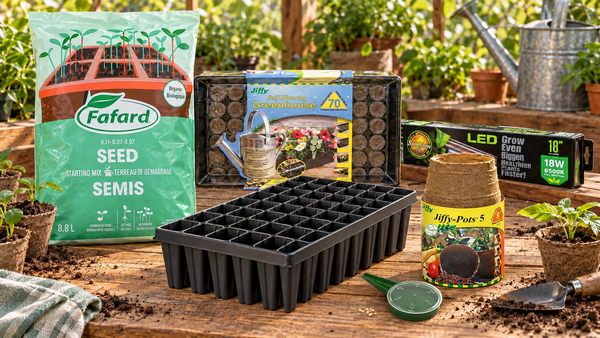
Seed-starting essentials

Click a product to build your selection.

Your selection

Total