Sale
Sold out

Native wetland annual
Asteraceae
Native annuals for wet areas
Nodding Beggarticks – Seeds
Bidens cernua
Product code : AKENE-0008
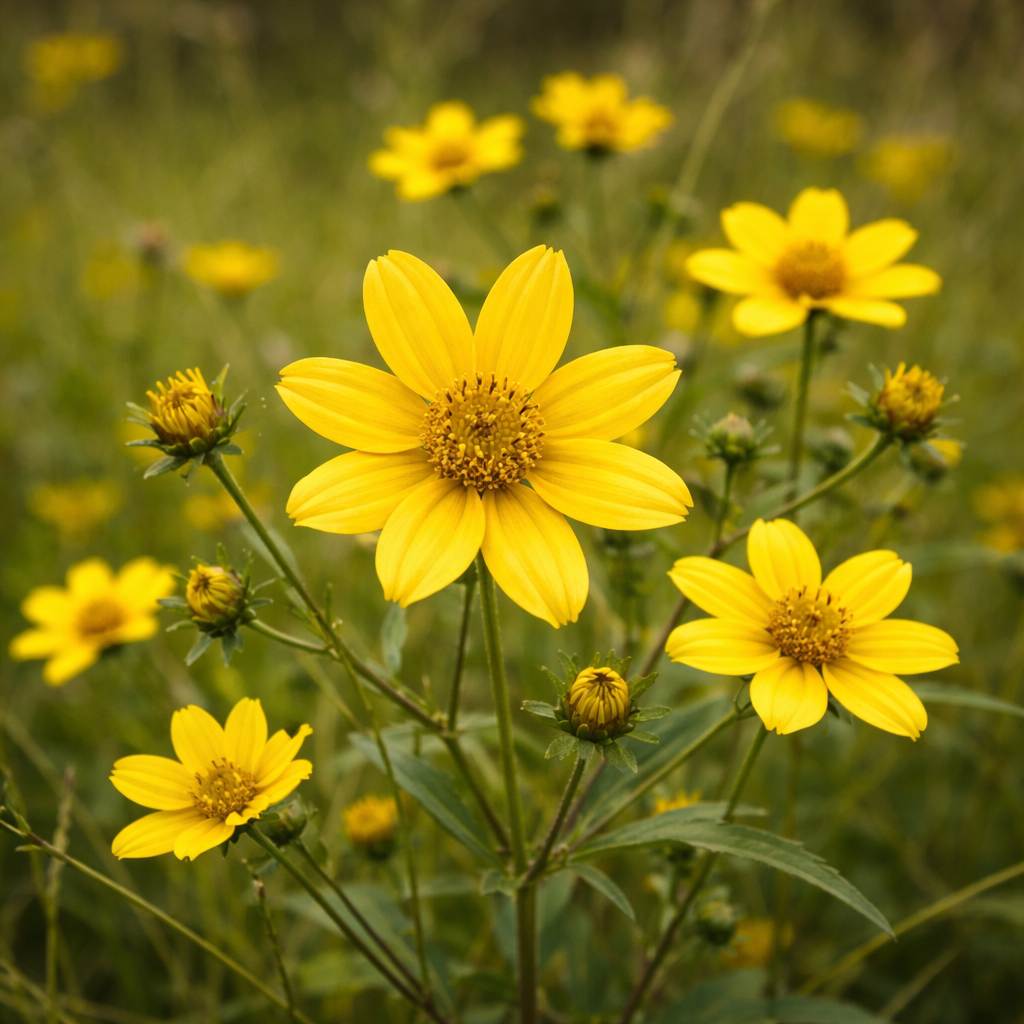
This native annual produces late yellow flowers that support pollinators. Adapted to saturated or periodically flooded soil, Nodding Beggarticks is well suited to rain gardens, shorelines, and ecological restoration projects.
- Quantity
- Around 200 seeds
- Exposure
- Full sun to partial shade
- Life cycle
- Annual
- Hardiness
- Native annual adapted to Zones 3 to 8
Discover the plant
Common nameNodding Beggarticks
FamilyAsteraceae
GenusBidens
Speciescernua
Cultivar
TypeNative wetland annual
Botanical nameBidens cernua
Reproducible seedsYes
Nodding Beggarticks (Bidens cernua) is a native annual of wet habitats, recognized by its yellow flower heads that gradually nod as they mature. Upright stems carry opposite, simple, toothed green leaves and branch to create a bright, natural-looking form. Flowers appear from late summer until the first frosts, extending colour in the garden as many other species finish their seasonal cycle. Plants generally reach 45 to 100 cm tall. The brownish achenes have barbed tips that readily cling to clothing and animal fur, an effective dispersal method that allows this adaptable wetland wildflower to colonize suitable moist and seasonally flooded sites.
Nodding Beggarticks grows in full sun or partial shade and in loamy to clay soil that remains consistently moist, saturated, or periodically flooded. It is particularly well suited to shorelines, ditches, marshes, and low areas that retain water. Seeds may be sown outdoors in autumn or planted in spring after a short period of moist cold stratification. Cover them lightly, then maintain steady moisture throughout germination and active growth. This annual establishes quickly when conditions are suitable and requires little fertilizer. A light application of compost is sufficient, while prolonged drying may reduce plant vigour, flowering, and the production of mature seed.
In the garden, Nodding Beggarticks is useful in rain gardens, shoreline buffers, vegetated swales, and wetland restoration projects. Its late flowers supply nectar and pollen to bees, hoverflies, and other beneficial insects when fewer floral resources remain available. Achenes left in place often support natural reseeding and may also provide food for some birds. Combine this annual with Cardinal Flower, Northern Blue Flag Iris, Spotted Joe-Pye Weed, and Prairie Ironweed to create a diverse native planting for moist conditions. Its rapid establishment also helps cover disturbed ground and contributes to the stabilization of wet soil where many conventional garden plants struggle to grow.

Sowing guide
It all startswith a seed.
Sowing depth
Approximately 3 to 5 mm
Spacing / density
30 to 45 cm (12 to 18 in)
Germination temperature
18 to 22°C after stratification
Germination time
7 to 21 days after 6 to 12 weeks of cold treatment
Sowing period
Autumn or spring after cold stratification
Propagation
Seed and natural reseeding
Cold stratification
Yes
Growing method
Sow Nodding Beggarticks seeds in autumn or in spring after a short period of cold stratification to improve germination. Cover the seeds lightly with about 5 mm of growing medium and maintain consistent moisture throughout germination. This species naturally thrives in wet soils, marshes, ditches, and riparian habitats. Full sun encourages abundant flowering and vigorous growth. Seedlings establish quickly when soil remains consistently moist, and this annual readily self-sows where growing conditions are favorable.
Soil and care
The right care,at the right time.
Soil pH
Slightly acidic to mildly alkaline, about 6.0 to 7.5
Minimum temperature
Killed by frost; seeds overwinter
Care level
Low to moderate
Watering
Abundant and regular; do not allow soil to dry
Soil type
Loamy to clay, moist to saturated
Fertilization
Light compost only; fertilizer rarely required
Moisture
Very high; wet to muddy soil
Seasonal care
In spring, prepare an open area where the soil remains moist and monitor the emergence of naturally reseeded plants. Thin crowded seedlings to maintain good airflow. Throughout summer, water whenever the soil begins to dry and remove competing weeds during establishment. Heavy fertilization is unnecessary. After flowering, allow several heads to mature to support reseeding and provide food for some birds. Remove excess plants before the achenes disperse where spread must be controlled or where the barbed seeds could become troublesome by attaching to clothing, footwear, or passing animals.
Container growing
A garden,within reach.
Recommended pot size
30 to 45 cm (12 to 18 in)
Nodding Beggarticks can be grown in containers at least 30 cm (12 in) wide with excellent drainage while using a growing medium that retains moisture. Place the container in full sun to partial shade and water frequently throughout summer. Container culture is particularly well suited to rain garden displays and naturalistic patio plantings.

Bloom and dimensions
Its place,in your garden.
Mature height
Approximately 100 cm
Width / spread
Approximately 60 cm
Flower color
Yellow
Foliage color
Green
Foliage type
Annual deciduous foliage
Growth rate
Fast
Growth habit
Upright, branched, and annual
Fragrance
Bloom period
August until the first frosts
Fruiting
Brownish achenes with barbed tips
Days to maturity
Flowers and sets seed in the first year
Harvest
September to October
Garden associations
In goodcompany.
Companion plants
Cardinal Flower, Northern Blue Flag Iris, Spotted Joe-Pye Weed, and Prairie Ironweed
Plants to avoid
Lavender, cotton lavender, Blanket Flower, and other dry-soil plants
Frequently asked questions
Your questions,answered.
When should Nodding Beggarticks seeds be sown?
Nodding Beggarticks can be sown in spring or autumn in moist soil. A short period of cold stratification often improves germination and encourages more uniform seedling emergence.
Does Nodding Beggarticks attract pollinators?
Yes. Its bright yellow late-season flowers provide an important source of nectar and pollen for many beneficial pollinating insects.
Can Nodding Beggarticks grow in a rain garden?
Yes. This species is perfectly adapted to rain gardens, vegetated ditches, and areas that experience temporary flooding. It thrives in saturated soils.
How should Nodding Beggarticks be maintained?
Nodding Beggarticks requires very little maintenance. Consistently moist soil and occasional watering during dry periods are usually all that is needed.
Is Nodding Beggarticks native to Canada?
Yes. Bidens cernua is native to many regions of North America and is widely used in ecological restoration and wildlife-friendly landscapes.
Wildlife and pets
Life,around your plants.
Attracts birds
Yes
Native plant
Yes
Supporting wildlife
Bees and pollinators
For a great start to your seeds
The right extras.Right here.
Seed Starting Soil
Shop the collectionSeed starting supplies
Shop the collection