

Sale
Sold out

Perennial plant
Asteraceae
Aromatic and repellent perennials
Common Tansy
Tanacetum vulgare
Product code :
Hardy aromatic perennial with golden flowers and decorative foliage.
- Quantity
- Minimum 200 seeds
- Exposure
- Sun to partial shade
- Life cycle
- Perennial
- Hardiness
- Zone 3 to 8
Discover the plant
Common nameCommon Tansy
FamilyAsteraceae
GenusTanacetum
Speciesvulgare
Cultivar
TypePerennial plant
Botanical nameTanacetum vulgare
Reproducible seedsYes
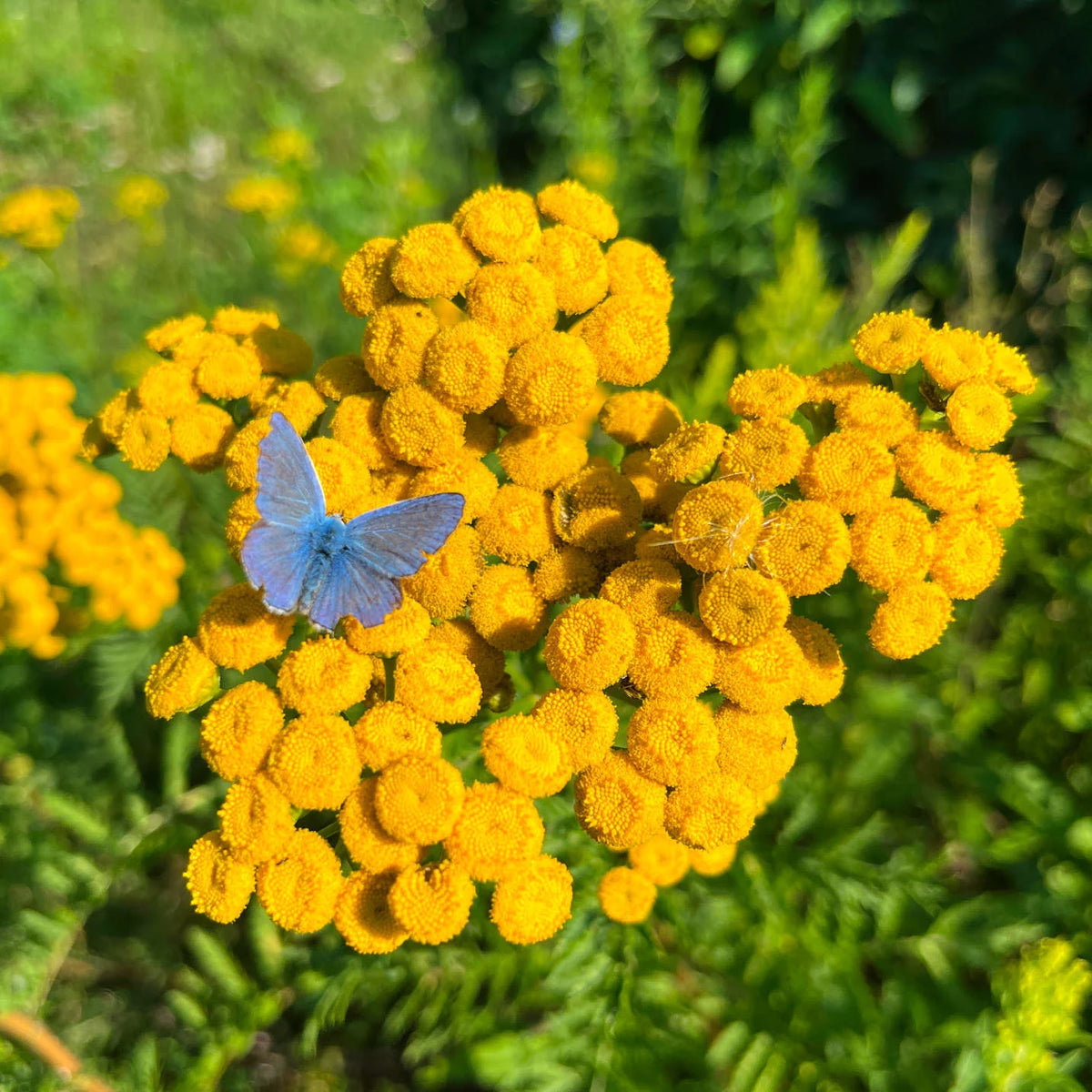
Common Tansy (Tanacetum vulgare) is a hardy perennial recognized for its finely divided foliage, aromatic scent, and numerous golden yellow flower heads arranged in flat clusters. Its summer flowering adds bright colour to natural gardens, borders, and pollinator-friendly landscapes. Easy to grow in Quebec, this resilient plant returns year after year and maintains ornamental value through its textured foliage and extended blooming period.
Common Tansy (Tanacetum vulgare) prefers sunny to partially shaded locations with well-drained loamy to sandy soil. Once established, it tolerates dry periods very well and requires little watering. Its vigorous growth allows it to quickly form attractive clumps, while occasional division helps maintain balanced growth. In Quebec and Canadian gardens, it offers excellent hardiness and reliable low-maintenance performance.
Common Tansy (Tanacetum vulgare) provides ecological value by attracting bees, butterflies, hoverflies, and other beneficial insects. Its aromatic foliage has traditionally been associated with horticultural uses as a repellent plant, but it is not intended for food use. It combines well with yarrow, monarda, and rudbeckia to create biodiversity-rich gardens. Its late-season flowers help support pollinators when many other plants have finished blooming.

Sowing guide
It all startswith a seed.
Sowing depth
2 to 3 mm
Spacing / density
45 to 60 cm (18 to 24 in)
Germination temperature
18 to 22 °C
Germination time
10 to 21 days
Sowing period
Spring or fall
Propagation
Seeds, clump division, and offsets
Growing method
Surface sow the seeds or cover them with a very thin layer of growing medium in spring or autumn. Keep the soil lightly moist until germination, then space the seedlings to promote good air circulation. This hardy perennial adapts to many well-drained soils and becomes drought tolerant once established. Over time it forms dense colonies that help suppress weeds while providing abundant late-season flowers for pollinators.
Soil and care
The right care,at the right time.
Soil pH
6.0 to 7.5
Minimum temperature
-40 °C (-40 °F)
Care level
Moderate
Drought tolerance
Yes
Watering
Moderate
Soil type
Well-drained loamy to sandy soil
Fertilization
Light mature compost in spring
Moisture
Low to moderate; avoid waterlogged soil
Seasonal care
Remove dry stems, limit self-seeding, and divide clumps when needed.
Container growing
A garden,within reach.
Recommended pot size
30 to 40 cm (12 to 16 in)
Common Tansy grows well in large containers filled with a light, fertile, well-drained growing medium. This hardy perennial adapts easily to container culture and requires little maintenance once established. A sunny location encourages compact growth and abundant flowering. Because it can become vigorous, divide established clumps periodically to maintain a balanced size.

Bloom and dimensions
Its place,in your garden.
Mature height
1.5 m
Width / spread
90 cm
Flower color
Golden yellow
Foliage color
Dark green
Foliage type
Deciduous
Growth rate
Fast to moderate
Growth habit
Upright, robust and rhizomatous
Fragrance
Strongly aromatic, camphor-like foliage
Bloom period
July to September
Fruiting
Achenes after flowering
Days to maturity
Usually flowers in the second year
Harvest
August to October
Garden associations
In goodcompany.
Companion plants
Yarrow, wild bergamot, black-eyed Susan, purple coneflower
Plants to avoid
Ligularia, marsh marigold, plants requiring wet soils
Frequently asked questions
Your questions,answered.
When should Common Tansy be sown?
Seeds can be sown in spring or autumn in well-drained soil. Germination is generally rapid when temperatures remain mild.
Does Common Tansy attract pollinators?
Yes. Its nectar-rich flowers attract many bees, hoverflies, pollinating beetles, butterflies, and other beneficial insects.
Is Common Tansy a repellent plant?
Common Tansy can gradually spread through both underground roots and self-seeding. Occasional thinning or division keeps its growth under control.
Is it hardy in Quebec?
Yes. Its aromatic foliage has traditionally been valued as a companion plant that may help discourage certain garden pests.
Can it be eaten?
Absolutely. Common Tansy is exceptionally hardy and survives Canadian winters reliably throughout most regions.
Wildlife and pets
Life,around your plants.
Reported toxicity
Yes
Supporting wildlife
Bees, butterflies, and beneficial insects
For a great start to your seeds
The right extras.Right here.
Platters, pots and domes
Shop the collection



Seed Starting Soil
Shop the collectionSeed starting supplies
Shop the collection




