Sale
Sold out

Native woodland perennial flower
Polemoniaceae
Native woodland perennials
Creeping Jacob's Ladder – Seeds
Polemonium reptans
Product code :
Compact native perennial with lavender-blue flowers and finely divided foliage. Creeping Jacob's ladder blooms early, attracts pollinators, and suits cool woodland edges and partially shaded gardens.
- Quantity
- About 50 seeds
- Exposure
- Partial shade to light shade
- Life cycle
- Perennial
- Hardiness
- Zones 3 to 8
Discover the plant
Common nameCreeping Jacob's Ladder
FamilyPolemoniaceae
GenusPolemonium
Speciesreptans
Cultivar
TypeNative woodland perennial flower
Botanical namePolemonium reptans
Reproducible seedsYes
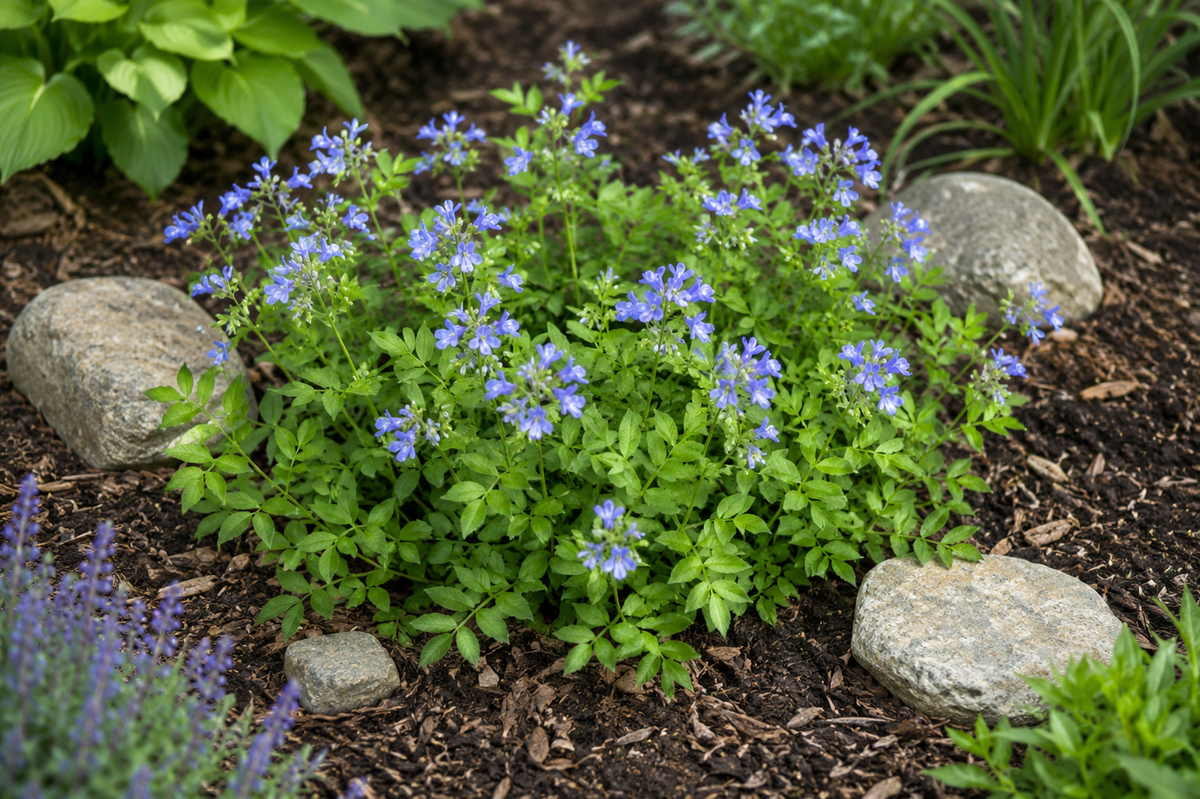
Creeping Jacob's Ladder (Polemonium reptans) is a delicate native perennial that brightens woodland gardens with loose clusters of lavender-blue flowers. Its early bloom, generally from May through June, adds welcome colour to shaded borders and cool woodland settings. Dark green foliage is finely divided into leaflets arranged like the rungs of a ladder, creating elegant texture throughout the growing season. Reaching 20 to 30 cm, this plant gradually develops into compact, natural-looking colonies. Exceptionally hardy, it suits ecological gardens in Quebec and other Canadian landscapes inspired by open woods, shaded slopes, and moist forest edges.
Creeping Jacob's ladder prefers partial shade and loamy, humus-rich soil that remains cool to moist while draining freely. It performs especially well beneath filtered light, along woodland edges, or in areas protected from intense afternoon sun. Organic mulch helps conserve soil moisture and gradually enriches the root zone. Regular watering is beneficial during warm or dry periods, particularly while plants become established. A light spring application of compost is generally sufficient. In Quebec, avoid very dry soil, hot exposed sites, and standing water around the roots, all of which can reduce vigour and shorten the flowering period.
Creeping Jacob's ladder suits shade gardens, woodland borders, shaded riparian plantings, and naturalization projects. Its spring flowers provide an early resource for native bees, bumblebees, butterflies, and other small pollinators. It pairs naturally with Canada columbine, ostrich fern, heartleaf foamflower, and bloodroot. Its low habit allows it to grow between ferns or beneath deciduous shrubs without overwhelming neighbouring plants. This perennial is not intended for culinary use; its primary value is ornamental, ecological, and supportive of woodland biodiversity. With reliable hardiness and refined foliage, Polemonium reptans brings a quiet natural character to cool, shaded Canadian gardens.

Sowing guide
It all startswith a seed.
Sowing depth
3 mm
Spacing / density
20 to 40 cm (8 to 16 in)
Germination temperature
18 to 20°C
Germination time
14 to 30 days after stratification
Sowing period
Fall or spring after cold stratification
Propagation
Stratified seed or division of mature clumps
Cold stratification
Yes
Growing method
Sow Jacob's Ladder seeds after a period of cold stratification to improve germination. Cover the seeds lightly with about 3 mm (0.1 in) of fine growing medium and keep the soil consistently cool and moist throughout germination. This native perennial thrives in rich, humus-rich soil and partial shade reminiscent of natural woodlands. Once established, it gradually forms attractive colonies that return reliably every spring. Organic mulch helps conserve moisture during the growing season and promotes vigorous growth.
Soil and care
The right care,at the right time.
Soil pH
5.5 to 7.0
Minimum temperature
Approximately -40°C
Care level
Low to moderate
Watering
Regular; keep soil cool and evenly moist
Soil type
Loamy, humus-rich, moist, well-drained soil
Fertilization
Light mature compost in spring
Moisture
Moderate; moist, humus-rich and well-drained soil
Seasonal care
In spring, remove winter debris and apply a thin layer of compost around the plants without covering the crowns. Renew organic mulch to keep the soil cool. During summer, water regularly through warm or dry periods and prevent the soil from drying completely. Remove spent flowers for a tidy appearance or allow selected capsules to mature for natural reseeding. In fall, leave some foliage to decompose naturally and enrich the soil. Divide overcrowded clumps in spring to maintain vigour, airflow, and reliable flowering.
Container growing
A garden,within reach.
Recommended pot size
30 to 45 cm (12 to 18 in)
Jacob's Ladder grows very well in wide containers filled with rich, organic growing medium that remains cool and evenly moist without becoming waterlogged. This native perennial performs especially well on shaded balconies or east-facing patios where direct afternoon sun is limited. Regular watering throughout summer maintains healthy growth and abundant flowering. Its compact habit and early bloom make it an excellent choice for naturalistic container gardens.

Bloom and dimensions
Its place,in your garden.
Mature height
30 cm
Width / spread
40 cm
Flower color
Lavender blue
Foliage color
Dark green
Foliage type
Deciduous
Growth rate
Moderate
Growth habit
Low, loose and gently spreading clump
Fragrance
Little to no fragrance
Bloom period
May to June
Fruiting
Small capsules containing several seeds
Days to maturity
Usually flowers from the second year
Harvest
June to July as capsules dry
Garden associations
In goodcompany.
Companion plants
Canada columbine, ostrich fern, heartleaf foamflower, bloodroot
Plants to avoid
English lavender, cotton lavender, rosemary, and stonecrops
Frequently asked questions
Your questions,answered.
When should creeping Jacob's ladder seeds be sown?
Jacob's Ladder seeds can be sown in autumn or spring after cold stratification. This treatment significantly improves germination and seedling establishment.
Does creeping Jacob's ladder attract pollinators?
Yes. Its lavender-blue flowers attract native bees, bumblebees, and many other pollinating insects early in the growing season, making it an excellent plant for biodiversity.
Where should creeping Jacob's ladder be planted?
Plant Jacob's Ladder in partial shade in rich, cool, humus-rich soil. It is especially well suited to woodland gardens, riparian areas, and naturalized landscapes.
Can creeping Jacob's ladder grow in containers?
Yes. It grows very well in containers provided they are wide enough and filled with rich soil that stays consistently moist. Regular watering helps maintain healthy growth and flowering.
Is creeping Jacob's ladder hardy in Canada?
Absolutely. This hardy native perennial withstands Canadian winters exceptionally well and returns reliably each spring with very little maintenance.
Wildlife and pets
Life,around your plants.
Native plant
Yes
Supporting wildlife
Bees, bumblebees, and butterflies
For a great start to your seeds
The right extras.Right here.
Seed Starting Soil
Shop the collectionSeed starting supplies
Shop the collection