


Sale
Sold out

Native herbaceous perennial
Asteraceae
Native perennials for pollinators
Flat-Topped White Aster – Seeds
Doellingeria umbellata
Product code :
This tall native perennial produces broad clusters of white flowers late in the season. Adapted to moist ground, it supports numerous pollinators and is well suited to rain gardens, shoreline buffers, and naturalized plantings.
- Quantity
- Approximately 300 seeds
- Exposure
- Full sun to light partial shade
- Life cycle
- Perennial
- Hardiness
- USDA Zones 3 to 8
Discover the plant
Common nameFlat-Topped White Aster
FamilyAsteraceae
GenusDoellingeria
Speciesumbellata
Cultivar
TypeNative herbaceous perennial
Botanical nameDoellingeria umbellata
Reproducible seedsYes
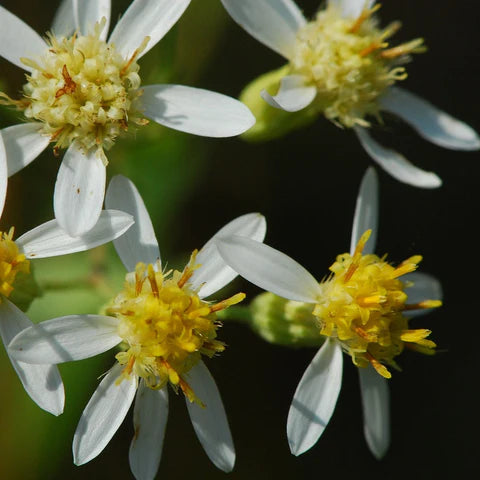
Flat-Topped White Aster (Doellingeria umbellata) is a tall native perennial distinguished by broad, flattened clusters of white flowers with yellow centres. Carried above upright, leafy stems, the blooms appear from late summer into early autumn, when many other perennials are finishing their display. Its green, lance-shaped deciduous foliage forms a natural-looking clump generally reaching 1.2 to 1.75 m tall. This rhizomatous species can gradually develop into an elegant colony when given adequate space. Exceptionally hardy in Zones 3 to 8, it returns reliably after severe Quebec winters and extends the seasonal interest of naturalized, pollinator-friendly landscapes across Canada.
Flat-Topped White Aster prefers full sun or light partial shade and consistently moist, fertile, well-drained soil. It adapts well to loamy or clay ground and is particularly suitable for locations that retain regular moisture during active growth. Providing 90 to 140 days of moist cold stratification improves seed germination before spring sowing. Seeds may also be sown outdoors in autumn to receive natural winter chilling. Cover them only lightly, keep the medium evenly moist, and prevent prolonged drought. In Quebec gardens, a moderate spring application of mature compost supports vigorous growth without encouraging excessively soft stems. Established clumps benefit from division when their centres become crowded.
In the garden, Flat-Topped White Aster is ideal for rain gardens, shoreline buffers, moist meadows, woodland edges, and ecological restoration projects. Its numerous late-season flowers supply nectar and pollen to bees, butterflies, and other beneficial insects as floral resources begin to decline. Seed heads left standing may also feed some birds and provide winter shelter for invertebrates. Pair this native perennial with Spotted Joe-Pye Weed, Prairie Ironweed, Northern Blue Flag Iris, or Cardinal Flower. Its tall habit adds structure to layered plantings, while spreading rhizomes help establish durable colonies and contribute to soil stabilization in moist natural landscapes.

Sowing guide
It all startswith a seed.
Sowing depth
Surface sow or cover very lightly
Spacing / density
45 to 60 cm (18 to 24 in)
Germination temperature
Approximately 20 to 22°C after stratification
Germination time
14 to 30 days after stratification
Sowing period
Autumn or spring after cold stratification
Propagation
Stratified seed or clump division
Cold stratification
Yes
Growing method
Sow Doellingeria umbellata seeds in autumn or in spring after a period of cold stratification to improve germination. Cover the seeds lightly with 3 to 5 mm of growing medium and maintain consistent moisture. Germination typically occurs within 15 to 20 days at temperatures between 18 and 22°C (64 to 72°F). Flat-Topped White Aster grows best in fertile, moist soils in full sun to light partial shade. Once established, it returns reliably each year and gradually forms impressive flowering colonies. Its late-season blooms provide an essential nectar source for pollinators.
Soil and care
The right care,at the right time.
Soil pH
Slightly acidic to neutral, about 5.5 to 7.0
Minimum temperature
Approximately -40°C
Care level
Low to moderate
Watering
Regular to keep the soil consistently moist
Soil type
Loamy to clay, moist, and well drained
Fertilization
Light spring application of compost
Moisture
Moderate to high; moist to wet soil
Seasonal care
In spring, cut back the previous year’s dry stems after temperatures have moderated, allowing insects to use them as shelter for longer. Apply a thin layer of compost and divide clumps that have become overly crowded. Throughout summer, keep the soil consistently moist and water deeply during prolonged drought. Staking may be helpful in very windy or overly shaded locations. In autumn, leave faded flowers and stems standing to feed birds, encourage limited natural reseeding, and preserve winter structure. Established colonies may be thinned periodically to maintain airflow and prevent the centre from declining.
Container growing
A garden,within reach.
Recommended pot size
30 to 40 cm (12 to 16 in)
Flat-Topped White Aster can be grown in a large, deep container filled with a rich growing medium that retains moisture well. This native perennial appreciates regular watering because it naturally grows along moist shorelines and in wet meadows. In containers, it provides abundant late-season flowers after many other perennials have finished blooming while attracting a wide diversity of pollinators. Its tall habit also adds impressive vertical structure to patios and terraces.

Bloom and dimensions
Its place,in your garden.
Mature height
Approximately 2 m
Width / spread
Approximately 1.2 m in an established colony
Flower color
White with yellow centres
Foliage color
Green
Foliage type
Deciduous
Growth rate
Moderate
Growth habit
Upright, branching and clump-forming
Fragrance
Little to no fragrance
Bloom period
July to October, depending on region
Fruiting
Achenes topped with a bristly pappus
Days to maturity
Usually flowers from the second year
Harvest
September to October
Garden associations
In goodcompany.
Companion plants
Spotted Joe-Pye Weed, Prairie Ironweed, Northern Blue Flag Iris, and Cardinal Flower
Plants to avoid
Lavender, cotton lavender, Blanket Flower, and other dry-soil plants
Frequently asked questions
Your questions,answered.
When should Flat-Topped White Aster seeds be sown?
Sow Flat-Topped White Aster seeds in autumn or in spring after cold stratification to encourage more uniform germination.
Why does Flat-Topped White Aster attract pollinators?
Its abundant late-season flowers provide large amounts of nectar and pollen at a time when many other flowering plants have finished blooming.
Can Flat-Topped White Aster grow in moist soil?
Yes. Doellingeria umbellata naturally grows in moist meadows, wet ditches, and along streambanks where soils remain consistently moist.
Is Doellingeria umbellata suitable for biodiversity gardens?
Yes. This native perennial is an outstanding choice for pollinator gardens, ecological restoration, and biodiversity-focused landscapes.
How should mature Flat-Topped White Aster be maintained?
An annual application of compost, consistently moist soil, and cutting back the previous year's stems in spring are generally all that is needed to keep this perennial healthy.
Wildlife and pets
Life,around your plants.
Attracts birds
Yes
Native plant
Yes
Supporting wildlife
Bees and pollinators
For a great start to your seeds
The right extras.Right here.
Seed Starting Soil
Shop the collectionSeed starting supplies
Shop the collection





