


Sale
Sold out

Native plant
Asteraceae
Native perennials for pollinators
Grass-leaved Goldenrod (Euthamia graminifolia)
Product code :
Native perennial with fine foliage and abundant yellow flowers.
- Quantity
- Around 250 seeds
- Exposure
- Sun to partial shade
- Life cycle
- Perennial
- Hardiness
- 3 to 8
Discover the plant
Common nameGrass-leaved Goldenrod
FamilyAsteraceae
GenusEuthamia
Speciesgraminifolia
Cultivar
TypeNative plant
Botanical nameEuthamia graminifolia
Reproducible seedsYes
Grass-leaved Goldenrod (Euthamia graminifolia) is an elegant native perennial recognized for its fine grass-like foliage and abundant golden yellow flowers. Its flexible stems create a light, airy silhouette that adds movement and texture to wildflower meadows, ecological gardens, and naturalistic landscapes. From late summer into early fall, its bright flower clusters extend seasonal interest while providing strong ornamental value in Quebec gardens.
Grass-leaved Goldenrod (Euthamia graminifolia) prefers sunny to partially shaded locations and sandy to loamy, well-drained soils. Low maintenance, it tolerates dry conditions once established and mainly requires regular watering during the establishment period. Seeds are sown on the surface because light supports germination. A small amount of compost in spring is enough to encourage healthy growth and abundant flowering.
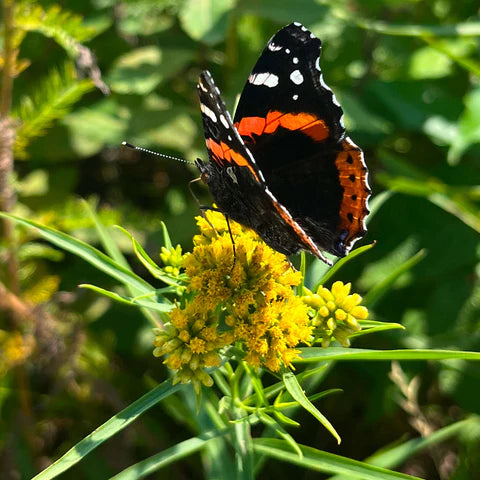
Grass-leaved Goldenrod (Euthamia graminifolia) is an excellent choice for pollinator gardens, wildflower meadows, and ecological restoration projects. Its late-season flowers provide nectar and pollen for bees, bumblebees, butterflies, and other beneficial insects. It combines beautifully with wild bergamot, switchgrass, and black-eyed Susan to create biodiversity-rich plantings. Its ability to form natural colonies also helps support soil stability.

Sowing guide
It all startswith a seed.
Sowing depth
Surface sowing
Spacing / density
45 to 60 cm (18 to 24 in)
Germination temperature
18 to 22 °C
Germination time
14 to 30 days after stratification
Sowing period
Fall or spring with optional stratification
Propagation
Seeds or colony division
Cold stratification
Yes
Growing method
Sow seeds in autumn or spring after a period of cold stratification. Surface sow or cover very lightly with fine growing medium and maintain consistent moisture until germination. Temperatures between 18 and 22°C (64 to 72°F) encourage germination within two to three weeks. Plant seedlings in full sun or partial shade in well-drained soil. Once established, this native perennial gradually forms attractive colonies that thrive in meadows, pollinator gardens, and ecological landscapes.
Soil and care
The right care,at the right time.
Soil pH
5.5 to 7.0
Minimum temperature
-40 °C (-40 °F)
Care level
Low
Drought tolerance
Yes
Watering
Moderate
Soil type
Sandy to loamy well-drained soil
Fertilization
Light compost in spring
Moisture
Moderate; tolerates moist to seasonally wet soil
Seasonal care
Spring cleanup and watering during drought.
Container growing
A garden,within reach.
Recommended pot size
20 to 30 L (5 to 8 gal)
Grass-leaved Goldenrod can be grown successfully in large containers with excellent drainage. Use a light, well-drained growing medium and place the container in full sun for the best flowering. Water regularly during establishment, then only as needed. Container-grown plants attract pollinators to patios and balconies while maintaining a compact, natural appearance.
Bloom and dimensions
Its place,in your garden.
Mature height
120 cm
Width / spread
60 cm
Flower color
Golden yellow
Foliage color
Dark green
Foliage type
Deciduous
Growth rate
Moderate
Growth habit
Upright, branching and rhizomatous
Fragrance
Foliage is lightly aromatic when crushed
Bloom period
July to September
Fruiting
Dry achenes after flowering
Days to maturity
Usually flowers from the second year
Harvest
August to October

Garden associations
In goodcompany.
Companion plants
Wild bergamot, black-eyed Susan, switchgrass, blazing star
Plants to avoid
Blue flag iris, marsh marigold, ligularia, horsetail
Frequently asked questions
Your questions,answered.
When should Grass-leaved Goldenrod be sown?
Seeds are best sown in autumn or in spring after cold stratification to improve germination.
Does this plant attract pollinators?
Yes. Its late-season flowers attract bees, butterflies, hoverflies, and many other beneficial pollinating insects.
Does it tolerate drought?
Yes. Once established, Grass-leaved Goldenrod is hardy, drought tolerant, and requires very little maintenance.
Is it suitable for naturalized gardens?
Yes. It tolerates moderately dry soils once established, although it performs best in well-drained soils with occasional moisture.
Is it hardy in Quebec?
Absolutely. Its natural growth habit, long flowering period, and ecological value make it an outstanding choice for wildflower meadows and restoration plantings.
Wildlife and pets
Life,around your plants.
Attracts birds
Yes
Native plant
Yes
Supporting wildlife
Bees, butterflies, and beneficial insects
For a great start to your seeds
The right extras.Right here.
Seed Starting Soil
Shop the collectionSeed starting supplies
Shop the collection





