Sale
Sold out

Native groundcover perennial
Rubiaceae
Small native groundcover perennials
Azure Bluet – Seeds
Houstonia caerulea
Product code : AKENE-0023
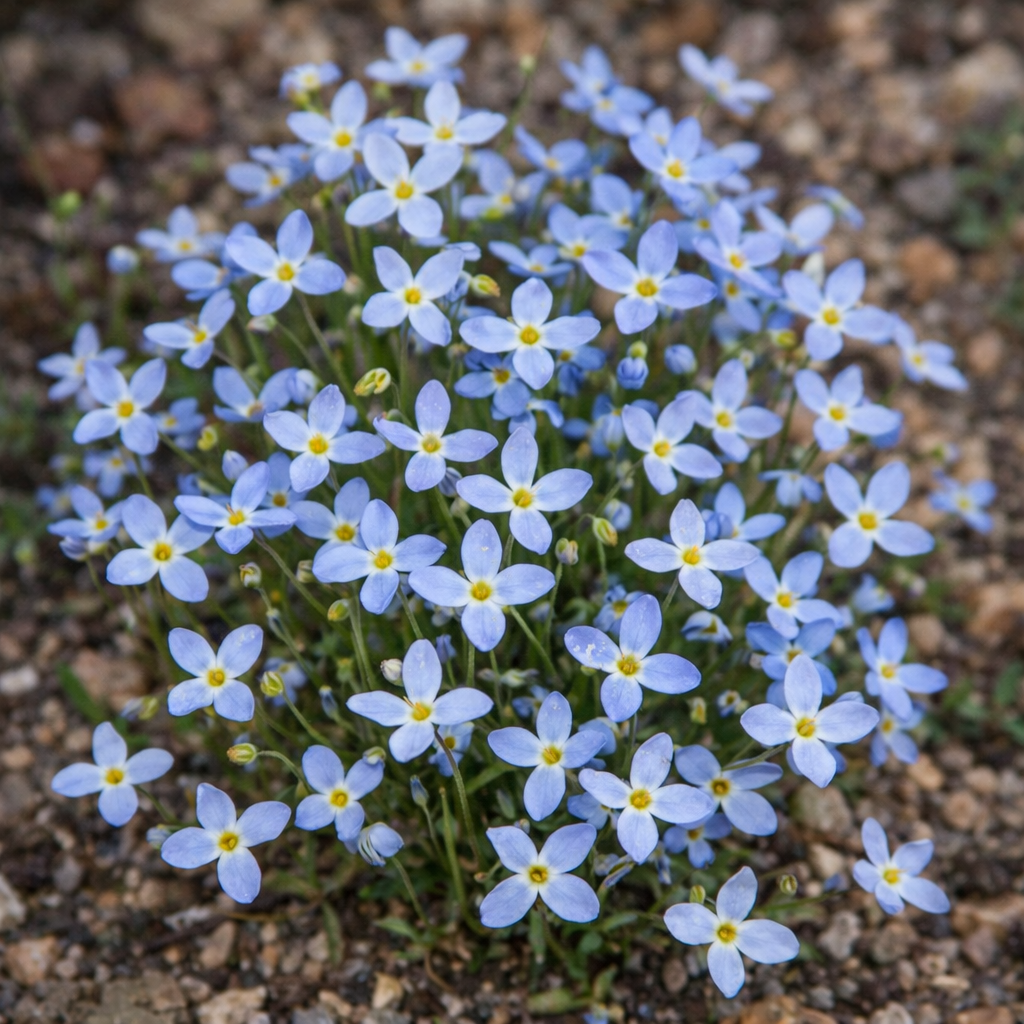
Tiny native perennial with pale blue flowers and yellow centres. Azure bluet creates a delicate groundcover in rock gardens, natural lawns, and open woods while feeding early spring pollinators.
- Quantity
- About 50 seeds
- Exposure
- Gentle sun to partial shade
- Life cycle
- Perennial
- Hardiness
- Zones 3 to 8
Discover the plant
Common nameAzure Bluet
FamilyRubiaceae
GenusHoustonia
Speciescaerulea
Cultivar
TypeNative groundcover perennial
Botanical nameHoustonia caerulea
Reproducible seedsYes
Azure Bluet (Houstonia caerulea) is a tiny native perennial that forms low, delicate rosettes topped in spring by slender stems, each carrying a single flower. The four-lobed blossoms range from pale blue to bluish white and feature a bright yellow centre. Reaching only 5 to 15 cm in height, this plant gradually creates airy colonies in natural lawns, rock gardens, open woods, and path edges. Its bloom period from April through June brings exceptional freshness to the spring landscape. Despite its fragile appearance, azure bluet is very hardy and survives Quebec winters through well-rooted crowns and persistent basal growth.
Azure bluet prefers gentle sun or partial shade in light, slightly acidic to neutral soil that remains cool while draining well. It performs especially well in sandy or gravelly ground that stays lightly moist in spring without becoming waterlogged. The extremely fine seeds must be surface sown because light is required for germination. A prolonged period of moist cold stratification greatly improves emergence. Once established, the plant needs little fertilizer and mainly benefits from regular moisture during hot or dry periods. In Quebec gardens, avoid thick mulch that could bury the miniature rosettes, and limit competition from vigorous neighbouring groundcovers.
Azure bluet suits cool rock gardens, natural lawns, pollinator gardens, open woodlands, and spaces between flat stones. Its spring flowers provide nectar and pollen for small bees, butterflies, and other beneficial insects early in the season. The foliage also serves as a larval host for certain native moth caterpillars. Its miniature habit pairs naturally with wild columbine, moss phlox, wild strawberry, and Pennsylvania sedge. Houstonia caerulea may self-seed in lightly disturbed or mossy ground and gradually develop into a refined flowering carpet. It is especially effective where gardeners want a low native plant that supports biodiversity without creating a coarse or aggressive appearance.

Sowing guide
It all startswith a seed.
Sowing depth
Surface sow
Spacing / density
6 to 8 in (15 to 20 cm)
Germination temperature
18 to 20°C
Germination time
7 to 28 days after stratification
Sowing period
Fall or spring after cold stratification
Propagation
Seed or division of established patches
Cold stratification
Yes
Growing method
Sow outdoors in autumn or in spring after cold stratification. Grow in sun or partial shade in cool, well-drained soil.
Soil and care
The right care,at the right time.
Soil pH
Slightly acidic to neutral
Minimum temperature
Approximately -40°C
Care level
Low
Watering
Moderate; keep moist without waterlogging
Soil type
Light, sandy or gravelly, moist, well-drained soil
Fertilization
Very light; fine compost only when needed
Moisture
Medium; moist but well-drained soil
Seasonal care
In spring, gently remove thick dead leaves and debris that could cover the tiny rosettes. Avoid vigorous raking in the planting area. Water lightly during dry periods to keep the soil cool, especially while plants are flowering or becoming established. Do not apply rich fertilizer or coarse mulch. After flowering, allow the capsules to mature when natural reseeding is desired. During summer, limit competition from vigorous groundcovers and weeds. In fall, retain only a light layer of finely shredded leaves so the rosettes remain protected without being smothered or exposed to poor drainage.
Container growing
A garden,within reach.
Recommended pot size
6 to 8 in (15 to 20 cm)
Houstonia caerulea is well-suited for pot cultivation, especially in a well-drained container. Use a light potting mix that remains slightly moist and place the pot in sun or partial shade. Its compact habit is particularly suitable for small containers.

Bloom and dimensions
Its place,in your garden.
Mature height
15 cm
Width / spread
20 cm per established rosette
Flower color
Pale blue to bluish white with yellow centres
Foliage color
Green
Foliage type
Semi-evergreen to deciduous depending on climate
Growth rate
Slow to moderate
Growth habit
Low, mat-forming, and tufted
Fragrance
Bloom period
April to June
Fruiting
Small capsules containing fine seeds
Days to maturity
May flower in the first or second year
Harvest
June to July
Garden associations
In goodcompany.
Companion plants
Wild columbine, moss phlox, wild strawberry, Pennsylvania sedge
Plants to avoid
Blue flag iris, ligularia, horsetail, and marsh marigold
Frequently asked questions
Your questions,answered.
When should azure bluet seeds be sown?
Sow blue bluet outdoors in the fall or in the spring after a cold stratification period.
Can azure bluet grow in full sun?
Yes. Bluets grow in sun or partial shade, preferring bright spots that don't become excessively dry.
Does azure bluet attract pollinators?
Yes. Its small flowers attract small pollinators and contribute to the garden's biodiversity.
Can azure bluet form a groundcover?
Yes. Its low, spreading habit allows it to gradually form small colonies that can serve as natural ground cover.
How should azure bluet be maintained?
Keep soil cool and well-drained and avoid prolonged drought. Once established, bluets are low maintenance.
Wildlife and pets
Life,around your plants.
Native plant
Yes
Supporting wildlife
Small bees, butterflies, and beneficial insects
For a great start to your seeds
The right extras.Right here.
Seed Starting Soil
Shop the collectionSeed starting supplies
Shop the collection