Sale
Sold out

Moisture-loving perennial flower
Malvaceae
Native perennials for wet gardens
Swamp Rose Mallow – Seeds
Hibiscus moscheutos
Product code : AKENE-0025
Spectacular perennial with enormous white to pink flowers and vigorous foliage. Swamp rose mallow thrives in moist soil and attracts bees, butterflies, hummingbirds, and other summer pollinators.
- Quantity
- About 25 seeds
- Exposure
- Full sun
- Life cycle
- Perennial
- Hardiness
- Zones 4 to 9
Discover the plant
Common nameSwamp Rose Mallow
FamilyMalvaceae
GenusHibiscus
Speciesmoscheutos
Cultivar
TypeMoisture-loving perennial flower
Botanical nameHibiscus moscheutos
Reproducible seedsYes
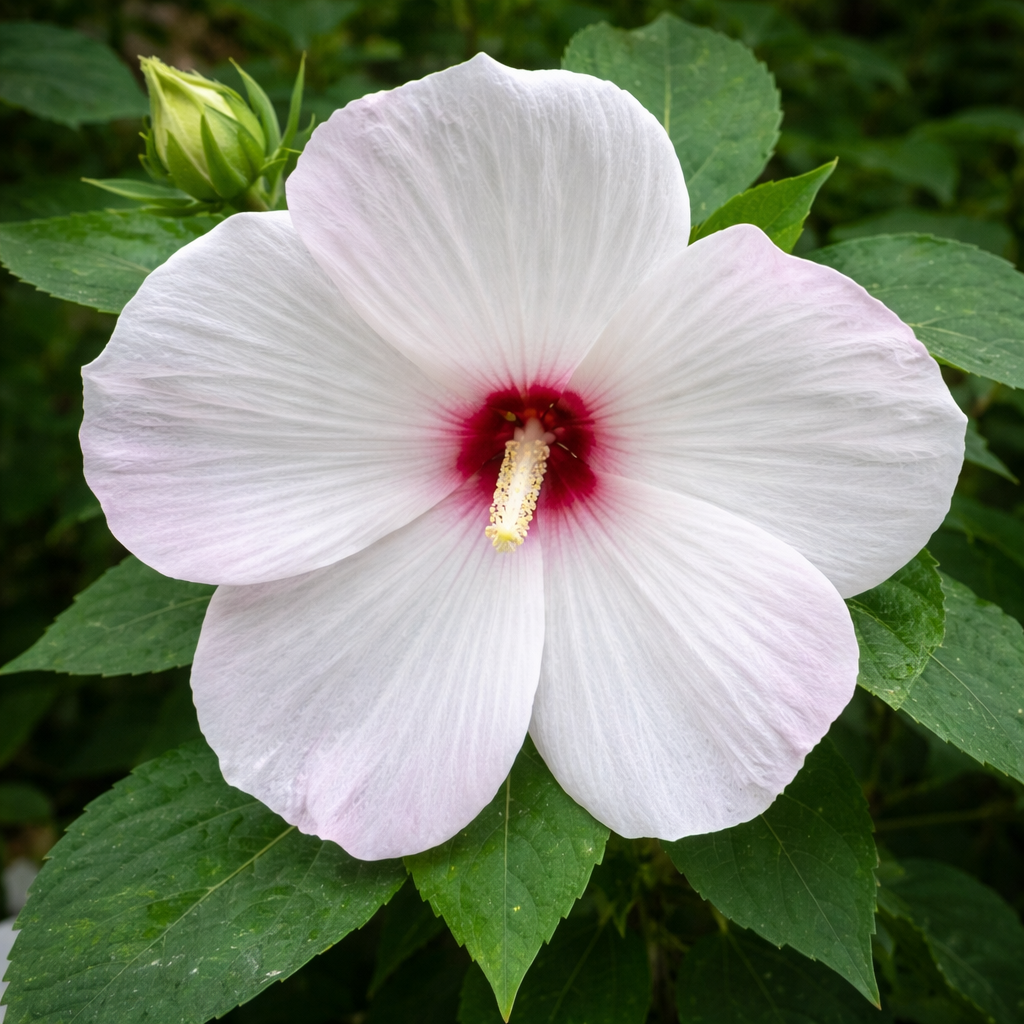
Swamp Rose Mallow (Hibiscus moscheutos) is a tall perennial celebrated for spectacular flowers that often measure 15 to 25 cm across and bring a tropical appearance to moist gardens. Seed-grown plants may produce flowers ranging from white to pink, often with a darker central eye. Dark green foliage forms a vigorous upright clump that generally reaches 1 to 1.75 m. New flowers continue opening from July through September, followed by decorative seed capsules. Despite its exotic appearance, this hardy perennial returns each spring from a persistent crown, making it a dramatic yet dependable choice for Canadian landscapes with adequate moisture.
Swamp rose mallow prefers full sun and rich, loamy to clay-based soil that remains consistently moist. It is especially suitable for riparian plantings, rain gardens, and pond edges where the roots receive regular moisture without prolonged oxygen deprivation. Steady watering is essential during hot weather, particularly for young plants and container-grown specimens. A spring layer of mature compost and organic mulch supports vigorous growth and flowering. In Quebec, new shoots often emerge later than those of many other perennials, so gardeners should avoid assuming too early that the crown has failed to survive the winter.
Swamp rose mallow creates an exceptional focal point in pollinator gardens, moist borders, and naturalized landscapes. Its enormous flowers attract bees, butterflies, hummingbirds, and many other beneficial insects throughout summer. It pairs naturally with blue flag iris, spotted Joe-Pye weed, cardinal flower, and common sneezeweed, which share similar moisture requirements. The tall clump adds structure and colour toward the back of a border while extending seasonal interest into early fall. Leaving the stems standing until spring helps protect the crown, provides winter structure, and offers shelter for small wildlife before the old growth is removed.

Sowing guide
It all startswith a seed.
Sowing depth
5 mm
Spacing / density
90 to 120 cm (36 to 48 in)
Germination temperature
20 to 24°C
Germination time
14 to 30 days after pretreatment
Sowing period
Fall or spring after cold stratification
Propagation
Seed or division of mature clumps
Cold stratification
Yes
Seed scarification
Yes
Growing method
Sow Swamp Rose Mallow seeds in autumn or spring after cold stratification. Plant the seeds about 5 mm (0.2 in) deep in a rich growing medium kept consistently moist. Temperatures between 20 and 24°C (68 to 75°F) encourage rapid germination, usually within 5 to 10 days. Young plants thrive in full sun and fertile, organically rich soil. As plants mature, they develop strong crowns that produce increasingly impressive flowering stems each year. Once established, Swamp Rose Mallow becomes one of the most spectacular plants in any pollinator or rain garden.
Soil and care
The right care,at the right time.
Soil pH
Acidic to neutral
Minimum temperature
Approximately -34°C
Care level
Moderate
Watering
Frequent; keep soil consistently moist
Soil type
Rich, loamy to clayey, moist to wet soil
Fertilization
Mature compost in spring
Moisture
High; moist to wet soil
Seasonal care
In spring, wait for the characteristically late new shoots before cutting the dry stems back to ground level. Apply mature compost and renew mulch around the crown. During summer, water regularly so the soil remains consistently moist, especially in hot weather and throughout flowering. Stake the stems only in exposed, windy sites. Remove spent flowers for a tidier appearance or retain selected capsules for seed collection. In fall, leave the stems standing to protect the crown naturally, provide winter structure, and offer shelter for small wildlife before removing the old growth the following spring.
Container growing
A garden,within reach.
Recommended pot size
40 to 60 L (10 to 16 gal)
Swamp Rose Mallow can be grown successfully in a large container of at least 40 to 60 L (10 to 16 gal) to accommodate its vigorous root system and impressive size. Use an organic-rich growing medium that retains moisture without becoming stagnant. Place the container in full sun and water regularly throughout the growing season. Container-grown plants bring spectacular tropical flowers to patios and terraces while attracting a wide variety of pollinators.

Bloom and dimensions
Its place,in your garden.
Mature height
1.75 m
Width / spread
120 cm
Flower color
White to pink, often with a darker eye
Foliage color
Dark green
Foliage type
Deciduous
Growth rate
Fast during the growing season
Growth habit
Upright, bushy, and vigorous
Fragrance
Bloom period
July to September
Fruiting
Capsules containing numerous seeds
Days to maturity
Usually flowers from the second year
Harvest
Mature capsules from September to October
Garden associations
In goodcompany.
Companion plants
Blue flag iris, spotted Joe-Pye weed, cardinal flower, common sneezeweed
Plants to avoid
Lavender, cotton lavender, blanket flower, and stonecrop
Frequently asked questions
Your questions,answered.
When should swamp rose mallow seeds be sown?
Swamp Rose Mallow seeds can be sown in autumn or spring after cold stratification. This treatment generally improves germination and seedling vigor.
Why is swamp rose mallow so spectacular?
Its enormous flowers, often exceeding 20 cm (8 in) across, create one of the most dramatic displays of any hardy perennial. Few plants combine such tropical beauty with exceptional cold hardiness.
Does swamp rose mallow attract pollinators?
Yes. Its large pollen-rich flowers attract bees, butterflies, and sometimes hummingbirds throughout the blooming season.
Can swamp rose mallow grow near water?
Absolutely. Swamp Rose Mallow thrives in rich, consistently moist soils and is perfectly suited to pondsides, rain gardens, riparian plantings, and other wet landscapes.
How should swamp rose mallow be overwintered?
Once established, Swamp Rose Mallow requires relatively little maintenance. Simply keep the soil consistently moist and remove the old stems each spring.
Wildlife and pets
Life,around your plants.
Attracts birds
Yes
Native plant
Yes
Supporting wildlife
Hummingbirds, bees, and butterflies
For a great start to your seeds
The right extras.Right here.
Seed Starting Soil
Shop the collectionSeed starting supplies
Shop the collection