Sale
Sold out

Native perennial flower
Asteraceae
Native perennials for pollinators
Dense Blazing Star – Seeds
Liatris spicata
Product code : AKENE-0027
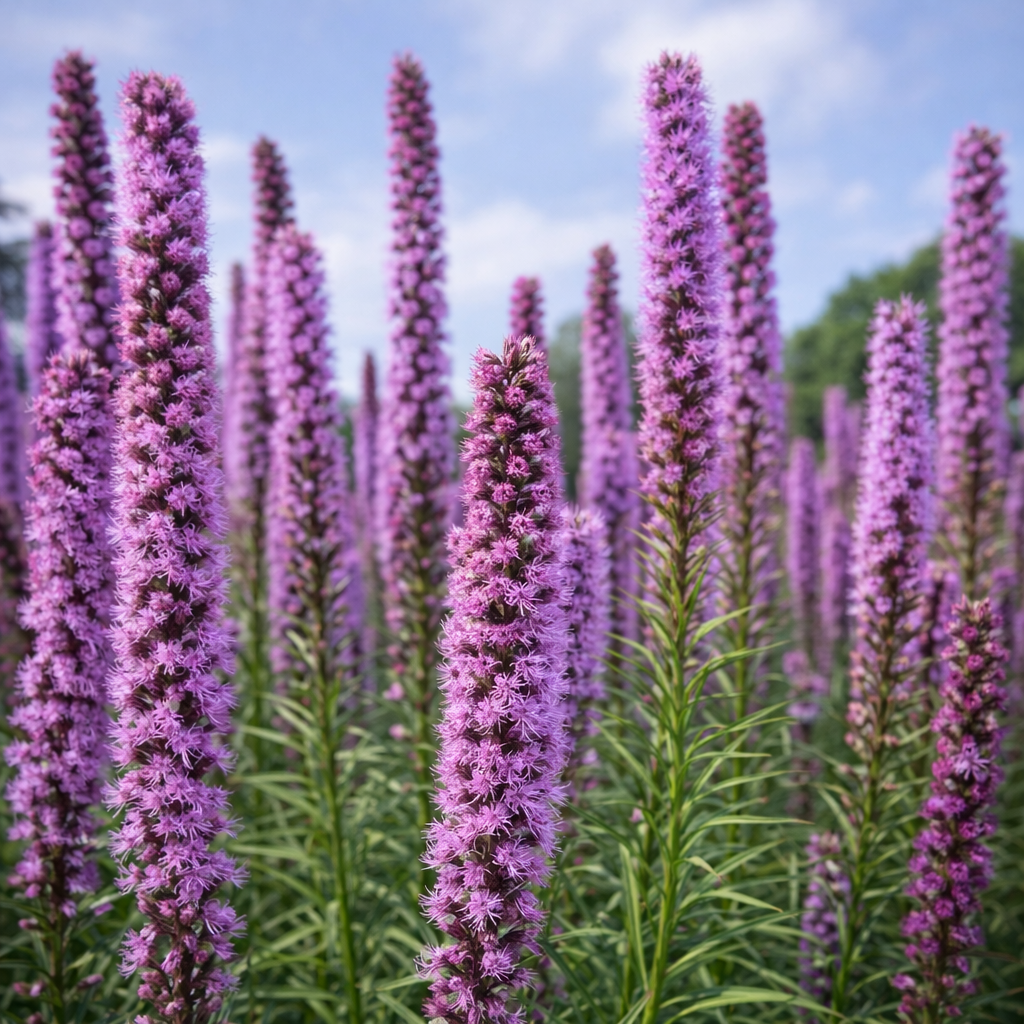
Native perennial with tall violet-purple spikes that open from the top downward. Dense blazing star attracts abundant butterflies, bees, and other pollinators while adding strong vertical structure to the garden.
- Quantity
- About 100 seeds
- Exposure
- Full sun
- Life cycle
- Perennial
- Hardiness
- Zones 3 to 8
Discover the plant
Common nameDense Blazing Star
FamilyAsteraceae
GenusLiatris
Speciesspicata
Cultivar
TypeNative perennial flower
Botanical nameLiatris spicata
Reproducible seedsYes
Dense Blazing Star (Liatris spicata) is a striking native perennial recognized by tall, upright flower spikes covered with violet-purple blossoms that open gradually from the top downward. Fine, linear green foliage forms an elegant clump that adds height, rhythm, and texture to perennial borders. The summer bloom period generally extends from July through September and creates a strong vertical accent. Reaching 60 cm to 1.2 m in height, this hardy plant returns reliably each year and often becomes more floriferous with age. The stems also remain attractive after flowering, especially in naturalistic and prairie-inspired landscapes where structure is valued beyond the active bloom season.
Dense blazing star prefers full sun and light, sandy to loamy soil that drains well and never remains waterlogged. Moderate watering is useful during establishment, after which mature plants tolerate dry periods through their fleshy underground storage structures. A thin layer of compost in spring is usually sufficient, while excessive nitrogen may encourage weak stems and reduced flowering. In Quebec, leaving the dry stems standing through fall and winter provides structure and habitat, then they can be cut back in spring. This perennial requires little maintenance when planted in a bright, well-drained site with enough space for air circulation.
Dense blazing star suits pollinator gardens, flowering meadows, perennial borders, and landscapes inspired by native prairie communities. Nectar-rich flowers attract bees, butterflies, and many other beneficial insects throughout summer. The spikes are also highly valued in fresh and dried arrangements, while mature seeds may provide food for some birds. It pairs naturally with black-eyed Susan, purple coneflower, wild bergamot, and blue vervain. Its vertical silhouette contrasts especially well with rounded flower forms and broader foliage, allowing gardeners to create layered plantings with strong structure, extended seasonal colour, and meaningful wildlife value.

Sowing guide
It all startswith a seed.
Sowing depth
5 mm
Spacing / density
30 to 45 cm (12 to 18 in)
Germination temperature
18 to 22°C
Germination time
20 to 45 days after stratification
Sowing period
Fall or spring after cold stratification
Propagation
Seed or division of mature clumps
Cold stratification
Yes
Growing method
Sow Dense Blazing Star seeds in autumn or spring after a period of cold stratification to improve germination. Plant the seeds approximately 5 mm (0.2 in) deep in a light growing medium and maintain temperatures between 18 and 22°C (64 to 72°F). Germination generally occurs within 20 to 30 days when the medium remains evenly moist without becoming waterlogged. Young plants thrive in full sun and well-drained soil. As they mature, they gradually develop deep root systems and produce increasingly impressive flower spikes, with the most spectacular flowering beginning in the second year.
Soil and care
The right care,at the right time.
Soil pH
Acidic to neutral
Minimum temperature
Approximately -40°C
Care level
Low
Watering
Moderate during establishment; low afterward
Soil type
Light, sandy to loamy, well-drained soil
Fertilization
Light compost in spring; avoid excess nitrogen
Moisture
Medium; moist to well-drained soil
Seasonal care
In spring, cut back the previous season’s dry stems before new growth appears. Apply a thin layer of compost around the clumps without covering the crowns. During summer, water only through prolonged drought because constantly wet soil may damage the underground storage structures. Remove spent spikes for a tidier appearance or leave them to feed birds and encourage natural reseeding. Stake plants only when they grow in overly rich soil or an exposed, windy location. Divide crowded clumps in spring to restore vigour, improve air circulation, and maintain strong flowering.
Container growing
A garden,within reach.
Recommended pot size
20 to 30 L (5 to 8 gal)
Dense Blazing Star grows exceptionally well in containers thanks to its compact root system and elegant vertical habit. Use a container of at least 20 to 30 L (5 to 8 gal) filled with a light, well-drained growing medium. Place it in full sun to encourage sturdy flower spikes and abundant blooming. Container-grown plants bring pollinators to patios and balconies while requiring very little maintenance.

Bloom and dimensions
Its place,in your garden.
Mature height
1.2 m
Width / spread
45 cm
Flower color
Violet-purple
Foliage color
Green
Foliage type
Deciduous
Growth rate
Moderate
Growth habit
Upright clump with vertical flower spikes
Fragrance
Bloom period
July to September
Fruiting
Achenes maturing on the spikes after flowering
Days to maturity
Usually flowers from the second year
Harvest
Flowers from the second year, July to September
Garden associations
In goodcompany.
Companion plants
Black-eyed Susan, purple coneflower, wild bergamot, blue vervain
Plants to avoid
Blue flag iris, marsh marigold, horsetail, and ligularia
Frequently asked questions
Your questions,answered.
When should dense blazing star seeds be sown?
Dense Blazing Star seeds are best sown in autumn or spring after a period of cold stratification. This treatment improves germination and encourages more uniform seedling development.
Why does dense blazing star attract pollinators?
Its long nectar-rich flower spikes attract a remarkable diversity of bees, butterflies, and occasionally hummingbirds, making it one of the best native plants for supporting summer pollinators.
Can dense blazing star grow in containers?
Yes. Dense Blazing Star adapts very well to container growing when planted in a well-drained growing medium and placed in full sun. It adds outstanding vertical interest to patios and balconies.
When does dense blazing star begin flowering?
Flowering generally begins during the second growing season and extends from July through September, depending on growing conditions.
Is dense blazing star easy to grow?
Yes. Once established, Dense Blazing Star requires very little maintenance, tolerates dry periods well, and returns reliably year after year.
Wildlife and pets
Life,around your plants.
Attracts birds
Yes
Native plant
Yes
Supporting wildlife
Butterflies and bees
For a great start to your seeds
The right extras.Right here.
Seed Starting Soil
Shop the collectionSeed starting supplies
Shop the collection