Sale
Sold out

Shrub
Rosaceae
Edible native roses for meadows and hedges
Smooth Rose
Rosa blanda
Product code : AKENE-0045
Native shrub with delicate pink flowers and edible rose hips for ecological gardens.
- Quantity
- About 20 seeds
- Exposure
- Full sun to partial shade
- Life cycle
- Perennial
- Hardiness
- 3 to 8
Discover the plant
Common nameSmooth Rose
FamilyRosaceae
GenusRosa
Speciesblanda
TypeShrub
Botanical nameRosa blanda
Reproducible seedsYes
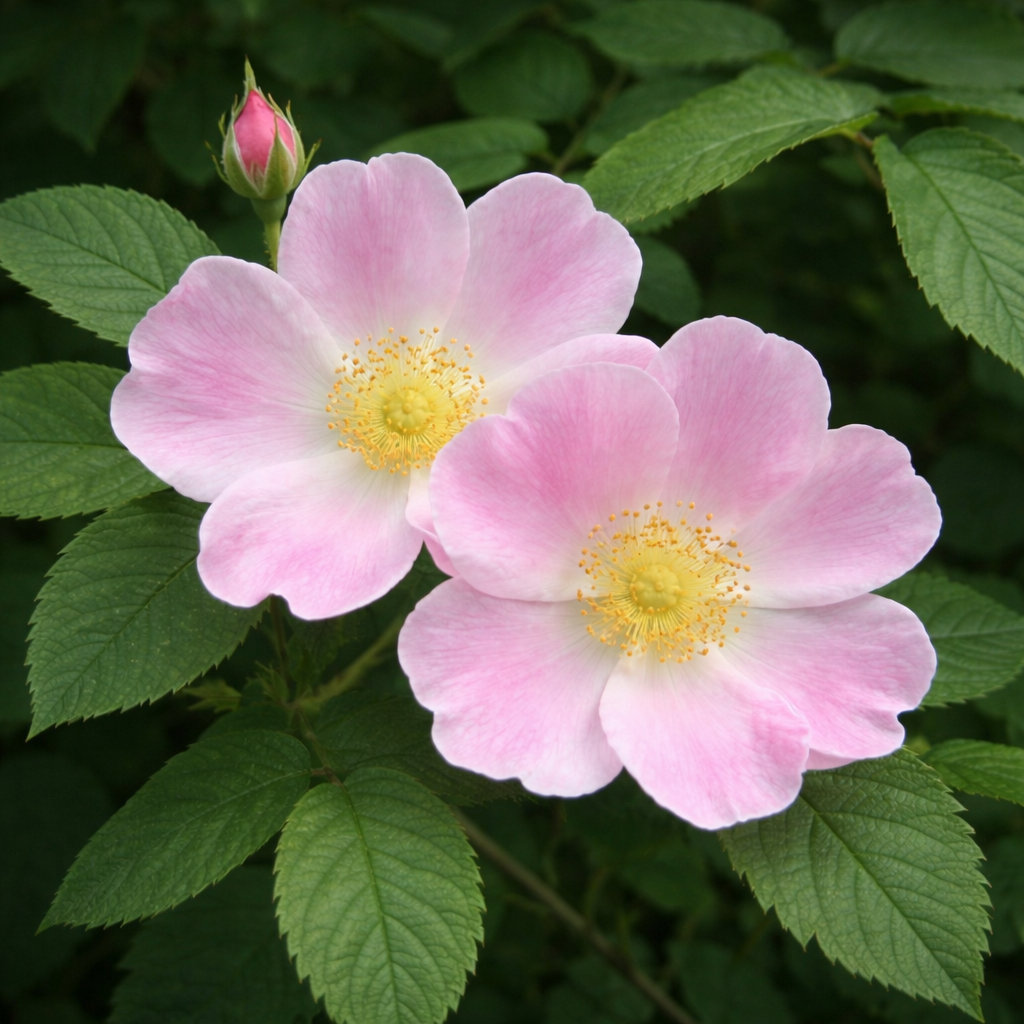
Smooth Rose (Rosa blanda) is an elegant native shrub known for its delicate pink flowers, green deciduous foliage, and graceful natural habit. From June to August, its fragrant blooms brighten gardens while attracting bees, butterflies, and many pollinating insects. Unlike many wild roses, this species has very few thorns, making it easier to integrate into frequently used spaces. Its red rose hips extend seasonal interest into autumn and provide important ecological value for wildlife.
Smooth Rose (Rosa blanda) prefers sunny to partially shaded locations and light, well-drained sandy or rocky soils. Throughout Quebec and Canada, it adapts well to natural hedges, pollinator gardens, and ecological landscapes. Once established, it tolerates dry conditions and requires little maintenance. A light application of compost in spring is usually enough to support healthy growth. Its exceptional hardiness allows it to return reliably year after year in cold climates.
Smooth Rose (Rosa blanda) is ideal for ecological gardens, native plantings, and wildlife-friendly hedges. Its edible rose hips can be harvested in autumn for teas, jellies, syrups, and traditional recipes. The fruits also provide food for birds and small wildlife during the colder months. Combined with serviceberry, wild bergamot, goldenrod, and bush honeysuckle, it creates a landscape rich in successive blooms, seasonal interest, and biodiversity.

Sowing guide
It all startswith a seed.
Sowing depth
9 mm (0.35 in)
Spacing / density
1 to 1.5 m (3.3 to 5 ft)
Germination temperature
20 to 22 °C
Germination time
60 to 180 days after prolonged stratification
Sowing period
Fall or spring after scarification and double stratification
Propagation
Seeds after scarification and double stratification, suckers, or cuttings.
Cold stratification
Yes
Growing method
Sow seeds in autumn or spring after scarification followed by double cold stratification to overcome natural dormancy. Plant the seeds about 9 mm (0.35 in) deep in a light, well-drained growing medium and maintain consistent moisture without waterlogging. Germination is often slow and irregular, requiring patience. Young plants thrive in full sun to partial shade and in poor to moderately fertile soils, especially sandy or rocky sites. Once established, Smooth Wild Rose develops into a beautiful native shrub that supports biodiversity and requires little maintenance.
Soil and care
The right care,at the right time.
Soil pH
Acidic to neutral
Minimum temperature
-40 °C (-40 °F)
Care level
Low
Drought tolerance
Yes
Watering
Moderate during establishment
Soil type
Well-drained sandy or rocky soil
Fertilization
Light compost in spring
Moisture
Low to medium; well-drained soil
Seasonal care
Remove dead branches, perform light pruning, and preserve fruits for wildlife.
Container growing
A garden,within reach.
Recommended pot size
40 to 60 L (10 to 16 gal)
Smooth Wild Rose can be grown in a deep container of at least 40 L (10 gal) that allows ample root development. Use a well-drained growing medium enriched with compost and coarse sand or gravel to mimic its natural habitat. Water regularly during establishment, then less frequently as the shrub becomes established. Container growing makes it possible to enjoy its fragrant flowers and decorative rose hips on patios and in smaller gardens.
Bloom and dimensions
Its place,in your garden.
Mature height
2 m
Width / spread
2 m
Flower color
Pale pink to bright pink
Foliage color
Green
Foliage type
Deciduous
Growth rate
Moderate
Growth habit
Shrubby, upright, and suckering
Fragrance
Lightly fragrant flowers
Bloom period
June to August
Fruiting
Red rose hips in autumn
Harvest
September to November
Garden associations
In goodcompany.
Companion plants
Serviceberry, wild bergamot, goldenrod, bush honeysuckle
Plants to avoid
Blue flag iris, marsh marigold, ligularia, horsetail
Recipe idea
From the gardento your plate.
Edible parts
Rose hips and petals from untreated plants
The rose hips of Smooth Wild Rose are edible when fully ripe in autumn. They are commonly used to prepare herbal teas, jellies, syrups, and other traditional recipes rich in vitamin C. The flower petals may also be used as edible garnishes or in specialty recipes. Beyond its culinary value, this native shrub has a long history of traditional medicinal use and is an excellent addition to edible native gardens.
Frequently asked questions
Your questions,answered.
When should Smooth Rose be sown?
Smooth Wild Rose seeds are generally sown in autumn or spring after scarification and double cold stratification. These treatments mimic natural conditions and greatly improve germination.
Are the fruits edible?
Yes. The rose hips are edible, rich in vitamin C, and can be used to prepare herbal teas, jellies, syrups, and many traditional recipes.
Why choose Smooth Rose for an ecological garden?
Its abundant flowers support a wide diversity of pollinators, while its rose hips feed birds and small wildlife in autumn, making it an excellent shrub for biodiversity.
Can it be used in a natural hedge?
Yes. Its naturally dense habit and ability to spread by suckers make it an excellent choice for wildlife hedgerows and naturalization projects.
Is it truly thornless?
Yes. Compared with most native wild roses, Rosa blanda has very few thorns, making it easier to maintain and more suitable for family gardens.
Wildlife and pets
Life,around your plants.
Attracts birds
Yes
Native plant
Yes
Supporting wildlife
Bees and pollinators
For a great start to your seeds
The right extras.Right here.
Seed Starting Soil
Shop the collectionSeed starting supplies
Shop the collection