Sale
Sold out

Deciduous pollinator shrub
Clethraceae
Fragrant native shrubs
Sweet Pepperbush (Clethra alnifolia) – Seeds
Product code :
This deciduous shrub produces long spikes of intensely fragrant white flowers that attract abundant pollinators. Adapted to acidic, moist soil, Sweet Pepperbush suits rain gardens, informal hedges, shoreline buffers, and naturalized landscapes.
- Quantity
- Approximately 30 seeds
- Exposure
- Full sun to light shade
- Life cycle
- Perennial
- Hardiness
- USDA Zones 3 to 9
Discover the plant
Common nameSweet Pepperbush
FamilyClethraceae
GenusClethra
Speciesalnifolia
Cultivar
TypeDeciduous pollinator shrub
Botanical nameClethra alnifolia
Reproducible seedsYes
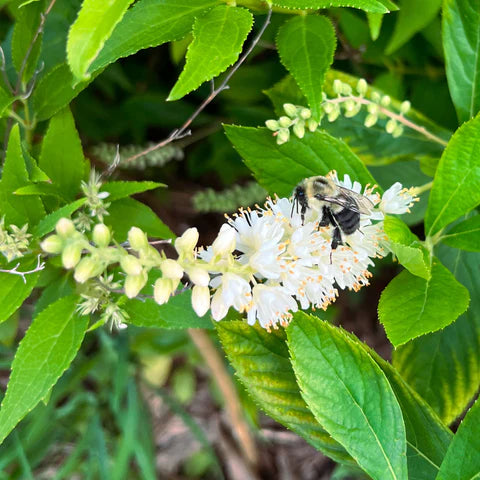
Sweet Pepperbush (Clethra alnifolia) is a deciduous shrub valued for upright spikes of intensely fragrant white flowers. Blooming from July into September, when relatively few shrubs remain in flower, it attracts a wide range of pollinating insects. Its glossy, toothed, dark green leaves generally turn golden yellow in autumn. The species develops a rounded, suckering form that commonly reaches 1 to 2 m tall in northern gardens. Hardy to Zone 3 in a protected location, it provides an elegant, natural, and enduring presence in moist landscapes, rain gardens, and woodland-edge plantings throughout Quebec and other cool regions of Canada.
Sweet Pepperbush grows in full sun, partial shade, or light shade and prefers acidic soil rich in organic matter that remains consistently moist. Reliable moisture is especially important during establishment and hot summer weather. The extremely small seeds should be surface sown because they require light for germination. Press them gently onto an acidic, moist growing medium without covering them, then maintain temperatures near 20 to 22°C. Organic mulch helps conserve moisture and protect the shallow root zone. A spring application of mature compost is generally sufficient; avoid high-nitrogen fertilizers, which may encourage excessive foliage at the expense of flowering and sturdy growth.
In the garden, Sweet Pepperbush suits rain gardens, shoreline buffers, informal hedges, naturalized borders, and moist woodland edges. Its fragrant flowers provide nectar for bees, butterflies, and other beneficial insects over several weeks. Dry seed capsules may persist into winter and can interest some birds. Suckering growth allows the shrub to develop a gradual colony that helps stabilize moist soil, although unwanted shoots can be removed to maintain a more compact outline. Pair Clethra alnifolia with Northern Blue Flag Iris, Black Chokeberry, Witherod Viburnum, and Cinnamon Fern to create a lush native planting that supports biodiversity and provides strong summer fragrance and autumn colour.

Sowing guide
It all startswith a seed.
Sowing depth
Surface sow without covering
Spacing / density
1 to 1.5 m (3.3 to 5 ft)
Germination temperature
20 to 22°C
Germination time
Slow germination, generally 30 to 90 days after stratification
Sowing period
Spring, or autumn in a cold frame
Propagation
Seed, cuttings, or sucker division
Cold stratification
Yes
Growing method
Surface sow Sweet Pepperbush seeds in spring on an acidic, moist growing medium without deeply covering them, as light promotes germination. Maintain consistent warmth and moisture until seedlings emerge. Transplant young plants once several true leaves have developed into a sunny or partially shaded location with cool, moist acidic soil. Organic mulch helps conserve moisture and maintain soil acidity. Although growth is moderate, Clethra alnifolia gradually develops into a dense, floriferous shrub with outstanding ornamental and ecological value.
Soil and care
The right care,at the right time.
Soil pH
Approximately 4.5 to 6.5
Minimum temperature
Approximately -34 to -40°C depending on exposure
Care level
Low
Watering
Regular; keep soil consistently moist
Soil type
Acidic, rich, loamy to sandy, moist to wet
Fertilization
Compost or organic matter in spring
Moisture
Moderate to high; prefers moist to wet acidic soil
Seasonal care
In spring, remove dead, broken, or winter-damaged branches before active growth begins. Apply compost and renew the organic mulch without piling it against the stems. Because the shrub flowers on new growth, light shaping may be completed in late winter to maintain a balanced form. During summer, water deeply whenever the surface begins to dry, particularly in hot weather. Remove suckers extending beyond the intended area or allow them to enlarge the colony. In autumn, retain the mulch to protect shallow roots and conserve moisture, while leaving persistent seed capsules for winter texture and wildlife interest.
Container growing
A garden,within reach.
Recommended pot size
45 to 60 cm (18 to 24 in)
Sweet Pepperbush grows well in large containers filled with an acidic, organic-rich growing medium that retains moisture while draining well. A deep container promotes healthy root development and abundant flowering. Water regularly so the growing medium never dries out completely during summer. Container-grown plants benefit from winter protection in colder climates.

Bloom and dimensions
Its place,in your garden.
Mature height
Approximately 2.4 m
Width / spread
Approximately 1.8 m without sucker control
Flower color
White
Foliage color
Dark green, turning golden yellow in autumn
Foliage type
Deciduous
Growth rate
Moderate
Growth habit
Upright, rounded and suckering shrub
Fragrance
Highly fragrant flowers with sweet, spicy notes
Bloom period
July to September
Fruiting
Small persistent dry capsules containing seeds
Days to maturity
First flowering generally after 3 to 4 years
Harvest
September to October
Garden associations
In goodcompany.
Companion plants
Northern Blue Flag Iris, Black Chokeberry, Witherod Viburnum, and Cinnamon Fern
Plants to avoid
Lavender, cotton lavender, rockrose, and other dry-soil plants
Frequently asked questions
Your questions,answered.
When should Sweet Pepperbush seeds be sown?
Sweet Pepperbush seeds are best sown in spring on the surface of an acidic growing medium kept consistently moist. Good light exposure encourages successful germination.
Why grow Sweet Pepperbush?
Its intensely fragrant midsummer flowers bloom when few other shrubs are flowering, making it an exceptional ornamental shrub and one of the best native plants for pollinators.
Does Sweet Pepperbush attract pollinators?
Yes. The nectar-rich flowers attract bees, butterflies, and many beneficial insects over an extended flowering period.
Can Sweet Pepperbush grow in wet soil?
Yes. Sweet Pepperbush naturally thrives in consistently moist soils and performs exceptionally well near ponds, streams, and in rain gardens.
When should Sweet Pepperbush be pruned?
Organic mulch and regular watering during dry periods are generally all that is required. Light pruning in spring helps maintain a dense, attractive shape.
Wildlife and pets
Life,around your plants.
Attracts birds
Yes
Native plant
Yes
Supporting wildlife
Bees and pollinators
For a great start to your seeds
The right extras.Right here.
Seed Starting Soil
Shop the collectionSeed starting supplies
Shop the collection