


Sale
Sold out

Native perennial
Asteraceae
Tall native pollinator perennials
Giant Ironweed
Vernonia gigantea
Product code : AKENE-0056
Tall North American perennial with violet-purple late-summer flowers, valued for adding height, structure, and pollinator resources to large naturalistic gardens.
- Quantity
- About 100 seeds
- Exposure
- Full sun to partial shade
- Life cycle
- Perennial
- Hardiness
- Observed Canadian range approximately Zone 6a to 7b
Discover the plant
Common nameGiant Ironweed
FamilyAsteraceae
GenusVernonia
Speciesgigantea
TypeNative perennial
Botanical nameVernonia gigantea
Reproducible seedsYes
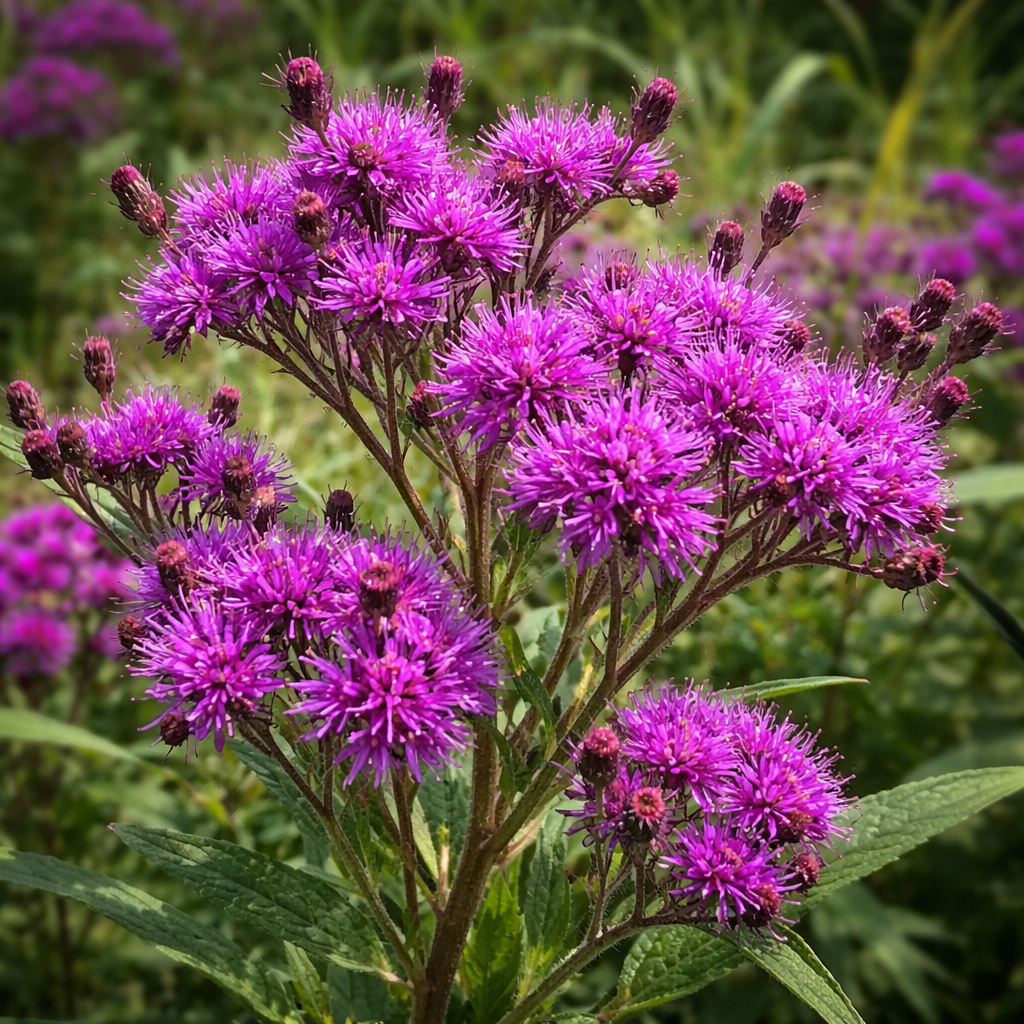
Giant Ironweed (Vernonia gigantea) is an imposing perennial in the aster family, producing tall upright stems topped with clusters of rich violet-purple flowers. Its spectacular bloom develops from late summer into early fall, when many other perennials are beginning to fade. Long green deciduous leaves create a substantial mass of foliage that emphasizes its strong vertical form. This North American species can reach an impressive height and quickly becomes a focal point in large perennial borders. Its late flowering season and architectural silhouette extend ornamental interest in naturalistic and pollinator-focused gardens well into autumn.
It performs best in full sun to partial shade and in moist, organically rich, loamy to clay soil with adequate drainage. Regular watering during establishment encourages strong root development, while established plants become more tolerant of fluctuating moisture. In Quebec, select a protected site with favourable winter conditions because actual hardiness can vary with local climate. A light application of compost in spring is generally sufficient to support vigorous growth. Stems may be cut back modestly in late spring when a shorter, more manageable plant is desired. Allow adequate spacing so its substantial mature size does not overwhelm nearby perennials.
This tall perennial is especially useful in pollinator gardens, wildflower meadows, naturalized borders, and large landscapes where pronounced vertical structure is desired. Its nectar-rich flowers attract bees, butterflies, and many other beneficial insects late in the growing season. It combines beautifully with Joe-Pye weeds, native asters, sneezeweeds, blue vervain, and taller ornamental or native grasses. Dried stems and flower heads may remain standing through winter to contribute structure and habitat for invertebrates. Giant ironweed is valued primarily for its ornamental and ecological qualities rather than for culinary use, making it particularly suitable for biodiversity-oriented plantings.

Sowing guide
It all startswith a seed.
Sowing depth
Approximately 2 mm
Spacing / density
75 to 90 cm (30 to 36 in)
Germination temperature
18 to 22 °C (64 to 72 °F)
Germination time
15 to 20 days after stratification
Sowing period
Fall or spring after cold stratification
Propagation
Stratified seeds or division of mature clumps
Cold stratification
Yes
Growing method
Sow seeds in autumn or spring after a period of cold stratification to improve germination. Cover the seeds lightly with approximately 2 mm (0.08 in) of fine growing medium and maintain consistent moisture without overwatering. Temperatures between 18 and 22°C (64 to 72°F) generally produce germination within 15 to 20 days. Transplant seedlings once they are sturdy enough to handle and gradually acclimate them to outdoor conditions. Plant them in rich, well-drained soil in full sun to partial shade, where this majestic native perennial will quickly become a dramatic focal point in ecological landscapes.
Soil and care
The right care,at the right time.
Soil pH
Acidic to neutral
Minimum temperature
Varies with climate and site conditions
Care level
Moderate
Watering
Regular during establishment; keep soil moist afterward
Soil type
Loamy to clay, fertile, moist, and well-drained
Fertilization
Light application of mature compost in spring
Moisture
Medium to high; moist to wet soil
Seasonal care
In spring, remove the previous year’s dry stems and spread a thin layer of compost around the crown. New stems may be cut back partially in late spring when reduced height is desired. During summer, keep the soil moist through extended dry periods, particularly around young plants. Spent flowers may remain in place to allow seeds to mature and to extend ornamental interest. In fall, leave several upright stems rather than cutting the entire plant to the ground; they add structure to the garden and can provide overwintering habitat for some invertebrates during the cold season.
Container growing
A garden,within reach.
Recommended pot size
40 to 60 L (10 to 16 gal)
Tall Ironweed can be grown in containers, but it requires a very large pot of at least 40 to 60 L (10 to 16 gal) to accommodate its impressive size. Use a rich, well-drained growing medium that remains evenly moist throughout the season. In exposed locations, discreet staking may be helpful because stems can reach several metres in height. Container growing allows gardeners to enjoy its spectacular flowers even on large patios or in urban gardens.

Bloom and dimensions
Its place,in your garden.
Mature height
Up to approximately 300 cm
Width / spread
Up to approximately 120 cm
Flower color
Violet-purple
Foliage color
Green
Foliage type
Deciduous
Growth rate
Moderate
Growth habit
Very upright and tall
Fragrance
Bloom period
Late summer to early fall
Fruiting
Dry achenes produced after flowering
Harvest
Seeds mature in late summer and fall
Garden associations
In goodcompany.
Companion plants
Spotted Joe-Pye weed, native asters, sneezeweed, blue vervain, tall grasses
Plants to avoid
Lavender, santolina, and other plants requiring very dry soil
Frequently asked questions
Your questions,answered.
When should Giant Ironweed be sown?
Seeds may be sown outdoors in autumn or in spring after cold stratification. Stratification generally improves germination and produces more vigorous seedlings.
Why is this plant valuable for pollinators?
Its abundant late-season purple flowers produce generous amounts of nectar and pollen at a time when many other perennials have finished blooming, attracting bees, butterflies, and numerous beneficial insects.
Can Giant Ironweed be grown in a small garden?
Yes, provided sufficient space is available. Because it commonly exceeds 2 m (6.5 ft) in height, Tall Ironweed is best used as a background plant in perennial borders.
Does Giant Ironweed require staking?
In windy, exposed locations, light staking may be beneficial. In sheltered sites, the strong stems generally remain upright without support.
Is Giant Ironweed easy to maintain?
Once established, Tall Ironweed is a durable, low-maintenance perennial that withstands harsh Canadian winters and returns reliably with abundant blooms every year.
Wildlife and pets
Life,around your plants.
Attracts birds
Yes
Native plant
Yes
Supporting wildlife
Bees and butterflies
For a great start to your seeds
The right extras.Right here.
Seed Starting Soil
Shop the collectionSeed starting supplies
Shop the collection





