


Sale
Sold out

Native plant
Asteraceae
Native woodland perennials
Zigzag Goldenrod
Solidago flexicaulis
Product code :
Native woodland perennial with late yellow flowers.
- Quantity
- About 150 seeds
- Exposure
- Partial shade
- Life cycle
- Perennial
- Hardiness
- 3 to 8
Discover the plant
Common nameZigzag Goldenrod
FamilyAsteraceae
GenusSolidago
Speciesflexicaulis
Cultivar
TypeNative plant
Botanical nameSolidago flexicaulis
Reproducible seedsYes
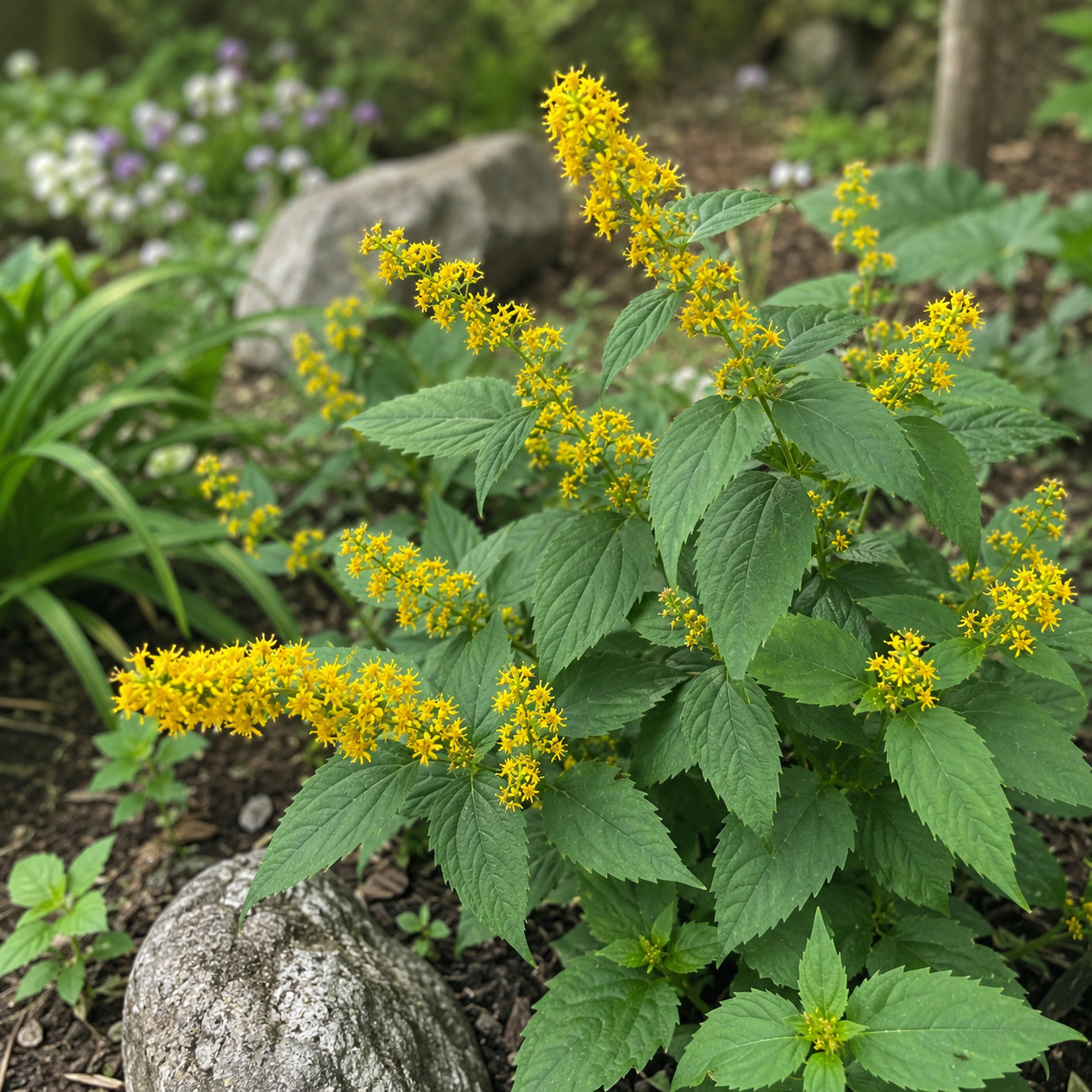
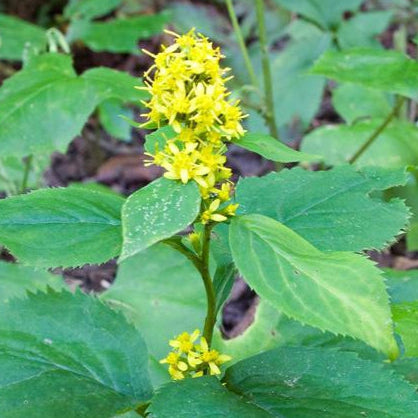
Zigzag Goldenrod (Solidago flexicaulis) is a native woodland perennial recognized for its arching stems, elegant foliage, and clusters of golden yellow flowers appearing late in the season. It brings light and movement to shaded gardens, forest edges, and naturalistic landscapes. Its late flowering period extends garden interest while providing an important resource for Quebec pollinators.
Zigzag Goldenrod (Solidago flexicaulis) prefers partial shade locations with rich, moist, loamy, and slightly acidic soils. Seeds are sown on the surface because light supports germination. Once established, this plant requires little maintenance and returns year after year. A light spring compost application and moderate watering during dry periods are usually enough to maintain healthy growth.
Zigzag Goldenrod (Solidago flexicaulis) is ideal for pollinator gardens, woodland plantings, and ecological restoration projects. Its yellow flowers attract bees, bumblebees, hoverflies, and butterflies during an important period of the season. It combines beautifully with Canada columbine, white snakeroot, and foamflower to create diverse plantings inspired by Quebec forest ecosystems.

Sowing guide
It all startswith a seed.
Sowing depth
Surface sowing
Spacing / density
30 to 45 cm (12 to 18 in)
Germination temperature
18 to 22 °C
Germination time
14 to 30 days after stratification
Sowing period
Fall or spring with optional stratification
Propagation
Seeds or clump division
Cold stratification
Yes
Growing method
Sow Zigzag Goldenrod seeds outdoors in autumn or in spring after a short period of cold stratification. Because the seeds require light to germinate, sow them on the soil surface without covering them. Keep the growing medium consistently moist until germination, which typically occurs within 15 to 30 days at 18–22°C (64–72°F). Solidago flexicaulis grows best in rich, slightly acidic woodland soils with partial shade. Once established, this native perennial gradually forms attractive colonies that provide outstanding late-season support for pollinators.
Soil and care
The right care,at the right time.
Soil pH
5.5 to 7.0
Minimum temperature
-40 °C (-40 °F)
Care level
Low
Drought tolerance
Yes
Watering
Moderate
Soil type
Rich slightly acidic loamy soil
Fertilization
Light compost in spring
Moisture
Low to moderate; moist but well-drained soil
Seasonal care
Remove dry stems and maintain regular moisture.
Container growing
A garden,within reach.
Recommended pot size
30 to 40 cm (12 to 16 in)
Zigzag Goldenrod grows well in deep containers filled with a rich, well-drained potting mix high in organic matter. Place containers in partial shade and keep the soil consistently moist without becoming waterlogged. Its moderate growth habit makes it well suited to patios, balconies, and urban gardens while providing valuable nectar for native pollinators throughout late summer.
Bloom and dimensions
Its place,in your garden.
Mature height
120 cm
Width / spread
60 cm
Flower color
Golden yellow
Foliage color
Green
Foliage type
Deciduous
Growth rate
Moderate
Growth habit
Upright, branching and lightly rhizomatous
Fragrance
Little to no fragrance
Bloom period
Late summer to fall
Fruiting
Dry achenes after flowering
Days to maturity
Usually flowers from the second year
Harvest
September to October
Garden associations
In goodcompany.
Companion plants
Canada columbine, white snakeroot, Jacob's ladder, bunchberry
Plants to avoid
Lavender, santolina, rosemary, sedum
Frequently asked questions
Your questions,answered.
When should Zigzag Goldenrod be sown?
Sow Zigzag Goldenrod seeds in autumn for natural winter stratification or in spring after a short cold stratification period. This improves germination and produces more uniform seedlings.
Does this plant attract pollinators?
No. Zigzag Goldenrod spreads gradually by forming small colonies, but it is generally far less aggressive than many other goldenrod species, making it an excellent choice for native gardens.
Can it grow in shade?
Yes. The late-season flowers attract native bees, bumblebees, butterflies, hoverflies, and many other beneficial pollinating insects when few other woodland plants are still blooming.
Is it invasive?
Yes. Solidago flexicaulis naturally thrives in partial shade and light woodland conditions, making it one of the best native wildflowers for shade gardens and forest edges.
Is it suitable for Quebec's climate?
Yes. Solidago flexicaulis is fully hardy in USDA Zones 3–8 and easily withstands harsh Canadian winters, returning reliably year after year.
Wildlife and pets
Life,around your plants.
Attracts birds
Yes
Native plant
Yes
Supporting wildlife
Native bees, butterflies, hoverflies, and other pollinators
For a great start to your seeds
The right extras.Right here.
Seed Starting Soil
Shop the collectionSeed starting supplies
Shop the collection





