


Trees and shrubs
Korean Fir 'Aurea'
Korean fir
Products and available quantities may vary between Brossard and Laval. To check a store’s inventory, please contact us directly.
Even better: visit us in store to discover the full selection available!
- Exposure
- Sun to partial shade
- Hardiness
- Zone 4
Discover the plant
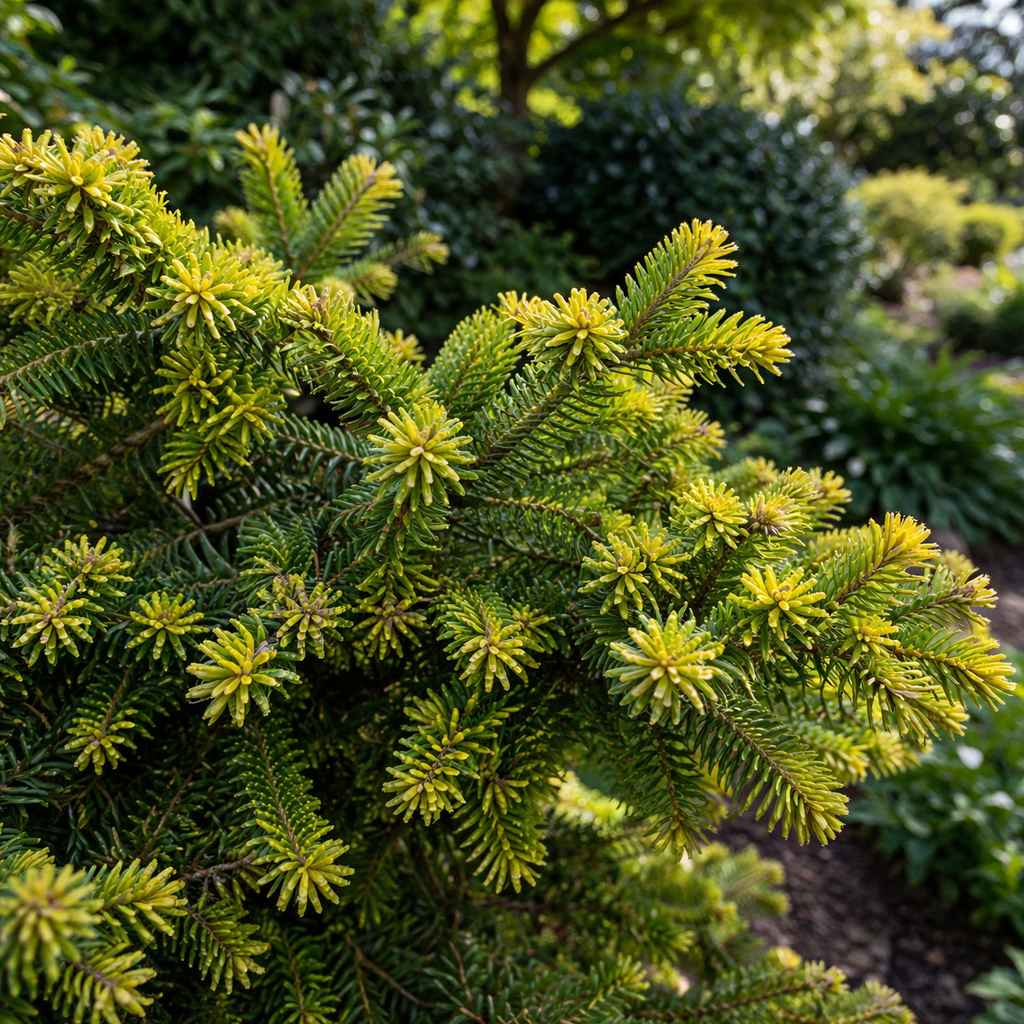
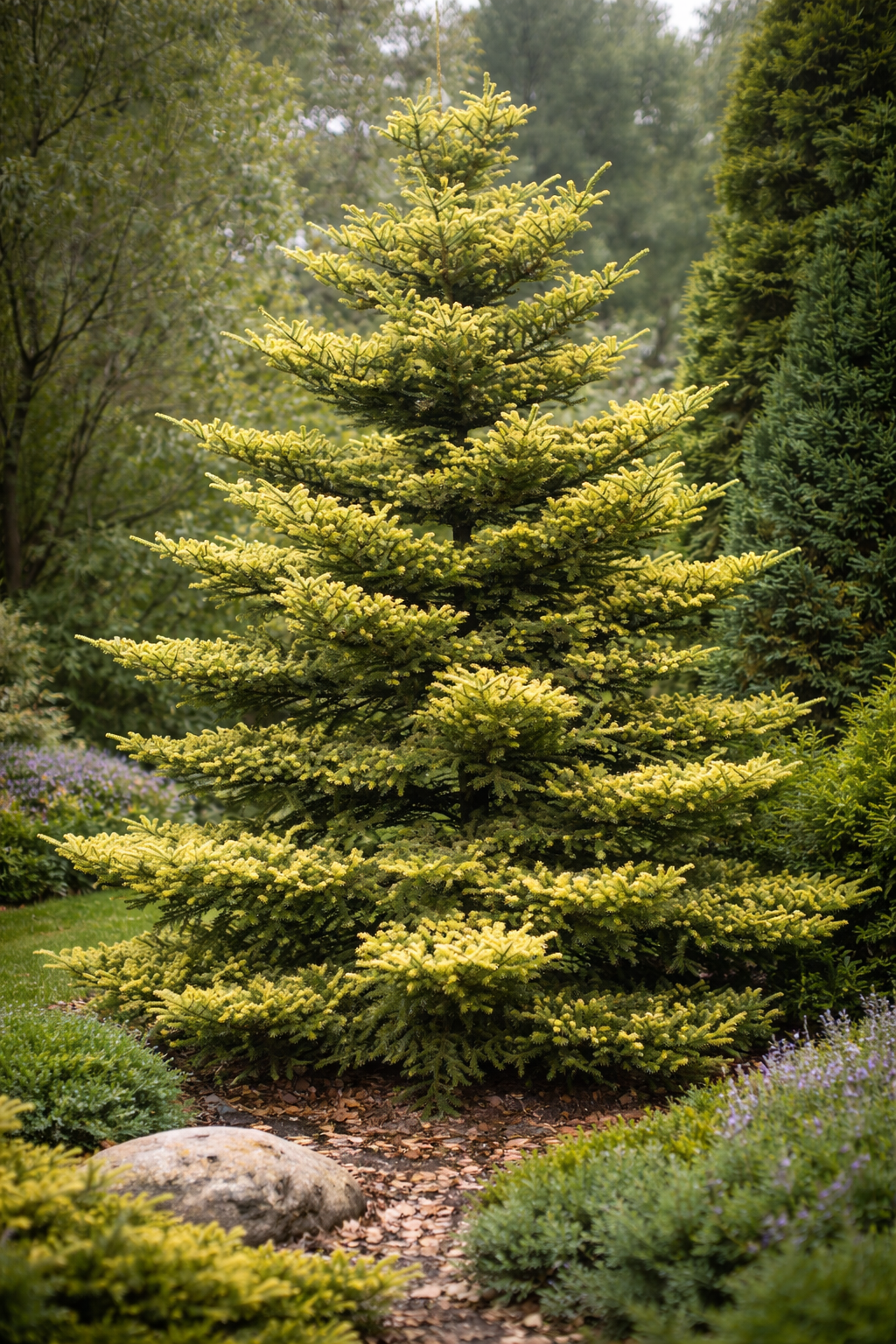
Korean Fir 'Aurea' (Abies koreana 'Aurea'). Abies koreana 'Aurea', or Korean Fir 'Aurea', is a bright ornamental conifer characterized by its golden foliage in spring and its naturally elegant conical habit. Its young golden-yellow shoots bring a lot of brilliance to the garden, then evolve into a softer light green as the season progresses. This color variation creates a lively and refined effect, particularly interesting in conifer beds, rockeries, or arrangements where a touch of light is desired.
One of the great attractions of Abies koreana 'Aurea' is its ability to produce, even when relatively young, very decorative upright bluish-purple cones. These cones contrast beautifully with the golden to light green foliage and enhance its interest as a star plant in a landscape design. Thanks to its slow growth and dense habit, it is very well suited for collector's gardens, carefully designed small spaces, elaborate rockeries, or as a standalone planting. Its presence is both structuring and delicate, allowing it to be used as a focal point without overwhelming the decor.
Well-suited for northern gardens when planted in good conditions, the Korean Fir 'Aurea' prefers fresh, well-drained, slightly acidic soil, as well as a sunny to semi-shady exposure. Too intense light can sometimes scorch the young golden foliage, so it is preferable to offer it a bright but balanced location. Regular watering during the first seasons promotes strong rooting and good establishment. With its hardiness, slow growth, spectacular cones, and bright foliage, Abies koreana 'Aurea' is an exceptional conifer for creating an elegant, contrasting, and durable design.

Planting guide
From planting to establishment.
Soil and care
The right care,at the right time.
Soil pH
Minimum temperature
Care level
Watering
Soil type
Fertilization
Moisture
Seasonal care
Container growing
A garden,within reach.
Bloom and dimensions
Its place,in your garden.
Mature height
Width / spread
Foliage color
Foliage type
Growth rate
Growth habit
Bloom period
Fruiting
Garden associations
In goodcompany.
Companion plants
Plants to avoid
Wildlife and pets