


Trees and shrubs
Amur Maple Flame
Products and available quantities may vary between Brossard and Laval. To check a store’s inventory, please contact us directly.
Even better: visit us in store to discover the full selection available!
- Exposure
- Sun to partial shade
- Hardiness
- Zone 2
Discover the plant
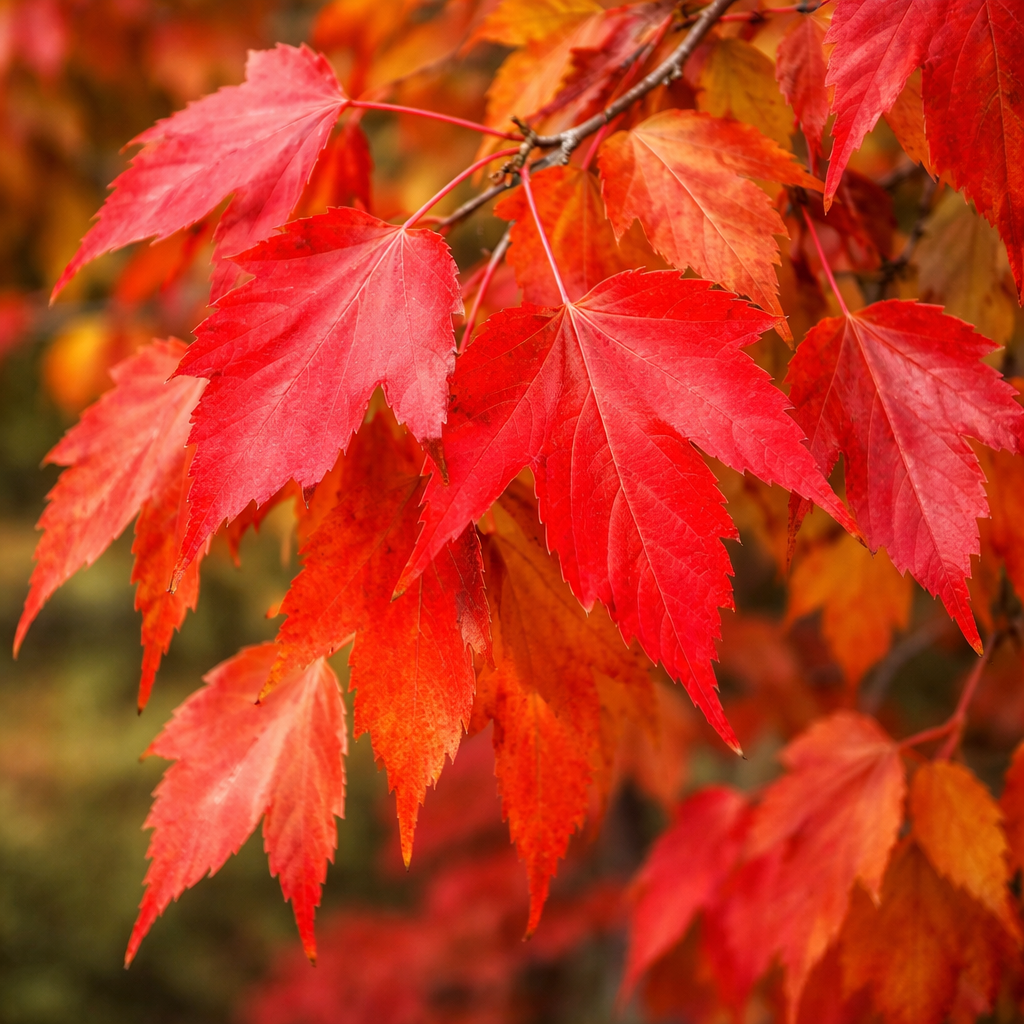
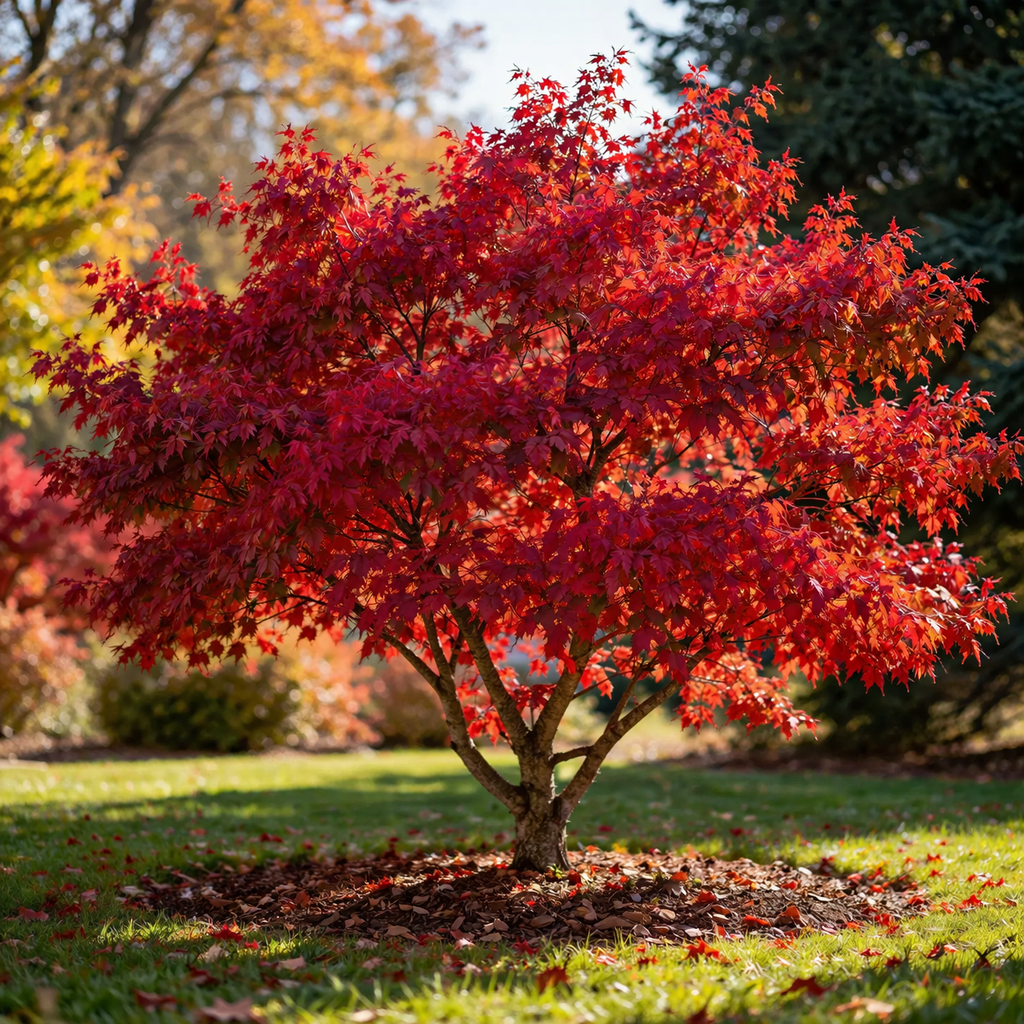
Amur Maple Flame (Acer ginnala ‘Flame’) is a seed-grown selection chosen for its improved habit and consistent fall colour. It forms a small, low tree or a large, multi-stemmed shrub with spreading branches and a rounded crown, growing to about 6 m in height and width. The slender, trilobed, toothed medium-green leaves turn brilliant orange-red to deep red early in autumn. Small, fragrant cream flowers appear with the young leaves, followed by numerous reddish samaras. As the lineage is propagated from selected seedlings, some variation between plants remains normal.
Very hardy in Zone 2, Flame prefers sun but tolerates light partial shade. Provide it with loose, fresh to moderately dry, well-drained soil; it adapts to loam, structured clay, amended sand, and some alkalinity. Once established, it tolerates urban heat, some salt, and occasional drought, but does not like standing water. Keep the root collar visible, spread 5 to 8 cm of mulch without touching the stems, and water deeply during the first two seasons. Analyze the soil before fertilizing: a surface compost is often sufficient.
Use Flame as a small specimen tree, a light screen, or a large lawn shrub, but only away from woodlands, banks, and other natural environments. Amur maple is a non-native Asian species that produces many viable seeds, escapes from gardens in Ontario, and is regulated in some North American regions. Check local regulations before planting, monitor for samaras, and remove volunteer seedlings; near a natural environment, choose a native tree or shrub adapted to the site instead. For an existing specimen, maintain an open framework, eliminate undesirable suckers, and avoid frequent shearing, which stimulates dense regrowth.

Planting guide
From planting to establishment.
Soil and care
The right care,at the right time.
Soil pH
Minimum temperature
Care level
Watering
Soil type
Fertilization
Moisture
Seasonal care
Container growing
A garden,within reach.
Bloom and dimensions
Its place,in your garden.
Mature height
Width / spread
Flower color
Foliage color
Foliage type
Growth rate
Bloom period
Fruiting
Garden associations
In goodcompany.
Companion plants
Plants to avoid
Wildlife and pets