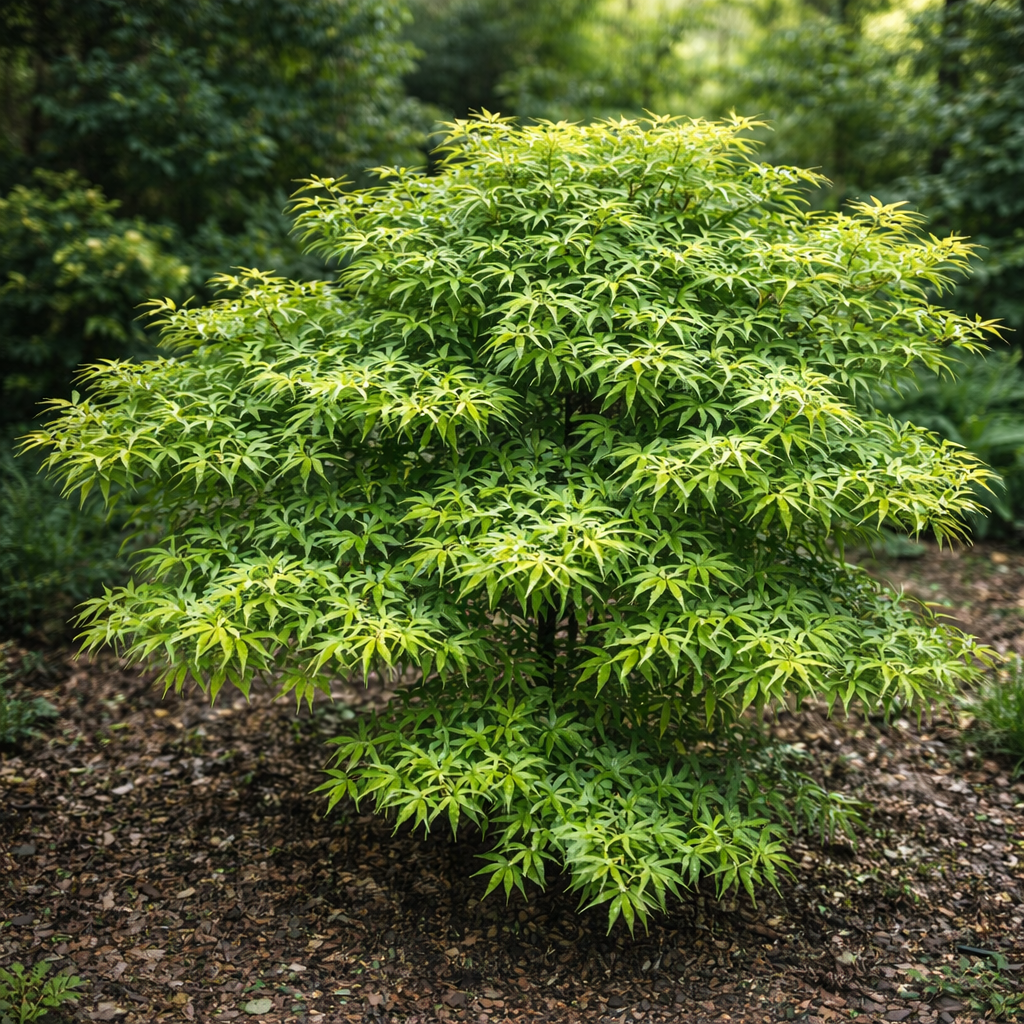
Dense rounded dwarf Japanese maple for Canadian Zone 5

Sharp’s Pygmy Japanese maple

Acer palmatum ‘Sharp’s Pygmy’

Sharp’s Pygmy Japanese maple is a genuine dwarf with a dense, naturally rounded habit. Small green leaves have five deeply divided, toothed lobes and turn orange to red in autumn before revealing fine branching. Very slow growth of about 8 to 15 cm per year generally produces a plant 1 to 1.5 m in both height and spread. In Canadian Zone 5, choose a protected position with gentle sun or partial shade and organic, evenly moist, well-drained soil. Water deeply during establishment, keep the root flare visible and prune very little. The 3-gallon format changes neither mature size nor the need to protect roots during temporary container culture in colder regions.
3 gallons; 6 gallons
Each store has its own inventory.

Products and available quantities may vary between Brossard and Laval. To check a store’s inventory, please contact us directly.

Even better: visit us in store to discover the full selection available!

Share
Quantity
3 gallons; 6 gallons
Exposure
Gentle sun to partial shade; protect from scorching sun and drying wind
Hardiness
Canadian Zone 5; a protected site is recommended

Discover the plant

Common nameSharp’s Pygmy Japanese maple; dwarf Japanese maple
FamilySapindaceae
GenusAcer
Speciespalmatum
CultivarSharp’s Pygmy
TypeDwarf deciduous shrub or very small tree
Botanical nameAcer palmatum ‘Sharp’s Pygmy’

Sharp’s Pygmy Japanese maple (Acer palmatum ‘Sharp’s Pygmy’) is a genuine dwarf cultivar with a dense, naturally rounded habit, selected from a chance seedling discovered in Oregon during the 1980s. Small green palmate leaves have five deeply divided, toothed lobes. In autumn they turn mainly orange to red before falling and revealing fine winter branching. Small reddish-purple flowers may appear in spring and be followed by a few discreet samaras. Very slow growth, generally about 8 to 15 cm per year, produces a mature outline approximately 1 to 1.5 m in both height and spread. Older plants remain individual and may develop beyond typical garden measurements.

In Canada, grow Sharp’s Pygmy in a protected Zone 5 position sheltered from drying wind, salt, scorching sun and late frost. It accepts gentle sun or partial shade; light afternoon shade helps prevent leaf scorch. Provide organic, evenly moist, slightly acidic to neutral soil with dependable drainage. Keep the root flare visible, water deeply through the first two growing seasons and maintain 5 to 8 cm of mulch without touching the trunk. A thin surface layer of mature compost is often enough; strong or repeated feeding encourages vulnerable soft growth. Prune very little so the rounded outline and fine branching can develop naturally without repeated correction or stress.

Place this Sharp’s Pygmy Japanese maple beside a patio, in a cool rock garden, protected courtyard, Japanese-style garden or detailed planting bed. It also suits bonsai training, but remains an outdoor tree requiring cold dormancy and added root protection in a pot. Reserve approximately 1 to 1.5 m in both directions and keep the crown away from hot walls. The 3-gallon listing describes the young plant offered for sale, not its final dimensions. Sheltered in-ground planting gives roots more stable moisture and temperature than an exposed container in colder Canadian regions. Its miniature scale rewards close viewing without eliminating normal long-term growth or seasonal care.

Sharp’s Pygmy Japanese maple with a dwarf, dense, rounded habit and small green leaves divided into five deeply cut, toothed lobes. Foliage turns orange to red in autumn. The outline represents a mature specimen approximately 1 to 1.5 m across in a protected Canadian Zone 5 site.

Planting guide

From planting to establishment.

Spacing / density Space 1 to 1.5 m (3 to 5 ft) apart according to mature width
Best planting time Spring after hard frost or early autumn
Propagation Grafting to preserve the cultivar faithfully

Soil and care

The right care,at the right time.

Soil pH

Acidic to neutral

Minimum temperature

About -29 °C (-20 °F)

Care level

Moderate

Watering

Water slowly and deeply after planting, then keep the root ball evenly moist through the first two growing seasons. Check moisture beneath the mulch before irrigating so both drought and excess water are avoided. During a heat wave, water in the morning before leaf margins brown. Reduce frequency gradually in autumn without allowing the root ball to dry before freeze-up.

Soil type

Choose loose, organic-rich loam that remains fresh and drains very well. Where soil is poor, apply mature compost at the surface without creating an isolated pocket of amended soil. Avoid compacted clay, waterlogged depressions, alkaline construction fill and salt. A broad mulch ring protects fine roots while leaving the root flare visible and accessible for inspection through every Canadian season.

Fertilization

Fertilize sparingly. A thin surface layer of mature compost is often sufficient in suitable soil. When growth or colour appears abnormal, test the soil before adding fertilizer. Excess nitrogen produces soft shoots that are more vulnerable to cold. Stop nitrogen applications early enough for new growth to harden before the local Canadian winter and always follow product directions. Always follow labelled rates.

Moisture

Evenly moist fresh soil, never waterlogged; protect from drying wind

Seasonal care

In spring, inspect the trunk, graft union, root flare and fine branch unions after snowmelt. Restore 5 to 8 cm of mulch without covering bark, remove tight ties and water when rainfall is inadequate. Compare bud break across several branches before declaring late-frost injury. In summer, check moisture beneath mulch and drainage when margins brown; also observe wind, reflected heat and afternoon sun. Watch for aphids, mites, scales, leaf spots, cankers and Verticillium symptoms, then obtain a diagnosis before treatment. During dormancy, remove only dead, broken, diseased or crossing wood and rootstock shoots with a clean tool. Do not shear the dwarf crown and never top the plant. In autumn, record the shift to orange and red, water before freeze-up when soil is dry and collect heavily spotted leaves. In winter, direct salt-laden snow elsewhere, protect a young trunk from rodents without tightening the guard and insulate a temporary container. Each year, photograph the outline, verify that neighbouring plants do not overrun it and test irrigation depth. For bonsai culture, monitor moisture and winter root protection more frequently. This routine preserves the naturally dense form with few interventions and connects damage to actual conditions before care is changed. Record major weather events and reassess shade as nearby trees grow. Note irrigation dates and compare exposed foliage with protected inner leaves after every heat wave.

Container growing

A garden,within reach.

Suitable for a large stable, drained and frost-resistant container; insulate roots in winter for the region
Érable japonais Sharp’s Pygmy ‘Sharp’s Pygmy’ (Acer palmatum)

Bloom and dimensions

Its place,in your garden.

Mature height

1 to 1.2 m (39 to 48 inches)

Width / spread

1.5 m (5 feet)

Flower color

Reddish purple, discreet

Foliage color

Green in spring and summer; orange to red in autumn

Foliage type

Deciduous

Growth rate

Very slow, approximately 8 to 15 cm per year

Growth habit

Dwarf, dense, rounded and broadly upright

Bloom period

Small reddish-purple flowers may appear in spring as leaves expand. They remain secondary to the dwarf habit and autumn colour. Abundance varies with age, site and late frost. Some insects may visit them, so avoid non-targeted insecticides during this period. A few discreet winged samaras may form after pollination. Limited bloom on a young specimen is normal and does not reduce the cultivar’s ornamental value. Observe more than one season before drawing conclusions about flowering or fruit production.

Fruiting

Small winged samaras may follow the flowers and mature from late summer into autumn, but they often remain inconspicuous. Presence varies with plant age, pollination and late frost. Seedlings do not reproduce Sharp’s Pygmy faithfully because the cultivar’s habit is maintained by grafting. Remove misplaced volunteers before they compete with roots. Do not use fruit quantity as a measure of identity or health. Lack of samaras on a young specimen is normal and reduces neither the dwarf outline nor autumn foliage colour. Keep the graft union visible so rootstock growth can be distinguished from the named cultivar.
Érable japonais Sharp’s Pygmy ‘Sharp’s Pygmy’ (Acer palmatum)

Garden associations

In goodcompany.

Companion plants

Pair Sharp’s Pygmy with dwarf green conifers, compact ferns, sedges, foamflowers, coral bells, bush honeysuckles and small native perennials suited to evenly moist but drained soil. Their simple forms emphasize the small leaves and rounded crown without overwhelming it. Establish them toward the perimeter without cutting roots, covering the flare or trapping branches. Avoid invasive groundcovers and plants requiring saturated soil. Preserve open access for irrigation and graft-union inspection. Monitor competition carefully because the maple’s very slow growth lets vigorous companions overtake it quickly. Match moisture needs and adjust neighbours before they touch the crown or block light.

Frequently asked questions

Your questions,answered.

How large does Sharp’s Pygmy become?
Sharp’s Pygmy generally reaches about 1 to 1.5 m in both height and spread after many years. Iseli Nursery gives a garden size of approximately 1.2 m in each direction, while other references note that some very old specimens can become larger. Annual growth of about 8 to 15 cm remains very slow, but the cultivar is not motionless. Reserve mature space at planting and do not confuse the 3-gallon format with final size. Photograph the outline on similar dates and measure it every two or three years. This record prevents unnecessary pruning simply because the crown has begun to fill the space intentionally provided for it. Individual development varies with site and age.
Why do Sharp’s Pygmy leaves turn brown?
Leaf margins can brown when hot sun, drying wind, reflected heat or salt dehydrates foliage. A dry root ball, saturated roots or late frost can produce a similar appearance. First check moisture beneath mulch and drainage, then record exposure and timing. Water deeply when needed, direct salt-laden snow elsewhere and provide light afternoon shade without enclosing the crown. Do not add fertilizer automatically. When dieback progresses across several branches, look for leaf spots, cankers or Verticillium symptoms and obtain a diagnosis before treatment. Photograph the damage so its distribution and development can be compared the following year. Healthy inner foliage beside damaged exposed leaves often indicates environmental scorch rather than a whole-plant disorder.
Can Sharp’s Pygmy grow in a container in Canada?
Yes, its dwarf growth suits a large stable container at least 50 to 60 cm wide and deep with generous drainage holes. Use an aerated medium, keep the root flare visible and water when the upper layer begins to dry. Container roots are much more exposed to cold, wind and freeze-thaw cycles than roots in the ground. Before winter, move the pot to a sheltered position and insulate the root ball without trapping water. Do not bring the dormant tree into a warm room. Repot before roots circle densely. In Canadian Zone 5, sheltered in-ground planting remains the most reliable long-term option even for this miniature cultivar. Check moisture frequently during summer heat.
Is Sharp’s Pygmy suitable for bonsai culture?
Yes. Small leaves, short internodes, fine branching and slow growth suit bonsai training. This use still requires additional skill: the tree must remain outdoors, experience genuine cold dormancy and receive winter protection appropriate for roots held in a small volume of growing medium. Check moisture more often than for an in-ground plant without allowing standing water. Make structural cuts gradually and avoid removing too much foliage or root mass at one time. A specialist workshop or local bonsai club can help plan repotting, wiring and overwintering. For simpler care, allow the cultivar to develop its naturally rounded form in protected ground. Never treat bonsai as an indoor houseplant during the growing or dormant season.
How should Sharp’s Pygmy Japanese maple be pruned?
Respect the dwarf, dense, rounded habit. During dormancy, remove only dead, broken, diseased or crossing wood and every confirmed rootstock shoot. Use clean tools and cut just outside the branch collar without leaving a stub. Never top the plant or shear it into a ball. Correct distance from walls and paths reduces future pruning. Observe the structure through several seasons before removing a healthy branch because very slow growth replaces an unnecessary cut only gradually. Ask an experienced practitioner to handle a major crack or advanced bonsai pruning. Keeping the root flare and graft union visible also simplifies annual inspection and prompt removal of rootstock shoots. Minimal intervention preserves the fine branch structure customers selected.

Wildlife and pets

Life,around your plants.

Supporting wildlife

Small spring flowers may be visited by some insects and the dense crown can provide occasional shelter. Any samaras may supply food, but their presence varies and is not Sharp’s Pygmy’s principal attraction. Add several locally native flowering and fruiting plants to support more wildlife, maintain diverse layers and avoid non-targeted pesticides around the maple.