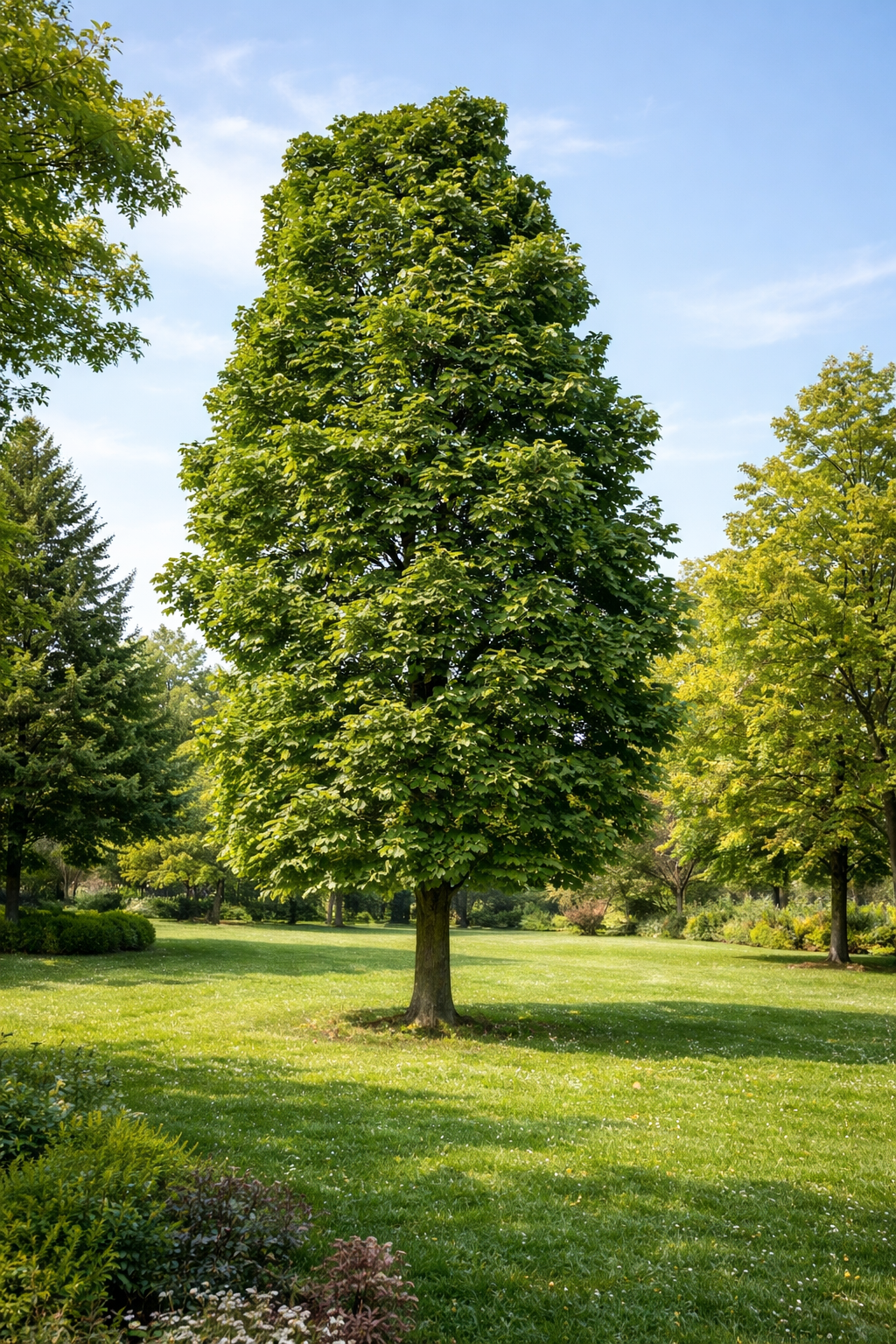
Large columnar urban maple

Columnar Norway maple

Acer platanoides ‘Columnare’

Columnare Norway maple (<em>Acer platanoides</em> ‘Columnare’) is a historic cultivar with stout ascending branches held almost parallel to the trunk. Its dense column reaches approximately 11 to 15 m high and 4 to 5 m wide. Dark-green leaves are smaller and more shallowly lobed than those of the typical species, then turn yellow to golden yellow in autumn. Hardy to Zone 4, it tolerates several urban conditions. Acer platanoides is nevertheless non-indigenous and invasive in several Canadian regions; Quebec ranks it as high risk and advises against planting except in strongly urbanized sites with difficult conditions. Prefer a suitable regional tree for any new project near natural habitat.
Each store has its own inventory.

Products and available quantities may vary between Brossard and Laval. To check a store’s inventory, please contact us directly.

Even better: visit us in store to discover the full selection available!

Share
Exposure
Full sun to partial shade
Hardiness
Zone 4

Discover the plant

Common nameColumnare columnar Norway maple
FamilySapindaceae
GenusAcer
Speciesplatanoides
CultivarColumnare
TypeLarge ornamental deciduous tree with a narrow columnar form
Botanical nameAcer platanoides ‘Columnare’

Columnar Norway maple (Acer platanoides ‘Columnare’) is a historic cultivar raised at the Simon-Louis nursery near Metz around 1855. Stout branches ascend almost parallel to the main stem, creating a dense column that remains bold in winter. Dark-green leaves are smaller and more shallowly lobed than those of the typical species, then turn yellow to golden yellow in autumn. Yellow-green spring flowers may produce abundant samaras. Plan for approximately 11 to 15 m in height and 4 to 5 m in spread; a very old specimen may become larger. This Zone 4 shade tree is neither a hedge nor a small-yard choice.

Where regional guidance permits it in a Canadian urban setting, provide full sun or partial shade and a large volume of well-drained soil. The species tolerates several textures, alkaline pH, pollution, heat and some drought after establishment, but shallow roots respond poorly to waterlogging, compaction and undersized planting pits. Keep the root flare visible, apply 5 to 8 cm of mulch without touching the trunk and water deeply through the first two growing seasons. Maintain one central leader and correct weak unions early; avoid topping, shearing and major root-zone cuts. Check municipal restrictions, overhead clearance and available rooting space before purchase.

Acer platanoides is non-indigenous and invasive in several Canadian regions; Quebec classifies it as a high-risk invasive plant and advises against planting except in strongly urbanized sites with difficult conditions. Never plant Columnare beside woodland, shorelines, green corridors or natural areas. For a new narrow tree, prefer a suitable regional species or an authorized sterile cultivar adapted to the site. Where a mature specimen already provides useful canopy, keep it structurally safe, remove seedlings and plan gradual replacement with indigenous trees. The narrow crown does not reduce seed-dispersal risk. Responsible planning weighs urban shade against documented impacts on native regeneration.

Columnar Norway maple (<em>Acer platanoides</em> ‘Columnare’)

Planting guide

From planting to establishment.

Spacing / density Allow at least 12 to 14 m (39 to 46 ft) of clearance for the crown
Best planting time Spring or early autumn, only where local guidance permits planting
Propagation Professional grafting to preserve Columnare faithfully

Soil and care

The right care,at the right time.

Soil pH

Acidic, neutral or alkaline

Minimum temperature

Approximately −29 to −34 °C depending on microclimate (Zone 4)

Care level

Moderate to high because of invasive seedlings

Drought tolerance

Yes

Watering

Water deeply at planting, then keep the root ball and surrounding soil evenly fresh for at least two growing seasons. Check beneath mulch weekly during hot weather and adjust frequency to rainfall, drainage and soil texture. An established tree tolerates moderate drought, but prolonged stress encourages decline and some health problems. Avoid shallow daily sprinkling and water pooling against the trunk. Extend irrigation across the expanding root zone rather than only beside the stem.

Soil type

Columnare Norway maple accepts clay, loam or sandy soils across a broad pH range when drainage is generally adequate. It performs best in fresh, loose soil with generous rooting volume. Avoid small pits enclosed by concrete, standing water and compacted fill. Despite its tolerance, the tree develops stronger structure where roots have continuous permeable soil protected by organic mulch. Confirm local ecological guidance before selecting a planting site.

Fertilization

Do not fertilize a healthy tree routinely. Maintain a broad mulch zone and add a thin layer of mature compost in spring without covering the root flare. If growth slows or foliage pales, test the soil before applying fertilizer. Correct drainage, compaction, irrigation and root damage first. Excess nitrogen creates tender growth and needlessly accelerates a species that is already vigorous and invasive. Avoid fertilizer movement into drains or neighbouring natural areas.

Moisture

Fresh to moderately moist, well-drained soil; tolerates dry conditions once established

Seasonal care

In spring, inspect the trunk, root flare, branch unions and winter damage. Maintain 5 to 8 cm of mulch without touching bark and irrigate if soil dries. Find seedlings within and beyond the crown, pulling them while soil is moist and monitoring neighbouring woodland edges. During summer, watch for aphids, scale, cankers, wilt and girdling roots. Tar spot often produces black circles on leaves late in the season; it is primarily cosmetic but can help confirm the species. Reduce compaction and water deeply during prolonged drought. Remove only dead, damaged, crossing or hazardous wood, preferably after leaves expand to reduce sap bleeding. Retain a central leader, preserve branch collars and hire a certified arborist for large cuts. In autumn, collect samaras before dispersal, place fruiting debris in household waste rather than compost and continue irrigation until freeze-up when soil stays dry. In winter, keep salt-laden snow away from the trunk and protect young stems from rodents without binding guards. Each year, report spread into natural areas through the appropriate provincial program and evaluate progressive replacement with diverse native trees. Keep records of seedlings removed so expanding dispersal does not go unnoticed. Photograph the same monitoring areas in spring and autumn, coordinate removal with neighbours when samaras cross property lines, and inspect drains, fence lines and disturbed soil where seedlings may be overlooked. Review the succession plan with an arborist as replacement trees gain size.

Bloom and dimensions

Its place,in your garden.

Mature height

Approximately 11 to 15 m (35 to 49 ft)

Width / spread

Approximately 4 to 5 m (13 to 16 ft)

Flower color

Yellow-green

Foliage color

Dark green in summer; yellow to golden yellow in autumn

Foliage type

Deciduous

Growth rate

Moderate

Growth habit

Narrow columnar with stout ascending branches

Bloom period

Many upright clusters of small yellow-green flowers appear in spring, often before or while leaves unfold. Together they are visible across the branches even though each flower is small. They may provide an early resource for some insect pollinators. Flowering is followed by abundant fertile samaras; in Canadian regions where the species is invasive, this fruiting requires careful monitoring and rigorous removal of volunteer seedlings around the tree and near natural areas.

Fruiting

Fruits are paired samaras whose wings spread almost horizontally. Green at first, they turn yellow and then brown as they mature in late summer before wind or water disperses them in autumn. Each samara carries a seed capable of germinating after extended cold. Their abundance drives invasive spread: remove volunteer seedlings, do not transport fruit and keep fruit-bearing debris out of compost and natural areas. Monitor nearby woodland edges each spring.
Columnar Norway maple (Acer platanoides ‘Columnare’)

Garden associations

In goodcompany.

Companion plants

For a new Canadian landscape, consider regionally appropriate sugar maple, red maple, hackberry, bur oak or basswood according to soil, space and exposure. Beneath an established Columnare Norway maple, do not force demanding perennials into dense shade and shallow roots. Maintain a broad mulch zone instead, then plant native succession trees and shrubs well beyond the main root system so they can establish before progressive replacement. Choose a diverse mix rather than creating another single-species canopy vulnerable to pests or disease.

Frequently asked questions

Your questions,answered.

How wide does Columnare Norway maple become?
Allow approximately 4 to 5 m of width for a mature landscape specimen and 11 to 15 m of height. European references indicate that a very old tree may become larger, approaching 20 m by 8 m under favourable conditions. The name Columnare therefore describes a crown narrower than the typical species, not a 2 m-wide spire that remains permanently confined. Measure clearance from the trunk centre, leave room for ascending branches and reserve generous rooting volume. Correct placement prevents shearing, large corrective cuts and conflicts with walls, wires, roads or neighbouring properties. Customers should distinguish common nursery planning dimensions from the ultimate size possible over many decades.
How much space does Columnare require?
Allow approximately 11 to 15 m in height and 4 to 5 m in spread, or about 45 by 40 ft. The crown remains upright and oval and full, not narrow. Keep the trunk away from wires, buildings, foundations, utilities, roadways and other large trees, then protect substantial uncompacted soil volume. Shallow roots and dense shade also make turf difficult beneath an older specimen; a broad mulch ring is preferable. Do not try to contain a poorly placed tree through topping. Before any new planting, account for the species’ invasive status in the region and choose a suitable indigenous tree whenever possible. Mature dimensions and ecological guidance must both be satisfied, not treated as separate considerations.
How large does Columnare Norway maple become?
Columnare belongs to Acer platanoides, a European species considered invasive in several Canadian regions and ranked high risk in Quebec. The tree produces abundant samaras carried by wind or water. Shade-tolerant seedlings create dense cover and can compete with indigenous trees and woodland plants. A named cultivar remains part of the same species and does not automatically lose that potential. Do not plant it near woodland, shorelines, green corridors or protected areas; remove seedlings and check provincial and municipal guidance. For a new landscape, select an indigenous tree suited to available space, drainage, salt exposure and the local hardiness zone. Regional rules take precedence over general nursery hardiness information.
How should an established Columnare be managed?
A sound large tree may still provide useful canopy. Have the trunk, branch unions, roots and deadwood assessed by a qualified arborist when defects appear. Maintain 5 to 8 cm of mulch without touching the trunk, water deeply during drought and prevent compaction. Collect samaras where practical and pull seedlings before roots enlarge, especially toward woodland and shorelines. Do not top the tree or remove it without considering safety, regulations and canopy loss. Instead, plan gradual replacement using several indigenous trees so future shade is established before removal becomes necessary. Urgent structural hazards still require professional action, while routine monitoring prevents ecological management from being confused with unsafe neglect.
Which trees can replace Columnare in Canada?
Sugar maple suits large sites with deep, fresh, well-drained, low-salt soil. Red maple accommodates wetter or more acidic ground depending on regional provenance. Hackberry handles several urban conditions, bur oak becomes a durable large tree and American basswood favours fertile soil while offering insect-accessible flowers. The best choice depends on hardiness zone, soil volume, drainage, pH, salt, wires and available width. Use indigenous regional species and diversify the canopy instead of replacing every maple with one clone. A local nursery or arborist can confirm provenance and site suitability. In western or northern Canada, select locally indigenous alternatives rather than assuming eastern species are native or adapted everywhere.

Wildlife and pets

Life,around your plants.

Attracts birds

Yes

Supporting wildlife

Spring flowers may feed some insects and samaras may be eaten by birds or small mammals. This value does not offset the ecological risk: the species is non-native, produces abundant seedlings and reduces plant diversity beneath its canopy. Choose regionally native trees and shrubs to support Canadian wildlife more effectively over the long term.