


Large Canadian Zone 3 native maple for extensive moist to wet sites
Silver maple
Acer saccharinum
Products and available quantities may vary between Brossard and Laval. To check a store’s inventory, please contact us directly.
Even better: visit us in store to discover the full selection available!
- Quantity
- 200 cm and 250 cm
- Exposure
- Full sun; light partial shade tolerated
- Hardiness
- Canadian Zone 3
Discover the plant
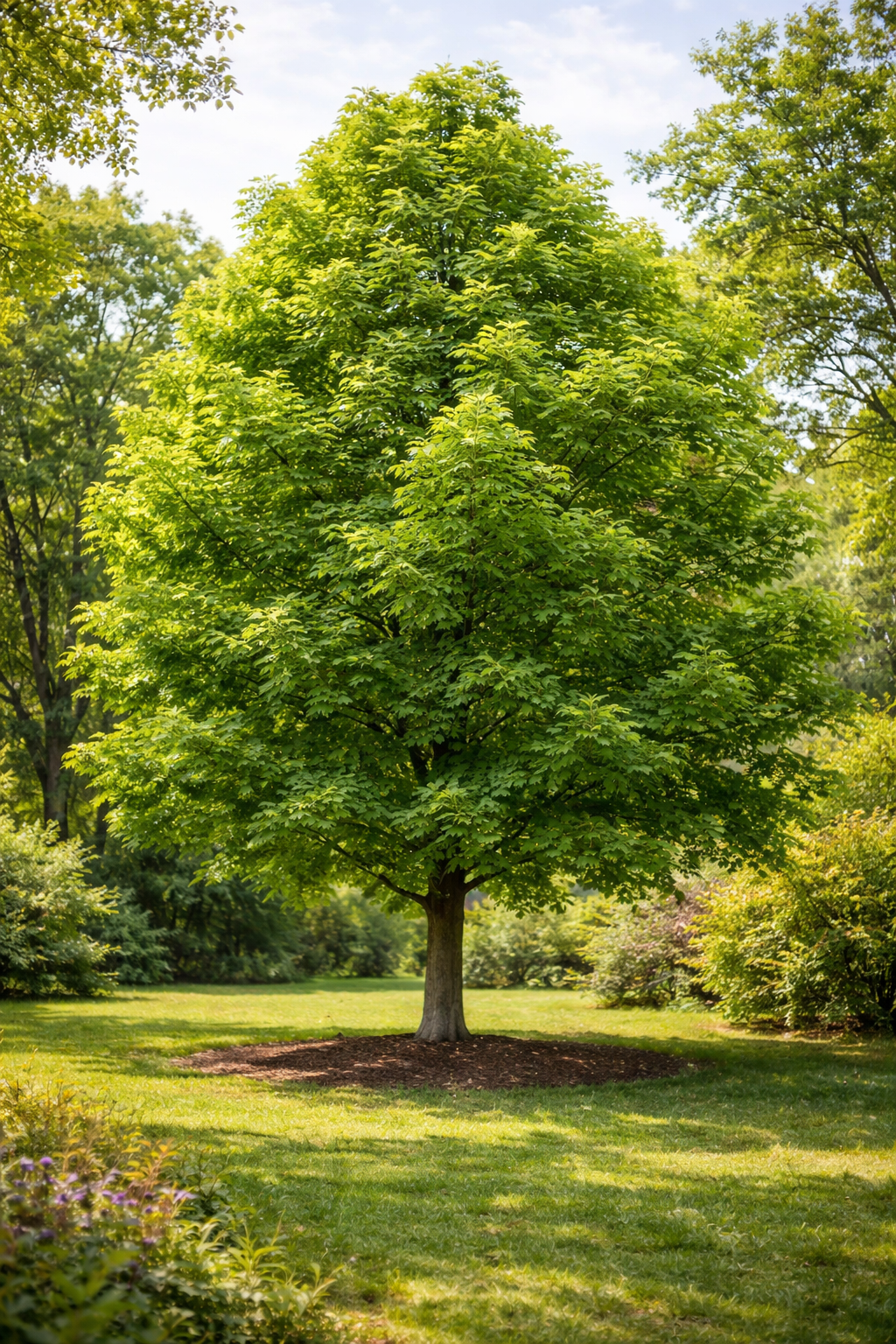
Silver maple (Acer saccharinum) is a large deciduous tree native to eastern North America and naturally associated with floodplains, shorelines and alluvial soils. Fast growth produces a broad, open and irregular crown, generally 20 to 30 m high and 12 to 20 m wide. Deeply cut leaves are light green above and silver beneath, flashing in the wind before becoming pale yellow to yellow-brown in autumn. Petal-free greenish to reddish flowers appear very early in spring before the leaves, followed by large paired samaras that fall in late spring. Older grey bark separates into shaggy strips and adds winter texture to an increasingly massive trunk.
Hardy in Canadian Zone 3, silver maple performs best in full sun and rich, moist to wet soil that still supplies oxygen to roots. It tolerates clay, temporary flooding and, once established, short drier periods, although consistent moisture supports its best growth. Water deeply through the first two growing seasons, keep the root flare visible and maintain 5 to 8 cm of mulch without touching the trunk. Avoid salt, compaction and changes in soil grade. Begin structural training early because weak wood and narrow branch unions can fail under wind, wet snow or ice. Inspect the crown after severe weather and use a certified arborist for elevated or large-branch work.
Reserve this silver maple tree for very large properties, parks, managed shorelines and rain gardens with an extensive soil volume. Vigorous shallow roots can lift surfaces and enter already damaged pipes, so keep the tree well away from buildings, sidewalks, parking areas, drains and underground services. Do not plant beneath overhead lines or where a falling branch could threaten a frequently used space. In a suitable Canadian site, rapid growth creates shade, silver leaf undersides animate the landscape and the crown provides food and shelter for wildlife. Long-term success depends on honest spacing, early branch-structure management and professional inspection as large limbs mature.

Planting guide
From planting to establishment.
Soil and care
The right care,at the right time.
Minimum temperature
Care level
Drought tolerance
Watering
Soil type
Fertilization
Moisture
Seasonal care
Bloom and dimensions
Its place,in your garden.
Mature height
Width / spread
Flower color
Foliage color
Foliage type
Growth rate
Growth habit
Bloom period
Fruiting
Garden associations
In goodcompany.
Companion plants
Frequently asked questions
Your questions,answered.
Why do silver maple leaves look white in the wind?
How far should silver maple be planted from buildings and pipes?
Does silver maple tolerate flooding and drought?
Why can silver maple break during storms?
Is silver maple suitable for a small urban yard?
Wildlife and pets