

Sale
Sold out

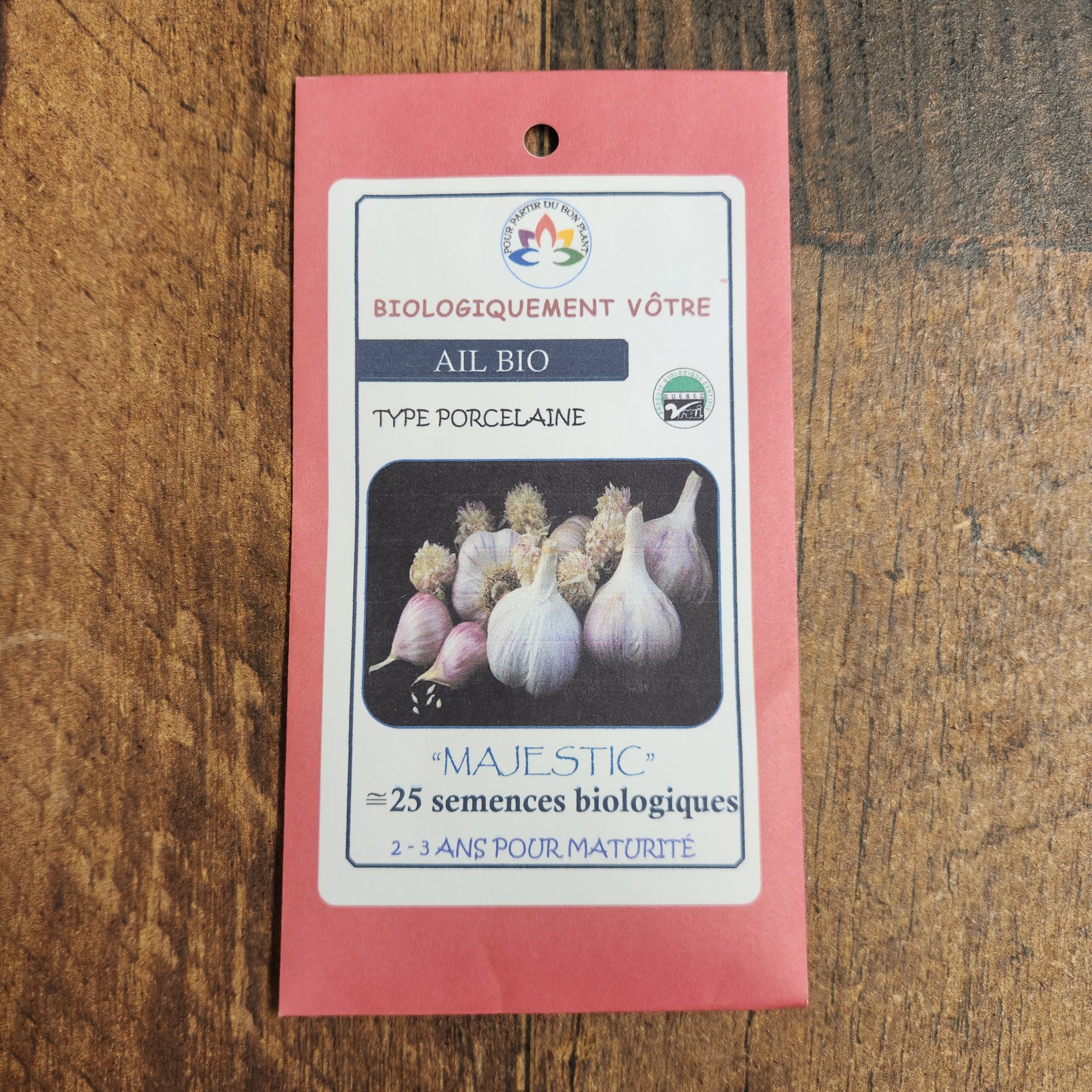
Porcelain hardneck garlic bulb for planting
Amaryllidaceae
Organic Porcelain hardneck garlic for planting
Organic ‘Majestic’ hardneck garlic (Allium sativum var. ophioscorodon)
Allium sativum var. ophioscorodon ‘Majestic’
Robust organic Porcelain hardneck garlic with large uniform bulbs, easy-peeling cloves, and rich balanced savoury flavour.
- Quantity
- 1 bulb
- Exposure
- Full sun to bright partial shade
- Life cycle
- Bulbous perennial grown as an annual vegetable crop
- Hardiness
- Zones 2 to 10
Discover the plant
Common nameMajestic garlic, Porcelain hardneck garlic
FamilyAmaryllidaceae
GenusAllium
Speciessativum var. ophioscorodon
CultivarMajestic
TypePorcelain hardneck garlic bulb for planting
Botanical nameAllium sativum var. ophioscorodon ‘Majestic’
Reproducible seedsYes
Heirloom varietyYes
Organic ‘Majestic’ hardneck garlic (Allium sativum var. ophioscorodon) is an organic Porcelain hardneck valued for robustness, productivity, and large uniform bulbs. White wrappers may show pinkish-purple shading and protect large easy-to-peel cloves. Rich balanced savoury flavour remains noticeable after cooking and suits fresh use, roasting, sautés, confits, sauces, and dressings. Adapted to cold climates, Majestic also produces an edible scape to harvest young.
Plant cloves in September or October approximately four to six weeks before lasting soil freeze. Separate the bulb immediately before planting, select the largest sound cloves, and set pointed end upward approximately 5 to 8 cm deep and 10 to 15 cm apart. Set in full sun in deep fertile loose perfectly drained soil enriched with mature compost. Mulch after planting to moderate freeze-thaw cycles, then reduce mulch in spring.
Water regularly in spring without saturating soil, weed carefully, and cut scapes when they form their first curl if larger bulbs are desired. Reduce water as several lower leaves begin yellowing. Harvest in midsummer when three or four lower leaves brown while several upper leaves remain green. Lift with a fork, then cure two to four weeks in shade in a dry highly ventilated place. Discard any soft, mouldy, deeply injured, or abnormal-smelling bulb.

Sowing guide
It all startswith a seed.
Sowing depth
8 cm (3 in), point upward
Spacing / density
15 cm (6 in) between plants and approximately 30 cm (12 in) between rows
Germination temperature
10 to 15°C (50 to 59°F)
Germination time
14 to 30 days
Sowing period
Fall planting after early light frosts and before lasting soil freeze
Propagation
Separate bulbs into cloves immediately before planting
Growing method
Plant Majestic in fall, generally from mid-September through October in cold Canadian regions, at least four weeks before lasting soil freeze. Choose full sun and an area where meltwater drains rapidly. Loosen 25 to 30 cm (10 to 12 in) of soil and incorporate a thin layer of mature compost. Separate the bulbs immediately before planting to preserve clove firmness. Keep their skins, position the root plate downward and point upward at a depth of 8 cm (3 in). Space plants 15 cm (6 in) apart with approximately 30 cm (12 in) between rows. Water deeply, then wait until the soil cools before applying 8 to 12 cm (3 to 5 in) of clean straw. In spring, open compacted mulch, weed with a shallow tool, and feed moderately as growth starts. Keep soil evenly moist without saturation. Cut garlic scapes at their first curl, approximately ten to fourteen days after emergence. Stop feeding as heads swell. Reduce irrigation as foliage yellows and stop approximately two weeks before the midsummer harvest. Lift with a fork and cure without washing. Preserve the protective wrappers during lifting, drying, trimming, and storage. Handle gently.
Soil and care
The right care,at the right time.
Soil pH
6.2 to 6.8
Minimum temperature
-35°C (-31°F)
Care level
Easy
Watering
Water deeply after planting, then allow fall rain to maintain light moisture. In spring and early summer, provide approximately 2.5 cm (1 in) weekly, including rainfall, whenever the surface dries. Water at the base in the morning. Even moisture supports formation of large cloves, but saturation encourages rot. Reduce irrigation as leaves yellow and stop approximately two weeks before harvest so wrappers can mature and protect the head.
Soil type
Majestic prefers deep loose fertile loam enriched with mature compost, but rapid drainage remains essential. A light texture allows large cloves to develop evenly. In heavy clay grow in a raised bed and incorporate well-decomposed compost without creating a saturated zone. Avoid fresh manure, wet depressions, compaction, and areas receiving spring runoff. A soil test helps correct only actual deficiencies.
Fertilization
Before planting, incorporate mature compost and correct deficiencies confirmed by testing. In spring, apply moderate nitrogen beside rows as growth resumes. Repeat lightly three or four weeks later if foliage pales. Stop all feeding as heads expand. Late excess promotes leaves, delays maturity, and reduces storage. Keep concentrated fertilizer away from cloves and roots, and avoid repeated applications when soil is already fertile and foliage remains healthy green.
Moisture
Evenly moist soil during growth, followed by drier conditions during maturation and curing.
Seasonal care
In spring, verify that meltwater never remains beneath mulch. Open compacted areas around shoots and keep only a light straw layer. Weed early and shallowly to avoid cutting surface roots. Apply moderate nitrogen as growth resumes, followed by one light dose if vigour warrants it. Water deeply whenever soil begins drying. In early summer, harvest garlic scapes at their first curl and use them promptly. Stop feeding as heads begin swelling. Reduce irrigation when lower leaves yellow, then stop approximately two weeks before harvest. At midsummer, lift bulbs when three or four lower leaves are brown while five or six upper leaves remain green. Cure whole plants for two to four weeks in shade, dryness, and strong airflow; do not wash them. After curing, trim roots and stalks, brush away soil, and sort the crop. In fall, replant the finest heads in another bed. During winter, keep the remainder cool, dry, dark, and ventilated. Inspect monthly, use any softening bulb promptly, and record which heads retain firmness best into spring so future planting stock can be selected accurately. Keep every batch labelled throughout curing and storage so Majestic is never confused with another cultivar. Record the harvest date, average head size, wrapper condition, and storage performance. Before fall planting, review these notes, retain only fully firm heads, and discard stock showing basal damage. This simple record connects soil preparation, irrigation, harvest timing, final size, and keeping quality from one season to the next.
Container growing
A garden,within reach.
Recommended pot size
At least 30 cm (12 in) deep and 40 to 50 cm (16 to 20 in) wide, with generous drainage
Choose a frost-resistant container at least 30 cm (12 in) deep and 40 to 50 cm (16 to 20 in) wide for several large Majestic cloves. It needs numerous holes, should rest on feet, and must never hold water in a saucer. Fill it with light vegetable mix, mature compost, and a mineral drainage component. Plant in fall, point upward, at a depth of 8 cm (3 in) and 15 cm (6 in) apart. Water, place in full sun, and mulch after conditions cool. For a cold Canadian winter, temporarily sink the pot, insulate its walls, or group it in a sheltered outdoor location. Do not move it into a heated room. In spring, expose shoots, check the holes, and water when the upper 2 to 3 cm dries. Feed moderately, cut scapes, and reduce irrigation as foliage yellows. Rotate the container if light is uneven. After harvest, cure heads elsewhere and replace the entire mix before another Allium crop. Label the pot so Majestic remains separate from other cultivars during curing and planting-stock selection. Watch winter thaws closely because saturated mix damages roots and cloves rapidly. Keep foliage open to airflow after rain.
Bloom and dimensions
Its place,in your garden.
Mature height
Approximately 60 to 90 cm including the flower stalk depending on conditions
Width / spread
Approximately 10 to 15 cm per plant
Flower color
Purple when umbels mature
Foliage color
Green
Foliage type
Deciduous, strap-like, and aromatic
Growth rate
Moderate
Growth habit
Upright and vigorous, with spaced leaves and a strongly curling scape
Fragrance
Rich balanced savoury flavour that remains noticeable after cooking
Bloom period
Majestic produces a rigid scape that bends and curls in early summer. Harvest this garlic scape while tender, approximately ten to fourteen days after emergence. Removal directs more energy toward the head. A retained scape may straighten and carry an umbel of bulbils, but leaving every scape generally reduces the size of bulbs intended for cooking. Tender scapes have a milder flavour than mature cloves.
Fruiting
Edible bulbs
Harvest
Midsummer, when three or four lower leaves brown while five or six upper leaves remain green

Garden associations
In goodcompany.
Companion plants
Sow radishes, lettuce, or spinach along Majestic bed edges and harvest them before final head expansion. Calendula, sweet alyssum, and phacelia outside the row can support beneficial insects. After harvest, a short green manure covers open soil. These associations improve succession and biodiversity but never replace rotation, drainage, weeding, or monitoring. Keep an open zone around each plant base so foliage dries promptly after rain and neighbouring roots do not compete during head development. Harvest edging crops early and prevent dense shade during spring.
Plants to avoid
Avoid planting them in the immediate vicinity of peas and beans. Good crop rotation also helps limit diseases and pests.
Recipe idea
From the gardento your plate.
Edible parts
Bulbs, cloves, and young garlic scapes
Roasted Majestic spread — Preheat the oven to 190°C (375°F). Remove only loose outer wrappers from one head and lightly trim the top to expose the cloves. Place it in a small covered dish with 10 ml (2 tsp) olive oil, thyme, and pepper. Roast for 40 to 55 minutes until the flesh is tender. Cool briefly, squeeze cloves from their skins, and mash with 60 g (¼ cup) white beans, 5 ml (1 tsp) lemon juice, 15 ml (1 tbsp) cold water, and a pinch of salt. Serve on bread or with vegetables. Refrigerate within two hours and use within three days, or freeze in portions. Never leave garlic and oil at room temperature because a low-oxygen environment can support botulism toxin formation. Taste and adjust lemon or salt gradually before serving. For a looser texture, add another spoonful of cold water instead of extra oil. Label frozen portions with the preparation date and thaw only what is needed.
Frequently asked questions
Your questions,answered.
When should Majestic garlic be planted in Canada?
Plant Majestic in fall, generally from mid-September through October and at least four weeks before lasting soil freeze. Divide the bulbs only when the bed is ready to preserve clove firmness. Choose full sun and exceptionally well-drained soil. Set every large clove point upward at a depth of 8 cm (3 in), with 15 cm (6 in) between plants and approximately 30 cm (12 in) between rows. Water deeply. Once the ground cools, apply 8 to 12 cm (3 to 5 in) of clean straw. In spring, gradually expose shoots if mulch is compacted and verify that meltwater drains rapidly. Cold hardiness does not protect cloves from prolonged saturation.
Why is Majestic excellent for roasting?
Majestic’s large cloves are easy to peel and their dense texture handles cooking well. Raw they provide rich pronounced flavour; roasted in their wrappers they become milder tender and creamy. Check cooking progressively rather than relying on one fixed time. Blend into purée soup sauce or spread. Refrigerate leftovers promptly and never keep a raw garlic-in-oil preparation at room temperature.
When is Majestic mature and ready to harvest?
Majestic generally matures in midsummer. Watch foliage rather than relying on a fixed date: three or four lower leaves should be brown while several upper leaves remain green. Reduce watering as this stage approaches. Lift one test bulb with a fork placed at a distance; cloves should be well defined beneath wrappers that remain intact. Then dig without pulling stalks and move plants immediately into shade for curing.
How can Majestic garlic be stored into spring?
Begin by harvesting before wrappers split, then cure whole plants for two to four weeks in shade in a dry, highly ventilated location. Do not wash heads. When necks are completely dry, trim roots and stalks, brush away soil gently, and retain only firm, intact, mould-free bulbs. Store them in a basket, mesh, or paper bag in a cool, dry, dark place with stable temperature. Avoid sealed plastic and humid refrigerator conditions. Inspect monthly, cook softening heads promptly, and keep the finest whole for planting. Majestic’s thick wrappers support storage into spring, provided bulbs were not bruised, harvested too late, or exposed to fluctuating humidity.
Can Majestic be grown in a container through a cold winter?
Yes, when the container resists freezing, is at least 30 cm (12 in) deep, allows 15 cm (6 in) between cloves, and has numerous holes. Fill it with a light draining mix, plant at a depth of 8 cm (3 in), water, then mulch as the mix cools. Limit rapid freeze-thaw cycles by temporarily sinking the pot, insulating its walls, or grouping it in a sheltered outdoor location. Do not place it in a heated room. In spring, clear the holes, expose shoots, and water as the surface dries. Never leave a water-filled saucer beneath the container, especially during thaws. Maintain airflow around foliage and rotate the pot if sunlight is uneven.
Wildlife and pets
Life,around your plants.
Reported toxicity
Yes
Supporting wildlife
A Majestic scape retained until its umbel opens may receive bees and other small visitors. The crop is harvested for its heads, however, and garlic scapes are normally cut young, limiting this value. Birds and hummingbirds do not specifically seek the foliage. Majestic should be presented as a food crop rather than as an important wildlife or pollinator plant.
For a great start to your seeds
The right extras.Right here.
Platters, pots and domes
Shop the collection
Seed Starting Soil
Shop the collectionSeed starting supplies
Shop the collection




