Aimers

Mesclun Mix Seeds — Organic

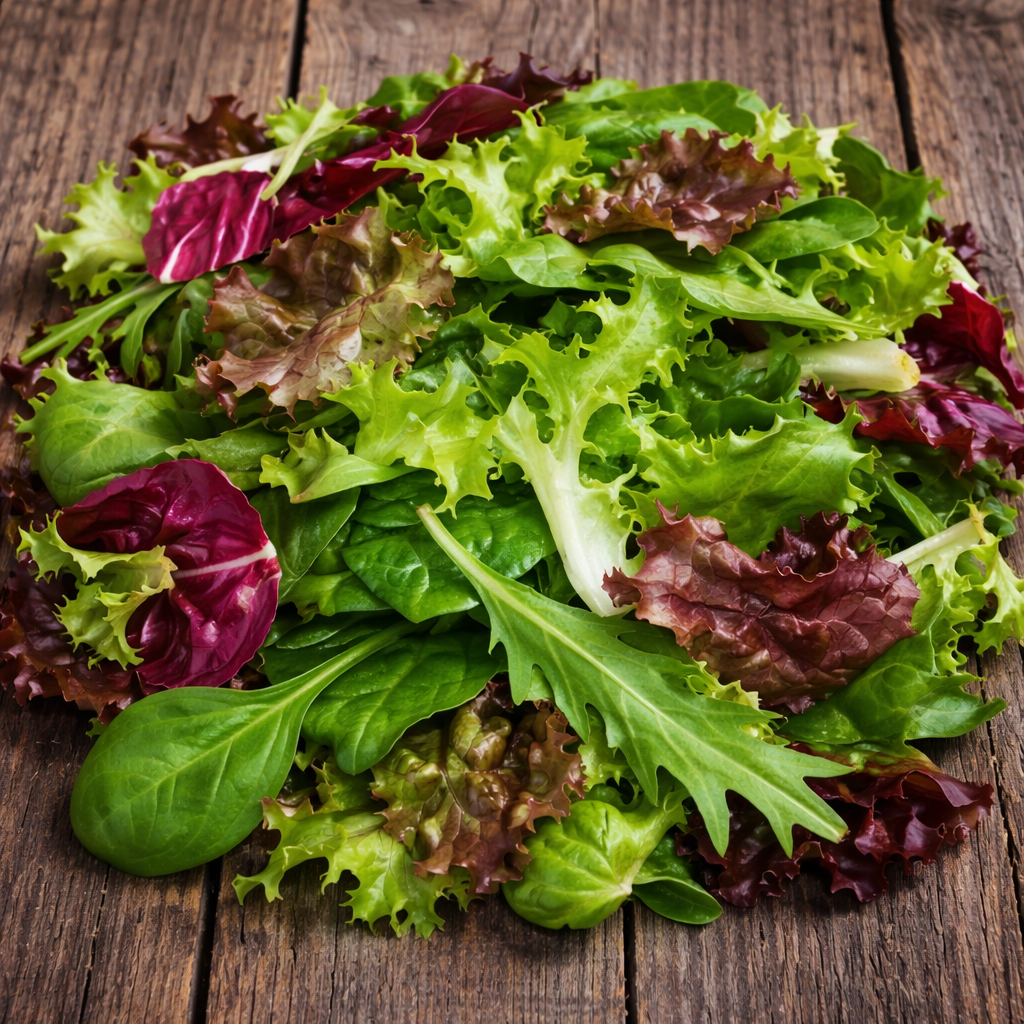
A mild mesclun blend is a flexible way to add young leaves to meals. Sow this organic Aimers blend in rows, small plots or containers, according to the available space. OSC describes it as fresh and easy to grow without listing all the combined species. Prepare fine, well-drained soil and keep the surface moist until emergence. In Quebec, time the start for local weather and the remaining harvest season. Small successive sowings can renew the plants. Choose the young leaves to make a salad or complete a sandwich with a freshly picked portion. The planting can be divided into sections for successive harvests.
Sold as Approximately 1,000 seeds
2 99 $

Sold out

Pay in 4 interest-free payments withSezzle

Delivery and pickup: view conditions

Product information
Advice adapted to Canada
Secure payment
Share

Discover the plant

Common nameMesclun salad mix
TypeSeeds

Mesclun Mix Seeds — OrganicThis organic mesclun blend supplies young leafy vegetables with mild, fresh flavours. OSC describes an open-pollinated blend that grows easily in rows, small plots or containers. It brings a variety of textures to the salad while keeping a flexible place in the garden layout. The supplier does not detail its exact botanical composition, so it should not be assigned the lettuces found in another blend. Loose seeds let you divide the crop between small areas and match harvests to your cooking needs. The planting can be divided into sections for successive harvests.

The organic mesclun’s loose seeds are easy to divide between small growing sections. Prepare a fine, levelled surface in well drained soil. Sow the mesclun directly outside taking into account local weather. Young leafy vegetables benefit from consistent moisture during emergence; water gently to avoid moving the seeds. Avoid too thick soil cover and the formation of a hard crust. Divide sowings between several small areas rather than filling the entire bed on one day. In Quebec, a later start in suitable soil can be preferable to sowing too early in cold, saturated ground.

Harvest this mild blend young to enjoy the tender texture wanted for salads. Pick the young leaves at the point where you like their texture and flavour. Cutting above the growing centre may allow new leaves, but regrowth depends on the species and condition of the plants. Avoid pulling out the whole plant if you want another harvest. Alternate the cutting areas to let each section recover. The vegetables in the mixture do not necessarily grow at the same rate: observe each one rather than looking for an identical size. As plants age, flower or lose tenderness, replace them gradually with a more recent sowing.

In the garden

Exposure
Full sun

Sowing guide

Sowing & germination

Germination time

5 to 10 days

Sowing period

In spring, according to soil warming and local weather.

Propagation

Direct sowing

Growing method

The organic mesclun’s loose seeds are easy to divide between small growing sections. Prepare a fine, levelled surface in well drained soil. Sow the mesclun directly outside taking into account local weather. Young leafy vegetables benefit from consistent moisture during emergence; water gently to avoid moving the seeds. Avoid too thick soil cover and the formation of a hard crust. Divide sowings between several small areas rather than filling the entire bed on one day. In Quebec, a later start in suitable soil can be preferable to sowing too early in cold, saturated ground. The mild blend’s young leaves benefit from renewed sowings when space permits. Keep the soil consistently moist without waterlogging the seedbed. Young salad roots occupy only a shallow layer of soil and tolerate abrupt moisture changes poorly. Weed early so the mixed seedlings are not confused with weeds. Check the density: crowded leaves retain more moisture and can become difficult to harvest cleanly. Remove some plants if necessary to improve ventilation. During hot spells, watch for changes in texture and bolting. A small new sowing may be more useful than keeping an ageing planting indefinitely. Water gently enough to keep the prepared surface level.

Soil and care

Soil & care

Watering

Check moisture in the soil or potting mix before watering again. During germination, water with a gentle spray to keep the surface moist without displacing seeds. After emergence, adjust watering to root development, heat and wind. Excess water must be able to drain away. Rain may not wet a sheltered container as thoroughly as a garden bed; check the growing area rather than watering on a fixed schedule.

Soil type

Mesclun needs a fine soil surface, good drainage and consistent moisture. Do not leave small seeds beneath a hard crust or among large clods. Prepare an easy to water and harvest area. For containers, use a potting mix that allows excess water to drain. Organic matter and a loose soil structure support young leafy growth, with no fixed pH range specified for this mix. The surface should also be easy to water gently.

Fertilization

Mesclun does not need repeated fertilizer applications to produce young leaves; avoid overfeeding an already well-nourished planting. Base fertilization on soil fertility, plant vigour and how heavily you harvest. Organic matter can provide a useful foundation, but keep additional applications measured. For containers, follow the directions on the fertilizer selected for vegetables or herbs. Adding fertilizer will not automatically correct slow growth caused by cold, insufficient light or saturated soil.

Seasonal care

The mild blend’s young leaves benefit from renewed sowings when space permits. Keep the soil consistently moist without waterlogging the seedbed. Young salad roots occupy only a shallow layer of soil and tolerate abrupt moisture changes poorly. Weed early so the mixed seedlings are not confused with weeds. Check the density: crowded leaves retain more moisture and can become difficult to harvest cleanly. Remove some plants if necessary to improve ventilation. During hot spells, watch for changes in texture and bolting. A small new sowing may be more useful than keeping an ageing planting indefinitely. Harvest this mild blend young to enjoy the tender texture wanted for salads. Pick the young leaves at the point where you like their texture and flavour. Cutting above the growing centre may allow new leaves, but regrowth depends on the species and condition of the plants. Avoid pulling out the whole plant if you want another harvest. Alternate the cutting areas to let each section recover. The vegetables in the mixture do not necessarily grow at the same rate: observe each one rather than looking for an identical size. As plants age, flower or lose tenderness, replace them gradually with a more recent sowing. After a cutting, check that each section still has active young leaves and enough moisture to recover. If older plants begin flowering or lose tenderness, renew a small section rather than expecting the entire bed to remain unchanged.

Container growing

Container growing

OSC also recommends this mesclun for small, accessible containers on a terrace. A container with drainage holes lets you grow mesclun near the kitchen, on a terrace or on a bright balcony. Use a container potting mix that holds moisture while allowing excess water to drain. Spread the seeds or seed tape over a flat surface, then cover slightly. Keep moisture consistent during germination, as exposed potting mix dries quickly in the wind. After emergence, reduce crowding if leaves overlap excessively. Alternate harvests between sections of the container. A container-grown blend is still affected by heat and uneven watering. The mild blend’s young leaves benefit from renewed sowings when space permits. Keep the soil consistently moist without waterlogging the seedbed. Young salad roots occupy only a shallow layer of soil and tolerate abrupt moisture changes poorly. Weed early so the mixed seedlings are not confused with weeds. Check the density: crowded leaves retain more moisture and can become difficult to harvest cleanly. Remove some plants if necessary to improve ventilation. During hot spells, watch for changes in texture and bolting. A small new sowing may be more useful than keeping an ageing planting indefinitely.
Mesclun Mix Seeds — Organic

Garden associations

Companion plants & uses

Garden use

Serve a handful of mesclun with grated carrots and a light dressing to preserve its mild flavour. Build a salad around the contrasting textures of mesclun. A light vinaigrette is suitable for young leaves and avoids masking differences between components. Gather your harvest with crunchy vegetables or herbs chosen according to the meal. Add the dressing just before serving to keep the leaves crisp. Portions can be small: a fresh handful complements a sandwich, grain bowl or plate of vegetables. Taste the leaves separately to discover the nuances of the mixture. This approach also helps choose the harvest stage you prefer.

Recipe idea

From garden to table

Serve a handful of mesclun with grated carrots and a light dressing to preserve its mild flavour. Prepare a mesclun salad with leaves of different textures and a light dressing. Gather your harvest in a salad bowl, then add finely cut crunchy vegetables to maintain a balance between the ingredients. Mix the oil, a little acidity and the seasonings separately; add the dressing when serving. This avoids leaving the leaves sitting in too much dressing. For another presentation, place a small portion of mesclun on a bowl of slightly warm cooked grains. The young leaves bring a fresh texture without having to make up the whole meal. A vegetable sandwich can also include leaves selected for mildness or a more pronounced flavour. Taste the components separately to decide how to use them on the plate. In French Salad Mix, lettuce, arugula and endive provide different flavours. A mild mesclun often requires less adjustment to accompany ingredients already highly seasoned.
Mesclun Mix Seeds — Organic

Frequently asked questions

Frequently asked questions

When and how should I sow mesclun in Quebec?
The organic mesclun’s loose seeds are easy to divide between small growing sections. Prepare a fine, levelled surface in well drained soil. Sow the mesclun directly outside taking into account local weather. Young leafy vegetables benefit from consistent moisture during emergence; water gently to avoid moving the seeds. Avoid too thick soil cover and the formation of a hard crust. Divide sowings between several small areas rather than filling the entire bed on one day. In Quebec, a later start in suitable soil can be preferable to sowing too early in cold, saturated ground. Water gently enough to keep the prepared surface level.
Can I grow mesclun in a container?
OSC also recommends this mesclun for small, accessible containers on a terrace. A container with drainage holes lets you grow mesclun near the kitchen, on a terrace or on a bright balcony. Use a container potting mix that holds moisture while allowing excess water to drain. Spread the seeds or seed tape over a flat surface, then cover slightly. Keep moisture consistent during germination, as exposed potting mix dries quickly in the wind. After emergence, reduce crowding if leaves overlap excessively. Alternate harvests between sections of the container. A container-grown blend is still affected by heat and uneven watering. Keep each section within easy reach for harvesting.
How do I harvest mesclun at the right stage?
Harvest this mild blend young to enjoy the tender texture wanted for salads. Pick the young leaves at the point where you like their texture and flavour. Cutting above the growing centre may allow new leaves, but regrowth depends on the species and condition of the plants. Avoid pulling out the whole plant if you want another harvest. Alternate the cutting areas to let each section recover. The vegetables in the mixture do not necessarily grow at the same rate: observe each one rather than looking for an identical size. As plants age, flower or lose tenderness, replace them gradually with a more recent sowing.
How do I use mesclun in the kitchen?
Serve a handful of mesclun with grated carrots and a light dressing to preserve its mild flavour. Build a salad around the contrasting textures of mesclun. A light vinaigrette is suitable for young leaves and avoids masking differences between components. Gather your harvest with crunchy vegetables or herbs chosen according to the meal. Add the dressing just before serving to keep the leaves crisp. Portions can be small: a fresh handful complements a sandwich, grain bowl or plate of vegetables. Taste the leaves separately to discover the nuances of the mixture. This approach also helps choose the harvest stage you prefer.
What should I check if my mesclun gets off to a poor start?
Since Aimers does not detail the blend’s exact composition, observe the different shoots without assigning an arbitrary variety. If shoots emerge unevenly, remember that mesclun combines components with different germination rates. Do not stir the entire surface immediately. Check the seed cover, contact with the soil, and regular moisture. On seed tape, some sections may have lifted during sowing or dried more than others. If leaves become tough, harvest stage and hot spells may be contributing factors. Plan a succession adapted to your region rather than a universal date. Results in Quebec vary according to season and garden exposure. Check soil contact along the entire row.

Seed-starting essentials

Click a product to build your selection.

Your selection

Total