Aimers

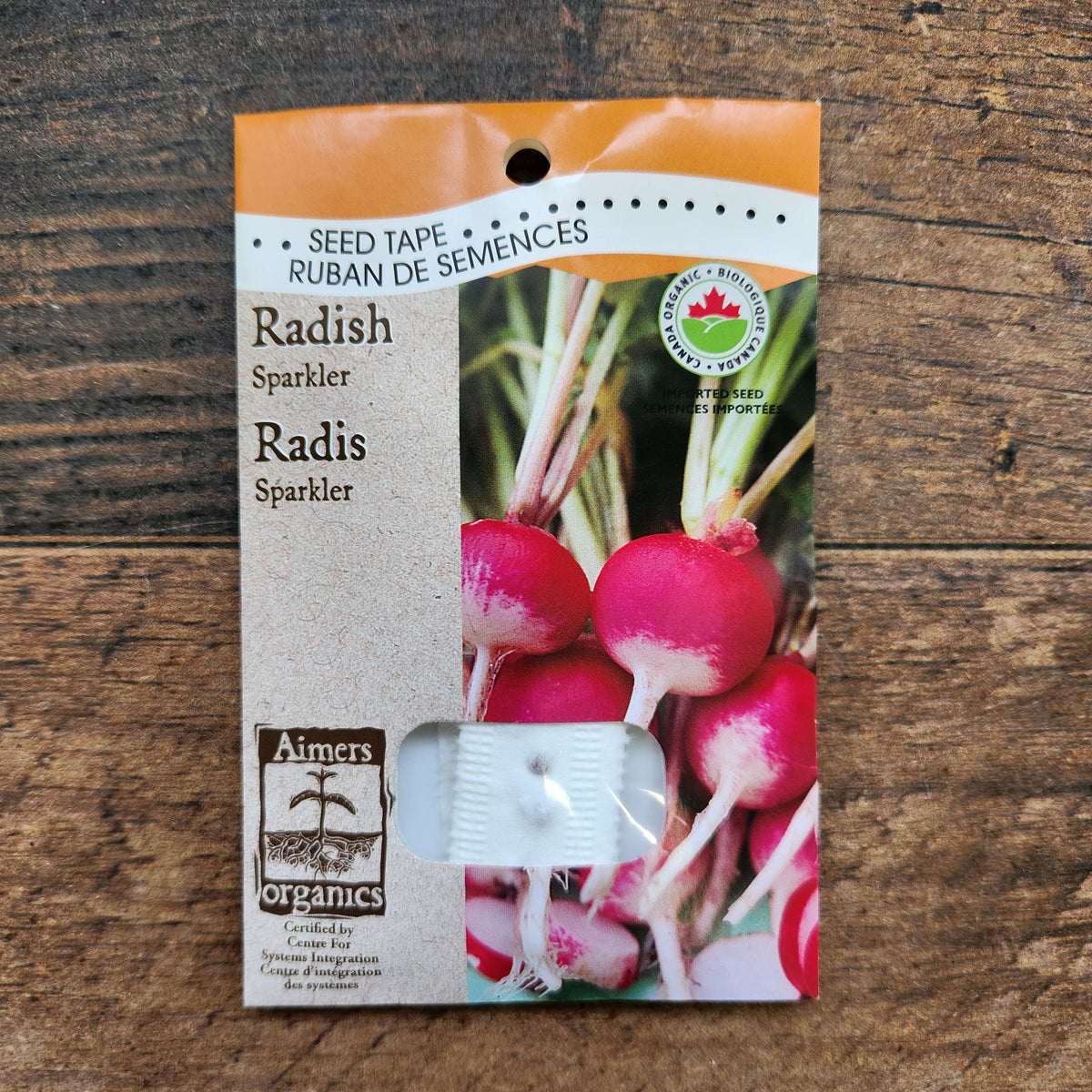
Radish 'Sparkler' Seed Tape — Organic

Raphanus sativus

Organic Sparkler radish on seed tape simplifies seed placement while producing round red-and-white roots. The scarlet top contrasts with the white base, and the tender flesh remains crisp for salads and vegetable platters. The 2-metre tape contains approximately 100 seeds and helps you plant a regular row. It still needs loose soil and consistent moisture during emergence. Sow in spring or late summer when conditions remain cool. Harvest at around 2.5 cm in diameter, following the supplier’s guidance and each root’s development rather than a fixed deadline. Sparkler’s round roots have a scarlet top and white base, so quartering them shows the contrast.
Sold as 2-metre seed tape, approximately 100 seeds

Available

4 99 $
Pay in 4 interest-free payments withSezzle

Delivery and pickup: view conditions

Product information
Advice adapted to Canada
Secure payment
Share

Discover the plant

Common nameRadish
FamilyBrassicaceae
GenusRaphanus
Speciessativus
CultivarSparkler
TypeVegetable seeds
Botanical nameRaphanus sativus

Radish 'Sparkler' Seed Tape — Organic (Raphanus sativus). Organic 'Sparkler' radish on seed tape produces round roots with scarlet-red tops and white bases. These radish seeds are part of the Aimers organic seed range. The tender, crisp flesh suits salads and raw vegetable platters. The tape spaces seeds regularly to make row planting easier. This format reduces seed handling but has the same moisture requirements as ordinary sowing. The packet contains 2 metres of seed tape and approximately 100 seeds. Check each root as it develops and pick the radishes that are ready, rather than waiting for every plant in the row to reach the same size.

Lay the tape directly outdoors in spring or late summer for an autumn harvest. Choose loose soil in a sunny location. Keep the tape and soil evenly moist to support germination and growth. Prepare the row before laying the tape and make sure it stays in contact with moist soil. The spacing helps organize sowing, but a strip that dries out still needs careful attention. After emergence, check root diameter and harvest those that reach the recommended size. Keep the row accessible to avoid compacting the soil each time you visit.

Quarter Sparkler radishes to show their red-and-white contrast. They suit raw vegetable platters, crisp salads and toast with fresh cheese. Harvest roots at around 2.5 cm in diameter, following their development rather than a fixed calendar. Tape simplifies sowing, but harvest gradually if the plants do not all reach the same size together. Radishes add crunch to salads, raw vegetable platters and open-faced sandwiches. Wash the roots, trim damaged ends and cut according to their shape: slices, quarters or sticks. Prepare the amount needed for the meal and refrigerate any cut vegetables.

In the garden

Exposure
Full sun

Sowing guide

Sowing & germination

Sowing period

Spring, once the soil can be worked; adjust sowing to local weather

Propagation

Direct sowing with seed tape

Growing method

Lay the tape directly outdoors in spring or late summer for an autumn harvest. Choose loose soil in a sunny location. Keep the tape and soil evenly moist to support germination and growth. Prepare the row before laying the tape and make sure it stays in contact with moist soil. The spacing helps organize sowing, but a strip that dries out still needs careful attention. After emergence, check root diameter and harvest those that reach the recommended size. Keep the row accessible to avoid compacting the soil each time you visit. Prepare the bed before sowing to provide good conditions for germination and emergence. After heavy rain, check drainage rather than automatically adding more water. During dry weather, check moisture near the roots. A plant label records the variety name and helps distinguish successive sowings. Record the stages of growth to adapt future crops to local conditions, without treating an estimated maturity period as a harvest guarantee. Spring radishes do best in loose soil with steady growth in cool weather. Lay the tape in a prepared line and keep it against moist soil throughout germination. Then watch root diameter and pick ready radishes individually if the row develops unevenly.

Soil and care

Soil & care

Watering

Maintain consistent moisture from sowing to harvest. Water gently at first to avoid moving the seeds, then check soil conditions between rains. The supplier stresses the importance of moisture for germination and root quality. Do not wait for the soil to dry out completely before watering again. Seed tape also needs contact with moist soil; it simplifies seed placement but does not make watering optional.

Soil type

Loose, well-drained soil allows radish roots to develop steadily. Prepare the surface before sowing and remove large clods that impede emergence. Avoid compacted areas or soil that stays waterlogged after rain. The soil needs to retain enough moisture for steady growth without becoming saturated. A clean, accessible bed makes it easier to monitor, water and harvest the row at the right time.

Fertilization

Radishes mainly need well-prepared soil and steady growth. Adjust fertilizer to soil fertility and do not overload the bed without an identified need. If using fertilizer, follow the instructions for a product intended for vegetables. Insufficient water or overly dense sowing can affect root development; correct these conditions first. Extra fertilizer cannot replace adequate spacing, steady moisture or harvesting roots at a suitable stage for their texture.

Seasonal care

Lay the tape directly outdoors in spring or late summer for an autumn harvest. Choose loose soil in a sunny location. Keep the tape and soil evenly moist to support germination and growth. At the start of the season, prepare the soil and remove weeds that compete with young plants. As the plants grow, check moisture regularly and inspect the foliage so that problems are noticed promptly. If leaves are damaged, examine the plant and identify the cause before taking action. Avoid applying treatments simply out of habit. Handle plants gently and use clean tools when harvesting to reduce damage. After harvest, remove spent crop debris and record useful observations about the weather, harvest quality and care provided. These notes help you plan the next season around the conditions in your own garden. Maintain consistent moisture from sowing to harvest. Water gently at first to avoid moving the seeds, then check soil conditions between rains. The supplier stresses the importance of moisture for germination and root quality. Do not wait for the soil to dry out completely before watering again. Seed tape also needs contact with moist soil; it simplifies seed placement but does not make watering optional. Continue checking individual roots instead of leaving the entire row until one fixed date. Harvest the first ready radishes while smaller roots keep growing, then use further sowings to renew the crop when conditions remain cool and moisture can be maintained.

Container growing

Container growing

The packet contains 2 metres of seed tape and approximately 100 seeds. The supplier recommends harvesting radishes at around 2.5 cm in diameter for their texture. Small radishes can grow in a planter with drainage and enough potting mix depth for their roots. Place the container in a bright, accessible location to monitor sowings. Sow directly, keep the surface moist at first and avoid disturbing young plants unnecessarily. Spacing still matters: extra watering cannot compensate for overcrowded roots. Seed tape makes planting easier if it fits along the planter without overlapping the seeds. Then check moisture, as containers exposed to sun and wind dry quickly. To stagger harvests, sow one part of the container and then another while conditions stay cool. Check roots at soil level and harvest those that have reached the desired size. A stable planter with drainage holes makes care easier and prevents prolonged rain from saturating the potting mix. Success depends on available root space, light and consistent care. Give each root room rather than trying to compensate for dense sowing with extra water. Check the surface during germination, then watch root size as the plants develop.
Radish 'Sparkler' Seed Tape — Organic

Bloom and dimensions

Size, flowering & harvest

Harvest

Harvest roots at around 2.5 cm in diameter, following their development rather than a fixed calendar. Tape simplifies sowing, but harvest gradually if the plants do not all reach the same size together.
Radish 'Sparkler' Seed Tape — Organic

Garden associations

Companion plants & uses

Garden use

Quarter Sparkler radishes to show their red-and-white contrast. They suit raw vegetable platters, crisp salads and toast with fresh cheese. Harvest roots at around 2.5 cm in diameter, following their development rather than a fixed calendar. Tape simplifies sowing, but harvest gradually if the plants do not all reach the same size together. Radishes add crunch to salads, raw vegetable platters and open-faced sandwiches. Quarter Sparkler radishes for a crisp vegetable platter or add thin slices to greens. The red-and-white contrast is enough to create an attractive dish alongside fresh cheese and a simple dressing.

Recipe idea

From garden to table

Edible parts

Roots
Quarter Sparkler radishes to show their red-and-white contrast. They suit raw vegetable platters, crisp salads and toast with fresh cheese. Wash the harvested vegetables thoroughly before preparing them, and use clean utensils. Start with a simple recipe so you can appreciate this variety’s texture and flavour. Herbs, onion or a light dressing can complement the vegetable without masking its flavour. Adjust cutting and cooking to the size you have harvested rather than following one rule for every vegetable. For a complete meal, combine the harvest with ingredients you already enjoy: grains, legumes, other vegetables or a source of protein. Prepare the amount needed for the meal and refrigerate any cut vegetables. For longer-term food preservation, use a tested recipe and follow its exact proportions and processing instructions. Radishes add crunch to salads, raw vegetable platters and open-faced sandwiches. Quarter Sparkler radishes for a crisp vegetable platter or add thin slices to greens.
Radish 'Sparkler' Seed Tape — Organic

Frequently asked questions

Frequently asked questions

When should I sow Sparkler radish seed tape in Quebec?
Lay the tape directly outdoors in spring or late summer for an autumn harvest. Choose loose soil in a sunny location. Keep the tape and soil evenly moist to support germination and growth. Spring radishes do best in loose soil with steady growth in cool weather. In Quebec, start once the soil can be worked and adjust later sowings to the weather. Prepare a fine seedbed without large clods, and maintain moisture during emergence. Successive sowings spread out harvests instead of producing a whole row that must be eaten at once. Lay the tape in a prepared line and keep it against moist soil throughout germination.
What makes Sparkler radish seed tape distinctive?
Organic 'Sparkler' radish on seed tape produces round roots with scarlet-red tops and white bases. The tender, crisp flesh suits salads and raw vegetable platters. The tape spaces seeds regularly to make row planting easier. This format reduces seed handling but has the same moisture requirements as ordinary sowing. The packet contains 2 metres of seed tape and approximately 100 seeds. The supplier recommends harvesting radishes at around 2.5 cm in diameter for their texture. These organic seeds allow you to grow the characteristics described for this product in your own garden. Sparkler’s round roots have a scarlet top and white base, so quartering them shows the contrast.
Can I grow Sparkler radish seed tape in a container?
The packet contains 2 metres of seed tape and approximately 100 seeds. The supplier recommends harvesting radishes at around 2.5 cm in diameter for their texture. Small radishes can grow in a planter with drainage and enough potting mix depth for their roots. Place the container in a bright, accessible location to monitor sowings. Sow directly, keep the surface moist at first and avoid disturbing young plants unnecessarily. Spacing still matters: extra watering cannot compensate for overcrowded roots. Seed tape makes planting easier if it fits along the planter without overlapping the seeds. Give each root room rather than trying to compensate for dense sowing with extra water.
How should I harvest and cook Sparkler radish from seed tape?
Harvest roots at around 2.5 cm in diameter, following their development rather than a fixed calendar. Tape simplifies sowing, but harvest gradually if the plants do not all reach the same size together. Quarter Sparkler radishes to show their red-and-white contrast. They suit raw vegetable platters, crisp salads and toast with fresh cheese. Radishes add crunch to salads, raw vegetable platters and open-faced sandwiches. Wash the roots, trim damaged ends and cut according to their shape: slices, quarters or sticks. Harvesting young helps preserve a pleasant texture. Quarter Sparkler radishes for a crisp vegetable platter or add thin slices to greens.
How should I water Sparkler radish seed tape?
Maintain consistent moisture from sowing to harvest. Water gently at first to avoid moving the seeds, then check soil conditions between rains. The supplier stresses the importance of moisture for germination and root quality. Do not wait for the soil to dry out completely before watering again. Seed tape also needs contact with moist soil; it simplifies seed placement but does not make watering optional. Radishes mainly need well-prepared soil and steady growth. Adjust fertilizer to soil fertility and do not overload the bed without an identified need. Check spacing as well as moisture if roots develop poorly, because a crowded row cannot be corrected simply by adding fertilizer.

Seed-starting essentials