Fall-planted bulbs

‘Arctic Snow’ Ornamental Allium

Allium schubertii ‘Arctic Snow’

Product code : VAN-146-191-01

‘Arctic Snow’ is a white selection of Allium schubertii supplied as 1 size 12/14 bulb. In late spring, an upright stem about 40 cm (16 in.) tall carries a broad starburst umbel of pure white flowers with green centres. Unequal flower stalks create the distinctive firework outline, which remains decorative after drying. Hardy in Zones 5 to 10, this easy ornamental onion prefers full sun, tolerates light partial shade, and needs freely drained soil. The flowers attract visiting pollinators, deer usually avoid the plant, and mature heads work beautifully in dried arrangements. Plant in fall, 10 cm (4 in.) deep and 20 cm (8 in.) apart.
8 99 $
Pay in 4 interest-free payments with Sezzle
Detailed plant guide
Advice adapted to Canada
Secure payment
2026 preorder for fall bulbs Shipping expected in October 2026.
Share
Quantity
1 size 12/14 bulb
Exposure
Full sun to light partial shade
Life cycle
Naturalizing bulbous perennial
Hardiness
Zone 5 to 10

Discover the plant

Common nameOrnamental onion; firework allium
FamilyAmaryllidaceae
GenusAllium
Speciesschubertii
CultivarArctic Snow
TypeOrnamental allium bulb
Botanical nameAllium schubertii ‘Arctic Snow’
Reproducible seedsYes

‘Arctic Snow’ Ornamental Allium (Allium schubertii ‘Arctic Snow’) is a white-flowering selection of the celebrated firework allium. This package contains 1 size 12/14 bulb. In late spring, a stem approximately 40 cm (16 in.) tall carries a broad starburst umbel made of numerous pure white flowers with green centres. Flower stalks of unequal length create an airy, architectural head that can reach about 30 cm (12 in.) across. Hardy in Zones 5 to 10, easy to grow, and attractive to pollinators, this bulbous perennial brings a distinctive focal point to borders, gravel gardens, and containers.

Plant the bulb in fall, four to six weeks before the ground freezes, in full sun or light partial shade. Set it pointed end up, 10 cm (4 in.) deep, leaving 20 cm (8 in.) between it and neighbouring plants. Loose, fertile, freely drained soil protects the bulb during winter thaws and summer dormancy. Water once after planting, then allow seasonal precipitation to take over. In spring, provide moderate moisture without saturating the root zone. This allium tolerates a brief dry period better than standing water, so avoid low spots and beds that remain wet after rain or snowmelt.

Allow the strap-shaped leaves to yellow fully after flowering so they can restore the bulb's energy reserves. Low perennials can disguise the fading foliage without hiding the starburst flower head. Cut the stem as the first flowers open for a fresh bouquet, or wait until the head matures for a dried arrangement. Its radiating structure remains decorative long after the petals fall. The onion-like scent of the leaves and bulb helps discourage deer, while open flowers welcome visiting insects. Reduce watering through summer dormancy and mark the planting site so later garden work does not disturb the resting bulb.

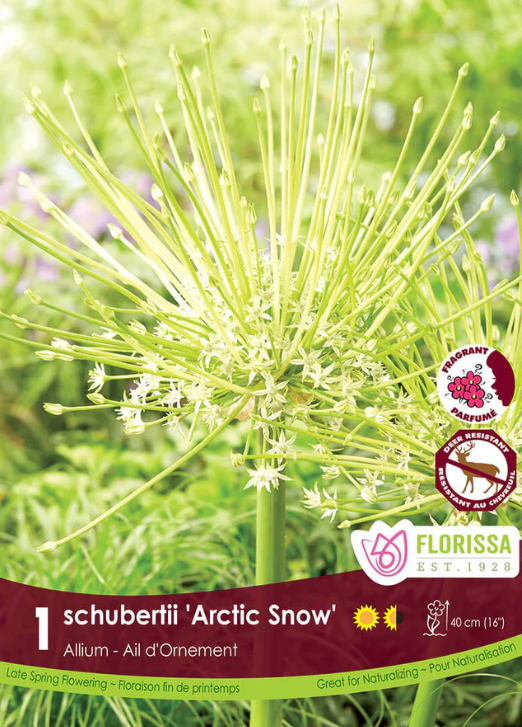
Ail ornemental ‘Arctic Snow’ ( Allium schubertii ) : une grande inflorescence d’allium aux fins rayons terminés par de petites fleurs claires. Le visuel Florissa présente la plante et son nom dans la partie inférieure de l’étiquette. La photographie occupe presque toute la surface, tandis que le bandeau du bas rassemble les indications du produit. Cette vue permet de reconnaître son apparence et de distinguer la variété présentée.

Planting guide

Plant well.Grow beautifully.

Planting depth

10 cm (4 in.)

Spacing / density

Space 20 cm (8 in.) apart

Best planting time

Fall, four to six weeks before the ground freezes

Propagation

Divide offsets during dormancy

Growing method

Plant ‘Arctic Snow’ in fall, about four to six weeks before the ground freezes. Select a position in full sun or light partial shade where water never collects. Loosen 20 to 25 cm (8 to 10 in.) of soil and incorporate a modest amount of mature compost if fertility is low. Set the size 12/14 bulb pointed end up, 10 cm (4 in.) deep, leaving 20 cm (8 in.) between it and neighbouring plants. Cover, firm gently, and water thoroughly once. In heavy clay, use a slight mound, raised bed, or container instead of creating a pocket of amended soil that can hold water. In spring, remove heavy debris, provide moderate moisture, and use only a thin compost top-dressing. Place the broad flower head away from frequent foot traffic. After bloom, allow every leaf to yellow and dry before removal. Reduce watering sharply during summer dormancy and mark the location. If offsets eventually form a crowded clump, lift them after foliage has finished, separate firm bulbs, and replant promptly at the same depth. Inspect the planting after snowmelt and prolonged rain, redirecting runoff if puddles remain. Keep mulch shallow so emerging growth receives air and light, and avoid cutting healthy leaves simply to make the border look tidier.

Soil and care

The right care,at the right time.

Soil pH

Acid, neutral, or alkaline

Minimum temperature

-29°C (-20°F)

Care level

Easy

Drought tolerance

Yes

Watering

Water thoroughly once after fall planting to settle the soil. During spring growth, provide moderate moisture when rainfall is insufficient, allowing the surface to dry slightly between applications. Water at soil level and avoid saturating the bulb zone. Reduce irrigation after flowering as the foliage turns yellow, then keep the site comparatively dry through summer dormancy. Established bulbs usually need supplemental water only during extended spring drought. In containers, check the mix more often but empty saucers after rain. Good drainage matters more than following a fixed watering calendar.

Soil type

Choose loose, fertile, freely drained soil. Sandy or loamy ground amended with a modest amount of mature compost is ideal. In heavy clay, improve drainage across a broad area or use a raised bed or deep container rather than creating a small planting pocket. The soil may remain lightly moist during active spring growth but should not stay saturated after rain or snowmelt. Dormant bulbs prefer comparatively dry summer conditions. Avoid low spots, compacted soil, and beds watered every day. Reliable drainage is more important than rich fertility for long-term performance.

Fertilization

At planting time, mix a modest amount of mature compost into poor soil without placing concentrated fertilizer against the bulb. In early spring, apply a light top-dressing of compost or a balanced bulb fertilizer according to its label. Avoid high-nitrogen products, which can produce soft foliage and weaker stems. A second feeding is usually unnecessary in suitable garden soil. For a container, use one light application as shoots emerge and stop after flowering. Never fertilize the bulb during summer dormancy.

Moisture

Moderate during growth; comparatively dry in dormancy

Seasonal care

In fall, plant the bulb before the ground freezes and water once to settle the soil. A thin mulch can moderate temperature changes, but it must not trap moisture over the planting. As shoots appear in spring, clear heavy debris, check drainage after snowmelt, and provide moderate water only when rainfall is insufficient. Apply a light compost top-dressing rather than a rich nitrogen fertilizer. During bloom, protect the broad umbel from heavy foot traffic and strong mechanical contact. Cut it as the first flowers open for a fresh arrangement, or leave it until mature for drying. After flowering, retain all green leaves until they yellow and pull away easily because they replenish the bulb. Keep the dried head if its sculptural outline suits the planting. During summer dormancy, reduce watering, avoid deep cultivation, and keep the site marked. Inspect the area after prolonged rain and redirect runoff if water remains. Divide offsets only when a clump becomes crowded or flowering declines. Lift bulbs after the foliage has finished, discard any soft or damaged material, and replant firm bulbs at 10 cm (4 in.) deep in refreshed, freely drained soil. In containers, protect the pot from prolonged winter saturation while still allowing the bulb to experience natural cold. Weed by hand around emerging shoots to avoid slicing the bulb. If stems lean, assess available sun and excess nitrogen before adding support; a suitable site normally keeps the moderate-height flower stem upright.

Container growing

A garden,within reach.

Recommended pot size

Stable, freely drained pot at least 30 cm (12 in.) wide and deep
Use a deep, stable container at least 30 cm (12 in.) wide and deep, with several open drainage holes. Fill it with a porous potting mix and set the size 12/14 bulb 10 cm (4 in.) deep, pointed end up. Water once after planting, then allow the mix to dry slightly between applications. Keep the container in full sun or light partial shade. The bulb needs winter cold for normal spring growth, so leave the pot outdoors in a sheltered position or in an unheated space that stays close to freezing. In Zone 5, insulate the sides with breathable material and prevent rain or meltwater from saturating the mix. Return the pot to sun in spring, water moderately, and rotate it if stems lean toward the light. A heavy pot helps stabilize the broad flower head. After flowering, allow the foliage to yellow completely before reducing water for summer dormancy. Check that drainage remains open throughout the year, and transplant the bulb into the garden if dependable winter protection cannot be provided. Keep the container away from roof runoff and empty any saucer promptly. Low companion plants may share the surface only if they need the same drainage and do not cover the emerging allium foliage.
Ail ornemental ‘Arctic Snow’ ( Allium schubertii ) : une grande inflorescence d’allium aux fins rayons terminés par de petites fleurs claires. Le visuel Florissa présente la plante et son nom dans la partie inférieure de l’étiquette. La photographie occupe presque toute la surface, tandis que le bandeau du bas rassemble les indications du produit. Cette vue permet de reconnaître son apparence et de distinguer la variété présentée.

Bloom and dimensions

Its place,in your garden.

Mature height

40cm (16 in)

Width / spread

Umbel up to approximately 30 cm (12 in.) across

Flower color

Pure white with green centres

Foliage color

Green

Foliage type

Deciduous

Growth rate

Moderate

Growth habit

Upright and architectural

Fragrance

Onion-scented foliage and bulb

Bloom period

Pure white, green-centred flowers open in late spring on stalks of unequal length, creating a broad starburst or firework effect. The umbel can reach about 30 cm (12 in.) across on a stem approximately 40 cm (16 in.) tall. Individual flowers open progressively and welcome visiting pollinators. Full sun and freely drained soil support the strongest stems and clearest display. After the petals fall, the head retains its radiating geometry and remains decorative in the border or in a dried arrangement.

Fruiting

After flowering, the umbel develops a dry seed head that preserves its radiating outline. Leave it to mature on the plant for extended garden interest, or cut it once firm for a dried arrangement. Capsules may release seed when heads remain in place. Remove the head before full maturity if self-sown seedlings are not wanted. Seedlings may vary from the named cultivar, so dividing offsets during dormancy is the more reliable way to preserve ‘Arctic Snow’. Handle mature heads gently because the long radiating stalks can break when completely dry.

Days to maturity

Flowering late in spring following fall planting

Harvest

Cut at the beginning of opening for fresh or ripe bouquets for drying
Ail ornemental ‘Arctic Snow’ ( Allium schubertii ) : une grande inflorescence d’allium aux fins rayons terminés par de petites fleurs claires. Le visuel Florissa présente la plante et son nom dans la partie inférieure de l’étiquette. La photographie occupe presque toute la surface, tandis que le bandeau du bas rassemble les indications du produit. Cette vue permet de reconnaître son apparence et de distinguer la variété présentée.

Garden associations

In goodcompany.

Companion plants

Pair ‘Arctic Snow’ with low perennials that disguise fading foliage without covering the flower head. Catmint, hardy geraniums, heucheras, lady's mantle, small ornamental grasses, and silver-leaved plants emphasize the white umbel. Late tulips or white narcissi can extend the spring composition. Leave about 20 cm (8 in.) around the bulb and choose companions that share its preference for sun and drainage. Avoid plants requiring constantly wet summer soil. Companion foliage should remain low enough for the broad starburst to open freely and should not form a dense root mat around the dormant bulb.

Plants to avoid

Avoid plants that require constantly wet soil

Frequently asked questions

Your questions,answered.

When should the ‘Arctic Snow’ allium bulb be planted?
Plant the bulb in fall, ideally four to six weeks before the ground freezes. Choose full sun or light partial shade where water does not collect. Set the bulb pointed end up, 10 cm (4 in.) deep, and leave 20 cm (8 in.) between it and neighbouring plants. Cover without heavy compaction, then water once to settle the soil. Seasonal rainfall is generally sufficient afterward. In clay soil, use a slight mound, raised bed, or deep container to protect the bulb from standing moisture. Mark the location after planting so winter or early spring garden work does not disturb the emerging shoot.
How large does ‘Arctic Snow’ grow?
The flowering stem reaches approximately 40 cm (16 in.), while the radiating umbel can approach 30 cm (12 in.) across because its flower stalks have different lengths. Leave about 20 cm (8 in.) between the bulb and neighbouring plants, and position it where the bloom can open without brushing a busy path. Actual size varies slightly with light, fertility, and soil moisture. Avoid high-nitrogen fertilizer, which can produce soft foliage and a weaker stem. A sunny position supports a more compact, well-held display. Low companions can cover fading leaves later without blocking the broad white architectural flower head completely overhead.
Does ‘Arctic Snow’ allium attract pollinators?
Yes. The broad umbel contains many small star-shaped flowers that can provide nectar and pollen for bees and other insects in late spring. A sunny, sheltered position makes visits easier during cool or breezy weather. To extend available forage, combine this allium with plants that bloom before and after it. Avoid insecticides while the flowers are open. A visible, unobstructed planting also helps insects locate the display. Actual visitor activity varies with weather, region, and nearby habitat. Leaving several other pollinator-friendly plants in the same border creates a more continuous seasonal flowering sequence without changing the drainage this bulb requires.
Can ‘Arctic Snow’ be grown in a container?
Yes. Use a stable container at least 30 cm (12 in.) wide and deep with several drainage holes. Set the bulb 10 cm (4 in.) deep in a porous mix, then water once. Keep the pot in full sun or light partial shade. The bulb needs winter cold, so leave the container outdoors in a sheltered position or in an unheated space close to freezing. In Zone 5, insulate the sides and protect the mix primarily from standing water. Reduce watering as the foliage yellows after bloom. A heavy pot also helps keep the broad flower head upright in wind.
What should be done with the flower head after bloom?
You may leave the head to mature on the plant because its radiating outline remains decorative after the petals fall. For a dried arrangement, cut the stem once the structure is firm and hang it in a dry, airy location. If self-sown seedlings are not wanted, remove the head before capsules release seed. Keep every green leaf until it yellows fully, however, because the foliage replenishes the bulb's reserves. Remove dry leaves afterward and reduce watering through summer dormancy. Mark the location so future garden work does not disturb the resting bulb. Handle a completely dry head gently, as its long radiating stalks can become brittle.

Wildlife and pets

Life,around your plants.

Reported toxicity

Yes

Supporting wildlife

The many small flowers in each white umbel can be visited by bees and other pollinating insects in late spring. A sunny, sheltered position makes the open bloom easier to use during cool weather. Pair it with plants that flower earlier and later to extend available forage, and avoid insecticides while the umbel is open. Deer usually avoid the onion-scented leaves and bulb, although local wildlife behaviour can vary.