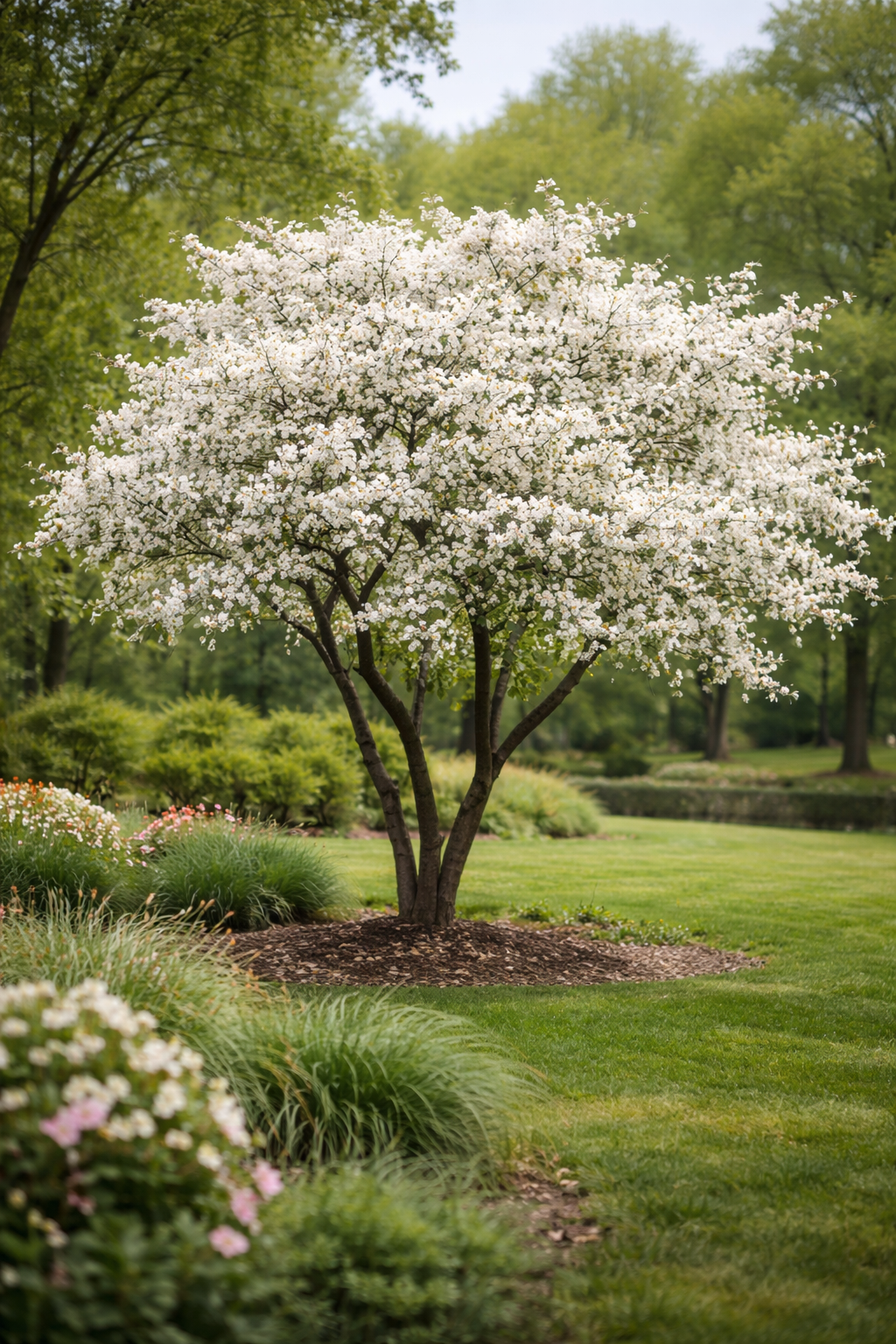
Native multi-stemmed large shrub with flowers, edible fruit, and fall colour

Canadian serviceberry

Amelanchier canadensis

Canadian serviceberry is a native large shrub or small tree with an upright, irregular, often multi-stemmed habit. Clusters of slightly fragrant white flowers appear before the leaves in early spring. Fruit changes from red to purple-black in early summer; it is sweet, edible, and valued by birds. Dark-green foliage turns orange to red in fall. Hardy to Zone 3, the plant reaches approximately 4.5 to 7.5 m high by 4.5 to 6 m wide (15 to 25 ft × 15 to 20 ft). It prefers cool to moist, well-drained soil in full sun or partial shade and can naturalize through root suckers.
2 gallons; 3 gallons; 5 gallons; 80 cm; 7 gallons; 150 cm; 175 cm / 10 gallons; 200 cm / 12 gallons; 250 cm / 10 gallons; 250 cm / 12 gallons; 250 cm / 16 gallons; 45 mm; 50 mm; 200 cm / wire basket; 175 cm / wire basket
Each store has its own inventory.

Products and available quantities may vary between Brossard and Laval. To check a store’s inventory, please contact us directly.

Even better: visit us in store to discover the full selection available!

Share
Quantity
2 gallons; 3 gallons; 5 gallons; 80 cm; 7 gallons; 150 cm; 175 cm / 10 gallons; 200 cm / 12 gallons; 250 cm / 10 gallons; 250 cm / 12 gallons; 250 cm / 16 gallons; 45 mm; 50 mm; 200 cm / wire basket; 175 cm / wire basket
Exposure
Full sun to partial shade; best flowering, fruiting, and fall colour in full sun
Hardiness
Zone 3

Discover the plant

Common nameCanadian serviceberry; shadblow serviceberry; shadbush
FamilyRosaceae
GenusAmelanchier
Speciescanadensis
TypeNative deciduous large shrub or small fruiting tree
Botanical nameAmelanchier canadensis

Canadian serviceberry (Amelanchier canadensis) is a large shrub or small tree native to eastern North America, including Quebec. Its naturally upright, irregular, often multi-stemmed habit can form a colony through root suckers. In early spring, drooping clusters of slightly fragrant white flowers open before the leaves. Small fruit changes from green to red and then purple-black in early summer; it is sweet, edible, and highly valued by birds. Dark-green foliage turns orange to red in fall. Hardy to Zone 3, the plant reaches approximately 4.5 to 7.5 m high by 4.5 to 6 m wide (15 to 25 ft × 15 to 20 ft).

Plant Canadian serviceberry in full sun or partial shade and cool to moist, slightly acidic to neutral, well-drained soil. It adapts to loam, sand, and clay and tolerates occasionally wetter ground, but flowering and fruit production are best in a bright position. Dig a hole as deep as the root ball and twice as wide, set the root flare level with the soil, and water slowly. Space plants 4.5 to 6 m (15 to 20 ft) apart. A 5 to 8 cm (2 to 3 in) organic mulch kept away from the stems helps maintain cool soil during establishment.

Use this serviceberry in a loose hedge, woodland edge, naturalized garden, light screen, or near a moist but well-drained site. Keep several stems for a dense large shrub, or select a few trunks for a more open outline. Harvest fruit when it becomes purple-black, soft, and sweet; enjoy it fresh or cooked. Flowers feed pollinators, while foliage hosts several caterpillars. Watch for rust, leaf spots, powdery mildew, and fire blight. Good air circulation, irrigation directed toward the soil, and prompt removal of affected shoots help reduce problems. Birds may take the crop quickly, so inspect ripening clusters regularly.

Multi-stemmed Canadian serviceberry bearing clusters of white flowers before leaf-out. This view shows <em>Amelanchier canadensis</em>, a native Zone 3 shrub or small tree reaching approximately 4.5 to 7.5 m high by 4.5 to 6 m wide (15 to 25 ft × 15 to 20 ft), with edible purple-black fruit and orange-red fall foliage.

Planting guide

From planting to establishment.

Spacing / density Space plants 4.5 to 6 m (15 to 20 ft) apart for their mature width. In a loose hedge or naturalized colony, spacing of 2.5 to 3.5 m (8 to 12 ft) creates a faster screen; root suckers will gradually fill gaps. Measure from the centre of the stems and allow for the planting to widen over time.
Best planting time In spring after the soil thaws, or in early fall at least six weeks before persistent frost
Propagation Seed after cold stratification, stem cuttings, or division of rooted suckers
Growing method
Choose a position in full sun or partial shade with enough room for a 4.5 to 6 m (15 to 20 ft) crown. Dig a hole as deep as the root ball and about twice as wide. Loosen circling roots, set the root flare level with the soil, backfill with existing soil, and water slowly. Spread 5 to 8 cm (2 to 3 in) of mulch over the root zone without touching the trunk. Maintain even moisture through the first two seasons. Stake only when the tree moves in the soil and remove supports after one year.

Soil and care

The right care,at the right time.

Soil pH

Slightly acidic to neutral, ideally approximately 5.5 to 7.5

Minimum temperature

Approximately -40 °C (-40 °F), Zone 3

Care level

Low to moderate

Watering

Water deeply once or twice weekly during the first season when rainfall is insufficient, then adjust frequency to weather and drainage. Soil should remain cool without becoming waterlogged. An established tree tolerates moderate drought, but irrigation during bloom, fruit development, and prolonged heat supports vigour. Direct water toward the root zone rather than foliage to limit disease. Check moisture beneath mulch before watering again.

Soil type

Cool, fertile, well-drained soil with loamy, sandy, or loosened clay texture is suitable. Slightly acidic to neutral conditions support vigour and nutrient availability. The tree adapts to several soils after establishment, but prolonged drought reduces fruiting and may scorch leaves. Stagnant water, severe compaction, and repeated salt deposits increase stress and disease risk. For best results, inspect soil, foliage, and growth regularly.

Fertilization

Fertilizer is generally unnecessary in fertile soil. In spring, spread a thin layer of mature compost over the root zone without touching the trunk. When a soil test identifies a deficiency, apply a balanced slow-release fertilizer according to its label. Avoid excess nitrogen because it encourages tender shoots, may reduce fruiting, and can increase susceptibility to fire blight. For best results, inspect soil, foliage, and growth regularly.

Moisture

Moderate and even; cool soil without stagnant water

Seasonal care

In spring, inspect bark and remove dead, crossing, or damaged branches before budbreak. White clusters appear early; avoid broad-spectrum insecticides during bloom to protect bees and butterflies. After flowering, prune only lightly because buds form on the previous season’s wood. In early summer, monitor ripening fruit and harvest when it becomes purple-black. Irrigate during dry periods to limit premature fruit drop. In summer, watch for rust, powdery mildew, leaf spots, or fire blight; remove affected shoots with disinfected tools and avoid wetting foliage. In fall, enjoy orange-red colour, renew mulch without piling it against the trunk, and water until freeze-up when soil remains dry. In winter, protect the trunk from rodents and avoid piling salt-laden snow over the root zone. For best results, inspect soil, foliage, and growth regularly. This attention supports a healthy, productive, lasting tree. For best results, inspect soil, foliage, and growth regularly. This attention supports a healthy, productive, lasting tree. For best results, inspect soil, foliage, and growth regularly. This attention supports a healthy, productive, lasting tree. For best results, inspect soil, foliage, and growth regularly. This attention supports a healthy, productive, lasting tree. For best results, inspect soil, foliage, and growth regularly. This attention supports a healthy, productive, lasting tree. For best results, inspect soil, foliage, and growth regularly. This attention supports a healthy, productive, lasting tree.

Container growing

A garden,within reach.

Recommended pot size

At least 75 to 100 L (20 to 25 US gal) for temporary culture
Container culture is best limited to young trees for a temporary period. Use a stable pot holding at least 75 to 100 L (20 to 25 US gal) with numerous holes and a structured well-drained mix. Water regularly, protect the root ball from freeze-thaw cycles, and transplant into the ground before roots become strongly circling.
Canadian serviceberry (Amelanchier canadensis)

Bloom and dimensions

Its place,in your garden.

Mature height

5 to 6 m (16 to 20 feet)

Width / spread

6 m (20 feet)

Flower color

White

Foliage color

Medium to dark green in summer, orange to red in fall

Foliage type

Deciduous; simple, oval, finely toothed, glossy leaves

Growth rate

Moderate

Growth habit

Upright, irregular, multi-stemmed, and suckering

Fragrance

Light floral fragrance

Bloom period

Numerous five-petalled white flowers open in slightly drooping clusters in early spring, before or as leaves unfold. Light fragrance and nectar attract bees, butterflies, and other pollinators. Bloom is generally more abundant in full sun. Protect flowers from insecticide sprays to support pollination and good fruit set. The white display contrasts with bronze-purple emerging foliage. For best results, inspect soil, foliage, and growth regularly.

Fruiting

Flowers produce small round pome fruits that change from red to purple-black in early summer. Sweet flesh resembles blueberries and can be eaten fresh or cooked. Birds harvest fruit quickly; netting installed after flowering can protect part of the crop. Seed does not reproduce the Canadian serviceberry cultivar reliably, so vegetative propagation is required. For best results, inspect soil, foliage, and growth regularly.

Harvest

Harvest fruit in early summer when it is fully purple-black, soft, and sweet. Pick clusters by hand early in the morning and chill fruit promptly. It keeps for several days in the refrigerator or can be frozen in a single layer before transfer to a container. Leave part of the crop for birds to support local wildlife.
Multi-stemmed Canadian serviceberry bearing clusters of white flowers before leaf-out. This view shows Amelanchier canadensis, a native Zone 3 shrub or small tree reaching approximately 4.5 to 7.5 m high by 4.5 to 6 m wide (15 to 25 ft × 15 to 20 ft), with edible purple-black fruit and orange-red fall foliage.

Garden associations

In goodcompany.

Companion plants

Pair Canadian serviceberry with viburnums, dogwoods, hazelnuts, blueberries, ferns, columbines, asters, and sedges that prefer cool soil. Leave open space around the stems for watering, harvesting, and inspection of the root flare. For best results, inspect soil, foliage, and growth regularly. This attention supports a healthy, productive, lasting plant. For best results, inspect soil, foliage, and growth regularly. This attention supports a healthy, productive, lasting plant. For best results, inspect soil, foliage, and growth regularly. This attention supports a healthy, productive, lasting plant.

Plants to avoid

Avoid stagnant water, severe compaction, prolonged drought, excess nitrogen, and repeated road-salt deposits. Rust, powdery mildew, leaf spots, cankers, and fire blight can occur. Encourage good air circulation, irrigate at soil level, and remove diseased shoots promptly with disinfected tools. Fruit may rot in very wet weather, and birds often consume the crop before full maturity. Use netting only when it cannot trap wildlife. For best results, inspect soil, foliage, and growth regularly. This attention supports a healthy, productive, lasting tree.

Recipe idea

From the gardento your plate.

Edible parts

Ripe purple-black fruit, fresh or cooked; remove stems before preparation
For a simple compote, combine 500 ml (2 cups) of washed serviceberries with 30 to 45 ml (2 to 3 tbsp) maple syrup and 15 ml (1 tbsp) lemon juice. Simmer gently for 10 to 15 minutes, stirring until fruit bursts. Serve over yogurt, pancakes, or ice cream, or freeze in small portions.

Frequently asked questions

Your questions,answered.

How large does Canadian serviceberry grow?
Canadian serviceberry generally reaches 4.5 to 7.5 m high by 4.5 to 6 m wide (15 to 25 ft × 15 to 20 ft). It often grows as an upright, irregular, multi-stemmed large shrub. Root suckers can gradually widen the planting and form a colony. Allow for mature width near buildings, paths, and property boundaries. For a loose hedge, spacing of 2.5 to 3.5 m (8 to 12 ft) lets plants meet. To keep specimens visually separate, space them approximately 4.5 to 6 m (15 to 20 ft) apart and remove unwanted suckers. For best results, inspect soil, foliage, and growth regularly.
Is Canadian serviceberry fruit edible?
Yes. Small ripe fruit changes from red to purple-black in early summer and has a sweet blueberry-like flavour. Eat it fresh, add it to muffins and pies, or make compote, preserves, and jelly. Harvest when fruit is fully dark, soft, and easy to detach. Birds value it highly and may empty the tree quickly; properly installed netting after flowering can protect part of the crop without interfering with pollinators. Wash fruit, remove stems, and refrigerate promptly. It also freezes well when first spread in a single layer. For best results, inspect soil, foliage, and growth regularly. This attention supports a healthy, productive, lasting tree.
Are two serviceberry trees needed for fruit?
One Canadian serviceberry can produce fruit because serviceberries are generally self-fertile. Another compatible serviceberry nearby can increase pollen diversity and may improve the crop. Production depends mainly on abundant bloom, pollinator visits, even moisture, and avoiding severe frost during flowering. Place the plant in full sun to maximize bloom and avoid insecticides during this period. Birds harvest fruit rapidly, so watch clusters as they change from green to red and finally purple-black. An apparently empty shrub may have produced fruit that wildlife removed before you noticed it. For best results, inspect soil, foliage, and growth regularly. This attention supports a healthy, productive, lasting plant.
When and how should Canadian serviceberry be pruned?
Prune lightly after flowering or during dormancy to remove dead, broken, crossing, or diseased branches. Retain several stems of different ages to maintain a vigorous large shrub. To renew a colony, cut one or two oldest stems at ground level and allow a well-placed young sucker to replace them. To restrict spread, remove excess suckers as they appear. Use clean tools and cut just outside the branch collar. Avoid severe annual pruning because it reduces flowering, stimulates numerous shoots, and distorts the natural habit. Remove fire-blight damage during dry weather and disinfect tools between cuts. For best results, inspect soil, foliage, and growth regularly.
Why are my serviceberry leaves spotted?
Orange spots may indicate rust, while a white coating suggests powdery mildew. Brown lesions or rapid blackening of young shoots can be associated with other diseases, including fire blight. Collect heavily affected leaves, prune diseased shoots with disinfected tools, and improve air circulation. Irrigate the soil rather than foliage and avoid excess nitrogen. Stress from drought, stagnant water, or salt can also cause brown margins. Identify the symptom and correct site conditions before applying a treatment. Consult a local horticultural specialist when dieback progresses, reaches major limbs, or returns despite sanitation and proper watering. For best results, inspect soil, foliage, and growth regularly.

Wildlife and pets

Life,around your plants.

Attracts birds

Yes

Native plant

Yes

Supporting wildlife

Flowers provide nectar and pollen for bees, butterflies, and other insects. Fruit feeds songbirds, grouse, and small mammals. Foliage hosts certain caterpillars, including viceroy and red-spotted purple butterflies. Leave part of the crop on the tree and avoid broad-spectrum insecticides during bloom. For best results, inspect soil, foliage, and growth regularly.