


Small tree with white flowers, edible fruit, and fall colour
Apple serviceberry
Amelanchier × grandiflora
Products and available quantities may vary between Brossard and Laval. To check a store’s inventory, please contact us directly.
Even better: visit us in store to discover the full selection available!
- Quantity
- 200 cm
- Exposure
- Full sun to partial shade; best bloom and fall colour in full sun
- Hardiness
- Zone 4
Discover the plant
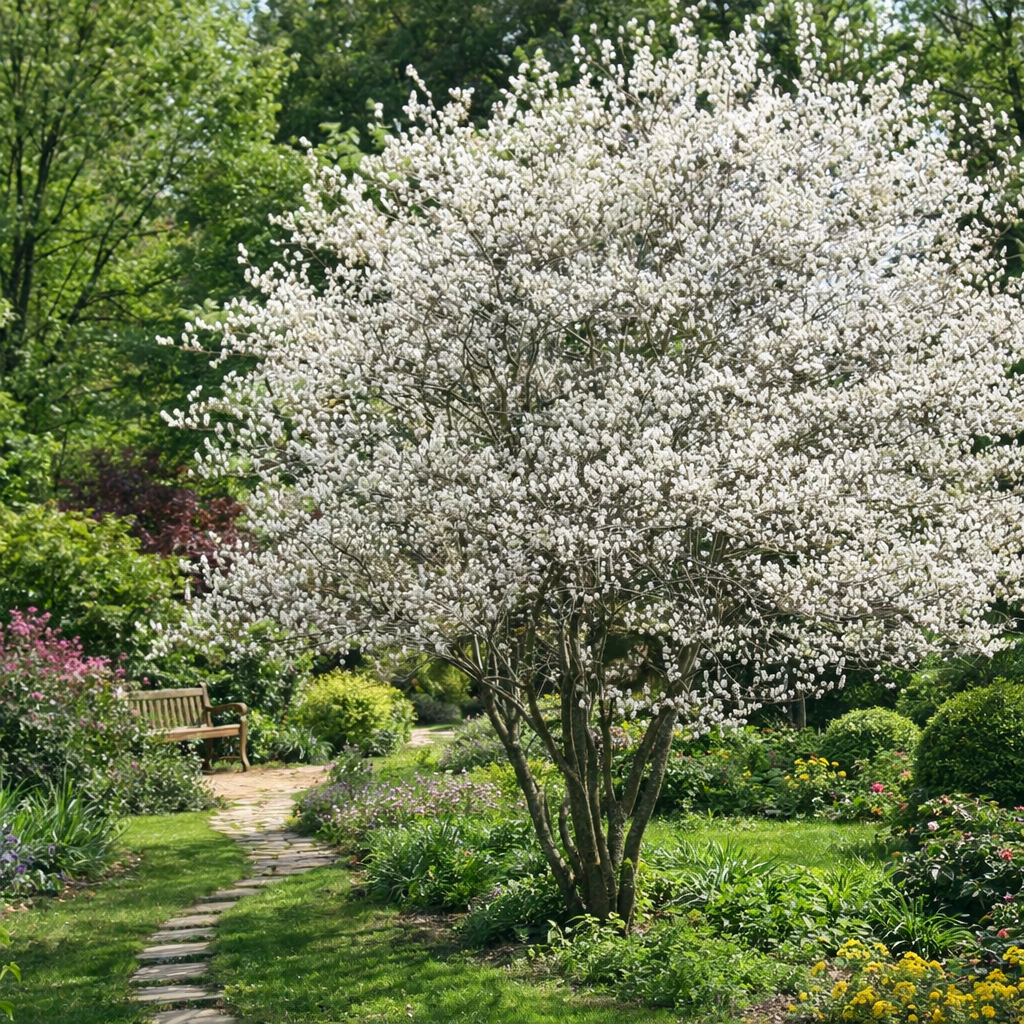
Apple serviceberry (Amelanchier × grandiflora) is a deciduous small tree, also called hybrid serviceberry, that arose naturally from downy serviceberry and Allegheny serviceberry. In mid to late spring, pink-tinged buds open into pendent clusters of five-petalled white flowers. Small sweet juicy fruit then changes from green to red and finally blue-black in June; it is edible and highly attractive to birds. Purplish emerging foliage becomes green in summer before turning yellow-orange to red in fall. Hardy to Zone 4, this tree develops a graceful rounded to spreading outline and is often grown with several stems.
Plant apple serviceberry in full sun or partial shade and cool, slightly acidic, well-drained soil. Full sun encourages heavier bloom, better fruiting, and stronger fall colour. Dig a hole as deep as the root ball and approximately twice as wide, position the root flare level with the soil, and water slowly. Allow approximately 6 to 8 m in height by 6 to 10 m in width (20 to 25 ft × 20 to 30 ft) at maturity. Space multiple trees according to the desired effect while preserving good air circulation. Apply 5 to 8 cm (2 to 3 in) of mulch without touching the trunk.
Use apple serviceberry as a specimen tree, in a woodland garden, loose hedge, naturalized planting, or near a living area where its four seasons of interest remain visible. Spring flowers support pollinators, while fruit feeds birds and may be harvested when dark and tender. Prune lightly during dormancy or after flowering to remove dead, crossing, or damaged wood and maintain the selected single- or multi-stemmed form. Shallow roots benefit from cool mulched soil. Watch for rust, leaf spots, cankers, and fire blight, especially when the tree is stressed by heat or drought. Smooth silver-grey bark becomes lightly fissured with age and adds winter texture.

Planting guide
From planting to establishment.
Soil and care
The right care,at the right time.
Soil pH
Minimum temperature
Care level
Drought tolerance
Watering
Soil type
Fertilization
Moisture
Seasonal care
Container growing
A garden,within reach.
Recommended pot size

Bloom and dimensions
Its place,in your garden.
Mature height
Width / spread
Flower color
Foliage color
Foliage type
Growth rate
Growth habit
Fragrance
Bloom period
Fruiting
Harvest
Garden associations
In goodcompany.
Companion plants
Plants to avoid
Recipe idea
From the gardento your plate.
Edible parts
Frequently asked questions
Your questions,answered.
How large does apple serviceberry grow?
Is apple serviceberry fruit edible?
Why choose apple serviceberry?
When and how should apple serviceberry be pruned?
Does apple serviceberry prefer full sun or partial shade?
Wildlife and pets