Silvery-blue dwarf shrub for cool acidic gardens

Blue Ice bog rosemary

Andromeda polifolia ‘Blue Ice’

Blue Ice bog rosemary is a dwarf evergreen shrub valued for narrow silvery-blue foliage and pale-pink spring bells. It slowly forms a compact cushion approximately 20 to 30 cm high by 40 to 60 cm wide (8 to 12 in × 16 to 24 in). Hardy to Zone 2, it prefers full sun or partial shade and very acidic, humus-rich soil that remains cool to moist yet drains well. Its small size suits cool rock gardens, heath gardens, pond edges, and containers. The plant is toxic and must not be eaten; its rosemary-like common name describes the foliage only. For best results, inspect moisture, drainage, and foliage colour regularly.
1 gallon
Each store has its own inventory.

Products and available quantities may vary between Brossard and Laval. To check a store’s inventory, please contact us directly.

Even better: visit us in store to discover the full selection available!

Share
Quantity
1 gallon
Exposure
Full sun to partial shade; avoid very hot positions
Hardiness
Zone 2

Discover the plant

Common nameBlue Ice bog rosemary; marsh andromeda
FamilyEricaceae
GenusAndromeda
Speciespolifolia
CultivarBlue Ice
TypeDwarf acid-loving evergreen shrub
Botanical nameAndromeda polifolia ‘Blue Ice’

Blue Ice bog rosemary (Andromeda polifolia ‘Blue Ice’) is a dwarf evergreen shrub that slowly forms a dense cushion of silvery-blue foliage. Its narrow, leathery, slightly rolled leaves resemble rosemary, although the plant is not edible. In spring, groups of pink buds open into small pale-pink bells held above the foliage. This cultivar reaches approximately 20 to 30 cm high by 40 to 60 cm wide (8 to 12 in × 16 to 24 in). Hardy to Zone 2, it brings outstanding cool colour to rock gardens, heath gardens, and low borders throughout the year.

Plant ‘Blue Ice’ in full sun or partial shade and very acidic, humus-rich soil that stays cool to moist while draining well. Never allow the root ball to dry completely, especially during the first season or in a container. A mulch of conifer needles helps maintain even moisture without raising soil pH. Space plants 40 to 60 cm (16 to 24 in) apart, keep the crown level with the soil, and water slowly after planting. Avoid lime, alkaline ground, prolonged drought, and stagnant water. Rainwater is especially useful where tap water is hard or alkaline.

Use Blue Ice bog rosemary at the front of an acid-loving border, beside a pond, in a cool rock garden, or among heathers, blueberries, and small conifers. Its slow growth and compact habit also suit a generous container with excellent drainage. Little pruning is needed; simply remove dead or damaged shoots after flowering. Intense heat, dry soil, or high alkalinity can brown the foliage, while waterlogged mix encourages root rot. All parts are toxic when ingested, so position the plant away from young children and pets that chew vegetation. The rosemary name describes its foliage only and does not indicate culinary use.

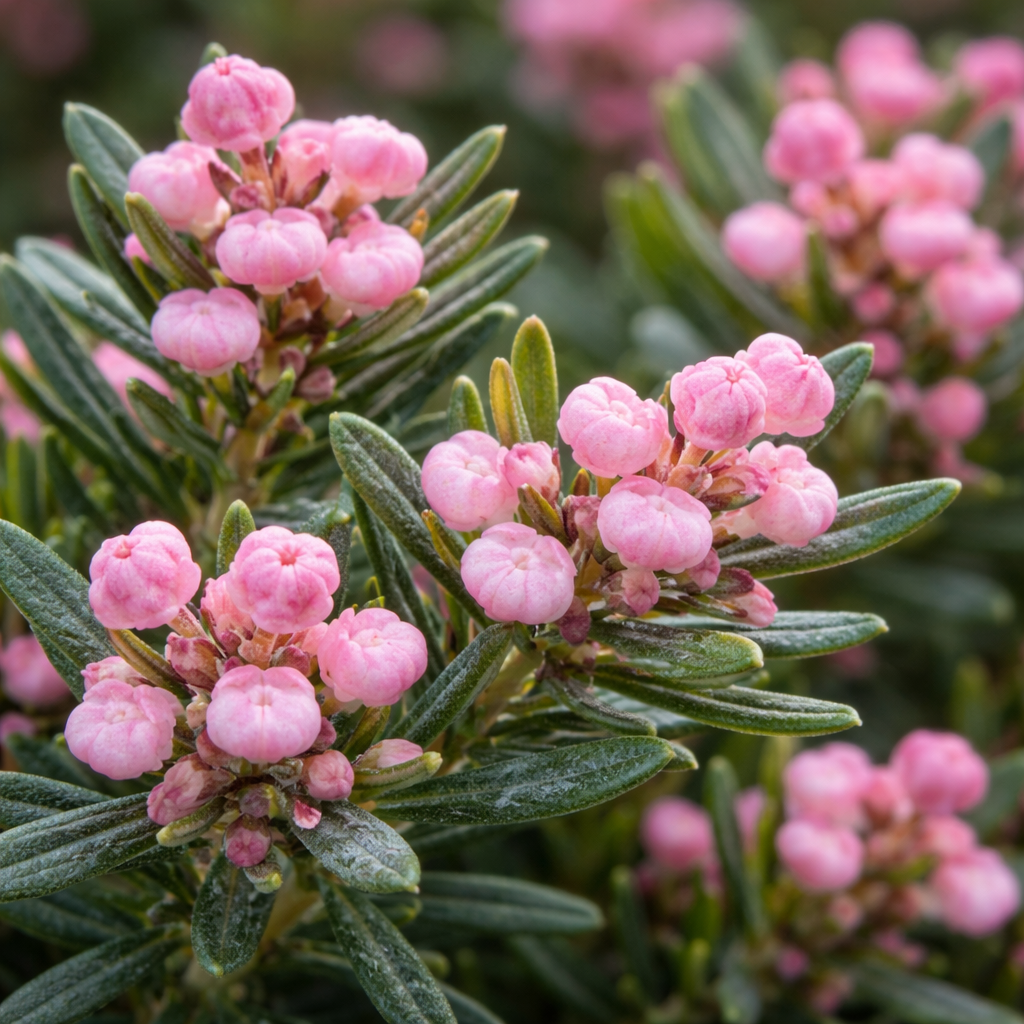
Blue Ice bog rosemary forming an evergreen cushion of narrow silvery-blue leaves with small pale-pink bell-shaped flowers. This view shows <em>Andromeda polifolia</em> ‘Blue Ice’, a Zone 2 dwarf shrub reaching approximately 20 to 30 cm high by 40 to 60 cm wide (8 to 12 in × 16 to 24 in), ideal for acidic, cool, moist soil.

Planting guide

From planting to establishment.

Spacing / density Space plants 40 to 60 cm (16 to 24 in) apart. Spacing of 40 to 45 cm (16 to 18 in) creates a continuous group sooner, while 50 to 60 cm (20 to 24 in) lets each cushion show its shape. Prepare the entire area with acidic substrate before planting to maintain uniform conditions around the roots.
Best planting time In spring after the soil thaws, or in early fall at least six weeks before persistent frost
Propagation Semi-ripe cuttings, layering, or division of suckers; cuttings preserve the cultivar faithfully

Soil and care

The right care,at the right time.

Soil pH

Very acidic to acidic, ideally approximately 4.5 to 6.0

Minimum temperature

Approximately -45 °C (-49 °F), Zone 2

Care level

Low to moderate; monitor moisture and acidity

Watering

Keep soil consistently cool to moist, particularly during the first season, flowering, and hot periods. Water slowly when the surface begins to dry, never allowing the root ball to become completely dry. Avoid stagnant water around the roots. Rainwater is preferable where tap water contains abundant lime because repeated alkaline irrigation can raise pH and cause chlorosis or browning. For best results, inspect moisture, drainage, and foliage colour regularly.

Soil type

Very acidic, humus-rich soil that stays cool to moist and drains well is ideal. A heath-style mix enriched with lime-free organic matter works well. The plant tolerates abundant soil moisture, but a container or depression holding stagnant water encourages root rot. Alkaline, lime-rich, dry, or heavily compacted soil quickly causes poor growth and browning foliage. For best results, inspect moisture, drainage, and foliage colour regularly.

Fertilization

Only light feeding is needed. In spring, apply a low dose of fertilizer for acid-loving plants when growth or a soil test indicates a need. Follow the label rate and water afterward. Avoid lime, wood ash, alkaline compost, and rich fertilizer because they can raise pH, burn fine roots, or create tender growth with reduced resilience. For best results, inspect moisture, drainage, and foliage colour regularly.

Moisture

High and even around the roots, without stagnant water

Seasonal care

In spring, remove dead shoots and renew a thin layer of conifer needles without covering the crown. Pink buds generally open in May or June; water regularly when rainfall is insufficient. After flowering, prune only damaged or unbalanced stems because growth is slow and the habit remains naturally compact. In summer, check soil moisture often, especially in containers, and use rainwater where local water is alkaline. Browning tips can indicate drought, excessive heat, or high pH. In fall, continue watering until freeze-up when weather remains dry and avoid late fertilizer. In winter, protect containers from repeated freezing and thawing as well as drying wind. Throughout the year, prevent stagnant water and keep the plant away from children and pets likely to chew it. For best results, inspect moisture, drainage, and foliage colour regularly. This attention supports a compact, healthy, lasting plant. For best results, inspect moisture, drainage, and foliage colour regularly. This attention supports a compact, healthy, lasting plant. For best results, inspect moisture, drainage, and foliage colour regularly. This attention supports a compact, healthy, lasting plant. For best results, inspect moisture, drainage, and foliage colour regularly. This attention supports a compact, healthy, lasting plant. For best results, inspect moisture, drainage, and foliage colour regularly. This attention supports a compact, healthy, lasting plant. For best results, inspect moisture, drainage, and foliage colour regularly.

Container growing

A garden,within reach.

Recommended pot size

At least 15 to 20 L (4 to 5 US gal), wide and well drained
‘Blue Ice’ grows well in a wide container of at least 15 to 20 L (4 to 5 US gal) with numerous drainage holes. Use an acidic heath-plant mix with a lime-free drainage component. Keep the mix evenly moist, use rainwater when possible, and protect the pot from wind and repeated freeze-thaw cycles.
Blue Ice bog rosemary forming an evergreen cushion of narrow silvery-blue leaves with small pale-pink bell-shaped flowers. This view shows Andromeda polifolia ‘Blue Ice’, a Zone 2 dwarf shrub reaching approximately 20 to 30 cm high by 40 to 60 cm wide (8 to 12 in × 16 to 24 in), ideal for acidic, cool, moist soil.

Bloom and dimensions

Its place,in your garden.

Mature height

30 to 40 cm (12 to 16 inches)

Width / spread

1 m (3 feet)

Flower color

Pale pink to pinkish white

Foliage color

Silvery blue to blue-grey throughout the year

Foliage type

Evergreen; narrow, leathery, slightly rolled leaves

Growth rate

Slow

Growth habit

Low, compact, spreading, and cushion-forming

Fragrance

No notable fragrance

Bloom period

Pink buds grouped at shoot tips open into small nodding urn-shaped or bell-shaped flowers. Their colour ranges from pinkish white to pale pink and contrasts with the silvery-blue foliage. Bloom occurs mainly in May and June according to climate. Flowers attract bees and other pollinating insects, then produce small brown capsules with little ornamental value. For best results, inspect moisture, drainage, and foliage colour regularly.

Fruiting

Small rounded capsules form after flowering and turn brown as they mature. They contain numerous tiny seeds but provide little ornamental value. Because ‘Blue Ice’ is a cultivar selected for foliage and habit, seedlings do not reproduce its characteristics reliably. Propagation by cuttings, layering, or suckers is preferable. Fruit and all other plant parts are toxic and must not be eaten.
Blue Ice bog rosemary forming an evergreen cushion of narrow silvery-blue leaves with small pale-pink bell-shaped flowers. This view shows Andromeda polifolia ‘Blue Ice’, a Zone 2 dwarf shrub reaching approximately 20 to 30 cm high by 40 to 60 cm wide (8 to 12 in × 16 to 24 in), ideal for acidic, cool, moist soil.

Garden associations

In goodcompany.

Companion plants

Pair ‘Blue Ice’ with blueberries, cranberries, wintergreen, heathers, dwarf kalmias, compact rhododendrons, and small conifers that prefer acidic soil. Sedges or other moisture-loving plants can complete a pond-side border when their roots do not overwhelm the small shrub. Choose non-calcareous stones and leave enough space to display its cushion-shaped habit. For best results, inspect moisture, drainage, and foliage colour regularly. This attention supports a compact, healthy, lasting plant. For best results, inspect moisture, drainage, and foliage colour regularly. This attention supports a compact, healthy, lasting plant.

Plants to avoid

Avoid alkaline or lime-rich soil, lime, wood ash, prolonged drought, intense heat, and stagnant water. High pH can cause chlorosis and browning, while a dry root ball quickly leads to scorched leaves. Conversely, waterlogged oxygen-poor mix encourages root rot. Rich fertilizer, road salt, and compaction also harm fine roots. Monitor conditions before applying a treatment because correcting moisture or pH is often the most useful response. For best results, inspect moisture, drainage, and foliage colour regularly. This attention supports a compact, healthy, lasting plant.

Frequently asked questions

Your questions,answered.

What soil is best for Blue Ice bog rosemary?
Blue Ice bog rosemary prefers very acidic, humus-rich soil that stays cool to moist and drains well, with a pH of approximately 4.5 to 6.0. A mix intended for heath plants and enriched with lime-free organic matter works well. Avoid alkaline soil, wood ash, and lime-rich amendments, which can yellow or brown the foliage. The root ball should retain even moisture without sitting in stagnant water. In heavy ground, plant slightly high and improve drainage with non-calcareous materials. A thin layer of conifer needles helps limit evaporation without raising pH. For best results, inspect moisture, drainage, and foliage colour regularly.
How often should Blue Ice bog rosemary be watered?
Water often enough to keep the root ball consistently cool to moist, especially during the first season and hot periods. Check the soil surface and irrigate slowly when it begins to dry; the root ball should never become completely dry. Drainage remains essential because stagnant water deprives roots of oxygen and encourages rot. Containers require frequent checking, sometimes daily during hot windy weather. Prefer rainwater where tap water is hard or alkaline. A light conifer-needle mulch reduces moisture swings. Water the soil rather than repeatedly wetting foliage, and empty any saucer that remains full after irrigation. For best results, inspect moisture, drainage, and foliage colour regularly.
Is Blue Ice bog rosemary edible?
No. Every part of bog rosemary contains toxic compounds, including andromedotoxin, and must not be ingested. The common name “bog rosemary” refers only to narrow leaves that resemble rosemary; this is not a culinary herb. Position the plant away from young children and pets that chew vegetation, and pay particular attention to the small capsules formed after flowering. If ingestion or symptoms occur, contact a poison centre, physician, or veterinarian promptly and provide the botanical name Andromeda polifolia. Do not prepare tea, seasoning, or homemade remedies from the foliage, flowers, fruit, or stems. For best results, inspect moisture, drainage, and foliage colour regularly.
Why is the foliage of Blue Ice bog rosemary turning brown?
Browning can indicate a root ball that is too dry, excessive heat, high pH, or salt damage. First check moisture several centimetres below the surface: soil should remain cool to moist without being waterlogged. When veins stay green while the rest of a leaf pales, excessive alkalinity may be limiting iron uptake. Avoid lime and use rainwater where local water is alkaline. Soft stems and dark roots point instead to inadequate drainage. Correct growing conditions before adding fertilizer or applying a treatment. Protect the plant from drying winter wind and road-salt splash, especially when planted near a driveway or walkway.
Can Blue Ice bog rosemary grow in a container?
Yes. Choose a wide container holding at least 15 to 20 L (4 to 5 US gal) with several drainage holes. Fill it with an acidic heath-plant mix plus a lime-free drainage material. Keep the mix evenly moist and use rainwater whenever possible. Do not let the pot stand in a full saucer. In winter, place it out of drying wind and protect the root ball from repeated freezing and thawing. Repot only when roots occupy the container because ‘Blue Ice’ grows slowly. Pair it with small acid-loving plants that will not compete aggressively for moisture or root space. For best results, inspect moisture, drainage, and foliage colour regularly.

Wildlife and pets

Life,around your plants.

Native plant

Yes

Reported toxicity

Yes

Supporting wildlife

Spring bells provide nectar and pollen for bees, bumblebees, and other insects. The plant’s small stature also creates low cover within a diverse planting. Its capsules are not an important ornamental or edible fruit for birds. Avoid broad-spectrum insecticides during bloom to preserve visiting pollinators.