


Sale
Sold out

Vegetable
Nightshades
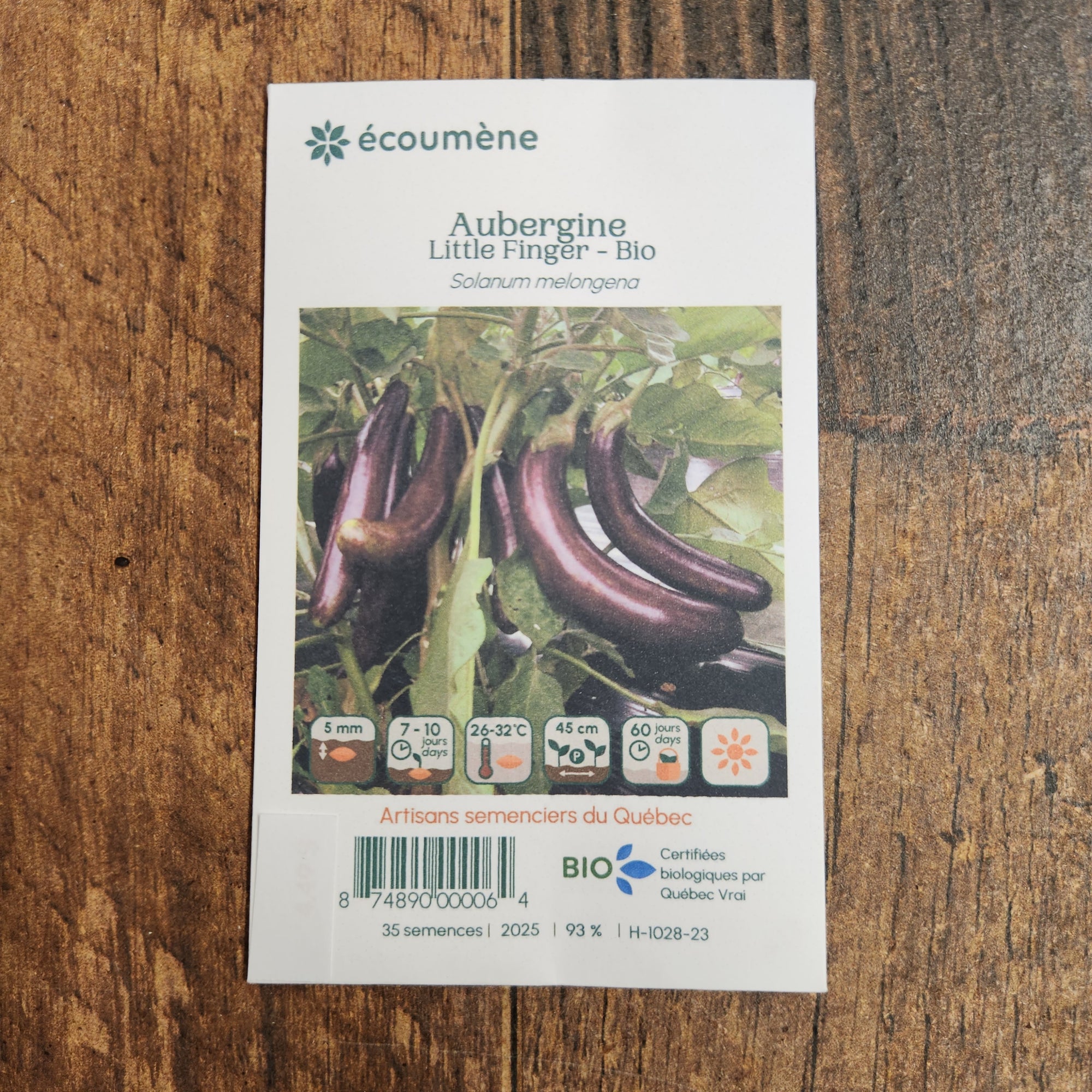
Aubergine 'Little Finger' (Solanum melongena)
Eggplant
Product code : JAREC-0012
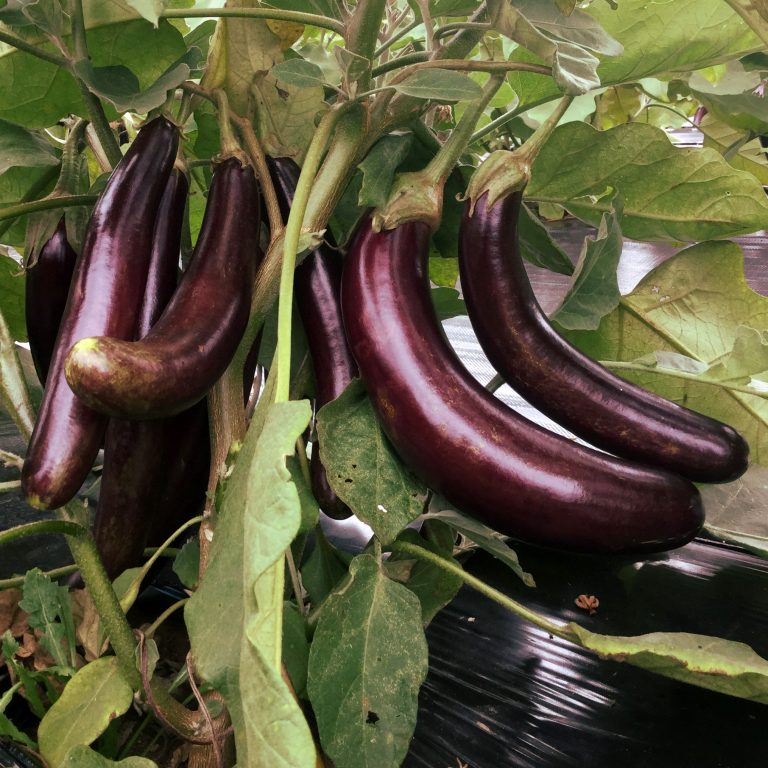
The organic 'Little Finger' eggplant is an early and productive variety that stands out for its compact habit, high reliability, and the delicate nature of its elongated fruits with purplish skin nuanced with bluish reflections. In the garden as well as on the terrace, it adds an elegant and gourmet touch, thanks to its adaptability to cultivation in the ground as well as in containers. Its clusters of small, tender fruits form generously throughout the season, offering abundant and regular harvests for summer cooking. Its delicate flavor makes it an ideal eggplant for stir-fries, grilling, stews, and Mediterranean recipes.
- Quantity
- 35 seeds
- Exposure
- Sun
- Life cycle
- Annual
Discover the plant
Common nameAubergine 'Little Finger'
FamilyNightshades
GenusNightshade
Specieseggplant
CultivarLittle Finger
TypeVegetable
Botanical nameEggplant
Reproducible seedsYes
‘Little Finger’ Eggplant (Solanum melongena). The organic ‘Little Finger’ eggplant is an early and productive variety that stands out for its compact growth habit, high reliability, and the delicate flavor of its elongated fruits with purplish skin nuanced with bluish reflections. In the garden as well as on the terrace, it adds an elegant and gourmet touch, thanks to its excellent adaptability to both open-ground and container cultivation. Its clusters of small, tender fruits form generously throughout the season, offering abundant and regular harvests for summer cooking.
Recommended sowing period: March to April. The depth should be 0.5 to 1 cm (1/4 to 3/8 in). Germination usually takes 7 to 14 days. For germination, keep the potting mix at 24 to 30 °C (75 to 86 °F). Eggplants should be started indoors so they can be transplanted to the garden with a well-rooted root ball. Heat promotes germination, but seedlings then need light to remain stocky. Repot vigorous specimens individually and space them under the lights. Acclimatize gradually, avoiding cool nights.
Harvested young, its fruits retain a fine texture and are particularly well suited to frequent picking. An eggplant can add a decorative presence to the garden thanks to its large leaves and colorful fruits. Reserve a spot where the harvests remain visible amidst the foliage. A border of lower plants is more suitable than an overly dense neighborhood. Leave a passage to cut the fruits at a good height and allow enough space around the loaded branches. Its clusters of small, tender fruits form generously throughout the season, offering abundant and regular harvests for summer cooking.

Sowing guide
It all startswith a seed.
Sowing depth
0.5 to 1 cm (1/4 to 3/8 in.)
Germination temperature
24 to 30 °C (75 to 86 °F)
Germination time
7 to 14 days
Sowing period
March to April
Propagation
Sowing
Growing method
Recommended sowing period: March to April. Sow at a depth of 0.5 to 1 cm (1/4 to 3/8 in). Germination usually takes 7 to 14 days. For germination, maintain the potting mix at 24 to 30 °C (75 to 86 °F). Eggplants should be started indoors so they can be transplanted into the garden with a well-established root ball. Heat aids germination, but seedlings then need light to remain stocky. Repot vigorous seedlings individually and space them under lights. Acclimatize gradually, avoiding cool nights. Slow establishment in cold soil will delay flower and fruit development. Harvest eggplants when their skin is still glossy and their flesh firm. A fruit left too long on the plant will develop more seeds and lose culinary quality. Cut with secateurs, as the stem is tough. Support the fruit-bearing branches and keep the foliage well exposed to light. During hot periods, regular watering will support growth without saturating the soil. Leafy greens require harvesting adjusted to the plant type. Outer leaf harvesting preserves the heart when you want to continue production.
Soil and care
The right care,at the right time.
Care level
Regular during establishment, then adapted to growing conditions
Watering
Regular
Soil type
Rich, friable, and well-drained
Fertilization
Fertilisation supports growth and takes into account nutrients already present in the soil or potting mix. Use mature compost or a fertilizer suitable for the crop, following the dosage instructions. Avoid using too many products, especially in a container where roots occupy a limited volume. Water as needed after application and observe foliage development before re-fertilizing.
Moisture
Keep the soil moist during germination, without standing water; then adjust according to cultivation
Seasonal care
Organic 'Little Finger' eggplant is an early and productive variety, prized for its compact habit, high reliability, and the delicate flavor of its elongated fruits with purplish skin nuanced with bluish reflections. Eggplant should be started indoors so that it can be transplanted into the garden with a well-established root ball. Heat aids germination, but seedlings then need light to remain stocky. Repot vigorous plants individually and space them under grow lights. Acclimatize gradually, avoiding cool nights. Slow establishment in cold soil will delay flower and fruit formation. Eggplants are harvested when their skin is still shiny and their flesh firm. A fruit left on the plant for too long will develop more seeds and lose culinary quality. Cut with secateurs, as the stem is strong. Support the fruit-bearing branches and keep the foliage well-exposed to light. During hot periods, regular watering will help the fruits grow without waterlogging the soil. Leafy greens require harvesting adjusted to the type of plant. Harvesting outer leaves preserves the heart when continuous production is desired. Very old leaves do not offer the same tenderness as young shoots. Rinse the harvest just before use or dry it carefully before a short stay in the refrigerator. Its clusters of small, tender fruits form generously throughout the season, offering abundant and regular harvests for summer cooking.
Container growing
A garden,within reach.
Suitable for containers
Yes
Recommended pot size
A stable container, with drainage holes, wide enough for the plant to spread out and deep enough for its roots
Choose this exposure: full sun. Reserve this spread around the plant: 30 to 40 cm (12 to 16 in). Pot cultivation allows the eggplant to be placed in a warm, sheltered spot. Choose a stable container that supports the plant's shape and retains a reserve of potting soil around the roots. Place an inconspicuous support before the fruits become heavy. Large leaves evaporate water during hot days: check the potting soil deeply and water slowly to moisten the entire root ball. In the garden as well as on the patio, it adds an elegant and gourmet touch, thanks to its beautiful adaptation to cultivation both in the ground and in containers. The organic 'Little Finger' eggplant is an early and productive variety that seduces with its compact habit, great reliability, and the finesse of its elongated fruits with purplish skin nuanced with bluish reflections. Its clusters of small, tender fruits form generously throughout the season, offering abundant and regular harvests for summer cooking. Its delicate flavor makes it an ideal eggplant for stir-fries, grilling, stews, and Mediterranean recipes.
Bloom and dimensions
Its place,in your garden.
Mature height
50 to 60 cm (20 to 24 in)
Width / spread
30 to 40 cm (12 to 16 in.)
Foliage type
Seasonal foliage
Growth habit
Erect, Compact
Bloom period
July to September
Fruiting
Its clusters of small, tender fruits form generously throughout the season, offering abundant and regular harvests for summer cooking. Its delicate flavor makes it an ideal eggplant for stir-fries, grilling, stews, and Mediterranean recipes. Picked young, its fruits retain a fine texture and are particularly well-suited to frequent harvesting. Leafy greens require harvesting adjusted to the type of plant.
Harvest
60 days after sowing
Garden associations
In goodcompany.
Companion plants
In a diversified plantation, you can reserve neighboring sections for these plants: basil, pepper, bean. The association here serves to organize space and harvests. Respect the height, light, and water needs of each plant, without crowding the foliage. Maintain a path for watering and picking, then remove finished crops to free up space. This organization facilitates maintenance without promising protection against pests. An eggplant can provide a decorative presence in the vegetable garden thanks to its large leaves and colorful fruits.
Recipe idea
From the gardento your plate.
Edible parts
Ripe fruit
Eggplant ‘Little Finger’ Recipe Idea: Roasted Eggplant for Four Servings. Cut 600g of eggplant into regular pieces, removing the stem, and mix with 25ml of olive oil, one minced garlic clove, and a pinch of salt. Spread in a wide enough dish. Cook at 210 °C (410 °F) for 25 to 35 minutes, turning the pieces halfway through cooking. The flesh should be completely tender. Add 10ml of lemon juice and chopped parsley before serving. Prepare ingredients with clean utensils and adjust the cutting size to your harvest. This recipe highlights freshly picked parts: remove damaged pieces before preparation. If doubling quantities, ensure enough space in the dish for even mixing or cooking. Promptly refrigerate leftovers in a sealed container and consume within two days. For a meal for two people, simply divide all quantities by two.
Frequently asked questions
Your questions,answered.
How to successfully sow 'Little Finger' Eggplant?
Recommended sowing period: March to April. Sow 0.5 to 1 cm (1/4 to 3/8 in.) deep. Germination usually takes 7 to 14 days. For germination, maintain the soil temperature at 24 to 30°C (75 to 86°F). Eggplants should be started indoors so that they can be transplanted into the garden with a well-established root ball. Heat promotes germination, but seedlings then need light to remain stocky. Repot vigorous plants individually and space them under the grow lights. Acclimatize gradually, avoiding cool nights. Slow establishment in cold soil will delay flower and fruit formation.
Can 'Little Finger' Eggplant be grown in pots?
Choose this exposure: full sun. Reserve this spacing around the plant: 30 to 40 cm (12 to 16 in). Pot cultivation allows the eggplant to be placed in a warm, sheltered spot. Choose a stable container that supports the plant's silhouette and maintains a reserve of potting soil around the roots. Place a discreet support before the fruits become heavy. Large leaves evaporate water during hot days: check the potting soil deeply and water slowly to moisten the entire root ball. The organic 'Little Finger' eggplant is an early and productive variety that seduces with its compact habit, great reliability, and the delicacy of its elongated fruits with purplish skin nuanced with bluish reflections.
When to harvest 'Little Finger' Eggplant?
Its clusters of tender, small fruits form generously throughout the season, providing abundant and regular harvests for summer cooking. Its delicate flavour makes it an ideal eggplant for stir-fries, grilling, stews, and Mediterranean recipes. Picked young, its fruits retain a fine texture and are particularly well-suited to frequent harvesting. Leafy greens require harvesting adjusted to the type of plant. Outer leaf harvesting preserves the heart when you want to continue production. Very old leaves do not offer the same tenderness as young shoots. Rinse the harvest just before use or dry it carefully before a short stay in the refrigerator.
What makes Aubergine 'Little Finger' stand out in the garden?
Organic 'Little Finger' eggplant is an early and productive variety that stands out for its compact habit, high reliability, and the delicate flavor of its elongated fruits with purplish skin nuanced with bluish reflections. In the vegetable garden or on the terrace, it adds an elegant and gourmet touch, thanks to its excellent adaptability to cultivation both in the ground and in containers. Its clusters of small, tender fruits form generously throughout the season, offering abundant and regular harvests for summer cooking. Its delicate flavor makes it an ideal eggplant for stir-fries, grilling, stews, and Mediterranean recipes.
How to organize a planting of Aubergine 'Little Finger'?
An eggplant can provide a decorative presence in the vegetable garden thanks to its large leaves and colorful fruits. Reserve a spot for it where the harvests remain visible amidst the foliage. A border of lower plants is more suitable than an overly dense neighborhood. Leave a pathway to cut the fruits at a good height and allow enough space around the loaded branches. Eggplants are harvested when their skin is still shiny and their flesh firm. A fruit left on the plant for too long develops more seeds and loses its culinary quality. Cut with a pruner, as the stem is strong.
For a great start to your seeds
The right extras.Right here.
Seed Starting Soil
Shop the collectionSeed starting supplies
Shop the collection





