


Sale
Sold out

Biennial leaf vegetable grown as an annual
Amaranthaceae
Organic leafy vegetable seeds
Organic 'Rainbow' Swiss chard
Beta vulgaris subsp. vulgaris
Product code : BIOVO-0005
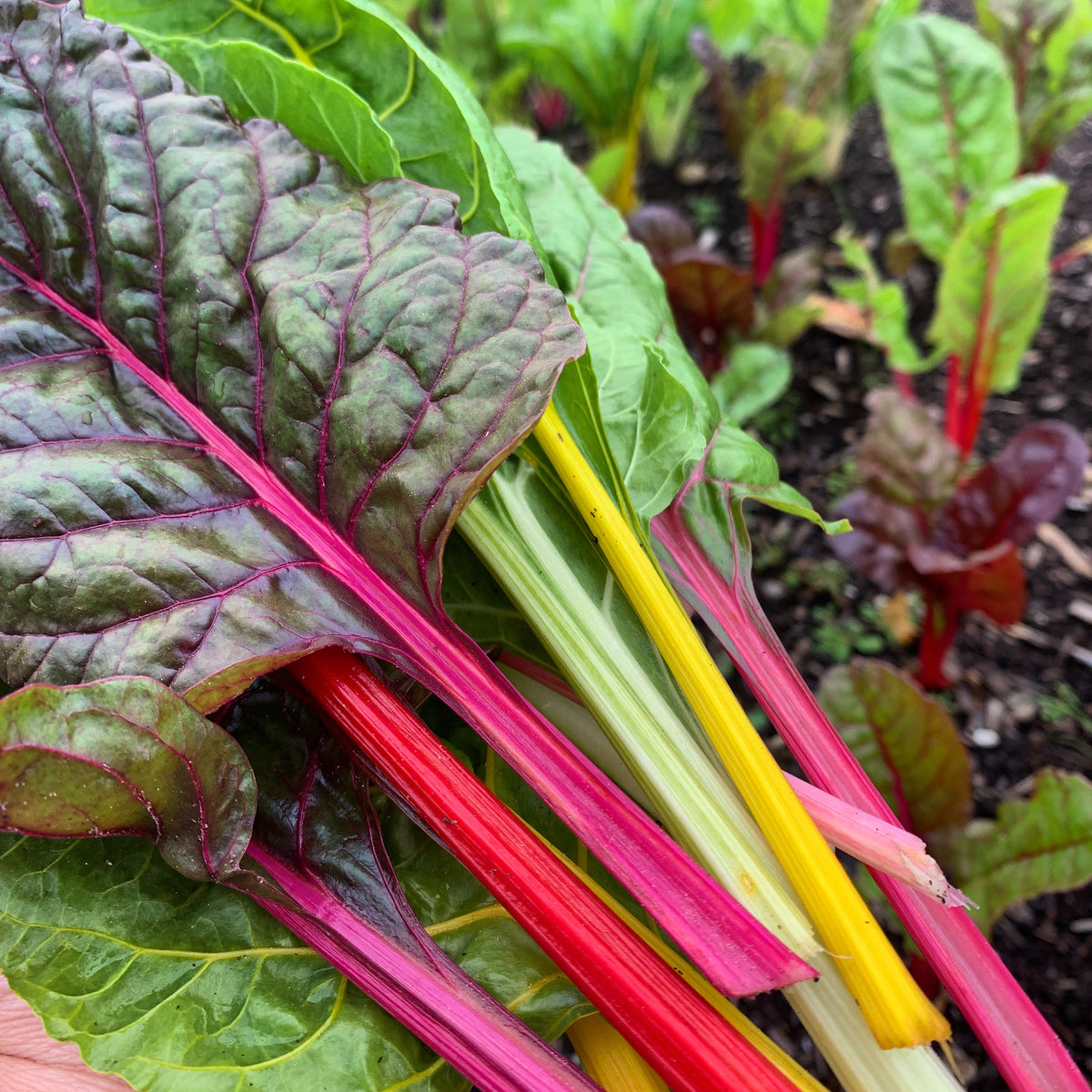
Organic 'Rainbow' Swiss chard, Beta vulgaris subsp. vulgaris subsp. vulgaris, is a mixture producing white, yellow, orange, pink, and red stalks. Each product offers about 100 certified organic seeds, an indication of 60 days, and a reported germination reference of 85%. Sow 1–2 cm deep once soil reaches approximately 10°C. Every seed cluster may produce several seedlings, so thin with scissors to retain 30.5 cm between full-sized plants. Grow in sun or partial shade in fertile, moist, well-drained soil. Harvest outer leaves while preserving the centre to encourage repeated cuts. Colour proportions vary naturally from one sowing to another. Repeated outer-leaf harvests can extend production.
- Quantity
- Approximately 100 organic seeds
- Exposure
- Sun to partial shade
- Life cycle
- Biennial, generally grown as an annual
Discover the plant
Common nameRainbow Swiss chard, multicolour leaf beet
FamilyAmaranthaceae
GenusBeta
Speciesvulgaris subsp. vulgaris
CultivarRainbow Mix (mix)
TypeBiennial leaf vegetable grown as an annual
Botanical nameBeta vulgaris subsp. vulgaris
Organic 'Rainbow' Swiss chard (Beta vulgaris subsp. vulgaris) is a chard mixture producing white, yellow, orange, pink, and red stalks. Every plant may show a different shade, and colour proportions vary naturally within this multicolour mixture. This product contains approximately 100 organic seeds, with a 60-day reference and a reference germination rate of 85%. Large green leaves and fleshy stalks can be sautéed, braised, steamed, baked in gratins, or added to soup. The upright habit brings colourful structure to gardens and containers, while preserving the centre allows repeated harvests over a long period.
Direct-sow two to four weeks before the last frost or once soil reaches approximately 10°C. Every seed cluster may produce several seedlings. Sow 1–2 cm deep, initially leaving approximately 15.2 cm between clusters. Maintain consistent moisture, then thin to 30.5 cm with scissors; also leave 30.5 cm between rows. To preserve a varied palette, retain several plants rather than only one seedling. Grow in sun or partial shade in fertile, moist, well-drained soil with pH from 6 to 8. Mulch after establishment without covering the crown. Deep watering during warm weather helps keep stalks tender.
Harvest outer leaves once they reach the desired size, using a clean knife without injuring young centre leaves. Thick stalks often require longer cooking, so begin them several minutes before adding the leaf blades. Some colours may soften during cooking without changing edibility. Maintain consistent moisture during heat and use light protection to extend fall harvest. Monitor slugs, leaf miners, aphids, and leaf spots. Remove diseased leaves, irrigate at soil level, and refrigerate clean portions promptly. If seed is saved, colours in the next generation can recombine. One plant never represents every possible colour in the mixture.

Sowing guide
It all startswith a seed.
Sowing depth
Approximately 1 to 2 cm (3/8 to 3/4 in)
Spacing / density
15.2 cm at sowing; thin to 30.5 cm; 30.5 cm between rows
Germination temperature
Soil at least 10 °C (50 °F); germinates over a broad temperature range
Germination time
Approximately 7 to 14 days in evenly moist soil; cool soil slows emergence.
Sowing period
Direct-sow 2 to 4 weeks before last frost, then make successive sowings through midsummer
Propagation
Direct sowing or cell starting with careful transplanting
Growing method
Growing 'Rainbow Mix (mix)' Swiss chard from seed. Direct-sow 'Arc-en-ciel' two to four weeks before last frost or once soil reaches approximately 10°C. Make furrows 1 to 2 cm deep, space clusters, cover, and water gently. Every seed cluster may produce several seedlings. Once first true leaves appear, thin with scissors by retaining the strongest plant without disturbing neighbouring roots. For large leaves, keep 20 to 30 cm between plants; sow more closely for baby greens. Maintain moist soil with deep irrigation and mulch applied after thinning. Harvest outer leaves with a clean knife while preserving the centre. Make successive sowings through midsummer to spread harvest. Remove diseased leaves and irrigate at soil level. In fall, light cover protects from cold nights. After severe frost, harvest remaining sound leaves, remove diseased debris, and record actual production length and compare it with the 60-day reference. Keep every row labelled as a multicolour Rainbow mixture. Inspect both leaf surfaces weekly and record clusters that produced several seedlings. When growth slows, check moisture, light, and density before feeding. Keep rows labelled and retain the multicolour mixture description clearly on every label. Harvest into shade, clean tools after diseased plants, and refrigerate sound leaves promptly.
Soil and care
The right care,at the right time.
Soil pH
Approximately 6.0 to 8.0; avoid strongly acidic soil
Care level
Easy
Watering
For 'Rainbow' Swiss chard, reliable moisture supports both the leafy top and the swelling large textured leaves on fleshy multicoloured stalks. Before 'Rainbow' Swiss chard emerges, use a gentle flow; as roots lengthen, water more deeply and let excess leave the bed. Below 'Rainbow' Swiss chard, check moisture before irrigating so the centre of the root zone does not stay saturated. Mulch 'Rainbow' Swiss chard lightly only after establishment, limiting abrupt wet-dry cycles that can cause cracking or uneven texture. A 'Rainbow' Swiss chard container must drain freely and needs daily checks in warm wind while the edible root enlarges.
Soil type
'Rainbow' Swiss chard forms best in friable soil that lets its large textured leaves on fleshy multicoloured stalks enlarge without standing water. Well before sowing 'Rainbow' Swiss chard, work in mature compost, remove stones and undecomposed debris, and avoid fresh manure near its roots. For 'Rainbow' Swiss chard, the stated soil reaction is approximately 6.0 to 8.0; avoid strongly acidic soil; confirm it with a test before amending. Level the 'Rainbow' Swiss chard seedbed carefully so moisture and emergence stay uniform across the row. For potted 'Rainbow' Swiss chard, use the recommended depth, light vegetable mix, and clear drainage holes.
Fertilization
'Rainbow Mix (mix)' responds best to moderate fertility and even moisture. Let a soil test guide any corrective amendment. For 'Rainbow' Swiss chard, its leafy harvest should grow steadily without becoming soft. Never place fertilizer directly against young roots. Heavy feeding makes Rainbow Swiss chard more vulnerable to stress. Use new growth to judge whether nutrition is adequate. For 'Rainbow Mix (mix)', its leaf rosette benefits from cool, consistently moist soil. Apply every fertilizer at its labelled rate. Stop feeding 'Rainbow' Swiss chard well before the intended harvest.
Moisture
Chard prefers steady root-zone moisture with good airflow among leaves. Avoid both prolonged drought and constantly waterlogged soil. Irrigate at soil level in the morning so foliage remains dry; this reduces conditions favouring leaf spots and supports a clean harvest.
Seasonal care
Seasonal care for 'Rainbow Mix (mix)' Swiss chard. Start 'Rainbow' Swiss chard when its bed and the local frost pattern are ready; the supplied window is direct-sow 2 to 4 weeks before last frost, then make successive sowings through midsummer. Sow approximately 1 to 2 cm deep in soil at least 10 °C (50 °F); the working germination range is 7 to 14 days, with moisture held steady rather than saturated. Prepare a fine, fertile, well-drained seedbed and keep the shallow root zone evenly moist from emergence onward. Thin or space seedlings while young so each plant has room to develop clean outer leaves around an open centre. Water at soil level in the morning, avoiding both a dry crust and standing moisture inside the developing crown. For container-grown 'Rainbow' Swiss chard, use the supplied guidance—at least 25 to 30 cm (10 to 12 in) deep and wide per plant—and check drainage before growth hides the surface. As temperatures rise, faster growth and bolting can shorten the harvest window, so inspect the crop more often. Check for slugs, chewing insects, and damaged outer leaves, using barriers and sanitation before considering any treatment on an edible crop. Follow the supplied harvest cue—repeated outer leaves; baby leaves earlier; retain the centre—then cut while leaves are crisp and before the centre elongates or flavour turns strongly bitter. For an autumn crop, sow only when local summer heat is easing and enough growing time remains before persistent freeze. Remove bolted or diseased plants promptly, chill sound leaves after harvest, and leave the bed clean for the next succession.
Container growing
A garden,within reach.
Recommended pot size
At least 25 to 30 cm (10 to 12 in) deep and wide per plant
Growing 'Rainbow Mix (mix)' Swiss chard in containers. For 'Rainbow Mix', choose a container matching this guide: at least 25 to 30 cm (10 to 12 in) deep and wide per plant. Keep several drainage holes unobstructed. Use fresh, fine potting mix that holds steady moisture while allowing surplus water to escape. At final planting, follow this layout for 'Rainbow Mix': 15.2 cm at sowing; thin to 30.5 cm; 30.5 cm between rows. Mark positions before roots are placed. Feed lightly only when growth or leaf colour shows a need. As the crop matures, use the expected harvest form—large textured leaves on fleshy multicoloured stalks—to guide support, inspection, and careful picking. Rotate the container for even light while keeping crowded leaves from rubbing against a wall. Place this leafy crop before late-season crowding develops, keeping its mature habit in mind: upright, open rosette. Sow the rosette thinly or transplant a sturdy seedling without burying the crown. The planting needs sun to partial shade; nearby walls or taller crops should not compromise it. Harvest clean outer leaves while preserving the centre, or cut the whole plant at its intended stage with a clean knife. Cut clean leaves before bolting, cool them promptly, and remove diseased potting debris from reuse. Succession-sow another labelled container instead of keeping bolting this leafy crop. Remove diseased mix from reuse, wash the pot, and cool every edible harvest promptly.

Bloom and dimensions
Its place,in your garden.
Mature height
Approximately 30 to 45 cm (12 to 18 in)
Width / spread
Approximately 20 to 35 cm (8 to 14 in)
Flower color
Inconspicuous green
Foliage color
Green leaves with white, yellow, orange, pink, and red stalks
Foliage type
Deciduous, harvested as an annual vegetable
Growth rate
Fast
Growth habit
Upright, open rosette
Fragrance
Vegetal, mild, and earthy after cooking
Bloom period
'Rainbow Mix (mix)' flowers only after shifting from harvest growth into reproduction. A taller seed stalk rises beyond the established upright, open rosette. In the 'Rainbow Mix (mix)' planting, water at soil level so open blossoms remain dry. For 'Rainbow' Swiss chard, as bloom advances, quality of the large textured leaves on fleshy multicoloured stalks declines and energy moves toward seed. When tending Rainbow Swiss chard, remove bolting plants when leaves or roots are the goal, or retain a clearly labelled specimen for insects or seed observation. Do not let unwanted seed scatter, and remember that nearby related plants may affect seed purity.
Fruiting
After second-year flowering, plants may form dry clusters containing several seeds. This fruiting stage is unnecessary for harvesting leaves and stalks. When saving seed, let several stalks mature completely in dry weather, collect them in labelled bags, and finish drying away from moisture. Colours may recombine in the next generation, so identical proportions are not guaranteed. Record the source plants and harvest year.
Days to maturity
60 days (product estimate)
Harvest
Repeated outer leaves; baby leaves earlier; retain the centre
Garden associations
In goodcompany.
Companion plants
No specific companion plant is confirmed for this mixture. Rainbow chard can nevertheless grow near other vegetables that prefer fertile, moist soil when every crop receives suitable care. Maintain approximately 30.5 cm around full-sized plants so air can circulate and outer leaves remain accessible. Avoid tall neighbours that create complete shade. Companion planting does not replace crop rotation, pest inspection, or regular watering. Observe results in your own garden because plant interactions vary with soil, weather, and layout. Thin or move neighbouring plants when they begin to restrict airflow, light, or harvesting access.
Recipe idea
From the gardento your plate.
Edible parts
Leaves and fleshy stalks
'Rainbow Mix (mix)' Swiss chard in the kitchen. 'Arc-en-ciel' Swiss chard sautéed with garlic and lemon — Wash one large bunch in several changes of water, paying attention to grit along the ribs. Separate the colourful stems from the leaves. Slice stems thinly and tear the leaves into broad pieces. Warm 15 mL olive oil in a large skillet, add the stems with 30 mL water, cover, and cook for four minutes. Uncover, add one minced garlic clove and the leaves, then toss until the greens wilt and the stems are tender. Finish with 15 mL lemon juice, black pepper, and a small pinch of salt. Add cooked chickpeas or white beans and serve over polenta, pasta, or toast for a complete meal. Cooking stems first respects their firmer texture and prevents overcooked leaves. Use only crisp, sound greens; discard slimy or badly damaged tissue. Keep soil-covered stems away from ready-to-eat ingredients while washing. Cool leftovers quickly in a shallow container and refrigerate within two hours.
Frequently asked questions
Your questions,answered.
Why do colours vary in the 'Rainbow' mixture?
Rainbow is a multicolour mixture rather than one uniform cultivar. Every seed cluster may produce several seedlings, and each can develop a white, yellow, orange, pink, or red stalk. Proportions vary with the seeds, germination, and thinning. To preserve a broad palette, sow several clusters and retain different plants. Do not remove every slower seedling when visual diversity is the priority. One plant does not necessarily represent the entire mixture. Saved seed may produce a different colour balance in the following generation because traits can recombine. This natural variation is part of the mixture's appeal and does not reduce the culinary quality of the leaves or stalks.
Why do several chard seedlings emerge from one seed?
A chard 'seed' is usually a dry corky fruit cluster rather than one isolated seed. Several embryos may be present, so two or more Rainbow chard seedlings can emerge from a single sown unit. This is normal biology, not accidental double sowing. Wait until true leaves identify the strongest plant, then snip extras at soil level with small clean scissors; pulling can loosen the roots you want to retain. For full multicoloured stalks, thin toward the final 30.5 cm spacing. Closer plants can supply baby leaves, but they will not develop the same large open rosettes. Water gently after thinning and keep the newly exposed soil from crusting. Do not try to overcome crowding with fertilizer, because light and root room are the limiting resources. When recording germination, count clusters sown separately from seedlings emerged.
How should chard be harvested without stopping production?
Harvest Rainbow chard from the outside inward. Once the rosette is established, choose the oldest sound leaves and cut each fleshy stalk near its base with a clean knife, taking care not to nick the central growing point. Leave most of the foliage standing so the plant can replace what was removed; after heat, drought, or a previous heavy picking, wait for healthy new leaves before cutting again. Place the multicoloured harvest in shade immediately and refrigerate it promptly. In the kitchen, separate thick stalks from leaf blades when different cooking times are useful. Spotted, mined, rotting, or heavily infested leaves belong outside the food basket. Continue watering evenly after harvest without saturating the bed. As cool weather slows expansion, reduce the number of leaves taken at one time rather than exhausting the crown.
How can leaf spots and pests be reduced?
Begin prevention with the open form of the crop: thin Rainbow chard to its intended spacing so air can pass between leaves, and water the soil in the morning instead of wetting the rosette at night. Inspect both leaf surfaces often. Leaf-miner eggs can be crushed and badly mined blades removed; slugs are best found around damp hiding places, while aphids concentrate on tender growth. Cut expanding leaf spots out with the whole affected leaf, clean the tool before touching another plant, and keep heavily diseased material out of ordinary compost. Rotate the bed away from other beets and chard, and clear residues after harvest. Avoid excessive nitrogen that produces soft, crowded foliage. Before using any treatment, identify the problem and choose a product authorized for leafy vegetables, following its label and harvest interval exactly.
Can Swiss chard harvest be extended in fall?
Yes. Rainbow Swiss chard continues producing in cool weather and can tolerate a light frost, so a midsummer sowing may provide vigorous autumn plants. Before colder nights, place floating row cover over hoops so wet fabric does not press on the leaves. Secure the edges against wind, close the protection in late day, and ventilate during mild sunny periods to release trapped humidity. Keep soil lightly moist because a covered bed still dries, but avoid wet saturated roots. Take mature outer leaves before a hard freeze while leaving the centre protected. After any frost, wait for tissue to thaw, then remove leaves that have become translucent, soft, or rotten. A low tunnel can extend harvest, not guarantee winter survival in every site. Record the temperature and last successful cutting to refine next year's sowing date and protection schedule.
Wildlife and pets
Life,around your plants.
Supporting wildlife
Rainbow chard is normally cut for its colourful stalks and leaves before reproduction begins. If a healthy plant survives winter and flowers in its second year, the greenish seed stalk may receive small insects, though beet-family pollen is largely wind-carried. This optional bloom has little relevance to the edible harvest and should not be presented as dependable pollinator forage.
For a great start to your seeds
The right extras.Right here.
Seed Starting Soil
Shop the collectionSeed starting supplies
Shop the collection





