Sale
Sold out

Vegetable
Amaranthaceae
Beetroot 'Bull's Blood' (Beta vulgaris)
Product code : JAREC-0021
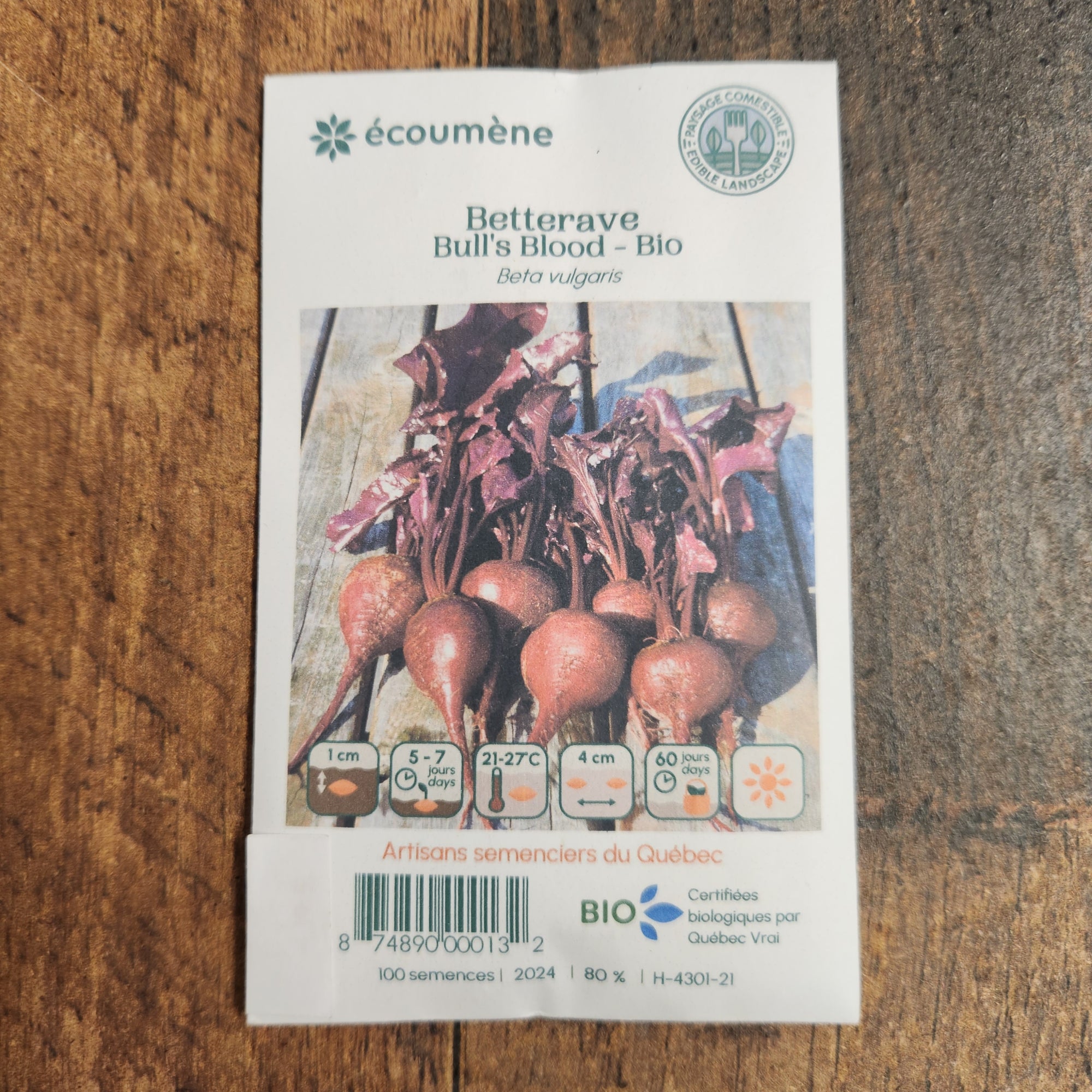
Organic 'Bull's Blood' beet is an old variety with great character, admired as much for its rich purple foliage as for its sweet, deep red roots. In the vegetable garden, *Beta vulgaris* immediately catches the eye with its intensely colored young leaves, which add depth and contrast among greener vegetables. This ornamental presence in no way detracts from its generosity; quite the opposite: it offers both tender leaves for salads and flavorful roots that can be cooked in a thousand ways. Its mild, sweet flavor makes it a very popular variety for summer and autumn harvests, both by amateur gardeners and by heritage vegetable enthusiasts.
- Quantity
- About 100 seeds
- Exposure
- Sun
- Life cycle
- Biennial
Discover the plant
Common nameBeetroot 'Bull's Blood'
FamilyAmaranthaceae
GenusBeta
Speciescommon
CultivarBull's Blood
TypeVegetable
Botanical nameBeetroot
Reproducible seedsYes
'Bull's Blood' Beet (Beta vulgaris). The organic 'Bull's Blood' beet is an old variety with great character, admired as much for its rich purple foliage as for the sweetness of its dark red roots. In the vegetable garden, Beta vulgaris immediately catches the eye with its intensely colored young leaves, which provide relief and contrast among greener vegetables. This ornamental presence does not detract from its generosity; quite the opposite: it offers both tender leaves for salads and flavorful roots to be cooked in a thousand ways.
Recommended sowing period: in spring, as soon as the soil has dried out and is workable; adjust subsequent sowings to the season and type of harvest. The depth to respect is 1.5 to 2 cm (0.6 to 0.8 in). Emergence generally takes 7 to 14 days. For germination, maintain the potting soil at 10 to 30 °C (50 to 86 °F). Small beet glomerules can produce several closely spaced seedlings. Monitor emergence then progressively thin out so that each root has space. Loose, consistently moist soil promotes continuous growth.
Its sweet and mild flavor makes it a very popular variety for summer and autumn harvests, both by amateur gardeners and by enthusiasts of heritage vegetables. Beets can form a colorful vegetable border or occupy small rows between two pathways. Keep the planting visible to choose the right harvest size. Young lettuces are suitable in a neighboring section if their harvest precedes the full development of the beet foliage. Reserve the most regular rows for roots intended for a grouped harvest. In the vegetable garden, Beta vulgaris immediately catches the eye with its intensely colored young leaves, which provide relief and contrast among greener vegetables.

Sowing guide
It all startswith a seed.
Sowing depth
0.6 to 0.8 in. (1.5 to 2 cm)
Germination temperature
10 to 30 °C (50 to 86 °F)
Germination time
7 to 14 days
Sowing period
May to July
Propagation
Sowing
Growing method
Recommended sowing period: in spring, as soon as the soil is drained and workable; adjust subsequent sowings according to the season and type of harvest. The recommended depth is 1.5 to 2 cm (0.6 to 0.8 in). Emergence generally takes 7 to 14 days. For germination, maintain the potting soil at 10 to 30 °C (50 to 86 °F). Small beet glomerules can produce several closely spaced seedlings. Monitor emergence, then progressively thin them out so that each root has enough space. Loose, consistently moist soil promotes continuous growth. Avoid turning the row into a dense cluster, even if all the young plants appear vigorous: the roots will later require more space to enlarge. Beets can provide both leaves and roots, but excessive harvesting of foliage slows down underground enlargement. Remove only a few outer leaves from plants kept for their roots. For a complete harvest, loosen the soil then gently lift them out. Remove the tops before cool storage to limit moisture loss from the roots. The harvested part develops below the surface, which requires some checks instead of just observing the foliage.
Soil and care
The right care,at the right time.
Care level
Regular during establishment, then adapted to growing conditions
Watering
Regular
Soil type
Friable and well-drained
Fertilization
Fertilization supports growth and takes into account the nutrients already present in the soil or potting mix. Use mature compost or a fertilizer suitable for the crop, following the dosage instructions. Avoid using multiple products, especially in a container where the roots occupy a limited volume. Water as needed after application and observe the foliage development before re-fertilizing.
Moisture
Keep the soil moist during emergence, without standing water; then adjust according to the crop
Seasonal care
Its sweet flavor makes it a highly popular variety for summer and fall harvests, both for amateur gardeners and heirloom vegetable enthusiasts. The small beet glomerules can produce several close-growing seedlings. Monitor emergence, then progressively thin them so that each root has enough space. Loose, consistently moist soil promotes continuous growth. Avoid letting the row become a dense clump just because all young plants appear vigorous; root development subsequently requires more space. Beets can provide both leaves and roots, but excessive harvesting of foliage slows underground root growth. Only pick a few outer leaves from plants being grown for their roots. For a full harvest, loosen the soil then gently lift the beets. Remove the greens before cool storage to limit moisture loss from the roots. The harvested part develops underground, requiring some checks rather than just observing the foliage. Gently clear around a crown or lift a first plant to assess its size. Consistent growth promotes tenderness. Use damaged roots quickly and reserve intact specimens for appropriate vegetable storage. This ornamental presence does not diminish its generosity; quite the opposite: it offers both tender leaves for salads and flavorful roots to cook in a thousand ways. Recommended sowing period: in spring, as soon as the soil is drained and workable; adjust subsequent sowings to the season and type of harvest.
Container growing
A garden,within reach.
Suitable for containers
Yes
Recommended pot size
Puncture-proof and stable container, wide enough for the plant to spread out, and deep enough for the roots
Choose this exposure: sun. Reserve this spacing around the plant: 20 to 30 cm (8 to 12 in). A beet container should allow for root development and access to the plants for thinning. Sow in loose, pre-moistened potting soil, then maintain regular spacing. Mature leaves extend far beyond the root diameter: let them spread over the rim. Harvest the most developed plants first to make room for the others. Organic 'Bull's Blood' beet is an heirloom variety of great character, admired as much for the richness of its purple foliage as for the sweetness of its dark red roots. In the garden, *Beta vulgaris* immediately catches the eye with its intensely colored young leaves, which provide relief and contrast among greener vegetables. This ornamental presence does not detract from its generosity, quite the contrary: it offers both tender leaves for salads and flavorful roots to cook in a thousand ways. Its mild and sweet flavor makes it a much-appreciated variety for summer and autumn harvests, by amateur gardeners and heritage vegetable enthusiasts alike.
Bloom and dimensions
Its place,in your garden.
Mature height
30 to 40 cm (12 to 16 in.)
Width / spread
20 to 30 cm (8 to 12 in)
Foliage type
Seasonal foliage
Bloom period
2nd-year summer
Fruiting
This ornamental presence does not detract from its generosity, quite the opposite: it offers both tender leaves for salads and tasty roots to be cooked in a thousand ways. Its mild and sweet flavor makes it a highly appreciated variety for summer and autumn harvests, by amateur gardeners and heritage vegetable enthusiasts alike.
Harvest
35 days for the leaves, 60 days for the roots

Garden associations
In goodcompany.
Companion plants
In a diversified planting, you can reserve neighboring sections for these plants: lettuce, onions, cabbages. The combination here serves to organize space and harvests. Respect the height, light, and water needs of each plant, without crowding the foliage. Maintain a path for watering and harvesting, then remove finished crops to free up space. This organization facilitates maintenance without promising protection against pests. Beets can form a colorful vegetable border or occupy small rows between two paths.
Recipe idea
From the gardento your plate.
Edible parts
Roots and young leaves
Beetroot 'Bull's Blood' cooking idea: roasted beetroot for four servings. Brush 600g of beetroot, quarter them, and mix with 15ml olive oil, a pinch of salt, and a little thyme. Spread on a baking tray without overcrowding. Bake at 200°C (400°F) for 35 to 50 minutes, until a knife tip can be easily inserted. Turn halfway through cooking and adjust time based on the size of the quarters. Add 10ml balsamic vinegar when serving. Prepare ingredients with clean utensils and adapt the cut to the size of your harvest. This recipe highlights freshly picked parts: remove damaged pieces before preparation. If doubling quantities, leave enough space in the dish to mix or cook uniformly. Quickly refrigerate leftovers in a closed container and consume within two days. For a meal for two people, simply halve all quantities.
Frequently asked questions
Your questions,answered.
How to successfully sow 'Bull's Blood' beet seeds?
Recommended sowing period: in spring, as soon as the soil is drained and workable; adjust subsequent sowings to the season and type of harvest. The depth to respect is 1.5 to 2 cm (0.6 to 0.8 in). Emergence generally takes 7 to 14 days. For germination, maintain the potting soil at 10 to 30 °C (50 to 86 °F). Small beet glomerules can produce several closely spaced seedlings. Monitor emergence, then gradually thin them out so that each root has room. Loose, consistently moist soil promotes continuous growth. Avoid turning the row into a dense clump on the pretext that all the young plants appear vigorous: the roots will then require more space to enlarge.
Can 'Bull's Blood' Beetroot be grown in pots?
Choose this exposure: full sun. Allow this spread around the plant: 20 to 30 cm (8 to 12 in). A beet container should allow for root development and access to the plants for thinning. Sow in loose, pre-moistened potting soil, then maintain regular spacing. Mature leaves extend well beyond the root diameter: let them spread over the rim. Harvest the most developed plants first to make room for the others. Organic 'Bull's Blood' beet is an old variety with great character, admired as much for its rich purple foliage as for its sweet, deep red roots.
When to harvest 'Bull's Blood' beetroot?
This ornamental presence in no way detracts from its generosity, quite the opposite: it offers both tender leaves for salads and tasty roots to be cooked in a thousand ways. Its mild and sweet flavor makes it a much-loved variety for summer and autumn harvests, by amateur gardeners and heritage vegetable enthusiasts alike. Easy to grow in loose, well-drained soil, it enjoys sunshine and regular moisture to develop tender roots and luxuriant foliage. Young shoots are harvested early to add color to dishes, while the roots ripen steadily over the weeks.
What makes 'Bull's Blood' beet stand out in the garden?
Organic 'Bull's Blood' beet is an heirloom variety of great character, admired as much for the richness of its purple foliage as for the sweetness of its dark red roots. In the garden, *Beta vulgaris* immediately catches the eye with its intensely colored young leaves, which provide depth and contrast among greener vegetables. This ornamental presence in no way detracts from its generosity; quite the opposite: it offers both tender leaves for salads and flavorful roots for cooking in a thousand ways. Its sweet and sugary flavor makes it a very popular variety for summer and autumn harvests, both among amateur gardeners and enthusiasts of heritage vegetables.
How to organize a ‘Bull’s Blood’ beet planting?
Beetroot can form a colourful border or grow in small rows between two paths. Keep the planting visible to choose the right harvest size. Young lettuces are suitable in a neighbouring section if their harvest precedes the full development of the beetroot foliage. Reserve the most regular rows for roots intended for grouped harvesting. Beetroot can provide leaves and roots, but excessive harvesting of the foliage slows down underground growth. Only remove a few outer leaves from plants kept for their roots. For the complete harvest, loosen the soil then gently lift.
For a great start to your seeds
The right extras.Right here.
Seed Starting Soil
Shop the collectionSeed starting supplies
Shop the collection