Sale
Sold out

Biennial table beet grown as an annual
Amaranthaceae
Organic root vegetable seeds
Organic 'Detroit' beet
Beta vulgaris subsp. vulgaris
Product code : BIOVO-0008
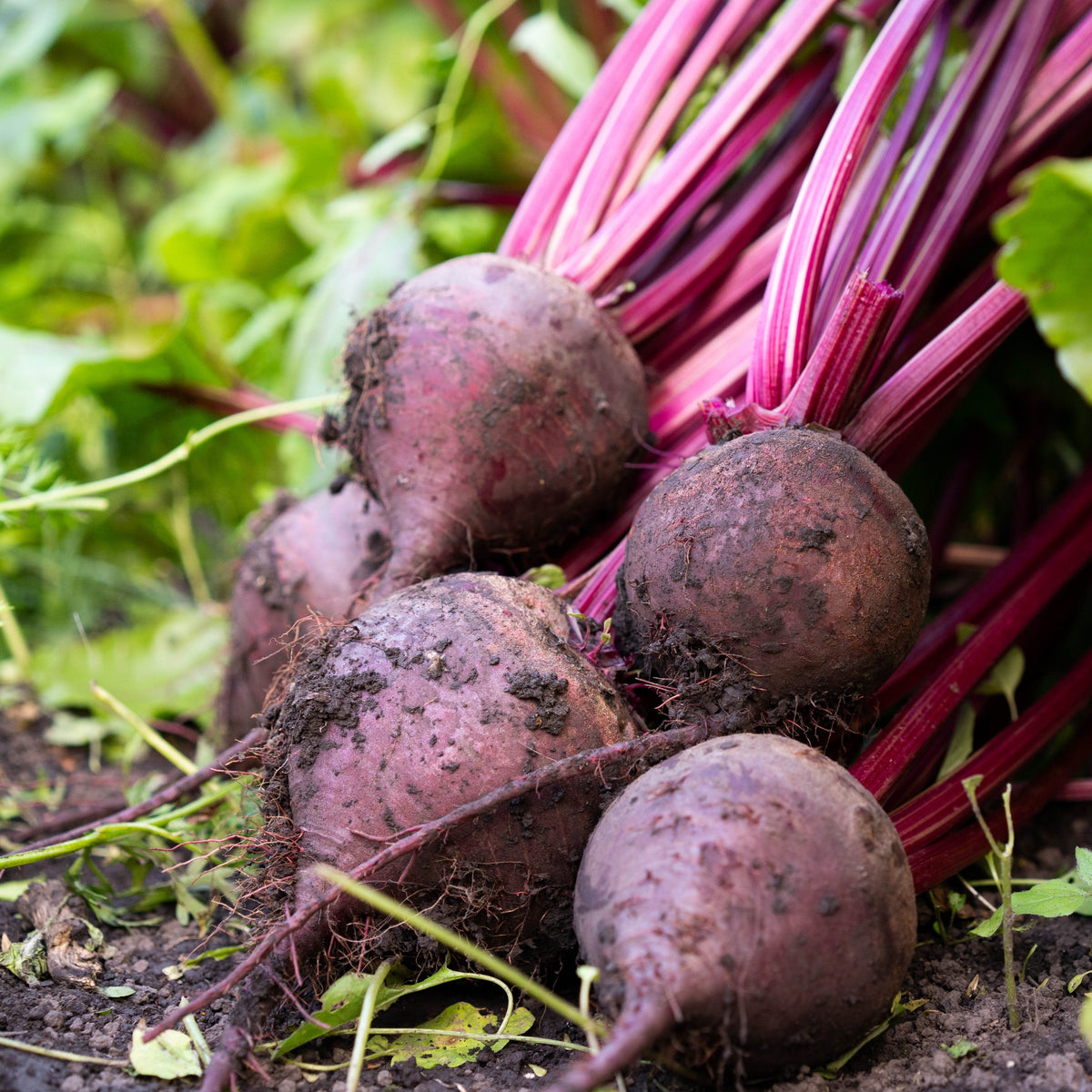
Organic 'Detroit' beet, Beta vulgaris, forms rounded smooth deep-red roots. This product contains approximately 100 organic seeds. Roots suit roasting, pickling, preserving, soups, and salads, while sound young tops cook as greens. Direct-sow 1 or 2 cm deep in deep loose stone-free well-drained soil. Every seed cluster may produce several seedlings; thin to 7 to 10 cm with scissors. Grow in sun or partial shade and maintain steady moisture. Begin checking diameter around the indicative 55-day reference, then harvest before roots become fibrous. Lift gently from moist soil and cool roots and tops separately for better quality. Store sound roots promptly after harvest.
- Exposure
- Sun to partial shade
- Life cycle
- Biennial, generally harvested in the first year
Discover the plant
Common name'Detroit' beet, red table beet
FamilyAmaranthaceae
GenusBeta
Speciesvulgaris subsp. vulgaris
CultivarDetroit
TypeBiennial table beet grown as an annual
Botanical nameBeta vulgaris subsp. vulgaris
Organic 'Detroit' beet (Beta vulgaris subsp. vulgaris) brings the familiar round, deep-red table beet to a home vegetable garden. Its smooth roots can be roasted in wedges, grated into a fresh salad or steamed for a simple side dish. Sound young leaves are useful cooking greens as well. The supplied packet contains approximately 100 seeds, making it possible to divide the sowing into several manageable batches. Begin checking roots near the approximate 55-day maturity reference, but choose the final picking stage by tenderness and kitchen size. Detroit offers two useful harvests from one crop without needing to wait for flowering or seed production.
Prepare a loose bed where small roots can enlarge without a hard crust or large stones. Sow directly once spring soil is workable, roughly two to four weeks before the local last frost, and cover seed clusters with about 1–2 cm of soil. Several seedlings can emerge together, so thin carefully rather than allowing a crowded tuft to remain. Aim for about 7–10 cm between plants kept for full roots. Keep the seedbed moist, then water deeply enough to reach the developing root zone. Mature compost is useful; fresh manure and excessive nitrogen are not shortcuts to better beets.
Use the exposed shoulders to decide when to sample a root, loosening the surrounding soil before lifting. A smaller tender beet may suit a meal better than one left to reach maximum size. Trim the tops after harvest and refrigerate roots and greens separately, keeping both clean and cool. Watch leaves for miners, spots and slug damage, and avoid repeatedly stripping foliage from plants whose roots are still growing. Later sowings need enough time to develop before severe freezing. For pickles or canned beets, follow a tested preservation recipe rather than treating a fresh preparation as shelf-stable.

Sowing guide
It all startswith a seed.
Sowing depth
Approximately 1 to 2 cm (3/8 to 3/4 in)
Spacing / density
Thin to approximately 7 to 10 cm (3 to 4 in)
Germination temperature
Cool soil at least approximately 5 to 10 °C (41 to 50 °F)
Germination time
Approximately 5 to 14 days in evenly moist soil; cool soil slows emergence.
Sowing period
Direct-sow 2 to 4 weeks before last frost, then make successive sowings through midsummer
Propagation
Direct sowing
Growing method
Beet seeding: 'Detroit' beet. Direct-sow 'Detroit' two to four weeks before last frost as soon as soil can be worked. Plan a later small sowing only if enough cool weather remains before hard freezing. Place 'Detroit' before late-season crowding develops, keeping its mature habit in mind: upright rosette above a swollen root. Water evenly at soil level while roots enlarge toward upright rosette above a rounded to slightly flattened root, preventing hard dry periods followed by saturation. At final planting, follow this layout for the root crop: thin to approximately 7 to 10 cm (3 to 4 in). Mark positions before roots are placed. Direct-sow the planting in a fine, loose seedbed prepared with finished compost. As the crop matures, use the expected harvest form—developing roots—to guide support, inspection, and careful picking. Mark the row and remove weeds shallowly to protect the swelling root. Give this beet sun to partial shade. Choose the site before committing the final planting position. Inspect leaf surfaces for damage while keeping edible tops free from unnecessary treatment. Check root shoulders before lifting the row, and loosen the soil beside mature roots rather than pulling against resistance. Lift the root crop when sample roots show the diameter and tenderness desired. Trim tops with a short stem remaining, shade both portions, refrigerate them separately, and continue checking later roots rather than treating one calendar date as a guarantee.
Soil and care
The right care,at the right time.
Soil pH
Approximately 6.0 to 8.0
Care level
Easy
Watering
Keep 'Detroit' evenly moist from germination through enlargement of the upright rosette above a rounded to slightly flattened root. When tending 'Detroit', water slowly at soil level as the surface begins drying, wetting the active root zone rather than only the top crust. Alternating drought and heavy irrigation can slow growth or split roots. For 'Detroit' beet, after thinning, mulch lightly without covering the crown. Container soil may need daily inspection during hot weather; irrigate until surplus drains and empty the saucer. In the 'Detroit' planting, if harvest soil is saturated, pause briefly before lifting rather than keeping roots waterlogged.
Soil type
'Detroit' needs deep, fine, stone-free soil for even development of its upright rosette above a rounded to slightly flattened root. Test the soil before making corrective mineral additions. In the 'Detroit' planting, finished compost can improve structure and water retention without leaving the root zone wet. Avoid fresh manure, compaction, standing water, and beds with serious recent disease in beets or chard. Use a raised bed or deep container for 'Detroit' where clay cannot be loosened sufficiently. Mulch only after conditions suit the crop, keeping the crown uncovered.
Fertilization
Incorporate mature compost before sowing to improve soil structure and water retention. In poor ground, apply moderate balanced organic feeding according to soil-test results. Avoid heavy nitrogen, which mainly favours tops, fresh manure that may deform roots, and concentrated fertilizer applied to dry soil. Water after a labelled granular application and keep fertilizer from touching emerging seedlings. More feeding does not compensate for overcrowding, poor light, or compacted soil.
Moisture
Beet prefers steady root-zone moisture with good airflow among tops. Avoid saturated soil and evening irrigation on foliage. Water at soil level in the morning, space plants correctly, and remove heavily spotted leaves to reduce conditions favouring foliar disease.
Seasonal care
Seasonal care for 'Detroit' beet. Use 'Detroit' beet’s stated sowing window as a frost-relative cue, not a universal date: direct-sow 2 to 4 weeks before last frost, then make successive sowings through midsummer. Sow approximately 1 to 2 cm deep and allow 5 to 14 days for emergence in cool soil at least approximately 5 to 10 °C (41 to 50 °F), then move seedlings promptly into strong light as soon as they appear. Direct-sow into deep, loose, stone-free soil; transplanting or hard clods can distort the upright rosette above a rounded to slightly flattened root. Prevent a crust from forming, then shift from light germination watering to deeper irrigation as roots lengthen. Thin seedlings early to the stated spacing by cutting extras rather than tugging against neighbouring roots, and keep the shoulders lightly covered. Maintain even moisture without saturation; long dry spells followed by heavy watering can produce cracking, coarse texture, or irregular growth. For container-grown 'Detroit' beet, use the supplied guidance—at least 25 to 30 cm (10 to 12 in) deep—and check drainage before growth hides the surface. Leaf miners, foliar spotting, and rough root growth deserve regular checks as the crop develops. Treat the supplied harvest guidance—begin checking around the indicative 55-day reference; harvest according to diameter and tenderness—as a starting point, then lift one sample to assess diameter, colour, and tenderness before clearing the row. For succession, make smaller sowings while enough cool-season time remains before local heat or hard freezing. At harvest, loosen the surrounding soil, trim foliage as appropriate, cool the crop promptly, and discard roots showing rot or serious damage.
Container growing
A garden,within reach.
Recommended pot size
At least 25 to 30 cm (10 to 12 in) deep
Growing 'Detroit' beet in containers. For 'Detroit', choose a container matching this guide: at least 25 to 30 cm (10 to 12 in) deep. Keep several drainage holes unobstructed. Thin seedlings with scissors to protect the roots that remain. Place 'Detroit' in sun to partial shade, while preserving drainage and airflow at root and leaf level. Leave headspace for watering while preserving uninterrupted depth for the upright rosette above a rounded to slightly flattened root. Space the planting thin to approximately 7 to 10 cm (3 to 4 in) to preserve access for watering, inspection, and harvest. Add a fine mulch only after establishment and keep crowns or shoulders uncovered as appropriate. The root crop produces the expected harvest form: developing roots. Protect the developing crop from soil splash and rough handling. Place the pot in sun or bright partial shade where heavy rain cannot leave it standing in water. This beet has a habit described as upright rosette above a swollen root; use this to guide positioning or selective thinning without forcing a cramped plant. Keep foliage open to light, remove weeds shallowly, and cover exposed root shoulders with a little clean mix when needed. Sample one root first, loosen the surrounding mix, and lift the remainder without scraping neighbouring roots. Sample the planting before lifting the whole container. Loosen mix beside the developing roots, harvest without twisting neighbouring roots, trim tops promptly, and refrigerate sound roots separately from foliage.

Bloom and dimensions
Its place,in your garden.
Mature height
Approximately 30 to 45 cm (12 to 18 in) including foliage
Width / spread
Approximately 20 to 30 cm (8 to 12 in)
Flower color
Inconspicuous green
Foliage color
Green with red to purple veins
Foliage type
Deciduous, harvested as an annual vegetable
Growth rate
Fast
Growth habit
Upright rosette above a swollen root
Fragrance
Mild, earthy, and slightly sweet after cooking
Bloom period
'Detroit' flowers only after shifting away from harvest growth. Keep the root zone evenly moist during bloom. Lengthening days or stress can hasten 'Detroit' beet's bolting. Do not treat every fallen blossom as disease. As this upright rosette above a root crop forming upright rosette above a bolts, leaf or root harvest quality changes. Let open flowers remain accessible to visiting insects. Remove 'Detroit' before seed disperses if volunteers are unwanted. Stable growth matters more than forcing extra bloom. For 'Detroit' beet, its seed stalk becomes taller and less harvest-focused.
Fruiting
Detroit beet is a biennial normally eaten in year one. If a selected root overwinters, it sends up a tall branched stalk the next season and forms rough seed clusters after flowering. Root quality is then lost. Collect only fully dry clusters in clear weather, finish drying them under cover, and remember that nearby flowering beet or chard can cross with the seed plant.
Days to maturity
Approximately 55 days; harvest according to diameter and tenderness
Harvest
Begin checking around the indicative 55-day reference; harvest according to diameter and tenderness
Garden associations
In goodcompany.
Companion plants
Lettuce, radishes, or spinach can use early gaps around 'Detroit' when they are harvested before beet roots enlarge. In the 'Detroit' planting, keep a visible open circle around the upright rosette above a rounded to slightly flattened root as it enlarges. Include beets and chard together in the rotation plan for 'Detroit' beet, because they belong to the same crop group. Remove any neighbour that begins competing for light, moisture, airflow, or harvest access. In the 'Detroit' beet planting, maintain a clear lifting path and water each crop according to its own root depth. Use companion planting to organize succession and diversity, not as a substitute for sound crop care. Reassess the arrangement around 'Detroit' as both crops approach mature size.
Recipe idea
From the gardento your plate.
Edible parts
Roots, young leaves, and stalks
'Detroit' beet in the kitchen. Roasted 'Detroit' beets with sautéed tops — Heat the oven to 200°C. Cut the leaves from 600 g beets, scrub the roots, and wrap similarly sized beets together with 15 mL water. Roast until tender when pierced, usually 40–70 minutes. Wash the leaves and stems in several changes of water. Dice the stems and sauté them in 15 mL olive oil for three minutes; add one minced garlic clove and the sliced leaves, then cook until wilted. Slip the skins from the warm roots, cut them into cubes, and toss with 15 mL red-wine vinegar, 10 mL oil, black pepper, and a small pinch of salt. Spoon the beets over the greens and finish with toasted pumpkin seeds and crumbled cheese or cooked lentils. Keep muddy roots apart from washed tops and ready-to-eat garnishes. Protect pale cutting boards from stains and wipe spills promptly. Discard slimy leaves or deeply rotten roots. Cool leftovers in a shallow covered container and refrigerate within two hours.
Frequently asked questions
Your questions,answered.
Why choose 'Detroit' beet for a home garden?
'Detroit' provides rounded smooth deep-red roots that suit roasting, pickling, preserving, soups, and salads. Sound young tops are also edible. Its indicative 55-day reference allows checking to begin during the season, but diameter and tenderness remain the best harvest criteria. Deep loose stone-free soil and thinning to 7 to 10 cm encourage even roots. The crop suits successive rows, raised beds, and deep containers. Maintain steady moisture, lift roots while soil is slightly moist, and cool roots and tops separately. Small roots may be harvested first while larger sound plants continue growing for a later kitchen harvest. Keep every harvest shaded and clean.
Why do several seedlings emerge from one beet cluster?
Several Detroit seedlings can emerge from one place because what is commonly handled as one beet seed is often a clustered seed structure containing more than one embryo. Multiple shoots do not mean that the packet was mixed or that you accidentally oversowed. Let the seedlings become visible, then thin carefully to approximately 7 to 10 cm apart for roots. Snipping unwanted seedlings at soil level reduces disturbance to the roots you keep. Do not pull a crowded clump aggressively, because neighbouring beet roots can be loosened or damaged. The removed young leaves may be used only when clean and correctly identified. Continue even moisture after thinning so retained plants resume growth. Proper spacing lets each Detroit plant develop its rounded to slightly flattened root and improves airflow through the upright foliage.
When is 'Detroit' beet ready to harvest?
Begin checking Detroit beets around the indicative 55-day point, but let root diameter and tenderness decide the harvest. Brush soil gently from one shoulder without cutting the skin. If the size looks suitable, lift one sample from moist, workable soil and assess it before harvesting the row. The root should show its rounded to slightly flattened form and sound deep-red skin. Small roots may be taken earlier; crowded or drought-stressed plants can need different timing. Twist or cut tops after lifting while leaving a short stem if the roots will be stored, and keep the edible young leaves separate. Do not wait solely for a calendar date if roots are already at the texture you want. Conversely, leave undersized neighbours to continue growing after the sample harvest.
Can beet tops be harvested without harming the roots?
A few Detroit beet greens may be cut without ruining the root, provided the plant is established and most foliage remains. Choose one young outer leaf, clip its stalk cleanly near the base, and leave the central leaves untouched. The rounded beet enlarges over roughly 55 days, so frequent stripping during that short period can noticeably slow it. If a large table beet matters more than greens, harvest leaves only during thinning and let the final 7–10 cm-spaced plants keep their canopy. Use only healthy foliage that is free of miners, active spots, rot, and contamination. Rinse and refrigerate culinary tops promptly, storing them separately from leaves removed for pest control. After drought, heat, or disease, wait until the rosette has produced fresh growth before cutting again. Never tear leaves from the crown or remove them all at once.
How should beet roots and tops be stored after harvest?
Separate tops from roots at harvest while leaving approximately 2 cm of stem without cutting the root itself. This limits water loss. Place clean tops in a ventilated refrigerator container and use them within several days. Brush soil from roots gently without injury; wash immediately before use when storing them for a longer period. Keep roots cold at high humidity in a perforated or suitable container. Under good conditions, sound roots may keep for several weeks or longer, but actual duration depends on temperature, humidity, and initial quality. Discard any soft, mouldy, rotting, or contaminated root, and check stored produce regularly so deteriorating roots can be removed promptly.
Wildlife and pets
Life,around your plants.
Supporting wildlife
Detroit beet is usually lifted in its first season, before any flowers exist. An overwintered root can bloom the following year and may host occasional small insect visitors, while its pollen is mainly dispersed by wind. For wildlife value, flowering herbs or native plants are a more reliable choice; beet bloom is chiefly relevant to deliberate seed production.
For a great start to your seeds
The right extras.Right here.
Seed Starting Soil
Shop the collectionSeed starting supplies
Shop the collection