


Sale
Sold out

Biennial table beet grown as an annual
Amaranthaceae
Organic root vegetable seeds
Organic yellow 'Touchstone' beet
Beta vulgaris subsp. vulgaris
Product code : BIOVO-0009
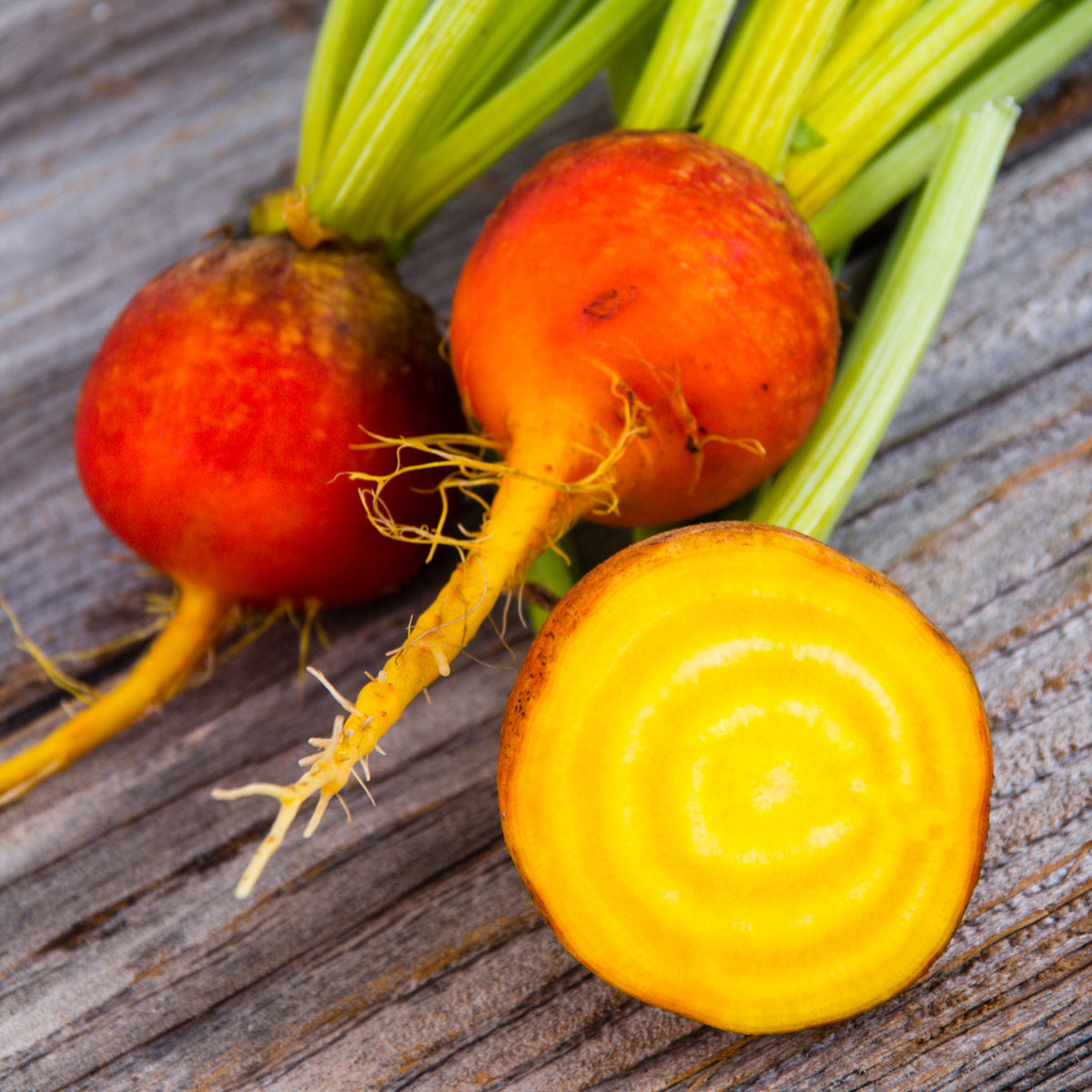
Organic yellow 'Touchstone' beet, Beta vulgaris, forms rounded roots with orange skin and golden-yellow flesh. This product contains approximately 100 organic seeds. These Touchstone Gold beet seeds produce a yellow beet, also described as a golden beet, suited to roasting, pickling, soups, and salads, while sound young tops cook as greens. Direct-sow 1 or 2 cm deep in deep loose stone-free well-drained soil. Every seed cluster may produce several seedlings; thin to approximately 10 or 13 cm with scissors. Grow in sun or partial shade and maintain steady moisture. Begin checking diameter within the indicative 53-to-55-day range, then harvest before roots become fibrous. Lift gently from moist soil and cool roots and tops separately. Refrigerate sound roots promptly.
- Exposure
- Sun to partial shade
- Life cycle
- Biennial, generally harvested in the first year
Discover the plant
Common name'Touchstone' beet, red table beet
FamilyAmaranthaceae
GenusBeta
Speciesvulgaris subsp. vulgaris
CultivarTouchstone
TypeBiennial table beet grown as an annual
Botanical nameBeta vulgaris subsp. vulgaris
Organic yellow 'Touchstone' beet (Beta vulgaris subsp. vulgaris) is a cool-season table beet grown for rounded roots with orange skin and golden-yellow flesh. Approximately 100 organic seeds allow several sowing and harvest dates. Roots may be finely grated raw, roasted, steamed, pickled, or canned. Young leaves and stalks are also edible when sound. This biennial is normally harvested during its first year and suits vegetable gardens, raised beds, and deep containers. Begin checking roots around the indicative 53-to-55-day reference, then harvest according to diameter and tenderness. Its familiar rounded form and useful tops make it a practical choice for a home garden with regular moisture.
Direct-sow two to four weeks before last frost as soon as soil can be worked. Place clusters approximately 1 or 2 cm deep, keep the seedbed moist, and thin groups of seedlings with scissors. Retain approximately 10 to 13 cm between plants intended for roots. Choose sun or bright partial shade, then prepare deep loose stone-free soil enriched with mature compost and drained well. Avoid fresh manure, unnecessary transplanting, and excess nitrogen. Steady moisture supports even tender roots, while prolonged dry periods may slow enlargement or increase cracking. Make additional sowings only while enough cool-season time remains before hard freezing.
Begin inspecting shoulders once plants are well developed without treating the day count as a guarantee. Lift one sample while soil is slightly moist and harvest before roots become fibrous. Trim tops while leaving a short stem, keep roots shaded, and refrigerate both portions separately. Monitor leaf miners, slugs, Cercospora leaf spot, and damage associated with irregular watering. Successive sowings every two or three weeks extend harvest. Light row cover may protect the final rows during cold fall nights, but it does not guarantee survival once the ground freezes deeply. Discard any root or leaf showing rot, contamination, or uncertain storage history.

Sowing guide
It all startswith a seed.
Sowing depth
Approximately 1 to 2 cm (3/8 to 3/4 in)
Spacing / density
Thin to approximately 10 to 13 cm (3 to 4 in)
Germination temperature
Cool soil at least approximately 5 to 10 °C (41 to 50 °F)
Germination time
Approximately 5 to 14 days in evenly moist soil; cool soil slows emergence.
Sowing period
Direct-sow 2 to 4 weeks before last frost, then make successive sowings through midsummer
Propagation
Direct sowing
Growing method
Beet seeding: 'Touchstone' beet. Direct-sow 'Touchstone' two to four weeks before last frost as soon as soil can be worked. Loosen ground deeply, remove stones, and make furrows 1 to 2 cm deep. Space clusters, cover, and water gently. Every cluster may produce several seedlings. Once first true leaves appear, thin with scissors to approximately 10 to 13 cm without pulling neighbouring roots. Keep soil moist with deep irrigation and light mulch. Remove only several young outer leaves when good roots are also desired. Make successive sowings every two or three weeks through midsummer. Monitor leaf miners, Cercospora leaf spot, slugs, and uneven growth. Once roots reach 3 to 7 cm depending on use, lift them from moist soil. Trim tops while leaving a short stem and cool roots and leaves separately. For fall harvest, use light row cover. Record actual diameter and days instead of treating the 53-to-55-day reference as a guarantee. Identify the row as 'Touchstone' so successive sowings remain easy to distinguish. Inspect both leaf surfaces weekly. When tops grow without root enlargement, check spacing, light, and nitrogen before adding anything. Harvest into shade, clean tools after diseased plants, and keep top and root batches separate. Keep every row clearly labelled and maintain steady moisture while rounded roots enlarge.
Soil and care
The right care,at the right time.
Soil pH
Approximately 6.0 to 8.0
Care level
Easy
Watering
For yellow 'Touchstone' beet, reliable moisture supports both the leafy top and the swelling upright rosette above a rounded to slightly flattened root. Before yellow 'Touchstone' beet emerges, use a gentle flow; as roots lengthen, water more deeply and let excess leave the bed. Below yellow 'Touchstone' beet, check moisture before irrigating so the centre of the root zone does not stay saturated. Mulch yellow 'Touchstone' beet lightly only after establishment, limiting abrupt wet-dry cycles that can cause cracking or uneven texture. A yellow 'Touchstone' beet container must drain freely and needs daily checks in warm wind while the edible root enlarges.
Soil type
Yellow 'Touchstone' beet forms best in friable soil that lets its upright rosette above a rounded to slightly flattened root enlarge without standing water. Well before sowing yellow 'Touchstone' beet, work in mature compost, remove stones and undecomposed debris, and avoid fresh manure near its roots. For yellow 'Touchstone' beet, the stated soil reaction is approximately 6.0 to 8.0; confirm it with a test before amending. Level the yellow 'Touchstone' beet seedbed carefully so moisture and emergence stay uniform across the row. For potted yellow 'Touchstone' beet, use the recommended depth, light vegetable mix, and clear drainage holes.
Fertilization
'Touchstone' develops best in loose, evenly fertile soil. Let a soil test guide any corrective amendment. For yellow 'Touchstone' beet, excess nitrogen can favour leaves over root development. Never place fertilizer directly against young roots. Feed 'Touchstone' beet modestly before the root begins swelling. Use new growth to judge whether nutrition is adequate. For 'Touchstone', unneeded mineral additions can upset the root-zone balance. Apply every fertilizer at its labelled rate. For yellow 'Touchstone' beet, its leaf growth should remain steady rather than overly lush.
Moisture
Beet prefers steady root-zone moisture with good airflow among tops. Avoid saturated soil and evening irrigation on foliage. Water at soil level in the morning, space plants correctly, and remove heavily spotted leaves to reduce conditions favouring foliar disease.
Seasonal care
Seasonal care for 'Touchstone' beet. In late winter, inspect seed and prepare a rotated plot away from sectors with substantial leaf spots. In early spring, loosen soil deeply, remove stones, and incorporate mature compost. Sow 1 or 2 cm deep as soon as ground can be worked. Keep the surface moist until emergence, then thin seedling groups with scissors to 10 to 13 cm. Mulch lightly. During cool spring weather, monitor leaf miners and remove few tops. Make successive sowings every two or three weeks. In early summer, irrigate deeply, remove spotted leaves, and clean tools. During heat waves, check moisture more often and avoid large water swings. In midsummer, sow a row for fall. Begin measuring roots around the 53-to-55-day reference. Harvest by diameter, trim tops, and cool separately. In fall, use row cover during cold nights, ventilate on mild days, and harvest before soil freezes. After the season, compost only healthy tissue, clean containers, and record sowing, thinning, pests, diameter, and yield to improve the next schedule. Retain exact cultivar labels on every row. In containers, rotate pots for balanced light, empty saucers, and check moisture daily during heat waves. After harvesting tops, allow new leaves before another cut. When nights remain mild beneath cover, ventilate to prevent condensation. Keep culinary tops separate from leaves removed for disease. Sanitize harvest containers and store unused seed cool, dry, and clearly labelled. Before the next sowing, compare diameter, tenderness, watering, pests, and the dates that produced the most even harvest. Keep those observations with the seed label for future planning.
Container growing
A garden,within reach.
Recommended pot size
At least 25 to 30 cm (10 to 12 in) deep
Growing 'Touchstone' beet in containers. Choose a container at least 25 to 30 cm (10 to 12 in) deep with many drainage holes. Fill with loose fertile well-drained mix free of large clods. Sow clusters 1 or 2 cm deep, then thin with scissors to 10 to 13 cm. Place in sun or bright partial shade. Keep mix evenly moist; during heat, check daily and always empty the saucer. Mulch lightly without covering the crown. Avoid nitrogen-rich feeding that favours tops over roots. Inspect leaves for miners and spots. Remove few tops when full roots are desired. Begin checking diameter around the 53-to-55-day reference, then harvest according to observed size. Lift gently rather than pulling by leaves. For fall, move the pot beside a sheltered wall or use row cover. After harvest, clean the container, compost only healthy tissue, and renew mix before another beet crop. Keep roots shaded and cool promptly. After heavy rain, verify drainage and keep mulch from covering root shoulders. When the container fills with tops, thin plants instead of feeding more. Record diameter and harvest date to improve the next sowing. Keep pots away from crops with substantial leaf disease and clean tools before lifting roots. After each harvest, cool sound tops promptly and keep lifted roots shaded until refrigeration.

Bloom and dimensions
Its place,in your garden.
Mature height
Approximately 30 to 45 cm (12 to 18 in) including foliage
Width / spread
Approximately 20 to 30 cm (8 to 12 in)
Flower color
Inconspicuous green
Foliage color
Green with red to purple veins
Foliage type
Deciduous, harvested as an annual vegetable
Growth rate
Fast
Growth habit
Upright rosette above a swollen root
Fragrance
Mild, earthy, and slightly sweet after cooking
Bloom period
As 'Touchstone' bolts, leaf or root harvest quality changes. Keep the root zone evenly moist during bloom. yellow 'Touchstone' beet flowers only after shifting away from harvest growth. Watch new flowers for recovery after stressful weather. For 'Touchstone' beet, its seed stalk becomes taller and less harvest-focused. Avoid spraying while beneficial insects are working. Lengthening days or stress can hasten 'Touchstone''s bolting. Water at soil level while flowers remain open. For yellow 'Touchstone' beet, leave selected blooms only when seed or insects matter. Remove 'Touchstone' beet before seed disperses if volunteers are unwanted.
Fruiting
Touchstone beet develops its edible root below a rosette of leaves; this is the harvest to monitor, rather than any fruit. Gently assess the exposed shoulder without repeatedly disturbing the plant. Pick roots while they are tender enough for the intended meal, and leave healthy foliage to support those still growing. Flowering and seed production are later reproductive stages, not prerequisites for a crop of golden roots.
Days to maturity
Approximately 53 to 55 days; harvest according to diameter and tenderness
Harvest
Inspect near approximately 53 to 55 days depending on the line; harvest according to diameter and texture
Garden associations
In goodcompany.
Companion plants
No specific companion plant is confirmed for this product. 'Touchstone' can nevertheless grow near vegetables that prefer loose, consistently moist, well-drained soil when enough room remains for its roots and tops. Low crops harvested quickly may share the bed without shading the beets. Maintain 10–13 cm between beet plants, preserve good airflow, and water every crop according to its needs. Companion planting does not replace rotation, weeding, or monitoring for leaf miners and foliar spots. Results may vary with soil, weather, and garden layout. Thin or move neighbouring plants when they begin to restrict light, airflow, root space, or access for harvesting.
Recipe idea
From the gardento your plate.
Edible parts
Roots, young leaves, and stalks
'Touchstone' golden beet in the kitchen. Prepare a warm beet and orange salad that keeps the root's yellow colour visible. Scrub four medium sound beets, trim their tops, and steam the roots whole for 30 to 45 minutes, depending on diameter, until a knife enters easily. Cool just enough to handle, slip off the skins, and cut into wedges. Whisk 30 mL (2 tbsp) orange juice with 15 mL (1 tbsp) cider vinegar, 15 mL (1 tbsp) oil, and a pinch of salt. Toss the warm wedges gently with the dressing, then add orange segments and a small handful of chopped parsley. Serve warm or chilled. If using healthy young beet tops, rinse them separately and sauté until fully wilted rather than adding them raw. Keep soil-covered roots away from ready-to-eat ingredients, use clean utensils, and refrigerate the finished salad within two hours. This is a fresh preparation, not a shelf-stable preserve; discard leftovers with an abnormal odour, gas, slime, or uncertain storage history.
Frequently asked questions
Your questions,answered.
Why choose yellow 'Touchstone' beet for a home garden?
'Touchstone' provides rounded roots with orange skin and golden-yellow flesh that suit roasting, pickling, soups, and salads. Sound young tops are also edible. Its indicative 53-to-55-day range allows checking to begin during the season, but diameter and tenderness remain the best harvest criteria. Deep loose stone-free soil and thinning to approximately 10 or 13 cm encourage even roots. The crop suits successive rows, raised beds, and deep containers. Maintain steady moisture, lift roots while soil is slightly moist, and cool roots and tops separately. Small roots may be harvested first while larger sound plants continue growing for a later kitchen harvest.
Why do several seedlings emerge from one beet cluster?
A beet “seed” is often a corky cluster containing several flowers and potential seeds. Two or more seedlings may therefore emerge in one place. Wait for first true leaves, then use small clean scissors to cut excess seedlings at soil level. Retain the strongest and space plants approximately 10 to 13 cm apart for roots. Pulling seedlings may disturb neighbouring roots and deform the crop. Water after thinning and keep soil moist. Cut young leaves may be used only when healthy, clean, and sufficiently developed. Do not compensate for an overcrowded row with more fertilizer: space and light are essential. Record cluster emergence when evaluating germination so several seedlings are not counted as several sown units.
When is 'Touchstone' beet ready to harvest?
Begin checking roots around the indicative 53-to-55-day reference, then harvest according to desired diameter and texture. Expose one root shoulder gently without injuring it. Small roots are often tender; lift one sample while soil is slightly moist and taste it before harvesting the whole row. A root left too long may become fibrous, while dry ground slows enlargement. After harvest, trim tops while leaving a short stem, keep roots shaded, and cool both portions separately. Record the date, diameter, and texture to adjust later sowings without treating the day count as a guarantee. Inspect every root for damage before longer storage.
Can beet tops be harvested without harming the roots?
Touchstone can provide a modest leaf harvest as well as yellow roots, but the timing matters. Let the rosette establish first, then snip one tender outer leaf from occasional plants while keeping the growing centre and most photosynthetic area intact. Rotate harvest among the 10–13 cm-spaced beets instead of repeatedly weakening one root. Since the crop is listed at approximately 53–55 days, there is little time to replace heavy losses before the yellow root should be ready. Stop picking tops once shoulders begin filling if uniform roots are the main objective. Select only clean, undamaged leaves and refrigerate them soon after cutting. Miner trails, expanding spots, rot, or questionable contamination disqualify a leaf from the kitchen. Plants stressed by dry soil, heat, or disease should recover fully before any further greens are removed.
How should beet roots and tops be stored after harvest?
Separate tops from roots at harvest while leaving approximately 2 cm of stem without cutting the root itself. This limits water loss. Place clean tops in a ventilated refrigerator container and use within several days. Brush soil from roots gently without injury; wash immediately before use when storing for a long period. Keep roots cold at high humidity in a perforated or suitable container. One university guide indicates that beets may keep for several months under good conditions, but actual duration depends on temperature, humidity, and initial quality. Discard every soft, mouldy, rotting split, or contaminated root. Label batches with the date. Inspect stogolden roots regularly and remove deteriorating ones before they affect neighbouring produce.
Wildlife and pets
Life,around your plants.
Supporting wildlife
Touchstone is grown for yellow roots and edible tops, neither of which needs pollination. Flowering occurs only after an overwintered plant enters its second season. The resulting greenish blooms may interest small insects, yet beet pollen is primarily wind-borne. This limited, late contribution is incidental, so nearby dedicated flowers remain the better way to support garden wildlife.
For a great start to your seeds
The right extras.Right here.
Seed Starting Soil
Shop the collectionSeed starting supplies
Shop the collection





