


Ornamental-bark birch for moist soil and rain gardens
River birch
Betula nigra
Products and available quantities may vary between Brossard and Laval. To check a store’s inventory, please contact us directly.
Even better: visit us in store to discover the full selection available!
- Quantity
- 225 cm; three-stem clump
- Exposure
- Full sun to partial shade
- Hardiness
- Zone 4
Discover the plant
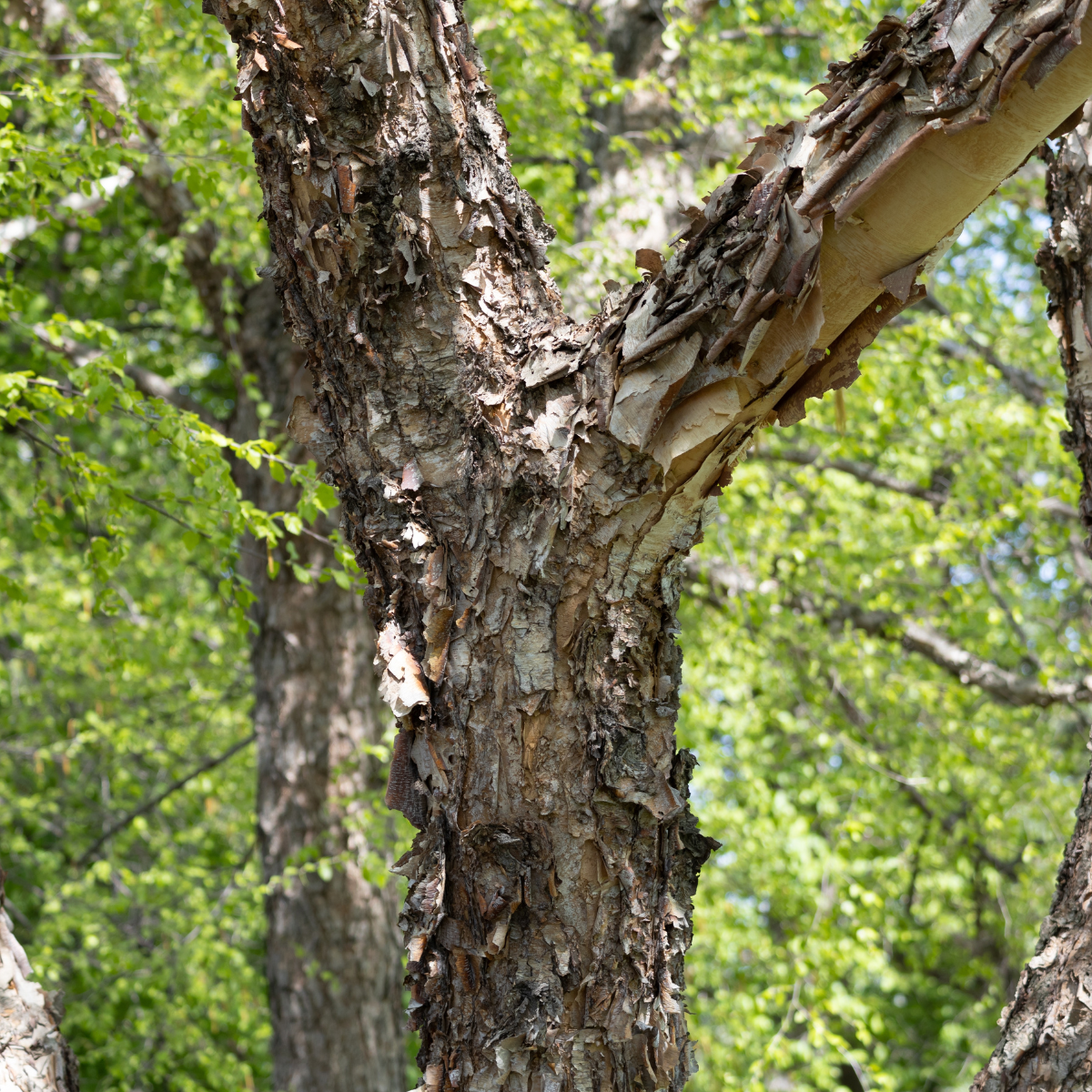
River birch (Betula nigra), also called black birch, is a North American deciduous tree valued for spectacular bark. Young trunks peel in thin cream, tan, pink, and cinnamon layers that create lively winter interest. The crown develops from pyramidal to rounded and may be trained as one trunk or grown as a multi-stem clump. Glossy green foliage turns golden yellow in fall, while spring catkins later produce small winged seeds. Depending on the site, allow approximately 12 to 18 m of height by 8 to 12 m of spread (40 to 60 ft × 26 to 40 ft). Zone 4 hardiness suits many cold Canadian landscapes.
Plant river birch in full sun or partial shade and cool, moist to wet, acidic soil enriched with organic matter. It tolerates clay, periodic flooding, and some poorly drained sites, but highly alkaline soil often causes yellow iron chlorosis. Water deeply during establishment and dry periods because this birch performs best with consistent moisture. Set the root flare at soil level, then apply 7 to 10 cm (3 to 4 in) of mulch without touching the trunk. A cool, uncompacted root zone protected from dense turf reduces premature leaf drop and supports rapid growth. Avoid adding lime or burying the trunk flare beneath new soil.
Use Betula nigra as a shade tree, ornamental-bark focal point, natural screen, or rain-garden feature. Its tolerance of wet soil is especially valuable near a pond, in a drainage swale, or along a large naturalized property. Keep it away from gutters and small patios because twigs, catkins, and seeds can drop. Prune sparingly and avoid cuts in spring during heavy sap flow. Watch mainly for chlorosis in alkaline soil, aphids, leaf miners, and leaf spots. River birch has excellent resistance to bronze birch borer, an important advantage in a durable landscape. A broad mulch ring and supplemental water preserve the most attractive foliage and bark.

Planting guide
From planting to establishment.
Soil and care
The right care,at the right time.
Soil pH
Minimum temperature
Care level
Watering
Soil type
Fertilization
Moisture
Seasonal care
Container growing
A garden,within reach.
Recommended pot size

Bloom and dimensions
Its place,in your garden.
Mature height
Width / spread
Flower color
Foliage color
Foliage type
Growth rate
Growth habit
Fragrance
Bloom period
Fruiting
Garden associations
In goodcompany.
Companion plants
Plants to avoid
Frequently asked questions
Your questions,answered.
How large does river birch become?
Can river birch grow in very wet soil?
Why are my river birch leaves turning yellow?
Is river birch resistant to bronze birch borer?
When and how should river birch be pruned?
Wildlife and pets