Sale
Sold out

Herb
Boraginaceae
Organic borage
Borago officinalis
Product code : JAREC-0029
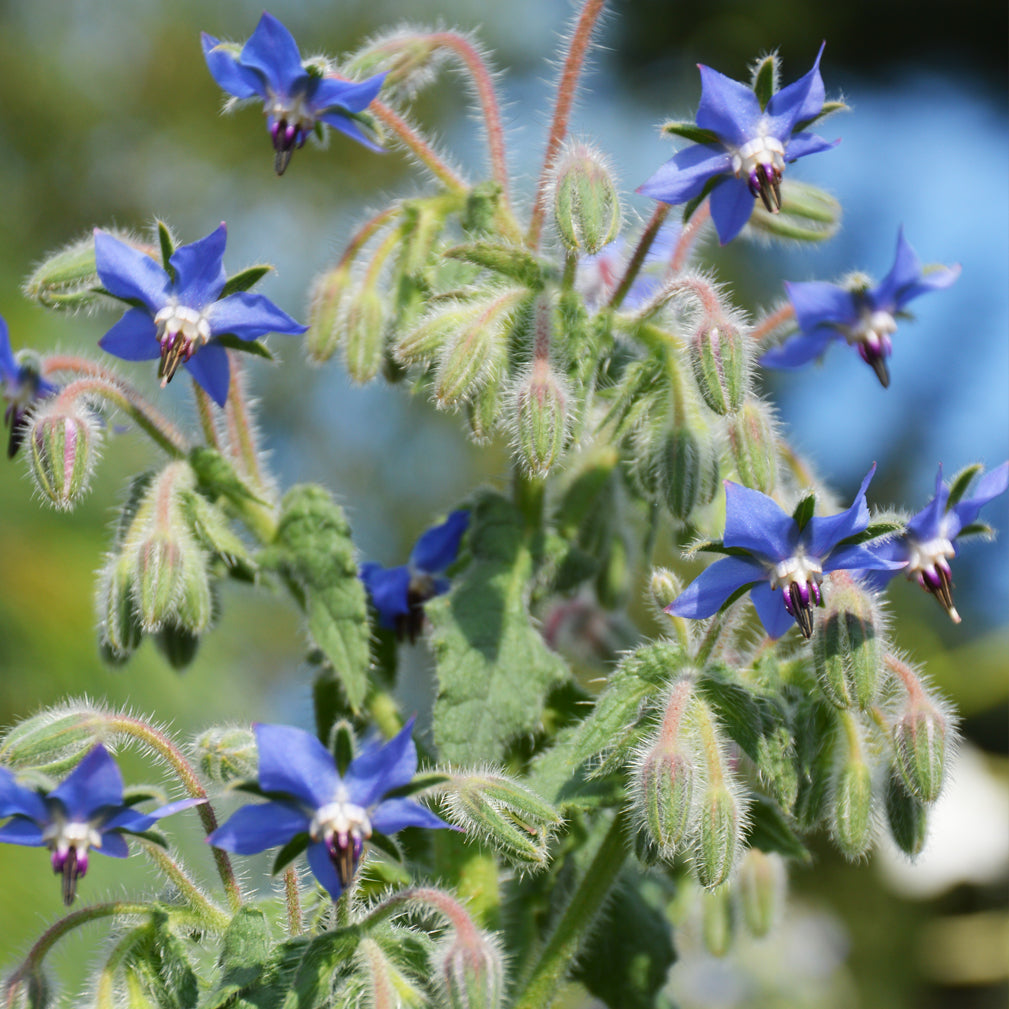
Organic borage is a generous annual that brings a wild, useful, and deeply vibrant charm to the garden. With its dazzling blue, sometimes white, star-shaped flowers, *Borago officinalis* attracts bees and other pollinators in large numbers, making it a valuable ally for the balance of the vegetable garden. Its green, hairy, and textured foliage gives it a rustic presence, while its fleshy stems and young leaves offer a fresh, cucumber-like flavor. It is often planted near tomatoes, squash, or strawberries, where it enlivens flowerbeds while promoting beautiful biological diversity.
- Quantity
- About 60 seeds
- Exposure
- Sun
- Life cycle
- Annual
Discover the plant
Common nameBorage
FamilyBoraginaceae
GenusBorage
Speciesofficinalis
TypeHerb
Botanical nameBorago officinalis
Reproducible seedsYes
Heirloom varietyYes
Borage (Borago officinalis). Organic borage is a generous annual that brings a wild, useful, and profoundly vibrant charm to the garden. With its dazzling blue, sometimes white, star-shaped flowers, Borago officinalis attracts large numbers of bees and other pollinators, making it a valuable ally for the balance of the vegetable garden. Its green, hairy, textured foliage gives it a rustic presence, while its fleshy stems and young leaves offer a fresh, cucumber-like flavor. It is often planted near tomatoes, squash, or strawberries, where it enlivens flowerbeds while promoting good biological diversity.
Recommended sowing period: May to June. The depth to respect is 1 to 2 cm (0.4 to 0.8 in). Germination usually takes 5 to 15 days. For germination, keep the soil at 15 to 20 °C (59 to 68 °F). Transplant young flowers when their true leaves have developed and their roots hold the root ball. Handle the seedlings delicately and avoid compressing the stem. Under lighting, gradually space out the containers so that the foliage does not overlap. Acclimatization then prepares the plants for sun, wind, and temperature variations.
Design the composition taking into account the adult habit and the distance from which the flowers will be observed. Small corollas benefit from being close to a path, while a tall silhouette can serve as a landmark at the back of a bed. Repeat a few plants of the same variety to make the color legible. Maintain access for cuttings and avoid crowding clumps just to immediately fill the space. Its green, hairy, textured foliage gives it a rustic presence, while its fleshy stems and young leaves offer a fresh, cucumber-like flavor.

Sowing guide
It all startswith a seed.
Sowing depth
1 to 2 cm (0.4 to 0.8 in)
Germination temperature
15 to 20 °C (59 to 68 °F)
Germination time
5 to 15 days
Sowing period
May to June
Propagation
Sowing
Growing method
Recommended sowing period: May to June. The required depth is 1 to 2 cm (0.4 to 0.8 in). Germination usually takes 5 to 15 days. For germination, keep the potting mix at 15 to 20 °C (59 to 68 °F). Transplant young flowers when their true leaves have developed and their roots hold the root ball. Handle seedlings gently and avoid compressing the stem. Under lights, gradually space out the containers so that the foliage does not overlap. Acclimatization then prepares the plants for sun, wind, and temperature variations. Planting out occurs when conditions match their hardiness. Observe the succession of buds, open flowers, and faded parts to determine necessary interventions. Pruning should preserve shoots that will flower next. For tall-stemmed plants, check supports after a windy period. A light tidying helps maintain the shape without stripping it. Adapt end-of-season care to the plant's cycle: annuals and perennials do not require the same winter preparation. Choose between extending flowering and keeping seeds on a few stems.
Soil and care
The right care,at the right time.
Care level
Regular during establishment, then adapted to growing conditions
Watering
Moderate
Soil type
Well drained
Fertilization
Fertilisation supports growth and takes into account nutrients already present in the soil or potting mix. Use mature compost or a fertilizer suited to the crop, following the dosage instructions. Avoid using too many products, especially in a container where roots occupy a limited volume. Water as needed after application and observe foliage development before re-fertilizing.
Moisture
Keep the soil moist during germination, without waterlogging; then adjust to the crop.
Seasonal care
Its green, hairy, and textured foliage gives it a rustic presence, while its fleshy stems and young leaves offer a fresh, cucumber-like flavor. Transplant young flowers when their true leaves have developed and their roots hold the soil ball together. Handle seedlings gently and avoid compressing the stem. Under lighting, gradually space out the containers so that the foliage does not overlap. Acclimatization then prepares the plants for sun, wind, and temperature variations. Planting takes place when conditions match their hardiness. Observe the succession of buds, open flowers, and faded parts to choose appropriate interventions. A cut should preserve the shoots that will flower next. For tall-stemmed plants, check the supports after a windy period. Light pruning helps maintain the silhouette without denuding it. Adapt end-of-season care to the plant's cycle: annuals and perennials do not require the same winter preparation. Choose between prolonging flowering and keeping seeds on some stems. Removing faded flowers is suitable for many annuals, while capsules and dry inflorescences can have decorative appeal. Keep plants identified when they no longer bear flowers and remove spontaneous seedlings that obstruct a pathway. Recommended sowing period: May to June. The recommended depth is 1 to 2 cm (0.4 to 0.8 in).
Container growing
A garden,within reach.
Recommended pot size
A stable container, with drainage holes, wide enough for the plant to spread out and deep enough for the roots.
Choose this exposure: full sun. Reserve this spread around the plant: 30 to 60 cm (12 to 24 in). A flowering container arrangement should allow space for each plant to grow. Place upright forms where they remain visible and allow trailing stems to occupy the edge when present. Ensure that the combined plants share the desired exposure and moisture. After a few weeks, observe the areas that are becoming dense and only remove damaged parts or stems that disrupt the composition's balance. Organic borage is a generous annual that brings a wild, useful, and deeply vibrant charm to the garden. With its bright blue, sometimes white, star-shaped flowers, Borago officinalis attracts large numbers of bees and other pollinators, making it a valuable ally for garden balance. Its green, hairy, textured foliage gives it a rustic presence, while its fleshy stems and young leaves offer a fresh, cucumber-like flavor. It is often planted near tomatoes, squash, or strawberries, where it enlivens flowerbeds while promoting good biological diversity.

Bloom and dimensions
Its place,in your garden.
Mature height
24 to 36 in. (60 to 90 cm)
Width / spread
30 to 60 cm (12 to 24 in)
Foliage type
Seasonal foliage
Growth habit
Bushy
Bloom period
June to September
Harvest
50 to 60 days after sowing
Garden associations
In goodcompany.
Companion plants
In a diverse planting, you can dedicate adjacent sections to these plants: strawberries, tomatoes, squash. Here, the association serves to organize space and harvests. Respect the height, light, and water needs of each plant, without crowding the foliage. Maintain a path for watering and harvesting, then remove finished crops to free up space. This organization facilitates maintenance without promising pest protection. Design the layout taking into account the mature size and the distance from which the flowers will be observed.
Frequently asked questions
Your questions,answered.
How to successfully sow Borage?
Recommended sowing period: May to June. The required depth is 1 to 2 cm (0.4 to 0.8 in). Germination usually takes 5 to 15 days. For germination, keep the potting mix at 15 to 20 °C (59 to 68 °F). Transplant young flowers when their true leaves have developed and their roots hold the soil ball. Handle the seedlings delicately and avoid compressing the stem. Under lights, gradually space out the containers so that the foliage does not overlap. Acclimatization then prepares the plants for sun, wind, and temperature variations.
Can borage be grown in pots?
Choose this exposure: full sun. Allow for this much space around the plant: 30 to 60 cm (12 to 24 in). A flowering container arrangement must allow room for each plant to grow. Place upright forms where they will remain visible and allow trailing stems to occupy the edge when present. Ensure that the combined plants share the desired exposure and moisture conditions. After a few weeks, observe the areas that are becoming denser and only remove damaged parts or stems that disrupt the balance of the arrangement. Organic borage is a generous annual that brings a wild, useful, and deeply vibrant charm to the garden.
How to care for Borage during the season?
Its green, hairy, and textured foliage gives it a rustic presence, while its fleshy stems and young leaves offer a fresh, cucumber-like flavor. As the season progresses, its edible flowers become bright little garnishes for plates, while the leaves find their place in salads or cooked dishes. Choose between prolonging flowering or keeping seeds on a few stems. Removing spent flowers is suitable for many annuals, while dried capsules and inflorescences can have decorative appeal. Keep plants identified when they are no longer flowering and remove spontaneous seedlings that are blocking a pathway.
What makes Borage stand out in the garden?
Organic borage is a generous annual that brings a wild, useful, and deeply vibrant charm to the garden. With its brilliant blue, sometimes white, star-shaped flowers, *Borago officinalis* attracts bees and other pollinators in large numbers, making it a valuable ally for the balance of the vegetable garden. Its green, hairy, and textured foliage gives it a rustic presence, while its fleshy stems and young leaves offer a fresh, cucumber-like flavor. It is often planted near tomatoes, squash, or strawberries, where it enlivens the beds while promoting biodiversity.
How to organize a Borage planting?
Draw the composition taking into account the adult habit and the distance from which the flowers will be observed. Small corollas benefit from being closer to a path, while a tall silhouette can serve as a landmark at the back of a bed. Repeat a few plants of the same variety to make the color legible. Keep access for cutting and avoid planting clumps too closely just to fill the space immediately. Observe the succession of buds, open flowers, and faded parts to choose useful interventions. A cut should preserve the shoots that will flower next. For plants with tall stems, check their supports after a windy spell.
Wildlife and pets
Life,around your plants.
Supporting wildlife
Flowers can host pollinating insects during the season. Plant several in a sunny area accessible to visitors, then avoid treating open flowers. Keep some of the blooms in the garden if you also cut stems for bouquets.
For a great start to your seeds
The right extras.Right here.
Seed Starting Soil
Shop the collectionSeed starting supplies
Shop the collection