Les jardins de l'écoumène

Matricaria recutita

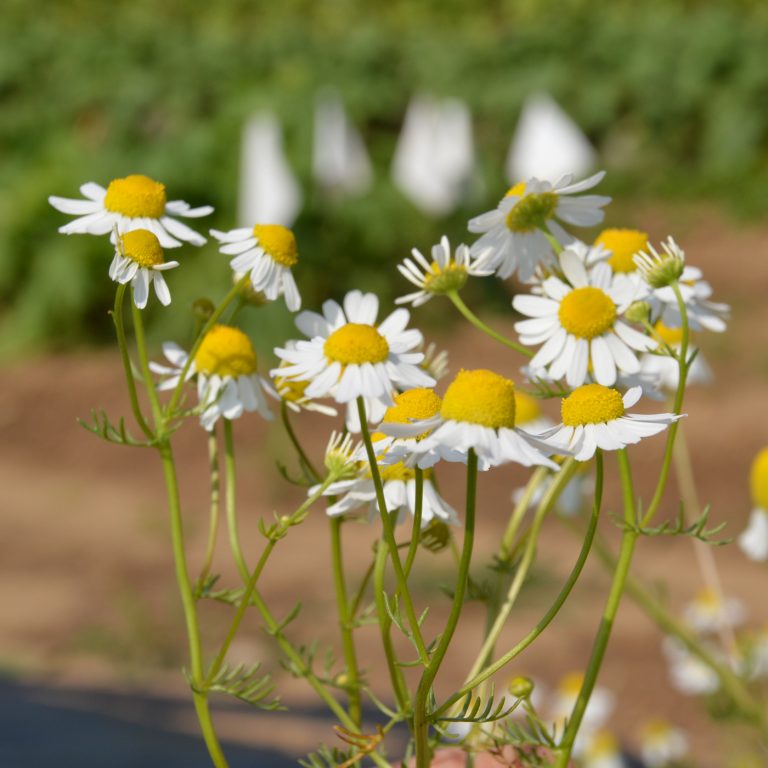
Organic German chamomile is a delicate annual whose airy display of small flowers brings a calm, gentle character to the surrounding garden planting. Small white flowers with bright yellow centres recall the simple herbs grown in older gardens, while giving the planting an ornamental, aromatic and useful presence through the season. Easy to grow in full sun and well-drained soil, it develops quickly and flowers generously through the warm season. Its flowers attract various useful pollinators and insects, adding a valuable ecological dimension to its culture. These organic seeds from Jardins de l’écoumène let you start your own plants and follow their development from sowing onward.
Sold as 500 seeds
4 49 $

Available

Pay in 4 interest-free payments withSezzle

Delivery and pickup: view conditions

Product information
Québec product
Secure payment
Share

Discover the plant

Common nameGerman Chamomile
FamilyAsteraceae
GenusMatricaria
Speciesrecutita
TypeHerb
Botanical nameMatricaria recutita
Reproducible seedsYes
Heirloom varietyYes

Matricaria recutita — German Chamomile. Organic German chamomile is a delicate annual whose airy display of small flowers brings a calm, gentle character to the surrounding garden planting. Small white flowers with bright yellow centres recall the simple herbs grown in older gardens, while giving the planting an ornamental, aromatic and useful presence through the season. Easy to grow in full sun and well-drained soil, it develops quickly and flowers generously through the warm season. Its flowers attract various useful pollinators and insects, adding a valuable ecological dimension to its culture.

Recommended planting period: April to June. The depth to be respected is 0.2 to 0.5 cm (0.08 to 0.2 in). Seedlings generally emerge within 7 to 14 days. For germination, keep the soil at 18 to 22°C (64 to 72°F). Label herbs when sowing so that you can distinguish species whose first leaves look alike. Transplant seedlings without crushing their crowns, and gradually give them more space under the grow lights. Wait until the roots fill the root ball before moving the plants into their final growing location.

To plant the German chamomile, prepare a thin surface and avoid deeply burying the small herb seeds. Pick the flower heads of chamomile well open in dry weather and dry them in an airy place. An herb garden is more convenient when it is close to a path or the kitchen. Group species with similar moisture needs, leaving enough space around each clump for growth. A labelled border makes it easy to find the herb flavour you want for a meal. Keep more vigorous vegetables from shading young herb plants while they are becoming established.

In the garden

Exposure
Full sun
Life cycle
Annual

Sowing guide

Sowing & germination

Sowing depth

0.2 to 0.5 cm (0.08 to 0.2 in)

Germination temperature

18 to 22°C (64 to 72°F)

Germination time

7 to 14 days

Sowing period

April to June

Propagation

From seed

Growing method

Recommended planting period: April to June. The depth to be respected is 0.2 to 0.5 cm (0.08 to 0.2 in). Seedlings generally emerge within 7 to 14 days. For germination, keep the soil at 18 to 22°C (64 to 72°F). Label herbs when sowing so that you can distinguish species whose first leaves look alike. Transplant seedlings without crushing their crowns, and gradually give them more space under the grow lights. Wait until the roots fill the root ball before moving the plants into their final growing location. Allow a plant intended for repeated harvesting to become established before removing large amounts of foliage. Harvest small stems or a few leaves at a time, leaving the plant enough vegetation to continue growing. A clean cut is better than tearing off a leaf with a piece of stem attached. Remove the dry parts and observe the formation of the flower buds according to the desired use. If you want to dry an herb harvest, spread it in a thin layer in a well-ventilated place protected from direct sunlight. For herbs grown for their leaves, take several small harvests rather than cutting away all the plant’s leafy growth at once.

Soil and care

Soil & care

Watering

Keep a steady moisture around the roots, without soaking the soil. Check the soil with a finger before watering, and direct the water to the base of the plant to limit splashing onto leaves intended for harvest. For container-grown plants, always allow excess water to drain away and empty the saucer afterwards. Check young seedlings carefully, as their small, developing root systems leave them vulnerable to drying out. Adjust the amount of water you provide according to rainfall, wind and heat.

Soil type

Prepare well-drained soil for planting. Label herbs when sowing so that you can distinguish species whose first leaves look alike. Transplant seedlings without crushing their crowns, and gradually give them more space under the grow lights. Wait until the roots fill the root ball before moving the plants into their final growing location. Allow a plant intended for repeated harvesting to become established before removing large amounts of foliage.

Fertilization

Fertilization supports growth and should take into account the nutrients already present in the soil or potting mix. Use mature compost or a fertilizer suitable for the crop, following the recommended application rate. Avoid combining too many products, especially in a container where the roots have a limited volume of growing medium. Water as needed after applying nutrients, and observe foliage growth before deciding whether another fertilizer application is necessary.

Moisture

Keep the growing mix moist during germination, without standing water; then adjust to the crop

Seasonal care

To plant the German chamomile, prepare a thin surface and avoid deeply burying the small seeds. Pick the flower heads of chamomile well open in dry weather and dry them in an airy place. Label herbs when sowing so that you can distinguish species whose first leaves look alike. Transplant seedlings without crushing their crowns, and gradually give them more space under the grow lights. Wait until the roots fill the root ball before moving the plants into their final growing location. Allow a plant intended for repeated harvesting to become established before removing large amounts of foliage. Harvest small stems or a few leaves at a time, leaving the plant enough vegetation to continue growing. A clean cut is better than tearing off a leaf with a piece of stem attached. Remove the dry parts and observe the formation of the flower buds according to the desired use. If you want to dry an herb harvest, spread it in a thin layer in a well-ventilated place protected from direct sunlight. For herbs grown for their leaves, take several small harvests rather than cutting away all the plant’s leafy growth at once. Prepare clean, healthy leaves shortly before the meal when you are ready to use them. If you also want to enjoy the flowers, keep some stems intact. This lets you separate the area reserved for leaf harvests from the flowering area left for visiting insects. Organic German chamomile is a delicate annual whose airy display of small flowers brings a calm, gentle character to the surrounding garden planting.

Container growing

Container growing

Suitable for containers

Yes

Recommended pot size

A stable container with drainage holes, enough width for the plant’s spread and sufficient depth for its roots
Choose a location in full sun. Reserve this spread around the plant: 20 to 30 cm (8 to 12 in.). An herb grown in a container is easy to move when you need to adjust its exposure to sunlight. The pot should provide air around the roots and allow excess water to drain away freely. Repeated harvesting is easier and cleaner when the foliage extends freely beyond the rim of the container. Turn the container occasionally if the light comes from one side only. Adjust watering to the needs of each species rather than treating every herb in the same planter in exactly the same way. Organic German chamomile is a delicate annual whose airy display of small flowers brings a calm, gentle character to the surrounding garden planting. Small white flowers with bright yellow centres recall the simple herbs grown in older gardens, while giving the planting an ornamental, aromatic and useful presence through the season. Easy to grow in full sun and well-drained soil, it develops quickly and flowers generously through the warm season. Its flowers attract various useful pollinators and insects, adding a valuable ecological dimension to its culture. Harvest small stems or a few leaves at a time, leaving the plant enough vegetation to continue growing.
Sachet de semences Camomille Allemande. Emballage blanc photographié de face sur un fond de bois brun. Une image du végétal occupe la partie centrale, sous le nom imprimé. De petits pictogrammes et un code-barres apparaissent au bas du sachet. La marque Écoumène figure dans la partie supérieure de cette présentation.

Bloom and dimensions

Size, flowering & harvest

Mature height

40 to 60 cm (16 to 24 in)

Width / spread

20-30 cm (8-12 in.)

Foliage type

Seasonal foliage

Bloom period

Flowering usually occurs in this period: June to August. Organic German chamomile is a delicate annual whose airy display of small flowers brings a calm, gentle character to the surrounding garden planting. Small white flowers with bright yellow centres recall the simple herbs grown in older gardens, while giving the planting an ornamental, aromatic and useful presence through the season.

Fruiting

For herbs grown for their leaves, take several small harvests rather than cutting away all the plant’s leafy growth at once. Prepare clean, healthy leaves shortly before the meal when you are ready to use them. If you also want to enjoy the flowers, keep some stems intact. This lets you separate the area reserved for leaf harvests from the flowering area left for visiting insects. Harvest small stems or a few leaves at a time, leaving the plant enough vegetation to continue growing.

Harvest

75 days after sowing
Camomille Allemande. Petites fleurs blanches à cœur jaune bombé sur de fines tiges. Le cadrage permet de voir les formes, les couleurs et les détails du sujet représenté. Les contours se détachent du fond de l’image, avec des différences de teinte et de texture visibles sur les surfaces. Cette vue accompagne la présentation du produit dans la boutique.

Garden associations

Companion plants & uses

Companion plants

In a mixed planting, you can reserve sections close to these plants: mint, lavender, basil. The association is used here to organize space and crops. Allow for the height, light requirements and water needs of each plant, leaving enough room between the foliage. Keep a path clear for watering and harvesting, then remove finished crops to make room for the next planting. This arrangement makes maintenance easier without promising protection against garden pests. An herb garden is more convenient when it is close to a path or the kitchen.

Garden use

For herbs grown for their leaves, take several small harvests rather than cutting away all the plant’s leafy growth at once. Prepare clean, healthy leaves shortly before the meal when you are ready to use them. If you also want to enjoy the flowers, keep some stems intact. This lets you separate the area reserved for leaf harvests from the flowering area left for visiting insects. Organic German chamomile is a delicate annual whose airy display of small flowers brings a calm, gentle character to the surrounding garden planting.

Recipe idea

From garden to table

Edible parts

Floral flower heads
Recipe idea using German Chamomile: aromatic infusion for two cups. Use 5 ml (1 tsp) of dried German chamomile flower heads intended for food use for every 250 ml of hot water. Prepare two cups separately, let infuse for five to ten minutes, then filter. Taste before adding some honey. Use clean, healthy flower heads collected from a properly identified German chamomile; remove the stems before preparation. Enjoy this infusion for its aroma and flavour. Prepare the ingredients with clean utensils and adapt the cut to the size of your harvest. This recipe highlights freshly picked parts: remove damaged pieces before preparation. If you double the quantities, keep enough space in the dish to mix or cook evenly. Quickly place leftovers in the refrigerator in a closed container and consume them within two days. To prepare a smaller meal for two people, use half of every ingredient quantity given in this recipe.
Camomille Allemande. Petites fleurs blanches à cœur jaune bombé sur de fines tiges. Le cadrage permet de voir les formes, les couleurs et les détails du sujet représenté. Les contours se détachent du fond de l’image, avec des différences de teinte et de texture visibles sur les surfaces. Cette vue accompagne la présentation du produit dans la boutique.

Frequently asked questions

Frequently asked questions

How do I grow German Chamomile from seed?
Recommended planting period: April to June. The depth to be respected is 0.2 to 0.5 cm (0.08 to 0.2 in). Seedlings generally emerge within 7 to 14 days. For germination, keep the soil at 18 to 22°C (64 to 72°F). Label herbs when sowing so that you can distinguish species whose first leaves look alike. Transplant seedlings without crushing their crowns, and gradually give them more space under the grow lights. Wait until the roots fill the root ball before moving the plants into their final growing location. Allow a plant intended for repeated harvesting to become established before removing large amounts of foliage.
Can I grow German Chamomile in a container?
Choose a location in full sun. Reserve this spread around the plant: 20 to 30 cm (8 to 12 in.). An herb grown in a container is easy to move when you need to adjust its exposure to sunlight. The pot should provide air around the roots and allow excess water to drain away freely. Repeated harvesting is easier and cleaner when the foliage extends freely beyond the rim of the container. Turn the container occasionally if the light comes from one side only. Adjust watering to the needs of each species rather than treating every herb in the same planter in exactly the same way. Organic German chamomile is a delicate annual whose airy display of small flowers brings a calm, gentle character to the surrounding garden planting.
When can I harvest German Chamomile?
For herbs grown for their leaves, take several small harvests rather than cutting away all the plant’s leafy growth at once. Prepare clean, healthy leaves shortly before the meal when you are ready to use them. If you also want to enjoy the flowers, keep some stems intact. This lets you separate the area reserved for leaf harvests from the flowering area left for visiting insects. Harvest small stems or a few leaves at a time, leaving the plant enough vegetation to continue growing. A clean cut is better than tearing off a leaf with a piece of stem attached. Remove the dry parts and observe the formation of the flower buds according to the desired use.
How can I use German Chamomile in the garden?
To plant the German chamomile, prepare a thin surface and avoid deeply burying the small seeds. Pick the flower heads of chamomile well open in dry weather and dry them in an airy place. Organic German chamomile is a delicate annual whose airy display of small flowers brings a calm, gentle character to the surrounding garden planting. Small white flowers with bright yellow centres recall the simple herbs grown in older gardens, while giving the planting an ornamental, aromatic and useful presence through the season. Easy to grow in full sun and well-drained soil, it develops quickly and flowers generously through the warm season. Its flowers attract various useful pollinators and insects, adding a valuable ecological dimension to its culture.
How do I arrange a planting of German Chamomile?
An herb garden is more convenient when it is close to a path or the kitchen. Group species with similar moisture needs, leaving enough space around each clump for growth. A labelled border makes it easy to find the herb flavour you want for a meal. Keep more vigorous vegetables from shading young herb plants while they are becoming established. Harvest small stems or a few leaves at a time, leaving the plant enough vegetation to continue growing. A clean cut is better than tearing off a leaf with a piece of stem attached. Remove the dry parts and observe the formation of the flower buds according to the desired use.

Seed-starting essentials

Click a product to build your selection.

Your selection

Total