Exceptionally hardy large hedge and windbreak shrub

Siberian peashrub

Caragana arborescens

Siberian peashrub is a large deciduous shrub with an upright then rounded habit, light-green compound foliage, and yellow pea-shaped flowers in May. Slender pods turn brown during summer and may produce volunteer seedlings. Allow approximately 3 to 5 m high by 2 to 4 m wide (10 to 16 ft × 7 to 13 ft). Hardy to Zone 2, it tolerates severe cold, wind, salt, poor soil, and drought after establishment. Its relatively fast growth suits informal hedges, rural screens, windbreaks, and difficult sites where more demanding shrubs perform poorly. For best results, inspect soil moisture, stem density, and foliage response regularly.
1 gallon; 2 gallons
Each store has its own inventory.

Products and available quantities may vary between Brossard and Laval. To check a store’s inventory, please contact us directly.

Even better: visit us in store to discover the full selection available!

Share
Quantity
1 gallon; 2 gallons
Exposure
Full sun
Hardiness
Zone 2

Discover the plant

Common nameSiberian peashrub; Siberian pea tree; caragana
FamilyFabaceae
GenusCaragana
Speciesarborescens
TypeLarge deciduous shrub that can be trained as a small tree
Botanical nameCaragana arborescens

Siberian peashrub (Caragana arborescens), also called Siberian pea tree or caragana, is a large deciduous shrub that can be trained as a small tree. Its upright habit becomes rounded with age, and light-green compound leaves generally carry 8 to 12 oval leaflets. Yellow pea-shaped flowers appear in May, singly or in small clusters, followed by slender pods that turn from green to brown during summer. Relatively fast growth and exceptional cold hardiness make it dependable for screens, informal hedges, and windbreaks. At maturity, allow approximately 3 to 5 m of height by 2 to 4 m of spread (10 to 16 ft × 7 to 13 ft).

Plant caragana in full sun and well-drained soil. It accepts sandy, gravelly, loamy, clay, or calcareous ground, even when fertility is low, and tolerates acidic to alkaline conditions. Hardy to Zone 2, it withstands severe cold, wind, salt, and dry periods after establishment. Water deeply after planting and through the first seasons so the entire root ball remains evenly moist. Set the root flare at soil level, then apply 5 to 8 cm (2 to 3 in) of mulch without touching the stems. Because this legume fixes nitrogen through its roots, heavy nitrogen fertilizer is rarely useful and can encourage soft growth.

Use Siberian peashrub for a hardy hedge, rural screen, windbreak, defensive boundary, snow-control planting, or shrub mass on a difficult site. Allow enough room for development and prune after flowering or during dormancy to remove dead, broken, or crossing wood. An older hedge can be renewed gradually by removing a few of the oldest stems at ground level each year. Flowers support spring insects, while mature pods can produce seedlings; remove pods before they ripen when self-sowing is not wanted. Watch mainly for spider mites, aphids, leafhoppers, and leaf spots when foliage becomes pale or distorted. Good air circulation and appropriate watering help maintain a dense, useful screen.

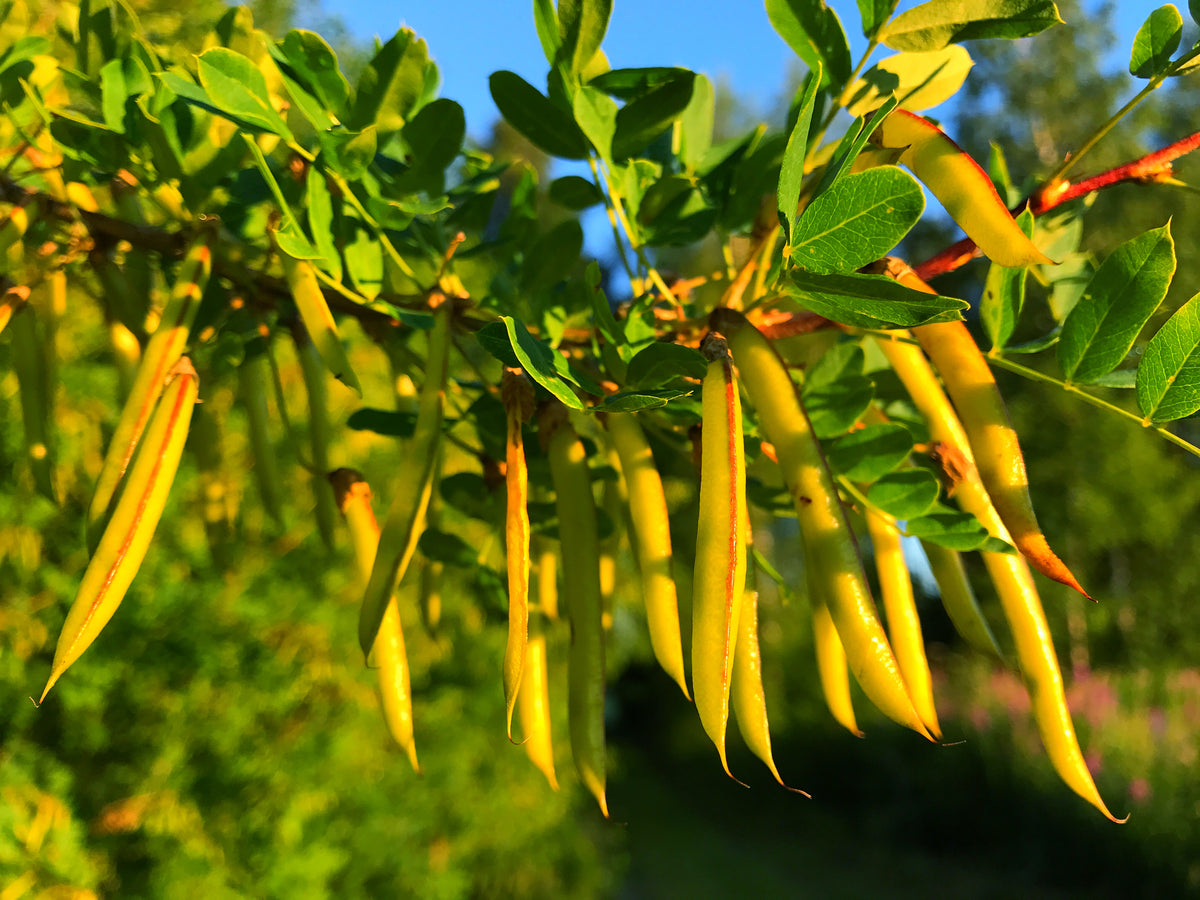
Siberian peashrub with an upright rounded habit, showing light-green compound foliage and yellow pea-shaped flowers along the shoots. Slender pods may follow during summer. This view presents <em>Caragana arborescens</em>, a Zone 2 deciduous shrub reaching approximately 3 to 5 m high by 2 to 4 m wide (10 to 16 ft × 7 to 13 ft), used for hedges, screens, and windbreaks on difficult sites.

Planting guide

From planting to establishment.

Spacing / density For a dense hedge, space plants approximately 1 to 1.5 m (3 to 5 ft) on centre. For a freer windbreak or screen, allow approximately 1.5 to 2.5 m (5 to 8 ft). A specimen needs about 3 to 4 m (10 to 13 ft) of clearance so its crown can round out without crowding a building or walkway.
Best planting time In spring after the soil thaws, or in early fall at least six weeks before persistent frost
Propagation Seed after scarification and cold stratification, root cuttings, or layering

Soil and care

The right care,at the right time.

Soil pH

Acidic to alkaline, approximately 5.5 to 8.0; avoid extremely calcareous conditions

Minimum temperature

Approximately -45 °C (-49 °F), Zone 2

Care level

Easy

Drought tolerance

Yes

Watering

Water deeply after planting and keep the entire root ball evenly moist through the first seasons. Check soil beneath mulch and irrigate when the upper centimetres begin to dry. Once well rooted, caragana tolerates long dry periods, but occasional water during a heat wave supports foliage density and reduces stress that favours spider mites. For best results, inspect soil moisture, stem density, and foliage response regularly.

Soil type

Well-drained poor to average sandy, gravelly, loamy, clay, or calcareous soil is suitable. Siberian peashrub accepts acidic to alkaline conditions and tolerates salt, wind, and drought after establishment. Avoid prolonged standing water and severe compaction around young roots. A mulched root zone reduces weed competition during establishment. For best results, inspect soil moisture, stem density, and foliage response regularly. This attention supports a durable, dense hedge suited to its site.

Fertilization

A thin spring compost layer and organic mulch are generally sufficient. Siberian peashrub fixes nitrogen through bacteria associated with its roots, so high-nitrogen fertilizer is rarely useful and can produce overly tender growth. If a soil test identifies a deficiency, apply a balanced slow-release fertilizer according to its label. For best results, inspect soil moisture, stem density, and foliage response regularly.

Moisture

Low to medium after establishment; dependable drainage required

Seasonal care

In spring, remove dead or damaged wood, renew mulch without covering stems, and observe the yellow May bloom. After flowering, lightly trim a hedge when needed to encourage branching. In summer, water young plants during long dry periods and watch for spider mites, aphids, leafhoppers, defoliating caterpillars, and leaf spots. Remove pods before maturity when volunteer seedlings are not wanted. In fall, stop nitrogen fertilization and remove broken branches. During dormancy, renew an old hedge gradually by removing a few of the oldest stems at ground level instead of cutting the entire screen back in one year. In winter, avoid piling heavily salted snow directly against trunks and protect young stems from rodents. For best results, inspect soil moisture, stem density, and foliage response regularly. This attention supports a durable, dense hedge suited to its site. For best results, inspect soil moisture, stem density, and foliage response regularly. This attention supports a durable, dense hedge suited to its site. For best results, inspect soil moisture, stem density, and foliage response regularly. This attention supports a durable, dense hedge suited to its site. For best results, inspect soil moisture, stem density, and foliage response regularly. This attention supports a durable, dense hedge suited to its site. For best results, inspect soil moisture, stem density, and foliage response regularly. This attention supports a durable, dense hedge suited to its site.

Container growing

A garden,within reach.

Recommended pot size

At least 50 to 75 L (13 to 20 US gal) for a young tree
Container culture is possible in a large stable, well-drained, insulated planter. Provide at least 50 to 75 L (13 to 20 US gal) for a young tree and protect the root ball from repeated freezing and thawing. Water regularly because container roots dry faster even though the plant tolerates drought in the ground. Garden planting remains preferable for lasting vigour.
Siberian peashrub (Caragana arborescens)

Bloom and dimensions

Its place,in your garden.

Mature height

4 to 6 m (13 to 20 feet)

Width / spread

4 m (13 feet)

Flower color

Bright yellow

Foliage color

Light green from spring through fall

Foliage type

Deciduous; pinnately compound leaves generally carrying 8 to 12 oval leaflets

Growth rate

Moderate to fast

Growth habit

Upright, branching, then rounded to spreading

Fragrance

No notable ornamental fragrance

Bloom period

Yellow pea-shaped flowers generally appear in early to mid-May. They are carried singly or in small groups along the shoots and contrast with light-green compound foliage. Bloom supports various spring insects and may be followed by numerous pods. To preserve flowers, trim a hedge after bloom rather than immediately before buds open. For best results, inspect soil moisture, stem density, and foliage response regularly.

Fruiting

Slender cylindrical pods approximately 4 to 5 cm (1.5 to 2 in) long develop after flowering. They turn from green to light brown in July or August, then split at maturity and disperse seeds. Remove pods before they open when volunteer seedlings are not wanted near natural areas or beyond the hedge. For best results, inspect soil moisture, stem density, and foliage response regularly.
Siberian peashrub (Caragana arborescens)

Garden associations

In goodcompany.

Companion plants

Pair Siberian peashrub with chokeberry, ninebark, red-osier dogwood, elderberry, juniper, spruce, or robust grasses suited to the same soil. Species diversity creates a more resilient screen than a long hedge made from one shrub. Keep low plants away from the root flare and space large neighbours for mature width. For best results, inspect soil moisture, stem density, and foliage response regularly. This attention supports a durable, dense hedge suited to its site. For best results, inspect soil moisture, stem density, and foliage response regularly.

Plants to avoid

Avoid standing water, dense shade, severe compaction, excessive nitrogen fertilizer, and repeated trimming that leaves a hedge bare at the base. Watch for spider mites, aphids, leafhoppers, caterpillars, beetles, and leaf spots. Mature pods can produce volunteer seedlings; remove them before opening and promptly pull young plants outside the intended area. For best results, inspect soil moisture, stem density, and foliage response regularly. This attention supports a durable, dense hedge suited to its site. For best results, inspect soil moisture, stem density, and foliage response regularly.

Frequently asked questions

Your questions,answered.

How large does Siberian peashrub become?
Siberian peashrub generally reaches approximately 3 to 5 m high by 2 to 4 m wide (10 to 16 ft × 7 to 13 ft). Its initially upright habit becomes more rounded and spreading with age. A clipped hedge can be kept narrower, but it requires regular pruning and enough room to remain leafy near the base. For a free-growing specimen, allow about 3 to 4 m (10 to 13 ft) of clearance. Keep it away from foundations, narrow walkways, and utilities that would be obstructed by a broad crown or densely branching stems. For best results, inspect soil moisture, stem density, and foliage response regularly.
How should Siberian peashrubs be spaced for a hedge?
For a dense hedge, space plants approximately 1 to 1.5 m (3 to 5 ft) on centre. For a free-growing screen or windbreak, allow 1.5 to 2.5 m (5 to 8 ft). Two staggered rows create a deeper barrier and slow wind more effectively than one line. Maintain a mulch strip during the first seasons and water the entire row so every root ball establishes evenly. Lightly trim young shoots after flowering to encourage branching, then renew older shrubs gradually by removing a few stems at ground level each year instead of cutting the whole hedge back at once. For best results, inspect soil moisture, stem density, and foliage response regularly.
Does Siberian peashrub tolerate drought, salt, and poor soil?
Yes. A well-rooted Siberian peashrub tolerates severe cold, wind, salt, poor soil, and long dry periods. This resilience does not replace establishment care. Water deeply after planting and keep the entire root ball evenly moist through the first seasons without allowing standing water. A mulch strip reduces evaporation and weed competition. Avoid heavy nitrogen applications because the plant naturally fixes this element through bacteria associated with its roots. During a prolonged heat wave, occasional irrigation maintains denser foliage and limits stress that favours spider mites. Container-grown plants need more frequent watering because their root balls dry faster. For best results, inspect soil moisture, stem density, and foliage response regularly.
When does Siberian peashrub flower and produce pods?
Yellow pea-shaped flowers generally appear in early to mid-May, singly or in small groups along the shoots. Slender pods approximately 4 to 5 cm (1.5 to 2 in) long then develop. They begin green, turn light brown in July or August, and may split to scatter seeds at maturity. To preserve flowers, trim the hedge after bloom rather than before it. When volunteer seedlings are not wanted, remove pods before they become fully brown and monitor young plants beyond the intended area. Flowers provide a spring resource for insects, while pods are mainly a propagation feature rather than the primary ornamental display.
How can volunteer Siberian peashrub seedlings be limited?
After flowering, monitor developing pods and remove them before they turn brown and split. This task is easier on a small group than along a long hedge; in the latter case, inspect nearby borders, ditches, and unmanaged spaces carefully. Pull young seedlings while soil is moist and before their roots become deep. Avoid planting next to natural land when local guidance discourages the species. Pruning soon after bloom can also remove some young fruit. Do not place waste containing mature pods in a cool compost pile. Combining pod removal with regular monitoring provides the most practical control. For best results, inspect soil moisture, stem density, and foliage response regularly.

Wildlife and pets

Life,around your plants.

Supporting wildlife

Yellow flowers provide pollen and nectar for various spring insects, while dense branches can offer temporary shelter. Add other shrubs and perennials with staggered bloom times to extend seasonal resources. Avoid broad-spectrum insecticides when damage remains minor, and prioritize appropriate watering, plant diversity, and observation.