


Sale
Sold out

Vegetable
Apiaceae
Organic seeds
Carrot 'Danvers 126'
Daucus carota subsp. sativus
Product code : JAREC-0036
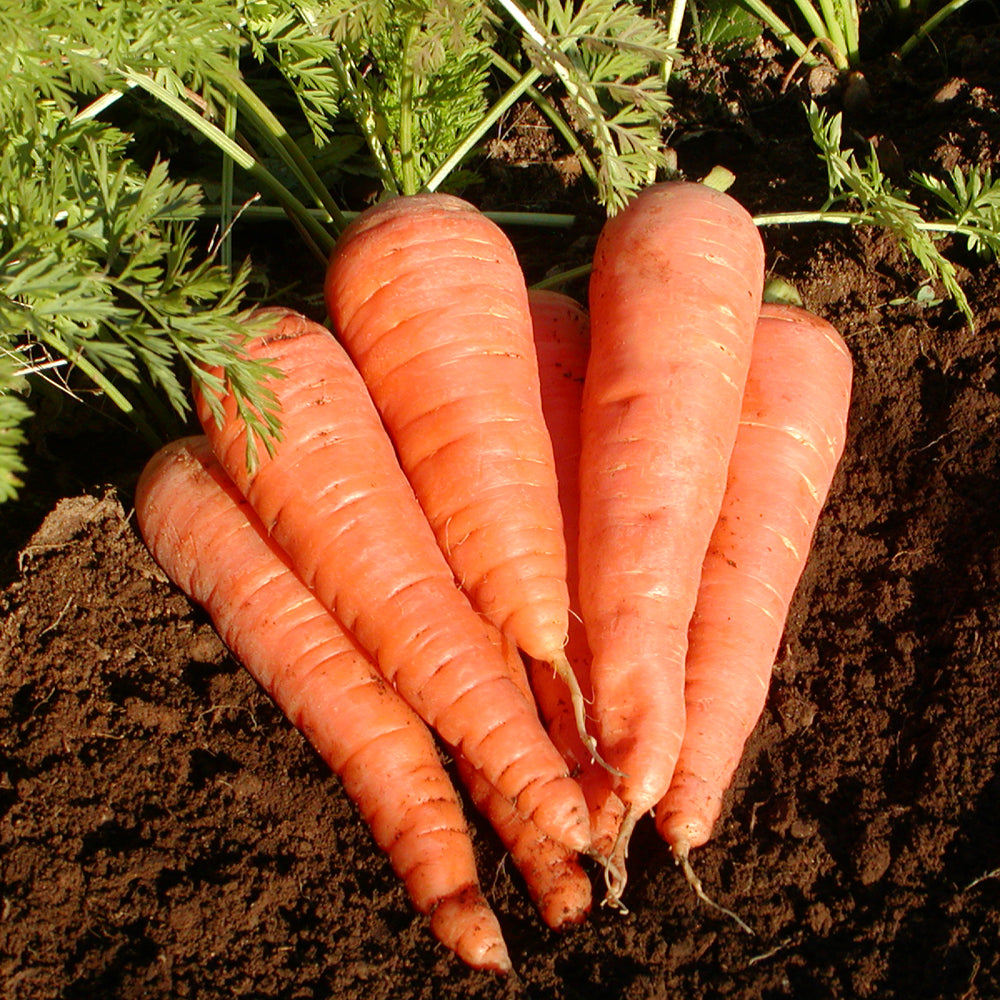
With its well-formed roots, widened at the collar, and deep orange color, Daucus carota subsp. sativus stands out as a reliable choice for summer and autumn harvests. Its tender flesh and sweet flavor make it a carrot that is as delightful to eat freshly picked as it is to cook in a variety of dishes. In the garden, it charms with its ease of cultivation when sown directly in light, loose, well-drained soil, where its roots can develop without constraint. Its finely cut foliage also brings a delicate texture to the vegetable patch, enlivening the rows with discreet elegance. A productive and consistent variety, it is suitable for both beginner gardeners and those who enjoy storing vegetables.
- Quantity
- About 800 seeds
- Exposure
- Sun
- Life cycle
- Biennial
Discover the plant
Common nameCarrot 'Danvers 126'
FamilyApiaceae
GenusCarrot
Speciescarrot
CultivarDanvers 126
TypeVegetable
Botanical nameDaucus carota subsp. sativus
Reproducible seedsYes
Heirloom varietyYes
Carrot ‘Danvers 126’ (Daucus carota subsp. sativus). With its well-formed roots, broad at the crown and deep orange in color, Daucus carota subsp. sativus is a reliable choice for summer and fall harvests. Its tender flesh and sweet flavor make it a carrot that is as delightful to eat fresh as it is versatile in a variety of dishes. In the garden, it is easy to grow when sown directly in light, loose, well-drained soil, where its roots can develop without constraint. Its finely cut foliage also adds a delicate texture to the vegetable patch, animating the rows with subtle elegance.
Recommended sowing period: in spring, as soon as the soil is dry enough and workable; adjust subsequent sowings to the season and type of harvest. The recommended depth is 0.5 to 1 cm (0.2 to 0.4 in). Germination usually takes 10 to 21 days. For germination, keep the potting mix at 15 to 25 °C (59 to 77 °F). Sow directly in the harvest location. Carrots do not tolerate transplanting of their main root well. Work the surface of the row finely enough so that the small seeds remain in contact with the soil.
Highly prized for its good storage capacity, it accompanies the gardener well beyond the harvest season, extending the pleasure into the colder months. Create short, accessible rows that are easy to weed during the first few weeks. Combine a section of carrots with lettuces or onions placed at a sufficient distance to allow for light. A raised bed can be practical if the natural soil is heavy. Avoid adding coarse organic matter directly into the furrow, which can hinder the formation of regular roots. With its well-formed roots, broad at the crown and deep orange in color, Daucus carota subsp. sativus is a reliable choice for summer and fall harvests.

Sowing guide
It all startswith a seed.
Sowing depth
0.5 to 1 cm (0.2 to 0.4 in)
Germination temperature
15 to 25 °C (59 to 77 °F)
Germination time
10-21 days
Sowing period
May to July
Propagation
Sowing
Growing method
Recommended sowing period: in spring, as soon as the soil is dry enough to work; adjust subsequent sowings to the season and type of harvest. The recommended depth is 0.5 to 1 cm (0.2 to 0.4 in). Germination usually takes 10 to 21 days. For germination, maintain the potting mix at 15 to 25 °C (59 to 77 °F). Sow directly in the harvest location. Carrots do not tolerate disturbance to their taproot well. Work the soil surface of the row finely enough so that the small seeds remain in contact with the soil. A hard crust after watering can hinder emergence: use a fine spray and keep the surface loose. Thin by cutting excess plants at ground level if pulling them out risks disturbing neighboring roots. Remove weeds when they are still small, as the light foliage of young carrots offers little competition. A visible crown can be lightly covered with loose soil. Before pulling an entire section, clear the top of a root to check its diameter. Loosen the soil next to the row with a fork when the soil is firm; only pulling on the tops can break them.
Soil and care
The right care,at the right time.
Care level
Regular during establishment, then adapted to growing conditions
Watering
Regular
Soil type
Loose, deep and well-drained
Fertilization
Fertilization supports growth and takes into account nutrients already present in the soil or potting mix. Use mature compost or a fertilizer suitable for the crop, following the dosage instructions. Avoid using multiple products, especially in a container where roots occupy a limited volume. Water as needed after application and observe foliage development before re-fertilizing.
Moisture
Keep soil moist during germination, with no standing water; then adjust to crop needs
Seasonal care
With its well-formed roots, broadened at the collar and a deep orange color, Daucus carota subsp. sativus is a reliable choice for summer and autumn harvests. Sow directly in the harvest location. Carrots do not tolerate disturbance to their taproot. Prepare the surface of the row finely enough so that the small seeds remain in contact with the soil. A hard crust after watering can hinder germination: use a fine spray and keep the surface loose. Thin by cutting excess plants at soil level if pulling them up risks disturbing neighboring roots. Remove weeds when they are still small, as the light foliage of young carrots provides little competition. A collar that becomes visible can be lightly covered with loose soil. Before pulling up an entire section, clear the top of a root to check its diameter. Loosen the soil next to the row with a fork when the soil is firm; simply pulling on the foliage can break it. The harvested part develops below the surface, which requires some checking instead of just observing the foliage. Gently clear a collar or pull up a first plant to assess the size. Regular growth promotes tenderness. Use damaged roots quickly and save intact specimens for proper storage adapted to the vegetable. Recommended sowing period: in spring, as soon as the soil is dry enough and workable; adjust subsequent sowings to the season and type of harvest.
Container growing
A garden,within reach.
Suitable for containers
Yes
Recommended pot size
A stable, perforated container, wide enough for the plant to spread out, and deep enough for the roots.
Choose this exposure: full sun. Reserve this spacing around the plant: 15 to 20 cm (6 to 8 in.). The useful depth of the container must exceed the expected root length. Avoid a layer of pebbles at the bottom, which would reduce this volume. Fill with a loose mixture free of large debris, then sow directly. In a small container, thin with fine scissors to limit handling. A sufficient reserve of potting soil slows down the drying out of the row during windy days. With its well-formed roots, widened at the crown and a deep orange color, Daucus carota subsp. sativus stands out as a reliable choice for summer and autumn harvests. Its tender flesh and sweet flavor make it a carrot that is as pleasant to munch on fresh from the garden as it is to cook in a multitude of dishes. In the garden, it charms with its ease of cultivation when sown directly in light, loose, well-drained soil, where its roots can develop without constraint. Its finely cut foliage also adds a delicate texture to the vegetable patch, enlivening the rows with discreet elegance. A productive and consistent variety, it is suitable for both beginner gardeners and enthusiasts of storage vegetables.

Bloom and dimensions
Its place,in your garden.
Mature height
30 to 40 cm (12 to 16 in.)
Width / spread
15 to 20 cm (6 to 8 in.)
Foliage type
Seasonal foliage
Growth habit
Compact
Bloom period
2nd-year summer
Fruiting
With its well-formed roots, enlarged at the crown, and a deep orange color, Daucus carota subsp. sativus is a reliable choice for summer and autumn harvests. Its tender flesh and sweet flavor make it a carrot that is as enjoyable to munch on freshly picked as it is to cook in a variety of dishes. The harvested part develops underground, which requires some checking rather than just observing the foliage.
Harvest
70 days after sowing
Garden associations
In goodcompany.
Companion plants
Onions, leeks, radishes
Recipe idea
From the gardento your plate.
Edible parts
Roots
Carrot ‘Danvers 126’ cooking idea: roasted vegetables for four servings. Prepare 600g of washed roots, peeled as needed, then cut them into similarly sized pieces. Mix with 15ml of olive oil, a pinch of salt, and a few thyme leaves. Spread in a dish and cook at 200°C (400°F) for 25 to 40 minutes, depending on the size of the pieces. Stir halfway through cooking. Serve when the vegetables are tender in the center and lightly colored on the edges. Prepare ingredients with clean utensils and adjust cutting to the size of your harvest. This recipe highlights freshly picked parts: remove damaged pieces before preparation. If you double the quantities, ensure enough space in the dish for even mixing or cooking. Promptly refrigerate leftovers in a sealed container and consume within two days. For a two-person meal, simply halve all quantities.
Frequently asked questions
Your questions,answered.
How to successfully sow Carrot ‘Danvers 126’?
Recommended sowing period: in spring, as soon as the soil is drained and workable; adjust subsequent sowings to the season and type of harvest. The depth to respect is 0.5 to 1 cm (0.2 to 0.4 in). Emergence usually takes 10 to 21 days. For germination, keep the potting soil at 15 to 25 °C (59 to 77 °F). Sow directly in the harvest location. Carrots do not tolerate transplanting of their main root well. Work the row surface finely enough so that the small seeds remain in contact with the soil. A hard crust after watering can hinder emergence: use a fine spray and keep the surface loose.
Can 'Danvers 126' carrots be grown in pots?
Choose this exposure: full sun. Reserve this spacing around the plant: 15 to 20 cm (6 to 8 in.). The useful depth of the container must exceed the expected root length. Avoid a layer of pebbles at the bottom, which would reduce this volume. Fill with a loose mixture free of large debris, then sow in place. In a small container, thin with fine scissors to limit handling. A sufficient reserve of potting soil slows down the drying out of the row during windy days. With its well-formed roots, enlarged at the crown and a deep orange color, Daucus carota subsp. sativus stands out as a reliable choice for summer and autumn harvests.
When to harvest 'Danvers 126' carrots?
With its well-formed, collared, and deep orange roots, Daucus carota subsp. sativus stands out as a reliable choice for summer and autumn harvests. Its tender flesh and sweet flavor make it a carrot that is as enjoyable to snack on freshly picked as it is to cook in a multitude of dishes. The harvested part develops underground, which requires some checking instead of just observing the foliage. Gently clear around a root crown or pull up a first plant to gauge its size. Consistent growth promotes tenderness. Use damaged roots quickly and set aside intact specimens for proper vegetable storage.
What sets 'Danvers 126' carrots apart in the garden?
With its well-formed roots, broadened at the crown, and deep orange color, Daucus carota subsp. sativus is a reliable choice for summer and autumn harvests. Its tender flesh and sweet flavor make it a carrot that is equally enjoyable to snack on fresh or to cook in a variety of dishes. In the garden, it is appealing for its ease of cultivation when sown directly in light, loose, well-drained soil, where its roots can develop without constraint. Its finely cut foliage also adds a delicate texture to the vegetable garden, enlivening the rows with discreet elegance. A productive and consistent variety, it is suitable for both beginner gardeners and those who enjoy storing vegetables.
How to plant carrot 'Danvers 126'?
Draw short, accessible rows that are easy to weed during the first few weeks. Pair a section of carrots with lettuces or onions placed far enough apart to allow light in. A raised bed can be practical if the natural soil is heavy. Avoid adding coarse organic matter directly into the furrow, which can hinder the formation of regular roots. Remove weeds when they are still small, as the light foliage of young carrots offers little competition. A visible crown can be lightly covered with loose soil. Before harvesting an entire section, clear the top of a root to check its diameter.
For a great start to your seeds
The right extras.Right here.
Seed Starting Soil
Shop the collectionSeed starting supplies
Shop the collection





