


Sale
Sold out

Compact root vegetable
Apiaceae
Organic root vegetable seeds
Organic 'Danvers' carrot
Daucus carota subsp. sativus
Product code : BIOVO-0017
Organic 'Danvers' carrot, Daucus carota subsp. sativus, produces broad-shouldered conical orange roots approximately 6 to 7 inches long. Direct-sow 1/4 inch deep and 1 inch apart, then thin to 2 inches. Leave 12 inches between rows. Loose, stone-free, evenly moist soil supports regular, very sweet roots. Harvest them for snacks, salads, soups, juice, or freezing. This biennial is grown as an annual vegetable and receives no hardiness zone. No specific companion plant is confirmed; keep rows open and monitor foliage and roots regularly. Dated labels make succession sowings easier to harvest at their best stage. For best results, check moisture, foliage, and root shoulders regularly, then adjust care as plants develop.
- Exposure
- Full sun to partial shade
- Life cycle
- Biennial grown as an annual crop
Discover the plant
Common name'Danvers' carrot, Danvers-type carrot
FamilyApiaceae
GenusDaucus
Speciescarota subsp. sativus
CultivarDanvers
TypeCompact root vegetable
Botanical nameDaucus carota subsp. sativus
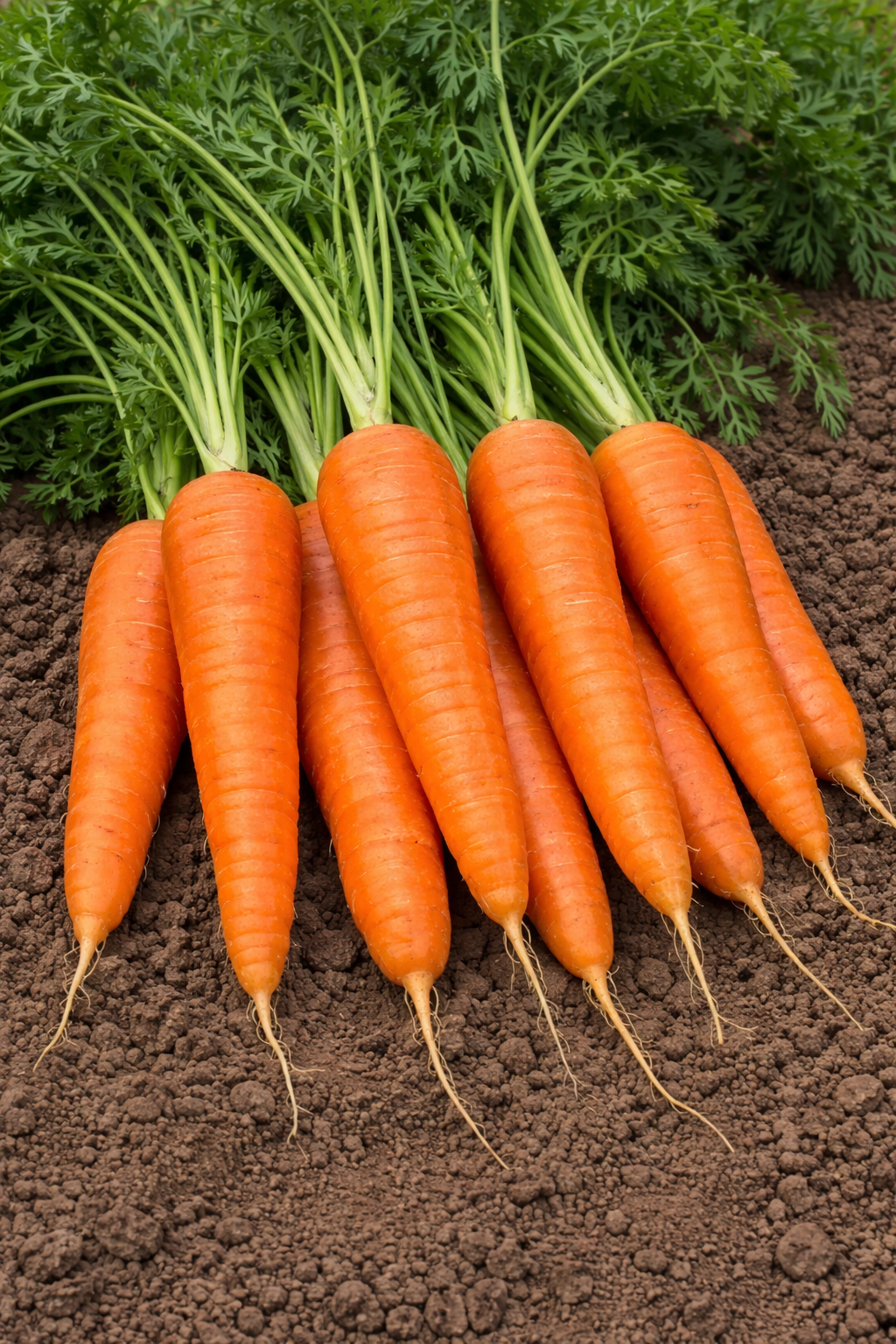
Organic 'Danvers' carrot (Daucus carota subsp. sativus) produces conical orange roots with broad shoulders tapering toward a blunt point. Roots generally measure 6 to 7 inches and have very sweet flesh. They suit fresh eating, salads, soups, juice, and freezing. Their sturdy shape performs in properly prepared soil and may tolerate some heavier ground better than long cylindrical carrots. Broad shoulders make harvest size easy to observe without disturbing every plant, while the tapered lower root develops best where the soil is fine and free of stones. The sweet flesh remains versatile for immediate use or preservation.
Direct-sow as soon as soil can be worked. Place seeds approximately 1/4 inch deep and 1 inch apart, then keep the surface continuously moist until emergence. Thin to 2 inches with scissors and leave 12 inches between rows. Prepare loose, stone-free, well-drained soil; avoid fresh manure and excessive nitrogen, which may cause forked roots or abundant foliage. Sowings spaced several weeks apart extend harvests when the season permits. Do not transplant because disturbance of the developing taproot commonly causes twisting, branching, or other deformation. Keep the seedbed clearly labelled until the fine seedlings become easy to recognize.
Begin checking around the indicative 70-day reference when shoulders reach the desired diameter and tenderness. Loosen soil before pulling to limit breakage, remove tops promptly, and cool the roots. Maintain steady irrigation while roots enlarge to support uniform texture and reduce splitting. No specific companion plant is confirmed; keep rows open and easy to monitor instead. Inspect crops, rotate plant families, and use a physical barrier when pest pressure justifies it. Store healthy roots in cool conditions after removing loose surface soil. In containers, check moisture frequently during warm weather and keep drainage openings clear after every deep watering.

Sowing guide
It all startswith a seed.
Sowing depth
Approximately 6 mm (1/4 in)
Spacing / density
Sow 1 in apart, thin to 2 in, and space rows 12 in apart
Germination temperature
10 to 30 °C (50 to 86 °F), with more even emergence near 20 °C
Germination time
Approximately 10 to 21 days in evenly moist soil; warmer soil within the crop’s suitable range speeds emergence.
Sowing period
Spring as soon as soil can be worked, then successive sowings through late summer according to the local season
Propagation
Direct sowing only for regular root production
Growing method
How to grow a carrot: 'Danvers' carrot. Loosen at least 25 to 30 cm (10 to 12 in) of soil, remove stones, and incorporate only well-decomposed compost. Make a furrow 6 mm (1/4 in) deep, distribute seed sparingly, and firm lightly. Keep the surface moist with a gentle spray until emergence, which may require up to three weeks. When crust forms after rain, break it carefully without disturbing seed. Once seedlings reach 8 to 10 cm (3 to 4 in), thin gradually to 5 cm (2 in). Water deeply to provide approximately 2.5 cm (1 in) weekly, including rainfall, and weed shallowly. Cover any greening shoulder with a little soil. Make two or three sowings three weeks apart. Harvest when diameter suits your use, loosen with a fork, and remove tops. Record dates, texture, and forked roots to improve the next batch. Cool every harvest promptly and keep rows labelled. Inspect foliage for aster yellows symptoms and remove suspicious plants rather than composting them beside healthy carrots. Keep the surface evenly moist during hot winds. After each thinning, close gaps gently without compacting the remaining roots. Record the sowing date on a weatherproof label. During sowing and cultivation, check moisture and foliage regularly, then adjust watering and protection as plants develop.
Soil and care
The right care,at the right time.
Soil pH
Approximately 6.0 to 7.0
Care level
Moderate
Watering
Keep the surface evenly moist while 'Danvers' carrot germinates, because the shallow seed and young taproot cannot recover well from crusting. Before 'Danvers' carrot emerges, use a gentle flow; as roots lengthen, water more deeply and let excess leave the bed. For 'Danvers' carrot, moisten the full depth of the developing root instead of repeatedly wetting only the surface. Mulch 'Danvers' carrot lightly only after establishment, limiting abrupt wet-dry cycles that can cause cracking or uneven texture. A 'Danvers' carrot container must drain freely and needs daily checks in warm wind while the edible root enlarges.
Soil type
'Danvers' needs a deep, finely prepared root zone so its rosette of finely divided leaves above a broad-shouldered conical root long can extend without obstruction. Mulch only after conditions suit the crop, keeping the crown uncovered. In the 'Danvers' planting, loose sandy loam or a raised bed should hold steady moisture while draining promptly. For 'Danvers' carrot, remove stones and hard clods, prevent surface crusting, and use only mature compost; fresh manure can promote distorted roots. Containers for 'Danvers' need fine vegetable mix, uninterrupted root depth, and open drainage holes. Test the soil before making corrective mineral additions.
Fertilization
Before sowing, incorporate a small amount of mature compost when soil is poor. Avoid fresh manure and nitrogen-rich fertilizers, which favour tops and may contribute to forked roots. If a soil test reveals a deficiency, apply a balanced organic fertilizer at a low labelled rate. Check moisture, spacing, and compaction first when growth seems slow. Do not place concentrated fertilizer directly against seed or young roots.
Moisture
Evenly moist soil without saturation
Seasonal care
Seasonal care for 'Danvers' carrot. Use 'Danvers' carrot’s stated sowing window as a frost-relative cue, not a universal date: spring as soon as soil can be worked, then successive sowings through late summer according to the local season. Sow approximately 6 mm deep and allow 10 to 21 days for emergence at 10 to 30 °C (50 to 86 °F), with more even emergence near 20 °C, then move seedlings promptly into strong light as soon as they appear. Direct-sow into deep, loose, stone-free soil; transplanting or hard clods can distort the rosette of finely divided leaves above a broad-shouldered conical root. Keep the surface continuously damp until seedlings are established, using a gentle flow that does not wash seed from the row. Thin seedlings early to the stated spacing by cutting extras rather than tugging against neighbouring roots, and keep the shoulders lightly covered. Maintain even moisture without saturation; long dry spells followed by heavy watering can produce cracking, coarse texture, or irregular growth. For container-grown 'Danvers' carrot, use the supplied guidance—well-drained container at least 25 to 30 cm (10 to 12 in) deep—and check drainage before growth hides the surface. Carrot rust fly and exposed green shoulders deserve regular checks as the crop develops. Treat the supplied harvest guidance—begin checking around the indicative 70-day reference according to desired diameter and tenderness—as a starting point, then lift one sample to assess diameter, colour, and tenderness before clearing the row. For succession, make smaller sowings while enough cool-season time remains before local heat or hard freezing. At harvest, loosen the surrounding soil, trim foliage as appropriate, cool the crop promptly, and discard roots showing rot or serious damage.
Container growing
A garden,within reach.
Recommended pot size
Well-drained container at least 25 to 30 cm (10 to 12 in) deep
Growing 'Danvers' carrot in containers. For 'Danvers', choose a container matching this guide: well-drained container at least 25 to 30 cm (10 to 12 in) deep. Keep several drainage holes unobstructed. As a cultivated carrot, 'Danvers' forms its best root when the seedling is not transplanted. If a seed harvest from the row is planned, retain the cultivar label and consult crop-specific isolation guidance; vegetable harvest directions alone are not sufficient. Direct-sow the root crop rather than transplanting, then label the container and keep the surface evenly moist. This carrot develops the expected harvest form: rosette of finely divided leaves above a broad-shouldered conical root 6 to 7 in long. Use visible changes in the crop rather than the calendar alone to judge harvest. Use fine, loose vegetable mix screened free of stones and hard clods, with only mature compost added. Place the pot in sun or bright partial shade where heavy rain cannot leave it standing in water. Match the row to full sun to partial shade and observe the actual hours of unobstructed light at the site. Leave headspace for watering while preserving uninterrupted depth for the developing roots. Leave the root crop open to light, airflow, and watering at soil level. Sample one root first, loosen the surrounding mix, and lift the remainder without scraping neighbouring roots. Sample the crop before lifting the whole container. Loosen mix beside the developing roots, harvest without twisting neighbouring roots, trim tops promptly, and refrigerate sound roots separately from foliage.

Bloom and dimensions
Its place,in your garden.
Mature height
Foliage approximately 15 to 30 cm (6 to 12 in), depending on growing conditions
Width / spread
Approximately 10 to 20 cm (4 to 8 in)
Foliage color
Medium green
Foliage type
Finely divided foliage in a rosette, dying back at season's end
Growth rate
Fast
Growth habit
Rosette of finely divided leaves above a medium-long conical root
Bloom period
Flowering is not wanted when growing carrots for roots. Carrot is biennial: a root that survives winter may produce a stem bearing white umbels in its second year. Harvest roots during the first season and remove every premature flower stalk because bolting makes flesh more fibrous and reduces culinary quality. A long cold period followed by warmth or substantial stress may encourage early bolting. Maintain even moisture and avoid disturbing the taproot during establishment.
Fruiting
Danvers carrots are grown for storage roots, not fruit. The shoulder provides a useful indication of thickening, but lifting one sample is more reliable than judging the entire row by foliage size. Keep the remaining roots covered where soil has washed away. If plants are retained through their reproductive cycle for seed, the resulting flower stalks and seed heads serve a different purpose from a tender eating harvest.
Days to maturity
Indicative estimate of approximately 70 days; harvest according to diameter and tenderness
Harvest
Begin checking around the indicative 70-day reference according to desired diameter and tenderness
Garden associations
In goodcompany.
Companion plants
Rotation, shallow weeding, and inspection remain more dependable for 'Danvers' carrot than any claim that one neighbour repels carrot pests. Low lettuce, green onions, or quick radishes may share the edges of a 'Danvers' row if they are removed before roots compete. When arranging neighbours for 'Danvers', keep neighbouring roots outside the loose column needed by the rosette of finely divided leaves above a broad-shouldered conical root long. Remove any neighbour that begins competing for light, moisture, airflow, or harvest access. In the 'Danvers' carrot planting, leave enough room to loosen and lift the rosette of finely divided leaves above a broad-shouldered conical root long without uprooting the companion crop. Reassess the arrangement around 'Danvers' as both crops approach mature size. Use companion planting to organize succession and diversity, not as a substitute for sound crop care.
Plants to avoid
Avoid compact or stony soil, fresh manure, excess nitrogen, prolonged drought, and transplanting, which favour forked, fibrous, or split roots. Watch for carrot fly, root tunnels, and foliage diseases. Rotation with crops from another family helps reduce recurring problems.
Recipe idea
From the gardento your plate.
Edible parts
Roots; young tops only when clean, healthy, and known to be carrot foliage
'Danvers' carrot in the kitchen. Glazed 'Danvers' carrots — Cut 500 g scrubbed carrots on a diagonal into thick coins. Heat 15 mL butter or olive oil in a broad pan, add the carrots, and stir for two minutes. Pour in 125 mL water, cover, and simmer gently until nearly tender. Remove the lid, add 10 mL maple syrup, 5 mL apple-cider vinegar, and 2 mL crushed coriander seed. Raise the heat slightly and turn the carrots until the remaining liquid forms a glossy coating. Season with salt only after the glaze has reduced, then add chopped parsley. The small amount of vinegar keeps the finish bright without turning the dish into a pickle. Serve warm with lentils, roast chicken, or baked squash. Cut the thick shoulder pieces smaller than the narrow ends so everything finishes together. Scrub soil from roots under running water, sanitize the sink area afterward, and keep the used board away from salad ingredients. Cool leftovers promptly and refrigerate in a covered shallow container.
Frequently asked questions
Your questions,answered.
Why choose 'Danvers' carrot?
'Danvers' combines a broad-shouldered conical root, very sweet flesh, and an indicative reference of approximately 70 days. Its 6- to 7-inch shape suits gardens, raised beds, and deep containers. It may also tolerate some heavier soil better than long cylindrical carrots when ground is loosened and cleared of stones. Roots may be eaten fresh, roasted, added to soup, juiced, or frozen. For a uniform harvest, maintain steady moisture, thin to 2 inches, and remove weeds without disturbing roots. Label successive sowings so harvest dates and performance remain easy to compare. Compare several roots before judging the crop, because temperature, soil, and moisture can change the actual harvest date.
Why do carrots become forked or fibrous?
The broad-shouldered Danvers root can push through moderately firm ground, but a hard layer, stones, undecomposed manure, or damage to the first root tip may still cause branching. Prepare an even seedbed, sow directly about 6 mm deep, and avoid transplanting. Thin seedlings from 1 inch to 2 inches apart while they are small; late pulling can disturb the conical roots you intend to keep. Fibrous or woody texture is different from forking and often means the crop experienced uneven water or stayed in the ground beyond its best stage. Keep moisture steady and begin sampling near the indicative 70-day estimate. Lift one carrot, check its 6–7-inch root for tenderness, and use that observation rather than size alone. A little loose soil over exposed shoulders prevents greening, but the foliage crown must remain open to light and air.
Can 'Danvers' be grown in a container?
Danvers can be container-grown if the pot is at least 25 to 30 cm deep and drains freely. Its broad-shouldered conical roots reach about 15 to 18 cm, so fill the vessel with loose, stone-free mix and avoid compacted layers. Direct-sow approximately 6 mm (¼ in) deep; transplanting would distort the taproot. Keep the surface moist through the 10- to 21-day emergence period, then thin seedlings to about 5 cm apart. Water evenly without saturation and cover exposed shoulders lightly. Begin checking near the indicative 70-day point, but lift according to root diameter and tenderness rather than a strict date. A deep container helps only when roots are uncrowded, drainage holes remain open, and the medium stays uniformly workable from the surface to the base.
When should 'Danvers' carrots be harvested?
Begin checking Danvers carrots around the indicative 70-day reference. Gently brush soil from a shoulder to assess diameter without cutting the root. This cultivar forms a broad-shouldered conical carrot about 15 to 18 cm long, but tenderness and desired size matter more than an exact date. Lift one sample from moist, workable soil and taste it before clearing the row. Loosen compact soil with a fork beside the root rather than pulling hard on the foliage. Leave smaller neighbours to continue growing. Trim tops promptly after harvest if roots will be stored, keeping clean young leaves separate if they will be used. Discard damaged or decaying roots. Record the sample date and shoulder size so later sowings can be judged from actual local growth rather than a fixed calendar promise.
Will harvested seed remain true to 'Danvers'?
Danvers seed will remain true only when second-year flowering plants are correctly identified and isolated from other compatible flowering carrots and wild relatives. Carrot is biennial, so first-year roots must survive or be replanted before they produce umbels. Pollinating insects can move pollen over distance, and seed from an unisolated garden may not reproduce the broad-shouldered Danvers root. Select several healthy, true-to-type roots rather than one plant, label them, and prevent nearby carrots from flowering at the same time. Collect seed from dry, sound umbels and store it separately. If you cannot document the isolation and parent selection, regard the saved seed as experimental. Grow a test row before depending on it for a uniform Danvers crop.
Wildlife and pets
Life,around your plants.
Supporting wildlife
Danvers carrots are pulled before flowering, so pollinators play no role in producing the edible root. Second-year plants form lacy white umbels that can host diverse small bees and flies. Those blooms are useful only when roots are intentionally overwintered. Keep seed plants isolated from other flowering carrots, and choose continuous-blooming companions for more dependable insect forage.
For a great start to your seeds
The right extras.Right here.
Seed Starting Soil
Shop the collectionSeed starting supplies
Shop the collection





