


Sale
Sold out

Green stalk vegetable
Apiaceae
Organic leafy vegetable seeds
Organic 'Tango' celery
Apium graveolens var. dulce
Product code : BIOVO-0023
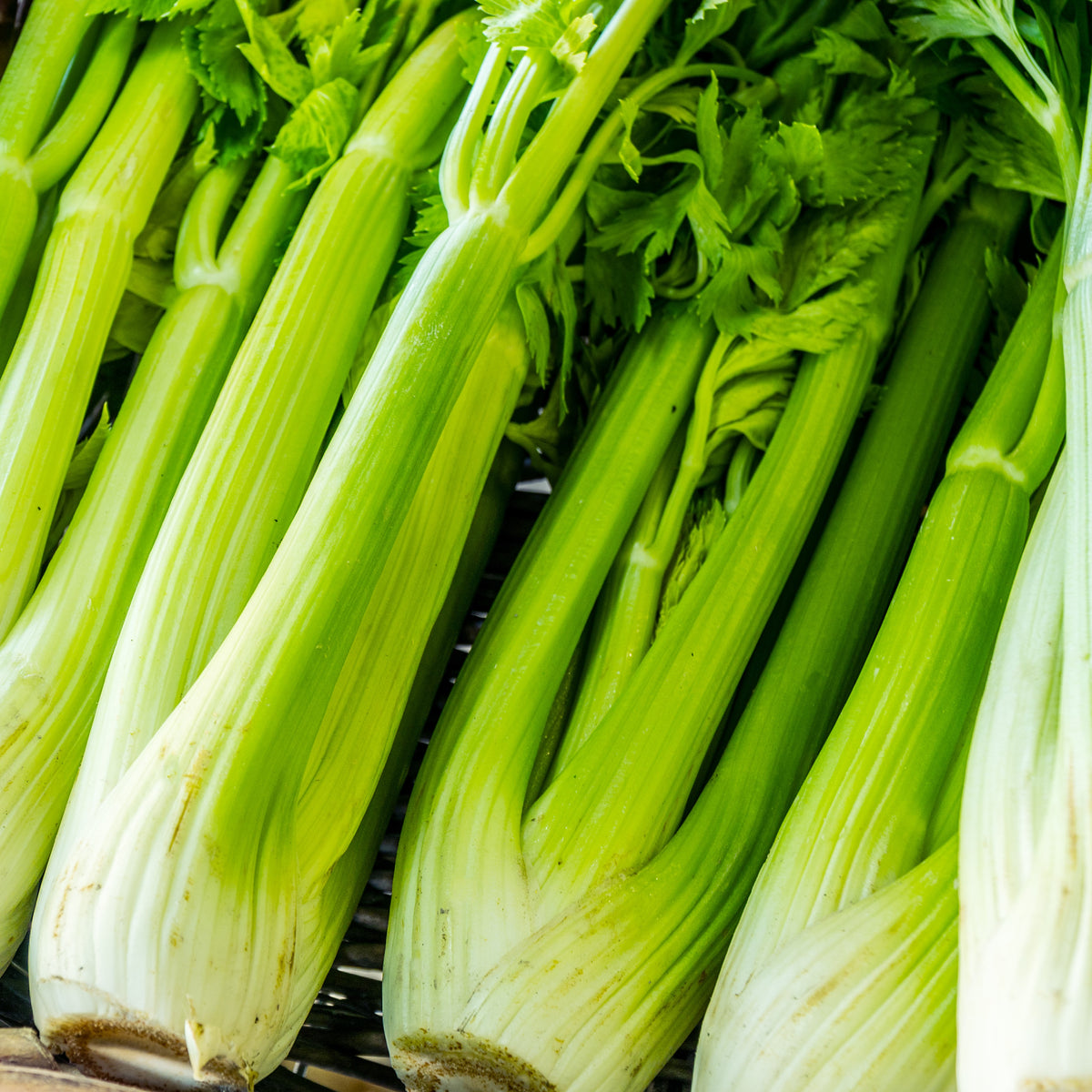
Organic 'Tango' celery, Apium graveolens var. dulce, produces an upright head with long, smooth, tender, crisp green stalks. Approximately 50 coated organic seeds are included, with 80-day maturity and 85% germination listed in the product information. Start indoors 10 to 12 weeks before the last frost. Transplant into rich, consistently moist soil, spacing plants 15 to 25 cm apart and rows 60 cm apart. Steady moisture is essential for flavourful, minimally stringy petioles. Start with clean trays, record the sowing date, and protect transplants from prolonged spring cold. Aromatic leaves may season food before the entire head is harvested. Inspect plants regularly and adjust care to their actual stage of growth.
- Quantity
- Approximately 50 coated organic seeds
- Exposure
- Full sun to partial shade
- Life cycle
- Biennial grown as an annual
Discover the plant
Common name'Tango' celery, stalk celery
FamilyApiaceae
GenusApium
Speciesgraveolens var. dulce
CultivarTango
TypeGreen stalk vegetable
Botanical nameApium graveolens var. dulce
Organic 'Tango' celery (Apium graveolens var. dulce) forms an upright head with long, smooth, tender, crisp green stalks. This product contains approximately 50 coated organic seeds; product information lists 80-day maturity and 85% germination. Coating makes the tiny seeds easier to handle and space. Petioles and leaves may be used in fresh snacks, salads, braises, soups, stocks, and sauces. This variety produces stalk celery rather than the enlarged storage root of celeriac. Aromatic leaves also increase the kitchen value of every healthy plant and may be harvested sparingly throughout growth.
Start indoors approximately 10 to 12 weeks before the last frost. Place coated seed on the surface of fine moist mix, then press lightly without burying it deeply. Maintain bright light, mild temperature, and steady moisture until emergence. Move seedlings into individual cells, then harden them gradually before transplanting. Space plants 15 to 25 cm (6 to 10 in) apart and rows 60 cm (24 in) apart. Choose deep soil rich in mature compost that remains moist but drains well. Label each transplant and water immediately so the root ball settles without burying the crown.
Allow approximately 80 days after transplanting, then harvest a firm well-developed head or remove several outer stalks without injuring the heart. Maintain uninterrupted growth with deep watering, mulch, and small split nutrient applications. Water stress may create tougher, hollow, or bitter stalks. Product information pairs celery with garlic, beet, spinach, onion, pea, and tomato; use these pairings as layout choices without promising protection. Inspect plants and apply integrated pest-management methods when needed. Cool harvested stalks promptly and discard every piece showing rot, slime, or an unusual odour. Wash hands and tools before preparing the edible harvest.

Sowing guide
It all startswith a seed.
Sowing depth
Surface sow; press gently into the mix and leave uncovered or barely dust with fine mix
Spacing / density
Space plants 15 to 25 cm (6 to 10 in) apart and rows 60 cm (24 in) apart
Germination temperature
Approximately 18 to 24 °C (64.4 to 75.2 °F)
Germination time
Approximately 14 to 21 days at 21–24°C; keep the surface evenly moist and exposed to light.
Sowing period
Indoors approximately 10 to 12 weeks before the last frost; transplant after frost and gradual hardening
Propagation
Indoor sowing followed by carefully hardened transplants
Growing method
Growing 'Tango' celery from seed. Surface-sow tiny seed on sterile moist mix, press without burying, and place the tray under bright light. Maintain 18 to 24°C and even moisture until emergence. Thin or transplant once seedlings can be handled, then grow under lights for approximately 10 to 12 weeks. Harden gradually over 7 to 10 days without abrupt cold exposure. Transplant into rich soil at 20 to 25 cm spacing. Water immediately, mulch after soil warms, and feed in small split doses. Harvest outer stalks as needed or cut the whole firm head at soil level. Use clean trays and label the sowing date. After emergence, remove the dome gradually and keep seedlings close to bright light to prevent stretching. Pot on at two or three true leaves without burying the crown. Maintain moist mix and feed lightly when growth pales. Before planting, expose seedlings gradually to wind and sun while returning them indoors on cold nights. During the first outdoor week, check moisture every day, replace only dead transplants, and weed shallowly. Keep clear access to each row so irrigation reaches soil without unnecessarily wetting foliage. Record emergence percentage and transplant losses for planning the next batch.
Soil and care
The right care,at the right time.
Soil pH
Approximately 6.0 to 7.0
Care level
Advanced
Watering
Keep seed-starting mix consistently moist but never saturated. After transplanting, irrigate deeply whenever the surface begins to dry. Celery produces tender petioles only through uninterrupted growth; alternating drought and heavy watering may create tough, hollow, or bitter stalks. Maintain even moisture throughout the root zone, check containers daily during heat, and add organic mulch without touching the crown. Prevent standing water around the base and water at soil level in the morning. Adjust frequency to rainfall, container size, and drainage rather than following one fixed schedule.
Soil type
Prepare deep fertile soil rich in mature compost that holds moisture without remaining waterlogged. Amended loam or sandy loam performs better than very light soil that dries rapidly or compacted clay. Loosen approximately 25 to 30 cm and remove debris that restricts rooting. Drainage must release excess water after rain while retaining enough moisture between irrigations. Maintain a slightly acidic to neutral pH, generally near 6.0 to 7.0. In containers, use a rich stable potting mix rather than garden soil alone. Test drainage before planting and add organic matter gradually so the bed remains evenly moist without becoming airless around the crown.
Fertilization
Work mature compost into the bed before planting and apply balanced fertilizer only according to a soil test and label directions. Celery feeds heavily, but one large nitrogen dose can create soft tissue. Prefer small split applications every three or four weeks during active growth, placed away from the crown and watered in. Balanced nutrition supports petioles and tissue quality. Do not add lime or calcium without a confirmed deficiency, and stop late feeding as heads approach harvest. Check moisture and root space before assuming that pale or slow growth requires more fertilizer.
Moisture
Consistently moist soil with good airflow; prevent crown saturation
Seasonal care
Seasonal care for 'Tango' celery. In late winter, sow indoors and keep seedlings under bright light. In spring, pot on, harden gradually, and protect young plants from prolonged cold nights. Through summer, maintain moisture, renew mulch, feed in small doses, and remove diseased leaves. During heat waves, provide light afternoon shade if plants wilt despite moist soil. In autumn, harvest before a hard freeze, clear debris, and avoid immediately planting another Apiaceae crop in the same location when disease has occurred. During indoor production, rotate trays, verify drainage, and separate seedlings so leaves touch as little as possible. After planting, inspect crowns, petioles, and leaf undersides every week. Remove weeds before they compete for water and renew mulch as it decomposes. Split feeding and irrigate after every application. During rainy periods, reduce watering and ensure crowns do not remain saturated. Harvest stressed but still sound plants first. Wash tools after cutting suspect tissue. At season end, weigh several heads, record tenderness, and compare sunnier and lightly shaded sections. Store only clean firm stalks that have been cooled promptly. Review emergence, transplant loss, and harvest records before ordering seed for the following season. Keep these observations with the garden plan for the next season. Compare container and bed performance, note every cold spell, and review whether transplant timing allowed full head development before autumn frost. Dispose of diseased residue away from active beds.
Container growing
A garden,within reach.
Recommended pot size
Well-drained container at least 30 to 40 cm (12 to 16 in) deep and wide
Growing 'Tango' celery in containers. Choose a stable container at least 30 to 40 cm (12 to 16 in) deep with approximately 15 to 20 litres of mix per plant and several drainage holes. Fill with rich potting mix amended with mature compost, then transplant without burying the crown. A container warms and dries faster than a bed: check moisture daily and sometimes morning and evening during heat waves. Water until drainage occurs, empty the saucer, and use diluted liquid fertilizer according to label directions every two to three weeks when growth pales. Place the container in morning sun and provide light protection during exceptionally hot afternoons. Add a thin layer of clean mulch after the mix warms. Rotate the pot weekly when light comes mainly from one direction. Never allow the root ball to dry completely or leave the saucer filled with water. Tie foliage loosely only when it blocks a walkway, without constricting petioles. Inspect leaf undersides, remove damaged tissue, and clear fallen debris. Harvest outer stalks with a clean tool or cut the entire head at mix level. After harvest, wash the container before starting another crop. Record daily watering needs during heat to choose a better pot size next season.

Bloom and dimensions
Its place,in your garden.
Mature height
Approximately 45 to 50 cm (18 to 20 in)
Width / spread
Approximately 20 to 30 cm (8 to 12 in)
Foliage color
Medium to dark green
Foliage type
Compound divided leaves borne at the top of petioles
Growth rate
Moderate
Growth habit
Upright dense uniform head
Fragrance
Mild aromatic celery flavour; tender minimally stringy stalks
Bloom period
When Organic 'Tango' celery reaches its reproductive stage, flower stalks emerge and carry blooms visited by small insects. For crops normally harvested before flowering, cut at the recommended culinary stage to preserve texture. If one plant is retained in bloom, keep it apart from the main harvest, maintain watering, and avoid disturbing active visitors. During flowering, inspect Organic 'Tango' celery regularly and adjust care to its actual stage of growth.
Fruiting
Tango celery is usually harvested for smooth green stalks about 80 days after transplanting, well before reproduction. A plant carried through winter may bolt during its second year, producing umbels followed by small dry seed. Stalk quality declines as that stem develops. Keep seed only from correctly identified, healthy plants, and never substitute garden seed for culinary celery seed unless its food use is certain.
Days to maturity
80 days after transplanting
Harvest
Approximately 80 days after transplanting; harvest a firm head or several outer stalks
Garden associations
In goodcompany.
Companion plants
Product information pairs celery with garlic, beet, spinach, onion, pea, and tomato. These crops may share a garden when their spacing, light, and water access are respected. Use the list as a layout guide without promising automatic protection or improvement. Maintain good airflow, inspect every crop separately, and rotate plant families. Keep vigorous neighbours from shading young celery and preserve convenient access for frequent watering. Avoid crowding several heavy-feeding crops into one small container, and preserve easy access for watering every plant at soil level.
Recipe idea
From the gardento your plate.
Edible parts
Clean petioles and leaves; seed only as a spice when obtained from an identified food source
'Tango' celery in the kitchen. Crisp 'Tango' celery and apple salad — Wash 5 or 6 sound stalks, remove the base and damaged sections, then slice thinly. Combine with one firm julienned apple, 30 ml plain yogurt, 15 ml lemon juice, 10 ml oil, a pinch of salt, and pepper. Add several chopped celery leaves and toasted nuts if desired. Chill for 15 minutes before serving. Use only clean correctly identified celery, keep the salad refrigerated, and consume promptly. For a quick soup, reserve sound leaves and clean trimmings. Sauté them with one onion in a little oil, add 750 mL stock and one diced potato, then simmer until tender. Blend, adjust seasoning, and cool unserved portions promptly. Do not eat slimy, heavily spotted, or foul-smelling tissue. Wash utensils that touched soil before preparing other ingredients. Label frozen containers with the date and use the oldest first. Reheat soup thoroughly and do not refreeze a portion that has already thawed. Keep raw celery refrigerated, separate from soil-covered produce, and wash it under running water immediately before cutting.
Frequently asked questions
Your questions,answered.
Does the 'Tango' days-to-maturity count begin at sowing or transplanting?
The stated 80 days represent the approximate period after transplanting. Add the 10 to 12 weeks needed to produce seedlings indoors. Temperature, light, cell size, hardening, and fertility may change the calendar. Record sowing and transplanting dates separately, then begin evaluating the head near 80 days after setting it outdoors. Harvest according to firmness, height, and stalk quality instead of one rigid date. Maintain uninterrupted growth with steady moisture and small split nutrient applications. Start seedlings early enough to reach a sturdy size without becoming crowded or root-bound in their cells. Move them into larger cells when necessary and maintain bright light.
Why is celery seed sown on the surface?
Celery seed is extremely small and light supports germination. Thick covering slows or prevents emergence. Moisten mix first, place seed, press gently, then cover the tray with a transparent dome that admits light. Remove the dome gradually after emergence to improve airflow. Use fine mist or bottom watering so seed is not displaced. The mix must remain moist, but saturated airless conditions increase damping-off risk. Because this seed is coated, handle it with dry fingers and place each unit separately. Coating does not remove the need for light or steady moisture. Label the tray, count emerged cells, and keep a written germination record. Remove the dome before excess condensation promotes disease. Keep equipment clean throughout this process.
How can tough, hollow, or bitter stalks be prevented?
Maintain uninterrupted growth from transplanting through harvest. Dry soil, intense heat, nutrient shortage, or confined roots may toughen petioles and increase bitterness. Irrigate deeply before wilting, mulch without covering the crown, and feed with small regular applications. Check containers more often. Harvest once the head is well developed instead of letting stalks age unnecessarily. Light shade during very hot afternoons may reduce stress, but it does not replace water and fertile soil. Inspect the crown for early discoloration, remove damaged outer leaves, keep the base open, and avoid major feeding fluctuations. Record every stress period and compare it with stalk quality at harvest. Begin with clean transplants and provide enough root space. Compare several plants before changing care.
Is 'Tango' resistant to every celery disease?
'Tango' may perform well against certain problems, but no variety is immune to every celery disease. Leaf spots, rots, Fusarium, and disorders related to water or nutrients may still occur. Rotate Apiaceae crops, use healthy transplants, provide proper spacing, water at soil level, and remove diseased tissue. Prevent standing water around the crown. When symptoms progress rapidly, isolate the affected plant and request a local horticultural diagnosis before applying treatment. Clean tools after working with suspect plants and avoid moving contaminated soil among beds. Photograph symptoms, record their progression, and determine whether several plants share the same problem before changing management throughout the entire bed.
Can seed be saved from 'Tango' celery?
Reproducibility of this cultivar is not confirmed, so harvested seed may not remain true to 'Tango'. Celery is biennial and requires overwintering healthy plants before second-year flowering. It may cross with compatible celery and celeriac plants. To attempt seed saving, isolate seed parents, retain several plants, harvest only mature umbels, and document their origin. For a predictable crop, use correctly identified organic seed and keep the cultivar name with cultivation notes. Label every saved batch with the year and never claim purity after uncontrolled pollination. Dry harvested umbels completely, clean the seed, and store it dry in a clearly labelled container. Run a small germination test before relying on saved seed for a full planting.
Wildlife and pets
Life,around your plants.
Supporting wildlife
Tango celery is cut for stalks in its first season, when pollinators are irrelevant to harvest. A plant that overwinters may bolt the next year and form small umbels visited by bees and flies. The stalks lose culinary quality as reproduction advances. Let only a labelled specimen flower, and remove it before seed drop if volunteers are unwanted.
For a great start to your seeds
The right extras.Right here.
Seed Starting Soil
Shop the collectionSeed starting supplies
Shop the collection





