


Large fragrant shade tree with fall colour
Katsura tree
Cercidiphyllum japonicum
Products and available quantities may vary between Brossard and Laval. To check a store’s inventory, please contact us directly.
Even better: visit us in store to discover the full selection available!
- Quantity
- 45 mm / 25 gallons; 200 cm / 10 gallons; 200 cm; 250 cm / 7 gallons; 15 gallons; 7 gallons
- Exposure
- Full sun to partial shade; sheltered position
- Hardiness
- Zone 4
Discover the plant
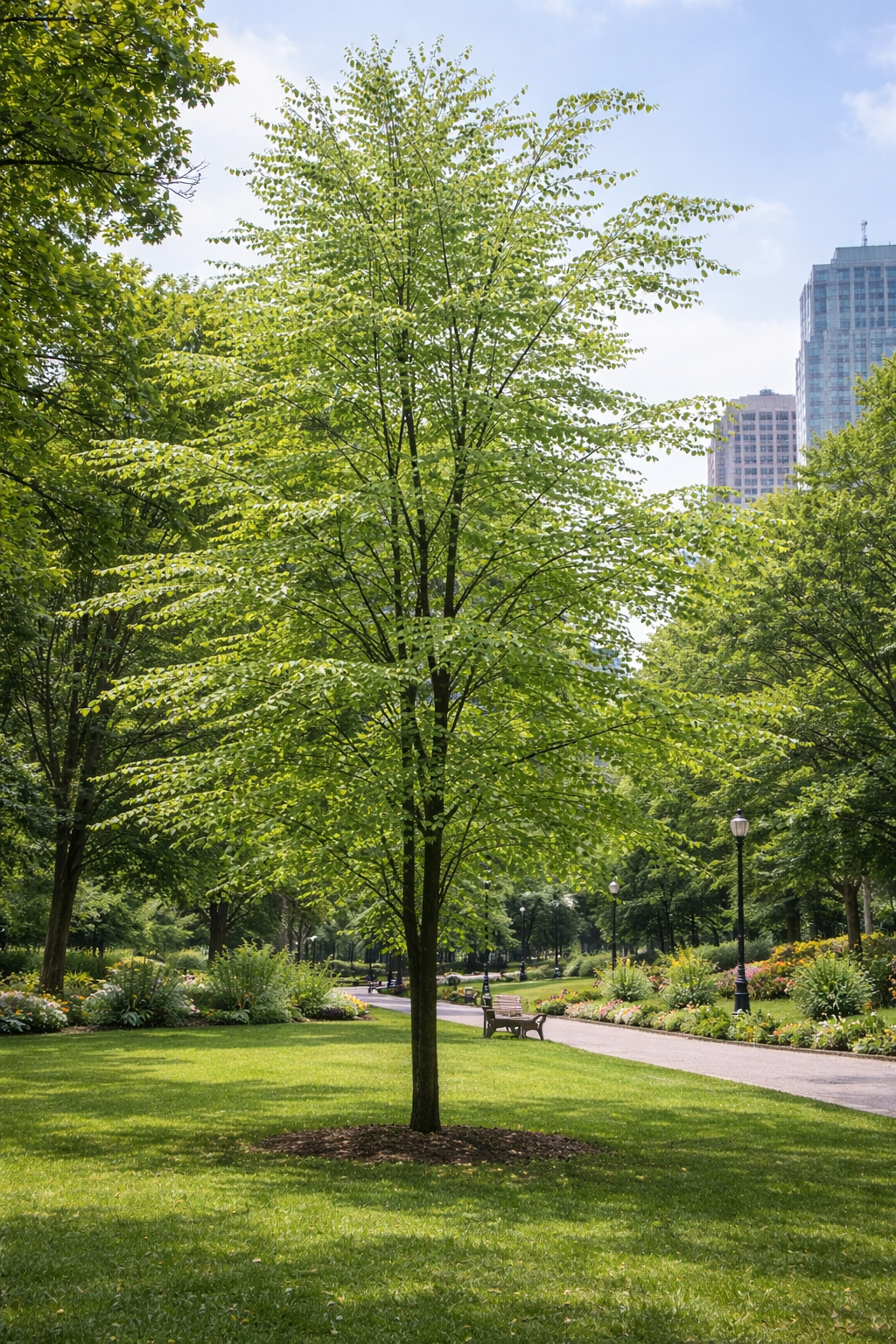
Katsura tree (Cercidiphyllum japonicum) is a large deciduous tree valued for heart-shaped foliage and a distinctive autumn fragrance. Young leaves emerge reddish purple, mature to blue-green in summer, then turn yellow, orange, apricot, pink, or red. As yellowing leaves begin to dry, they often smell like caramel, burnt sugar, cinnamon, or cotton candy. Small reddish flowers on male trees and greenish flowers on female trees appear in spring but remain inconspicuous. In cultivation, allow approximately 12 to 18 m of height by 9 to 15 m of spread (39 to 59 ft × 30 to 49 ft), with greater dimensions possible over a very long period.
Plant katsura in full sun or partial shade in a position sheltered from strong wind and intense late-afternoon heat. It prefers fertile, organically rich, evenly moist, acid-to-neutral, well-drained soil. Water generously during establishment and dry periods because drought and wind can scorch leaf margins. A 5 to 8 cm (2 to 3 in) mulch layer, kept away from the trunk, protects its shallow root system. Hardy to Zone 4, the tree suits cold climates when given a large permeable root area. Avoid standing water, compaction, de-icing salt, and repeated transplanting. Light afternoon shade can reduce stress where summer heat reflects from paving or buildings.
Use katsura tree as a large specimen, shade tree, park tree, street tree in a generous soil volume, or woodland-edge focal point. Its initially pyramidal outline becomes more oval, rounded, and spreading with age, sometimes developing multiple trunks. Light dormant-season pruning is sufficient to remove dead, crossing, or damaged wood while preserving well-spaced scaffold branches. Wind-pollinated flowers support some insects, while female trees produce small fruits containing winged seeds. Position a bench beyond the mulch ring to enjoy fragrant leaves without compacting roots. With dependable moisture and enough space, the tree provides spring colour, summer shade, autumn scent, and a graceful winter framework.

Planting guide
From planting to establishment.
Soil and care
The right care,at the right time.
Soil pH
Minimum temperature
Care level
Watering
Soil type
Fertilization
Moisture
Seasonal care
Container growing
A garden,within reach.
Recommended pot size

Bloom and dimensions
Its place,in your garden.
Mature height
Width / spread
Flower color
Foliage color
Foliage type
Growth rate
Growth habit
Fragrance
Bloom period
Fruiting
Garden associations
In goodcompany.
Companion plants
Plants to avoid
Frequently asked questions
Your questions,answered.
Why do katsura leaves smell like caramel?
Is katsura tree hardy in Quebec?
Should katsura grow in sun or partial shade?
How large does Cercidiphyllum japonicum become?
Why are my katsura leaf margins turning brown?
Wildlife and pets