Fragrant weeping tree with fall colour

Weeping katsura ‘Pendulum’

Cercidiphyllum japonicum ‘Pendulum’

Weeping katsura ‘Pendulum’ develops a low, rounded, cascading crown with architectural interest throughout the year. Heart-shaped leaves progress from reddish purple to blue-green, then yellow, orange, pink, or red. In fall, yellowing leaves often release a caramel or warm-sugar fragrance. Hardy to Zone 4, this 4 to 8 m high and wide tree (13 to 26 ft) prefers full sun or partial shade, a sheltered position, and fertile, evenly moist, acid-to-neutral, well-drained soil. It makes a memorable specimen near a path, bench, or winter garden where its scent, colour, and pendulous framework can be appreciated. For best results, inspect soil moisture, the root flare, and foliage response regularly.
7 gallons
Each store has its own inventory.

Products and available quantities may vary between Brossard and Laval. To check a store’s inventory, please contact us directly.

Even better: visit us in store to discover the full selection available!

Share
Quantity
7 gallons
Exposure
Full sun to partial shade; sheltered position
Hardiness
Zone 4

Discover the plant

Common nameWeeping katsura ‘Pendulum’; pendulous katsura tree
FamilyCercidiphyllaceae
GenusCercidiphyllum
Speciesjaponicum
CultivarPendulum
TypeGrafted deciduous weeping ornamental tree
Botanical nameCercidiphyllum japonicum ‘Pendulum’

Weeping katsura ‘Pendulum’ (Cercidiphyllum japonicum ‘Pendulum’) develops a dense cascade of long, drooping branches. Broad heart-shaped leaves emerge reddish purple, mature to blue-green in summer, then turn yellow, orange, pink, or red in fall. As yellowing leaves begin to dry, they often release a sweet fragrance compared with caramel, cotton candy, or warm sugar. Small red flowers on male trees and greenish flowers on female trees appear before the foliage but remain inconspicuous. Mature dimensions generally range from 4 to 8 m high and wide (13 to 26 ft), although the outline varies with the selected clone and early training.

Plant ‘Pendulum’ in full sun or partial shade in a position sheltered from drying wind and intense late-afternoon heat. This selection prefers fertile, evenly moist, acid-to-neutral, well-drained soil. Water regularly during establishment and dry periods because young trees have poor drought resistance. A 5 to 8 cm (2 to 3 in) mulch layer, kept away from the trunk, stabilizes moisture without covering the root flare. Hardy to Zone 4, weeping katsura suits cold climates when drainage remains dependable. Avoid standing water, compaction, and repeated cultivation over its shallow root system. Light afternoon shade is especially helpful where reflected heat can scorch the foliage.

Use this weeping tree as a specimen, architectural accent, small shade tree, or focal point in fall and winter gardens. Its low, rounded crown needs enough room for branches to descend naturally. Light pruning is sufficient: remove dead, crossing, or damaged wood during dormancy without routinely shortening flexible shoots. Fragrant leaves create memorable sensory interest near a path or a bench positioned beyond the root zone. Birds may visit female trees carrying small follicles. With consistent moisture and a protected position, ‘Pendulum’ becomes a durable living sculpture whose summer texture, autumn colour, sweet scent, and winter framework provide four-season value.

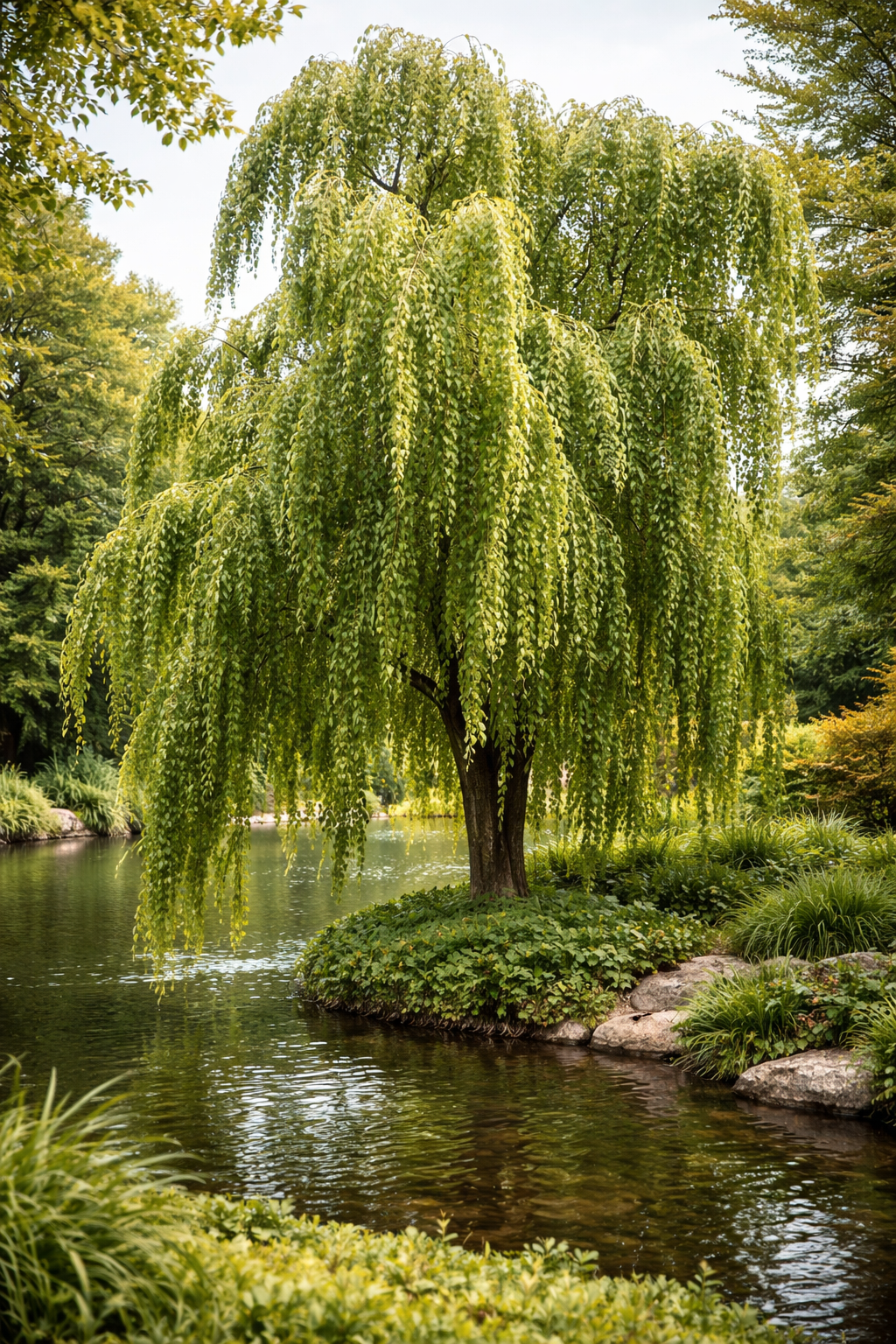
Weeping katsura ‘Pendulum’ showing a rounded crown and long flexible branches that descend toward the ground. Heart-shaped leaves progress from reddish purple in spring to blue-green in summer, then yellow, orange, pink, or red in fall. This view shows <em>Cercidiphyllum japonicum</em> ‘Pendulum’, a fragrant Zone 4 deciduous tree generally reaching 4 to 8 m high and wide (13 to 26 ft).

Planting guide

From planting to establishment.

Spacing / density Generally allow 4 to 8 m (13 to 26 ft) between the trunk and large trees or structures, depending on the intended effect and the specimen’s actual form. The weeping crown broadens with age and branches need room to descend freely. Maintain an uncompacted, mulched root zone that remains accessible for watering.
Best planting time In spring after the soil thaws, or in early fall at least six weeks before persistent frost
Propagation Grafting or vegetative propagation to preserve the weeping form accurately

Soil and care

The right care,at the right time.

Soil pH

Acid to neutral, approximately 5.5 to 7.0

Minimum temperature

Approximately -34 °C (-29 °F), Zone 4

Care level

Easy to moderate

Watering

Water slowly and deeply after planting, then keep the root ball evenly moist without saturating it. Check soil below the mulch before watering again. Young katsuras have poor drought resistance; irrigate when several centimetres of soil begin to dry, especially in sun or windy weather. Browning leaf margins can indicate insufficient water, excessive heat, or drying wind. For best results, inspect soil moisture, the root flare, and foliage response regularly.

Soil type

Fertile, evenly moist, well-drained clay, loam, or sandy soil suits this tree. Acid-to-neutral conditions generally support steady growth and dependable fall colour. The shallow root system benefits from organic mulch, but the root flare must remain visible. Avoid standing water, severe compaction, heat-reflecting hardscape, and repeated cultivation beneath the crown. For best results, inspect soil moisture, the root flare, and foliage response regularly.

Fertilization

In fertile soil, a spring compost layer and organic mulch are often sufficient. When testing or weak growth indicates a need, apply balanced slow-release fertilizer according to the label over the root zone. Avoid excessive nitrogen, which creates tender growth and may delay hardening. Stop applications early enough for wood to mature before winter. For best results, inspect soil moisture, the root flare, and foliage response regularly.

Moisture

Evenly moist soil; dependable drainage required

Seasonal care

In spring, confirm that the root flare remains visible, renew mulch without touching the trunk, and water if soil dries. Small flowers appear before foliage, followed by reddish-purple leaves. In summer, monitor young trees closely during hot, windy, or rainless periods; marginal browning calls for a check of moisture and exposure. Avoid soil cultivation beneath the crown. In fall, enjoy the fragrance of yellowing leaves and allow a thin layer to decompose away from the root flare. Remove only leaves that make a walkway slippery. During dormancy, remove dead, broken, or crossing wood with clean tools without shortening the entire cascade. Inspect ties on a young tree and remove them as soon as they are unnecessary. In winter, protect the trunk from mechanical damage and avoid piling salty snow over roots. A temporary screen can reduce wind around an exposed young specimen while maintaining air circulation. For best results, inspect soil moisture, the root flare, and foliage response regularly. This attention preserves the tree’s natural outline and lasting vigour. For best results, inspect soil moisture, the root flare, and foliage response regularly. This attention preserves the tree’s natural outline and lasting vigour. For best results, inspect soil moisture, the root flare, and foliage response regularly. This attention preserves the tree’s natural outline and lasting vigour. For best results, inspect soil moisture, the root flare, and foliage response regularly.

Container growing

A garden,within reach.

Recommended pot size

Temporary 7-gallon nursery container; planting in the ground is recommended
Permanent container culture is not ideal for a tree capable of reaching 4 to 8 m (13 to 26 ft). Keep the young specimen in its nursery container only until planting. Maintain an evenly moist root ball, shelter it from wind, and never leave the pot standing in water. If planting is delayed, place the container in bright partial shade and water when the upper layer dries. Avoid repeated repotting that disturbs shallow roots. Install the tree in the ground during spring or early enough in fall to allow rooting before persistent frost.
Weeping katsura ‘Pendulum’ (Cercidiphyllum japonicum ‘Pendulum’)

Bloom and dimensions

Its place,in your garden.

Mature height

6 to 8 m (20 to 26 feet)

Width / spread

3 m (10 feet)

Flower color

Reddish on male trees; greenish on female trees

Foliage color

Reddish purple when emerging, blue-green in summer, then yellow, orange, pink, or red in fall

Foliage type

Deciduous; broad simple heart-shaped leaves

Growth rate

Moderate

Growth habit

Weeping, dense, rounded, and often multi-stemmed

Fragrance

Yellowing leaves scented like caramel, warm sugar, or cotton candy

Bloom period

Small petal-free flowers appear before the leaves, generally in March or April. Male trees carry reddish flowers, while female trees display greenish flowers; sexes occur on separate plants. Bloom remains inconspicuous and is not the main reason to grow ‘Pendulum’. Avoid heavy pruning immediately before spring so healthy wood and the natural structure remain intact. Reddish-purple leaves soon follow the flowers and take over the ornamental display. Pollinated female trees may later form small green follicles.

Fruiting

Only pollinated female trees produce small green follicles approximately 2 cm (0.75 in) long. These inconspicuous fruits contain seeds and are not the tree’s main attraction. Their presence depends on plant sex and a compatible male nearby. Birds may visit the tree, but foliage, fragrance, and weeping habit remain its most dependable ornamental features. Allow fruits to mature naturally or collect them if they fall on a walkway. Do not expect fruit on every nursery specimen.
Weeping katsura ‘Pendulum’ showing a rounded crown and long flexible branches that descend toward the ground. Heart-shaped leaves progress from reddish purple in spring to blue-green in summer, then yellow, orange, pink, or red in fall. This view shows Cercidiphyllum japonicum ‘Pendulum’, a fragrant Zone 4 deciduous tree generally reaching 4 to 8 m high and wide (13 to 26 ft).

Garden associations

In goodcompany.

Companion plants

Pair ‘Pendulum’ with ferns, sedges, foamflowers, hardy geraniums, hostas, and spring bulbs that appreciate evenly moist, drained soil and filtered light. Position them beyond the root flare and choose non-aggressive roots. Dark-green conifers in the background emphasize fall colour. Avoid highly competitive plants or groundcovers that are difficult to remove because repeated cultivation can damage the katsura’s shallow root system. For best results, inspect soil moisture, the root flare, and foliage response regularly. This attention preserves the tree’s natural outline and lasting vigour.

Plants to avoid

Avoid standing water, extended drought, intense late-afternoon sun, drying wind, compaction, and root injury. Brown leaf margins may reflect water or heat stress rather than disease. Also watch for dieback, cankers, broken branches, and damage at the graft union. Remove affected wood only with clean tools. Katsura generally resists verticillium wilt but can decline in poorly drained soil or on an excessively dry site. Preserve even moisture and avoid piling mulch against the trunk. For best results, inspect soil moisture, the root flare, and foliage response regularly.

Frequently asked questions

Your questions,answered.

Why do the leaves smell like caramel in fall?
The fragrance is strongest when leaves turn yellow, fall, and begin to dry slightly. Many people compare it with caramel, warm sugar, cotton candy, or maple taffy. Intensity varies with weather, humidity, temperature, and drying stage, so it is not equally strong every day or on every tree. To notice it more easily, place a bench or path beyond the mulched root zone where a few leaves can collect briefly without creating a slippery surface. This natural scent does not indicate disease or treatment and fades as leaves fully decompose. Avoid crushing wet leaves on hard paving where they could become slick.
Is weeping katsura hardy in Quebec?
Yes. ‘Pendulum’ is generally hardy to Zone 4, allowing it to grow in many cold-climate regions when the site is suitable. Choose a position sheltered from drying wind, away from severe frost pockets and piles of salty snow. Soil should remain evenly moist, fertile, and well drained; standing winter water increases the risk of root damage. Plant in spring or early enough in fall, then maintain regular moisture during establishment. Keep the root flare visible and mulch without touching the trunk. In a highly exposed location, a temporary screen around a young tree can reduce winter stress while still allowing air circulation.
Should ‘Pendulum’ grow in sun or partial shade?
Both exposures work when soil remains evenly moist and the position is protected. Full sun encourages a dense crown and strong fall colour in a cool climate but increases water demand. Bright partial shade, especially during the hottest hours, reduces scorch risk where reflected heat is present. Avoid deep shade, which can thin the crown, as well as intense sun combined with dry soil. Check moisture beneath mulch during heat waves. When leaf margins turn brown, examine watering, wind, and heat before adding fertilizer. A sheltered east- or north-facing position can provide a useful balance between light, colour, and protection.
How large does weeping katsura become?
Allow approximately 4 to 8 m of height and spread (13 to 26 ft) over several decades. Exact size depends on the clone sold, graft height, whether a leader was trained, and site conditions. Some specimens remain broadly rounded, while others gain more height when a young leader has been staked. Let branches descend naturally and reserve space before planting; repeated clipping to contain the tree gradually destroys its weeping character. Remove only dead, broken, or crossing wood during dormancy. Keep buildings, wires, and busy walkways beyond the mature cascade. Nursery size does not reliably predict the final outline. For best results, inspect soil moisture, the root flare, and foliage response regularly.
Why are the leaf margins turning brown?
Brown margins commonly result from dry soil, drying wind, reflected heat, or intense late-afternoon sun. Check moisture several centimetres below mulch because the surface may look dry while the root ball remains moist, or the reverse. Water deeply when soil begins to dry without creating standing water. Widen the organic mulch zone while keeping the root flare clear and shelter a young tree from wind. Do not automatically add fertilizer because it will not correct water stress. If browning progresses despite consistent moisture or is accompanied by branch dieback, consult a qualified arborist. Also inspect for root disturbance and damage near the graft union.

Wildlife and pets

Life,around your plants.

Attracts birds

Yes

Supporting wildlife

Songbirds may visit the tree and are attracted to female specimens carrying small follicles. The dense weeping crown also provides temporary perching structure. Maintain a diverse garden around the katsura, avoid unnecessary pesticides, and allow fruit to mature when it does not interfere with walkways.