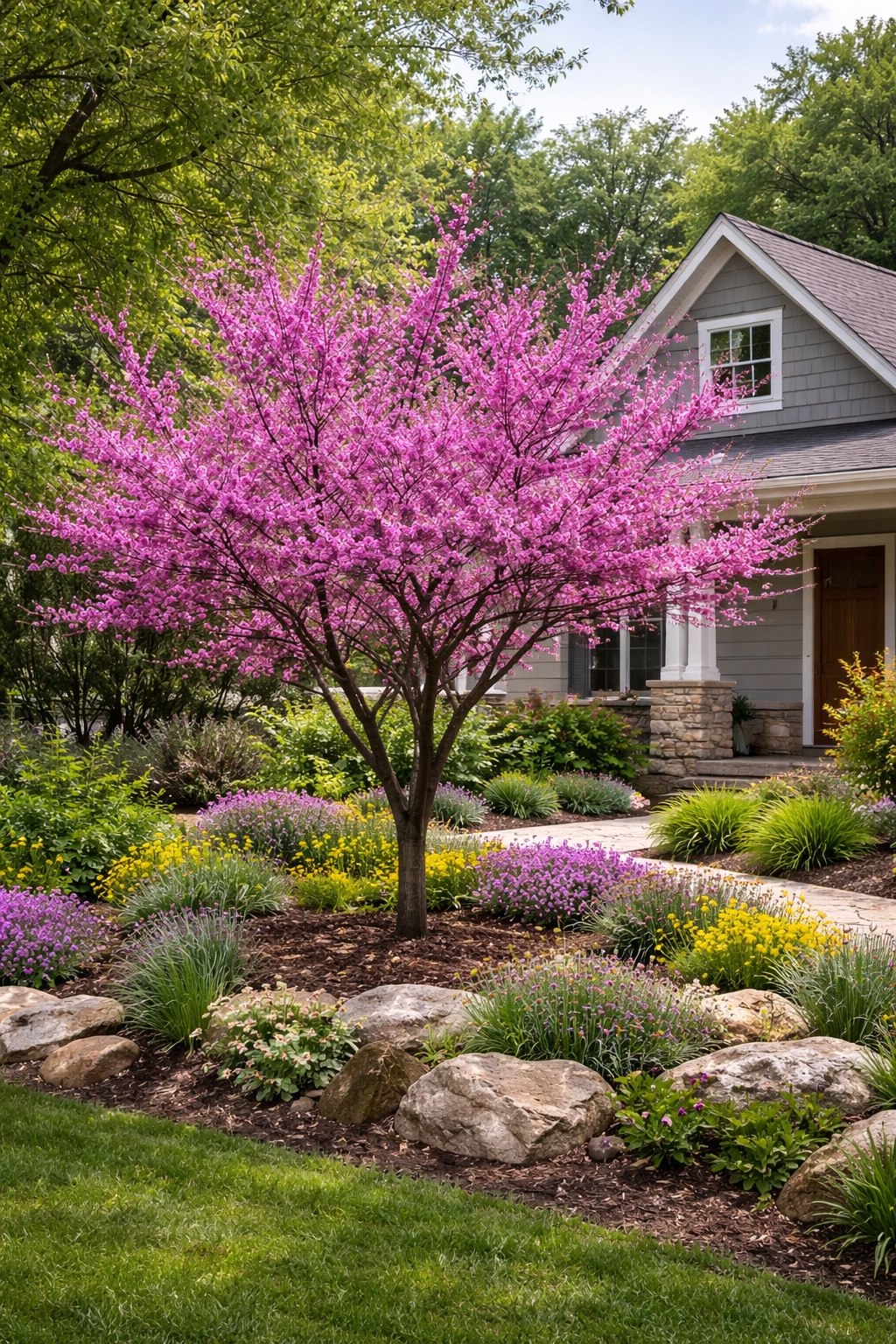
Small pink-flowering tree for pollinator gardens

Eastern redbud

Cercis canadensis

Eastern redbud is a small Zone 5 tree valued for purplish-pink clusters that appear directly on bare branches before the leaves. Heart-shaped foliage matures green and turns yellow to golden in fall, while flattened pods extend interest into winter. Allow approximately 6 to 9 m of height by 7.5 to 10.5 m of spread (20 to 30 ft × 25 to 35 ft). Plant a young tree in spring, in sun or partial shade, with evenly moist, drained soil. Flowers feed pollinators and are edible when gathered from a correctly identified, untreated tree. Protect shallow roots from disturbance and water during dry periods.
175 cm (69 in), 200 cm (79 in), or 10 gallon / 200 cm trees
Each store has its own inventory.

Products and available quantities may vary between Brossard and Laval. To check a store’s inventory, please contact us directly.

Even better: visit us in store to discover the full selection available!

Share
Quantity
175 cm (69 in), 200 cm (79 in), or 10 gallon / 200 cm trees
Exposure
Full sun to partial shade; sheltered position
Hardiness
Zone 5

Discover the plant

Common nameEastern redbud; American redbud; redbud tree
FamilyFabaceae
GenusCercis
Speciescanadensis
TypeSmall deciduous spring-flowering tree
Botanical nameCercis canadensis

Eastern redbud (Cercis canadensis) is a small deciduous tree celebrated for purplish-pink flowers that cover bare branches before the leaves emerge. Pea-shaped blossoms grow in clusters directly from branches and sometimes the trunk, producing a remarkable display in April or May. Rounded, heart-shaped foliage matures to medium green, then turns clear yellow to golden in fall. After bloom, flattened pods change from reddish green to brown and may remain visible through winter. Allow approximately 6 to 9 m of height by 7.5 to 10.5 m of spread (20 to 30 ft × 25 to 35 ft), with a rounded, often multi-stemmed crown.

Plant eastern redbud in sun or partial shade in a warm position sheltered from prevailing wind, with evenly moist but well-drained soil. Zone 5 is a reliable recommendation for Quebec gardens, and a plant from a northern or regional seed source offers the best adaptation. Install it young in spring because the root system dislikes repeated transplanting. Water deeply during establishment and dry periods, particularly in full sun. An 8 to 10 cm (3 to 4 in) mulch layer kept away from the trunk protects shallow roots. Avoid standing water, root disturbance, lawn herbicides, and highly exposed sites where branches experience repeated stress.

Use eastern redbud as a specimen, small patio tree, woodland-edge feature, or focal point in a pollinator garden. Early flowers feed bees and butterflies, while seeds interest some birds and small mammals. The flowers are also edible and have a mild pea-like flavour; gather only a small portion from a correctly identified, untreated tree. Light structural pruning while young helps maintain well-attached branches. Watch for cankers, verticillium wilt, borers, and dieback. With consistent moisture and minimal root disturbance, this tree provides three seasons of interest through spring bloom, heart-shaped summer foliage, yellow fall colour, and persistent pods against the winter framework.

Eastern redbud in bloom with numerous purplish-pink clusters growing directly on bare branches before heart-shaped leaves appear. This view shows <em>Cercis canadensis</em>, a small rounded Zone 5 deciduous tree reaching approximately 6 to 9 m high by 7.5 to 10.5 m wide (20 to 30 ft × 25 to 35 ft), followed by flattened seed pods after flowering.

Planting guide

From planting to establishment.

Spacing / density Reserve 7.5 to 10.5 m (25 to 35 ft) of mature width
Best planting time Spring, using a young tree from a northern or regional source
Propagation Scarified and stratified seed; grow or plant young to minimize root disturbance

Soil and care

The right care,at the right time.

Soil pH

Acidic to alkaline; drainage is the priority

Minimum temperature

Approximately −29 °C (−20 °F) in Zone 5

Care level

Moderate

Watering

Water deeply after planting and regularly during the first two or three years whenever rainfall is insufficient. Moisten the entire root ball, then allow the surface to dry slightly before watering again. In full sun, monitor more closely during hot periods. An established tree tolerates a short dry spell but can suffer during extended drought. Avoid both standing water and shallow daily irrigation that encourages surface rooting.

Soil type

Choose evenly moist, fertile, well-drained soil. Eastern redbud accepts loam, sand, or drained clay and a pH ranging from acidic to alkaline. Keep the root flare at grade and loosen a broad area without breaking the root ball. Avoid standing water, compaction, and repeated work around shallow roots. Apply 8 to 10 cm (3 to 4 in) of mulch away from the trunk to stabilize moisture.

Fertilization

Add a thin compost layer in spring when soil is poor. A redbud making steady growth and retaining healthy green foliage generally needs no concentrated fertilizer. Test the soil before correcting a suspected deficiency. Avoid high nitrogen rates and late applications that create weak growth. Deep watering, mulch, and protection from root disturbance support vigour more effectively than attempts to force rapid extension.

Moisture

Average and consistent; avoid saturation

Seasonal care

In spring, observe flower buds, water when soil is dry, and renew mulch without piling it against the trunk. After bloom, remove only dead, broken, or crossing wood and gradually correct weak forks. Never move an established tree unnecessarily. During summer, maintain even moisture, especially in full sun, and protect roots from excavation, herbicides, and compaction. Watch for borers, Japanese beetles, leaf spots, and dying branches. In fall, let foliage yellow naturally, collect diseased leaves, and continue watering until freeze-up when weather remains dry. Pods can remain for birds or be collected from busy paths. During winter, protect the young trunk from rodents and snow equipment, and prevent piles of salty snow. Complete structural pruning during dormancy or immediately after bloom depending on the objective, without removing a large portion of the crown. Consult an arborist when a canker girdles a branch, dieback advances quickly, or many leaves wilt despite correctly moist soil. For best results, inspect soil moisture and crown health regularly. This attention supports lasting establishment and balanced flowering. For best results, inspect soil moisture and crown health regularly. This attention supports lasting establishment and balanced flowering. For best results, inspect soil moisture and crown health regularly. This attention supports lasting establishment and balanced flowering. For best results, inspect soil moisture and crown health regularly. This attention supports lasting establishment and balanced flowering.

Container growing

A garden,within reach.

Recommended pot size

Temporary nursery container only; plant in the ground
Permanent container culture is not recommended for this 6 to 9 m (20 to 30 ft) tree. Keep a young plant temporarily in its nursery container only until planting. Maintain an evenly moist root ball, protect it from wind, and install the tree in spring in its permanent position. Roots dislike repeated repotting and relocation, while a container exposes the root ball to more severe freezing and drying.
Eastern redbud (Cercis canadensis)

Bloom and dimensions

Its place,in your garden.

Mature height

8 m (26 ft)

Width / spread

6 m (20 feet)

Flower color

Pink

Foliage color

Medium green; clear yellow to golden in fall

Foliage type

Deciduous; simple alternate heart-shaped leaves

Growth rate

Moderate

Growth habit

Rounded, irregular, and often multi-stemmed

Fragrance

Light or not noticeable

Bloom period

Purplish-pink to lavender-pink flowers appear in clusters during April or May before the leaves. They emerge directly from young twigs, older branches, and sometimes the trunk. Their pea-like shape reflects membership in the Fabaceae family. This early bloom provides nectar and pollen to bees, butterflies, and other garden visitors. Flower colour and timing vary slightly with weather and plant source.

Fruiting

Flattened pods 5 to 8 cm long (2 to 3 in) follow the flowers. Reddish to green at first, they turn brown in summer and may remain hanging into winter. Each pod contains several hard seeds that interest some birds and small mammals. Pods add seasonal texture but may also produce occasional seedlings or debris on busy walks. For best results, inspect soil moisture and crown health regularly.
Eastern redbud in bloom with numerous purplish-pink clusters growing directly on bare branches before heart-shaped leaves appear. This view shows Cercis canadensis, a small rounded Zone 5 deciduous tree reaching approximately 6 to 9 m high by 7.5 to 10.5 m wide (20 to 30 ft × 25 to 35 ft), followed by flattened seed pods after flowering.

Garden associations

In goodcompany.

Companion plants

Pair eastern redbud with serviceberries, sedges, ferns, spring bulbs, asters, bee balm, and goldenrods suited to the site’s light. Dark evergreens create an effective background for the pink bloom. Position companions beyond the mulch ring to avoid disturbing roots. Choose species that accept evenly moist but drained soil and stagger their flowering seasons to support pollinators after spring. Avoid aggressive spreaders that compete directly at the root flare. For best results, inspect soil moisture and crown health regularly. This attention supports lasting establishment and balanced flowering.

Plants to avoid

Avoid standing water, extended drought, highly exposed wind, compaction, root injuries, and lawn herbicides. Watch for cankers, verticillium wilt, dieback, leaf spots, borers, scale, and Japanese beetles. Prune an affected branch back to sound wood with a clean tool, then disinfect it. Do not relocate an established tree or cover the root flare with soil or mulch. Consult an arborist when symptoms spread quickly. For best results, inspect soil moisture and crown health regularly. This attention supports lasting establishment and balanced flowering.

Frequently asked questions

Your questions,answered.

When does Eastern redbud bloom?
Eastern redbud generally blooms in April or May before the leaves emerge. Exact timing varies with climate, exposure, and spring temperatures. Purplish-pink to lavender-pink flowers grow in clusters directly from twigs, older branches, and sometimes the trunk. Abundant bloom requires a sufficiently mature tree, good light, and healthy overall growth. Avoid heavy pruning immediately before spring because it may remove flowering wood. After bloom, heart-shaped leaves unfold and flattened pods gradually begin to form. A sheltered location helps protect buds and branches in areas with fluctuating late-winter weather. For best results, inspect soil moisture and crown health regularly. This attention supports lasting establishment and balanced flowering.
Is Eastern redbud hardy in Quebec?
Yes, in an appropriate Zone 5 site, especially with a plant from a northern or regional source. The species is sometimes listed to Zone 4, but performance varies with provenance, exposure, and winter conditions. Choose a warm location protected from prevailing wind and away from low pockets where cold air collects. Plant a young tree in spring in drained soil, then water regularly during establishment. Mulch protects shallow roots without touching the trunk. In colder or highly exposed areas, choose a selection recognized for hardiness and expect flowering intensity to vary after a difficult winter. For best results, inspect soil moisture and crown health regularly.
Are Eastern redbud flowers edible?
Yes. Fresh Cercis canadensis flowers are edible and have a mild flavour often compared with peas. They can garnish a salad or cold dish. Gather only a few clusters from a correctly identified, healthy tree that has not been treated with pesticides and grows away from busy roads. Rinse flowers gently and discard any that are wilted, dirty, or occupied by insects. Leave most of the bloom for pollinators and pod development. Anyone with legume allergies or uncertainty about identification should avoid consumption and seek qualified advice. Never assume that flowers from another ornamental tree are equally edible. For best results, inspect soil moisture and crown health regularly.
What location suits Eastern redbud?
Choose full sun or partial shade in a warm, sheltered position where the crown can eventually reach approximately 7.5 to 10.5 m wide (25 to 35 ft). Soil should remain evenly moist but well drained. A woodland edge, spacious patio setting, or site against dark evergreens works particularly well. Avoid prevailing wind, standing water, salty snow piles, wires, and places where roots will be repeatedly excavated. Plant a young specimen in spring because redbud dislikes transplanting. In full sun, monitor moisture more closely during hot, dry periods. Protect the shallow root zone with mulch and keep the root flare visible.
Why are branches on my Eastern redbud dying back?
Dieback may result from canker, verticillium wilt, borers, injury, drought, or poor drainage. Inspect the trunk and branches for sunken, discoloured, or cracked areas, then check soil moisture instead of watering automatically. Prune dead wood back to a healthy section with a clean tool and disinfect it between cuts. Avoid fertilizer until the cause is understood. Protect roots from compaction and herbicides. When several branches wilt rapidly, a canker girdles a major limb, or the trunk is affected, consult a qualified arborist. Maintaining even moisture and preventing root disturbance offer the best long-term support for a stressed redbud. For best results, inspect soil moisture and crown health regularly.

Wildlife and pets

Life,around your plants.

Attracts birds

Yes

Supporting wildlife

Early flowers provide nectar and pollen to bees, butterflies, and other insects, while redbud also serves as a host for several caterpillars. Seeds occasionally feed songbirds and small mammals. Leave most flowers on the tree and avoid insecticide use during bloom to preserve this wildlife value.