Large blue-green conifer for specimen or screening

Blue Nootka cypress ‘Glauca’

Chamaecyparis nootkatensis ‘Glauca’

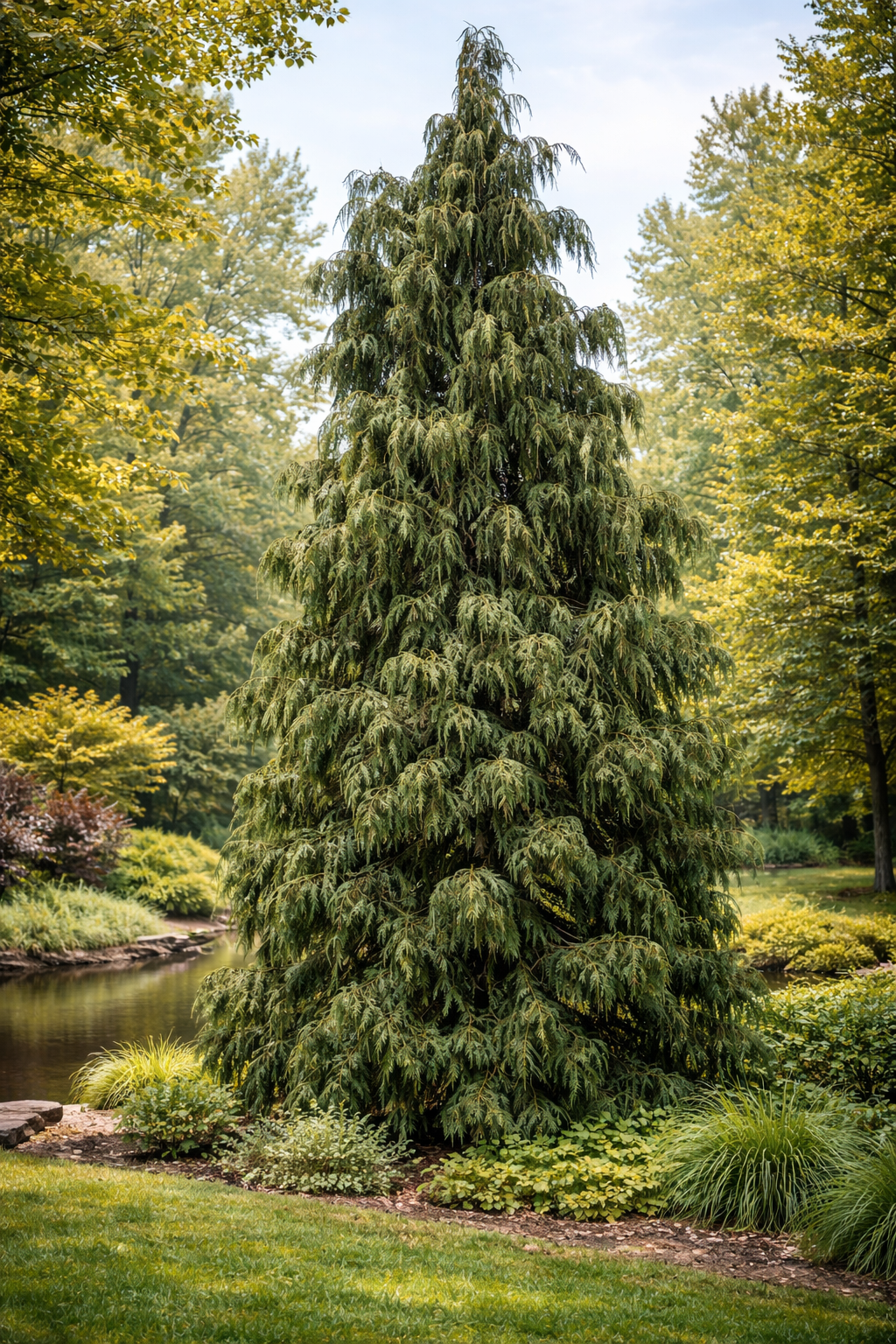
Blue Nootka cypress ‘Glauca’ is a large Zone 5 evergreen conifer with glaucous blue-green foliage. Its pyramidal habit features broad branches with slightly hanging tips, without the strongly weeping outline of ‘Glauca Pendula’. Spring growth displays especially vivid blue colour, followed by small nearly round cones that add seasonal detail. Reserve approximately 7.5 to 15 m of height by 3 to 4.5 m of spread (25 to 49 ft × 10 to 15 ft). Plant it in sun and evenly moist, very well-drained soil as a specimen, screen, or large informal hedge. Long-term placement matters because this tree eventually requires generous space.
100 cm (39 in) tree; also offered in 6 gallons
Each store has its own inventory.

Products and available quantities may vary between Brossard and Laval. To check a store’s inventory, please contact us directly.

Even better: visit us in store to discover the full selection available!

Share
Quantity
100 cm (39 in) tree; also offered in 6 gallons
Exposure
Full sun; light partial shade tolerated
Hardiness
Zone 5

Discover the plant

Common nameBlue Nootka cypress; blue Alaska cedar
FamilyCupressaceae
GenusChamaecyparis
Speciesnootkatensis
TypeLarge evergreen conifer
Botanical nameChamaecyparis nootkatensis ‘Glauca’

Blue Nootka cypress ‘Glauca’ (Chamaecyparis nootkatensis ‘Glauca’) is a large evergreen conifer with a pyramidal habit and glaucous blue-green foliage. Broad branches open with age, while their flexible tips hang slightly and give the outline graceful movement. New growth often displays its strongest blue colouring in spring. Small, nearly spherical cones are produced regularly, sometimes while the tree is still fairly young. This selection should not be confused with ‘Glauca Pendula’, which has a much more strongly weeping habit. Over the long term, allow approximately 7.5 to 15 m of height by 3 to 4.5 m of spread (25 to 49 ft × 10 to 15 ft).

Plant ‘Glauca’ in full sun for the best colour, in evenly moist, fertile, very well-drained soil. Light partial shade is tolerated, but the tree appreciates a bright, open position where its crown can develop. Water deeply through the first years and during extended drought without leaving the root ball waterlogged. A 5 to 8 cm (2 to 3 in) mulch layer kept away from the trunk stabilizes moisture and protects surface roots. Avoid compacted soil, standing water, de-icing salt, and undersized sites. Hardy to Zone 5, this conifer performs well in cool climates when roots remain healthy and drainage is reliable.

Use Blue Nootka cypress ‘Glauca’ as a specimen tree, evergreen screen, large informal hedge, or vertical accent in a spacious garden. Blue-green foliage provides lasting contrast with deciduous trees, grasses, and dark-green conifers. Light pruning can densify a hedge, although a specimen displays its natural habit best when only dead or damaged growth is removed. Permanent container culture is unsuitable for its mature size. Watch for browning, branch dieback, and signs of root rot, particularly after prolonged wet weather. By leaving generous space around the trunk and crown, you gain a long-lived evergreen structure with year-round colour, soft movement, and a distinctive northern character.

Blue Nootka cypress ‘Glauca’ with an upright pyramidal habit, broad branches with slightly pendulous tips, and silvery blue-green evergreen foliage. This view shows <em>Chamaecyparis nootkatensis</em> ‘Glauca’, a large Zone 5 conifer used as a specimen, screen, or informal hedge, with small spherical cones that turn brown at maturity and an outline that gradually broadens with age.

Planting guide

From planting to establishment.

Spacing / density Reserve 3 to 4.5 m (10 to 15 ft) of width per tree; allow more room to preserve each outline
Best planting time Spring or early fall
Propagation Professional cuttings or grafting to preserve the cultivar

Soil and care

The right care,at the right time.

Soil pH

Slightly acidic to neutral

Minimum temperature

Approximately −29 °C (−20 °F) in Zone 5

Care level

Low to moderate

Watering

Water deeply after planting and regularly through the first two or three years whenever rainfall is insufficient. Moisten the entire root ball and allow the surface to dry slightly before watering again. An established tree tolerates short dry periods but retains better colour in evenly moist soil. Avoid shallow daily irrigation, standing water, and systems that keep the trunk constantly wet.

Soil type

Choose fertile, evenly moist, very well-drained soil with a slightly acidic to neutral reaction. Loosen an area wider than the root ball and keep the root flare at grade. Avoid depressions, compacted clay, and fill that traps water. Apply 5 to 8 cm (2 to 3 in) of mulch away from the trunk to conserve moisture without reducing oxygen around roots.

Fertilization

Add a thin compost layer in spring when soil is poor. A tree making steady growth and retaining blue-green foliage generally needs no concentrated fertilizer. Test the soil before correcting a suspected deficiency. Avoid high nitrogen rates and late applications that produce tender growth. Healthy drainage and deep watering support establishment more effectively than attempts to force rapid growth. For best results, inspect soil moisture and foliage regularly.

Moisture

Average to evenly moist; excellent drainage

Seasonal care

In spring, confirm that the root flare remains visible, remove dead or broken wood, and renew mulch without piling it against the trunk. Water deeply when soil begins to dry. Light pruning after growth starts can densify a hedge, but preserve the natural habit of a specimen. During summer, monitor moisture in hot periods, inspect foliage for browning or dieback, and prevent mower damage. In fall, continue watering until freeze-up when weather stays dry, remove debris around the root flare, and stop nitrogen fertilizer. During winter, protect young trees from de-icing salt and ploughed snow. Flexible branches generally handle snow, but remove a very heavy load gently without shaking a frozen tree. Never top the leader or cut deeply into old leafless wood. Investigate drainage when several branches brown after wet weather. Consult a qualified specialist when rapid decline, trunk lesions, or root instability appears. For best results, inspect soil moisture and foliage regularly. This attention supports lasting establishment and a balanced outline. For best results, inspect soil moisture and foliage regularly. This attention supports lasting establishment and a balanced outline. For best results, inspect soil moisture and foliage regularly. This attention supports lasting establishment and a balanced outline. For best results, inspect soil moisture and foliage regularly. This attention supports lasting establishment and a balanced outline. For best results, inspect soil moisture and foliage regularly.

Container growing

A garden,within reach.

Recommended pot size

Temporary nursery container only; plant in the ground
Permanent container culture is not recommended for this large tree. Keep the young specimen temporarily in its nursery container until planting while maintaining an evenly moist, drained root ball. Install it promptly in the ground so roots can expand. A patio container cannot provide the long-term space, moisture reserve, and stability required by a conifer that eventually reaches many metres in height.
Blue Nootka cypress ‘Glauca’ (Chamaecyparis nootkatensis ‘Glauca’)

Bloom and dimensions

Its place,in your garden.

Mature height

12 to 15 m (39 to 49 ft)

Width / spread

2.5 m (8 feet)

Flower color

Non-ornamental

Foliage color

Glaucous blue-green, brightest on spring growth

Foliage type

Evergreen, scale-like, and arranged in flattened sprays

Growth rate

Moderate; slower during establishment

Growth habit

Upright pyramidal, broadening with age, with slightly pendulous tips

Fragrance

Aromatic foliage with a distinct scent when crushed

Bloom period

This conifer produces no showy flowers. Small male reproductive structures form near branchlet tips, while female structures develop into cones. Bloom usually passes unnoticed by garden visitors. The main interest comes from blue-green evergreen foliage, brighter spring growth, and nearly spherical cones that mature slowly. No special treatment is needed to encourage reproduction on a healthy established tree. For best results, inspect soil moisture and foliage regularly.

Fruiting

Small, nearly spherical cones change from green to grey-brown and generally mature during their second year. Each scale carries a small characteristic point. ‘Glauca’ may produce abundant cones while still relatively young, adding discreet texture among blue-green sprays. They require no routine removal except where fallen cones collect on a heavily used paved surface. For best results, inspect soil moisture and foliage regularly.
Blue Nootka cypress ‘Glauca’ with an upright pyramidal habit, broad branches with slightly pendulous tips, and silvery blue-green evergreen foliage. This view shows Chamaecyparis nootkatensis ‘Glauca’, a large Zone 5 conifer used as a specimen, screen, or informal hedge, with small spherical cones that turn brown at maturity and an outline that gradually broadens with age.

Garden associations

In goodcompany.

Companion plants

Pair ‘Glauca’ with birches, colourful-stemmed dogwoods, ornamental grasses, dark-green junipers, or robust sun-loving perennials. Yellow, purple, and deep-green foliage emphasizes its blue colouring. Position companions beyond the mulch ring to protect the root flare. Avoid plants that require waterlogged soil or frequent division close to the conifer’s roots. Choose lower neighbours where the distinctive branch tips should remain visible. For best results, inspect soil moisture and foliage regularly. This attention supports lasting establishment and a balanced outline. For best results, inspect soil moisture and foliage regularly.

Plants to avoid

Avoid standing water, compacted clay, de-icing salt, undersized planting pits, and trunk injuries. Poor drainage can encourage root rot, while extended drought browns branchlets. Watch for dieback, cankers, bagworms, and any rapid loss of vigour. Do not top the tree or prune deeply into old leafless wood. Protect the root zone from heavy traffic and investigate drainage before applying fertilizer to a declining specimen. For best results, inspect soil moisture and foliage regularly. This attention supports lasting establishment and a balanced outline.

Frequently asked questions

Your questions,answered.

How large does Blue Nootka cypress ‘Glauca’ grow?
Over the long term, ‘Glauca’ may reach approximately 7.5 to 15 m high by 3 to 4.5 m wide (25 to 49 ft × 10 to 15 ft). Growth rate and ultimate size vary with climate, soil depth, moisture, and available space. Young trees remain narrower, then branches open more horizontally with age while retaining a pyramidal outline. Plan for mature dimensions from planting day and keep the leader away from overhead wires. Severe pruning cannot sustainably turn this large conifer into a small-yard plant; choose a naturally compact cultivar when space is restricted. For best results, inspect soil moisture and foliage regularly.
What is the difference between ‘Glauca’ and ‘Glauca Pendula’?
‘Glauca’ develops a fairly regular pyramidal tree with broad branches whose tips hang slightly. Its leading feature is glaucous blue-green foliage. ‘Glauca Pendula’ is a separate cultivar with a much more strongly weeping character, as branches and sprays hang closely around a vertical framework. The names are therefore not interchangeable. Always check the complete botanical label when purchasing, especially when mature outline affects the design. This product is Chamaecyparis nootkatensis ‘Glauca’, not ‘Glauca Pendula’. Allow enough room for its branches to broaden naturally as the tree ages. For best results, inspect soil moisture and foliage regularly. This attention supports lasting establishment and a balanced outline.
What soil suits Blue Nootka cypress ‘Glauca’?
Choose fertile, evenly moist, very well-drained soil with a slightly acidic to neutral reaction. Drainage is essential because a saturated root ball lacks oxygen and may develop root rot. Keep the root flare at grade, loosen a broad area, and apply 5 to 8 cm (2 to 3 in) of mulch without touching the trunk. Water deeply during establishment, then allow the surface to dry slightly between applications. Avoid depressions, compacted clay, thick fill, and de-icing salt. An established tree tolerates a short dry period but retains better colour with consistent moisture. For best results, inspect soil moisture and foliage regularly.
Can Blue Nootka cypress ‘Glauca’ be used as a hedge?
Yes, on a large property where a tall informal hedge or screen is desired. ‘Glauca’ becomes an imposing tree, so space plants according to mature width and never place them directly below wires or in front of windows. Light pruning of young growth can maintain density and stimulate bright colour, but avoid cutting deeply into old leafless wood. To preserve a natural outline, leave every leader intact and provide adequate setback. Choose a compact conifer instead for a small yard. A screen of ‘Glauca’ also requires consistently good drainage along the entire planting line. For best results, inspect soil moisture and foliage regularly.
How is the blue-green foliage of ‘Glauca’ maintained?
Plant the tree in full sun to encourage strong blue colouring while keeping soil evenly moist and drained. Water deeply through the first years and during extended drought. Mulch kept away from the trunk limits moisture swings. Avoid high nitrogen rates because fertilizer cannot replace adequate light or healthy roots. New growth often shows its brightest blue colour in spring and becomes more subdued as the season progresses. When foliage browns, check moisture, drainage, salt exposure, and root injuries before fertilizing. Remove only branchlets that are truly dead and preserve the central leader and natural branch framework. For best results, inspect soil moisture and foliage regularly.

Wildlife and pets

Life,around your plants.

Attracts birds

Yes

Native plant

Yes

Supporting wildlife

Dense evergreen branches provide shelter from wind and resting sites for birds. Small cones may also interest some seed-eating species. The plant is not an important nectar source. Avoid preventive pesticide use and maintain a quiet area around the base when birds use the tree.