Sale
Sold out

Vegetable
Cucurbitaceae
Cucumis sativus ‘Tante Alice’
Product code : JAREC-0081
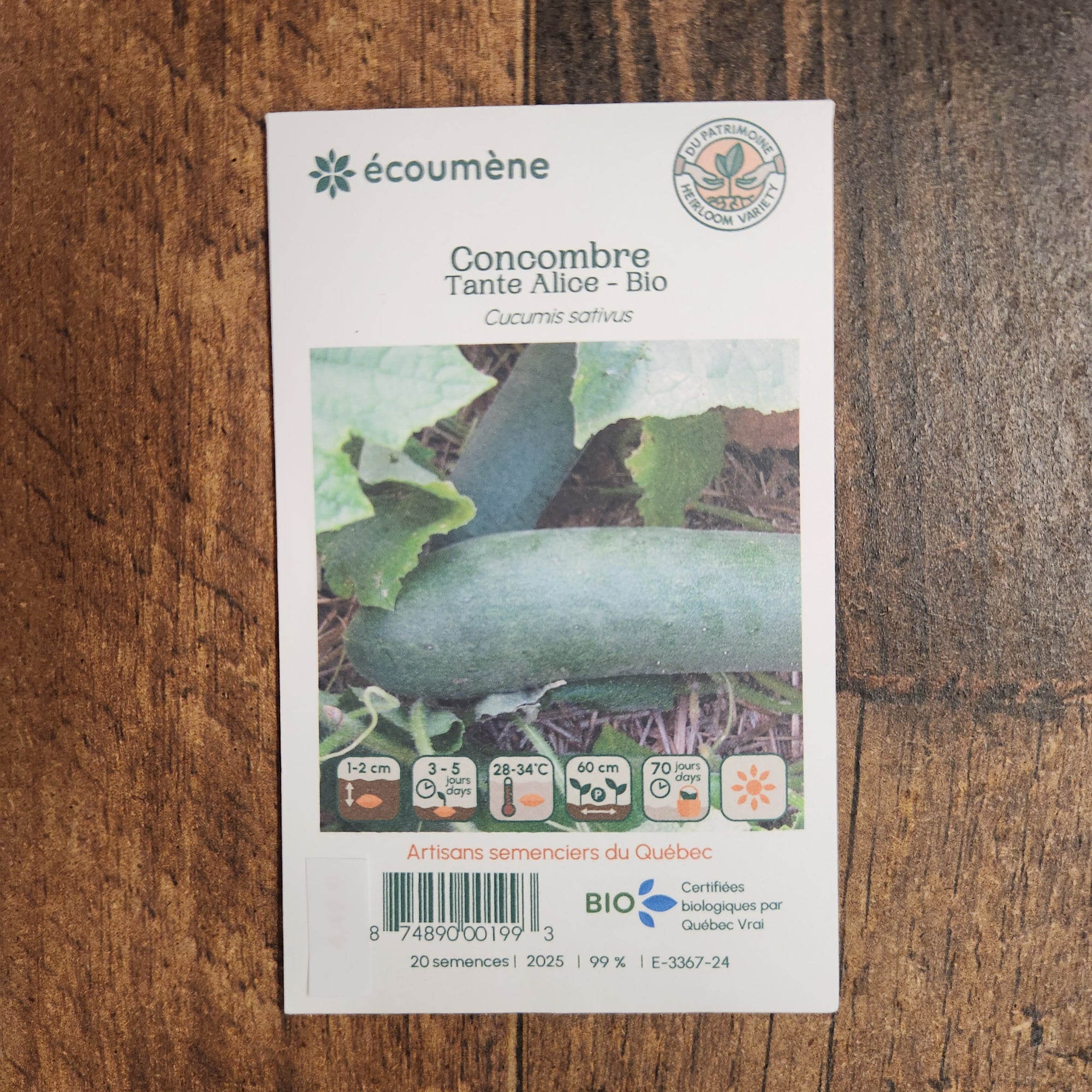
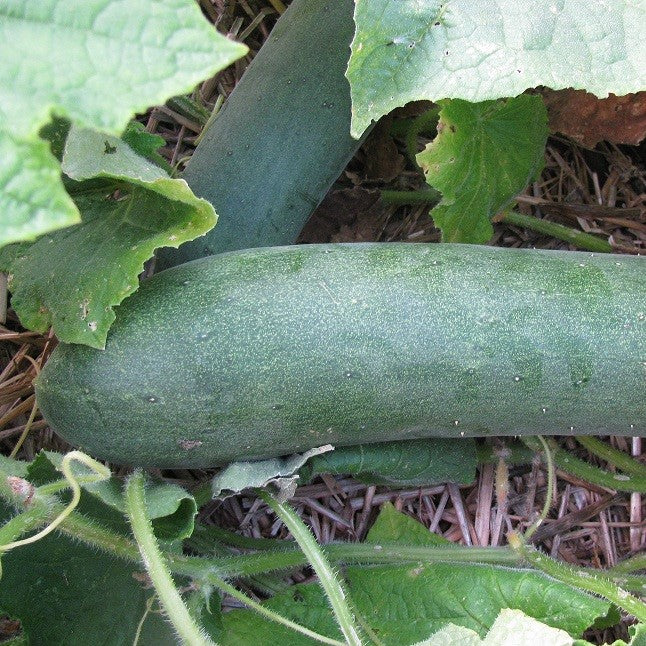
The organic cucumber ‘Tante Alice’ is a heritage variety of good reputation, appreciated for its vigour, productivity and the remarkable quality of its long refreshing fruits. In the vegetable garden, Cucumis sativus quickly develops generous foliage and flexible stems that can run on the ground or climb on a support, bringing an abundant and lively presence throughout the summer season. Its elongated, smooth green fruits have a slender shape reminiscent of English cucumbers, with a crisp, juicy and pleasantly sweet flesh. Although their skin is tougher and sometimes slightly bitter, it protects tender flesh that is particularly tasty once peeled.
- Quantity
- 20 seeds
- Exposure
- Full sun
- Life cycle
- Annual
Discover the plant
Common nameTante Alice Cucumber
FamilyCucurbitaceae
GenusCucumber
Speciessativum
CultivarAunt Alice
TypeVegetable
Botanical nameCucumis sativus
Reproducible seedsYes
Heirloom varietyYes
Cucumis sativus ‘Tante Alice’ — Tante Alice Cucumber. The organic cucumber ‘Tante Alice’ is a heritage variety of good reputation, appreciated for its vigour, productivity and the remarkable quality of its long refreshing fruits. In the vegetable garden, Cucumis sativus quickly develops generous foliage and flexible stems that can run on the ground or climb on a support, bringing an abundant and lively presence throughout the summer season. Its elongated, smooth green fruits have a slender shape reminiscent of English cucumbers, with a crisp, juicy and pleasantly sweet flesh. Although their skin is tougher and sometimes slightly bitter, it protects tender flesh that is particularly tasty once peeled.
Recommended planting period: May to June. Sow the seeds at a depth of 2 to 2.5 cm (0.8 to 1 in.). Germination usually takes 5 to 10 days. For germination, keep the soil at 20 to 30 °C (68 to 86 °F). If starting cucumbers indoors or under cover, sow the cucumber seeds in individual containers rather than a shared crowded tray. Their roots establish more readily after transplanting when the root ball is kept intact during the move. Do not allow young plants to age too long in a small pot. Plant them outdoors once the soil has warmed, then protect the newly planted seedlings from strong wind.
Growing cucumbers on a trellis makes the fruits easier to see and reduces their contact with the soil below. Install it firmly before the shoots lengthen, then guide their first tendrils towards it. At ground level, guide the vines into an open area and keep a path clear for harvesting. Keep shoots out of paths where they would be stepped on or moved whenever you tend the planting. Its elongated, smooth green fruits have a slender shape reminiscent of English cucumbers, with a crisp, juicy and pleasantly sweet flesh. Although their skin is tougher and sometimes slightly bitter, it protects tender flesh that is particularly tasty once peeled.

Sowing guide
It all startswith a seed.
Sowing depth
2 to 2.5 cm (0.8 to 1 in.)
Germination temperature
20 to 30 °C (68 to 86 °F)
Germination time
5 to 10 days
Sowing period
May to June
Propagation
Sowing
Growing method
Recommended planting period: May to June. Sow the seeds at a depth of 2 to 2.5 cm (0.8 to 1 in.). Germination usually takes 5 to 10 days. For germination, keep the soil at 20 to 30 °C (68 to 86 °F). If starting cucumbers indoors or under cover, sow the seeds in individual containers rather than a shared crowded tray. Their roots establish more readily after transplanting when the root ball is kept intact during the move. Do not allow young plants to age too long in a small pot. Plant them outdoors once the soil has warmed, then protect the newly planted seedlings from strong wind. At direct seeding, identify the locations so that weeds can be removed without displacing the young roots. Cucumbers grow rapidly once warm weather has settled in. Check beneath the leaves for hidden fruits so that none are overlooked and allowed to grow too large. Regular picking provides tender skin and seeds that have not yet fully developed. Cut the peduncles instead of pulling at the vines. Water at the base of the plant and keep the leaves spaced enough to dry after rain. Harvest leafy vegetables using the method appropriate to the type of plant. Picking the outer leaves preserves the centre of the plant when you want harvesting to continue.
Soil and care
The right care,at the right time.
Watering
Cucumber ‘Tante Alice: Maintain regular moisture around the roots during growth and fruit formation. Water the base deeply enough to moisten more than the surface. Check beneath the foliage before watering again. Mulch helps slow the loss of soil moisture through evaporation, while regular checks are still needed to decide when to water. For plants grown in containers, check the moisture more frequently during hot weather, and always allow surplus water to drain out freely.
Soil type
Prepare well-drained soil for planting. Improve the area where the roots will settle, avoiding the need to work on wet soil. Mature compost can be used to prepare the vegetable garden. The water must penetrate easily and then evacuate, without persistent puddle at the foot. In containers, use a crop soil and a drilled pot. A lattice facilitates the organization of the stems, but does not correct a compact or poorly drained substrate.
Fertilization
Fertilization supports growth and should take into account the nutrients already present in the soil or potting mix. Use mature compost or a fertilizer suitable for the crop, following the recommended application rate. Avoid combining too many products, especially in a container where the roots have a limited volume of growing medium. Water as needed after applying nutrients, and observe foliage growth before deciding whether another fertilizer application is necessary.
Moisture
Keep the potting mix moist during emergence, without standing water; then adjust watering to suit the crop
Seasonal care
Its elongated, smooth green fruits have a slender shape reminiscent of English cucumbers, with a crisp, juicy and pleasantly sweet flesh. If starting cucumbers indoors or under cover, sow the seeds in individual containers rather than a shared crowded tray. Their roots establish more readily after transplanting when the root ball is kept intact during the move. Do not allow young plants to age too long in a small pot. Plant them outdoors once the soil has warmed, then protect the newly planted seedlings from strong wind. At direct seeding, identify the locations so that weeds can be removed without displacing the young roots. Cucumbers grow rapidly once warm weather has settled in. Check beneath the leaves for hidden fruits so that none are overlooked and allowed to grow too large. Regular picking provides tender skin and seeds that have not yet fully developed. Cut the peduncles instead of pulling at the vines. Water at the base of the plant and keep the leaves spaced enough to dry after rain. Harvest leafy vegetables using the method appropriate to the type of plant. Picking the outer leaves preserves the centre of the plant when you want harvesting to continue. Very old leaves do not give the same tenderness as young shoots. Rinse the harvest just before use or dry it thoroughly before a short stay in the refrigerator. Although their skin is tougher and sometimes slightly bitter, it protects tender flesh that is particularly tasty once peeled. Recommended planting period: May to June. Sow the seeds at a depth of 2 to 2.5 cm (0.8 to 1 in.).
Container growing
A garden,within reach.
Suitable for containers
Yes
Recommended pot size
A stable container with drainage holes, enough width for the plant’s spread and sufficient depth for its roots
Choose a location in full sun. Reserve this spread around the plant: 1 to 2 m (3 to 6.5 ft). For cucumbers grown in a container, the support must be just as stable as the pot itself. Secure the support before planting, and check that it can withstand wind pushing against the developing foliage. Maintain a supply of moisture within reach of the roots, without leaving them standing in stagnant water. Fruits are more easily picked when the stems are guided outwards from the support and the foliage does not form a compact mass. The organic cucumber ‘Tante Alice’ is a heritage variety of good reputation, appreciated for its vigour, productivity and the remarkable quality of its long refreshing fruits. In the vegetable garden, Cucumis sativus quickly develops generous foliage and flexible stems that can run on the ground or climb on a support, bringing an abundant and lively presence throughout the summer season. Its elongated, smooth green fruits have a slender shape reminiscent of English cucumbers, with a crisp, juicy and pleasantly sweet flesh. Although their skin is tougher and sometimes slightly bitter, it protects tender flesh that is particularly tasty once peeled.
Bloom and dimensions
Its place,in your garden.
Mature height
30 to 50 cm (12 to 20")
Width / spread
1 to 2 m (3 to 6.5 ft)
Foliage type
Seasonal foliage
Growth habit
Climbing
Bloom period
Flowering usually occurs in this period: July to August. Keep the flowers on the plants while they are open, because they contribute to fruit formation. For varieties that require pollination, allow insects access to flowers and avoid treatments during their activity. The presence of a flower does not guarantee that a fruit will form. Maintain regular moisture during this step, without soaking the soil, and then monitor the development of the young fruit without damaging the stems.
Fruiting
This Tante Alice Cucumber’s elongated, smooth green fruits have a slender shape reminiscent of English cucumbers, with a crisp, juicy and pleasantly sweet flesh. Although their skin is tougher and sometimes slightly bitter, it protects tender flesh that is particularly tasty once peeled. It is a heritage cucumber, reliable and delicious, perfect to enrich the garden with freshness, yield and summer flavour.
Harvest
70 days after sowing
Garden associations
In goodcompany.
Companion plants
In a diverse planting, you can reserve sections close to these plants: corn, beans, peas. The association is used here to organize space and crops. Allow for the height, light requirements and water needs of each plant, leaving enough room between the foliage. Keep a path clear for watering and harvesting, then remove finished crops to make room for the next planting. This arrangement makes maintenance easier without promising protection against garden pests. Growing cucumbers on a trellis makes the fruits easier to see and reduces their contact with the soil below.
Recipe idea
From the gardento your plate.
Edible parts
Young fruits
Cooking idea with Cucumber ‘Tante Alice: cucumber salad for four servings. Cut 400 g of young fruit into thin slices, or in half for very small cucumbers. Mix with 125 ml of plain yogurt, 10 ml of lemon juice and 10 ml of chopped dill. Add a small pinch of salt and stir gently. For a lighter version, replace the yogurt with 15 ml of olive oil. Serve chilled soon after assembling the salad to keep the skin and flesh crisp. Prepare the ingredients with clean utensils and adapt the cut to the size of your harvest. This recipe highlights freshly picked parts: remove damaged pieces before preparation. If you double the quantities, keep enough space in the dish to mix or cook evenly. Quickly place leftovers in the refrigerator in a closed container and consume them within two days. For a two-person meal, simply divide all quantities by two.
Frequently asked questions
Your questions,answered.
How do I grow Tante Alice Cucumber from seed?
Recommended planting period: May to June. Sow the seeds at a depth of 2 to 2.5 cm (0.8 to 1 in.). Germination usually takes 5 to 10 days. For germination, keep the soil at 20 to 30 °C (68 to 86 °F). If starting cucumbers indoors or under cover, sow the seeds in individual containers rather than a shared crowded tray. Their roots establish more readily after transplanting when the root ball is kept intact during the move. Do not allow young plants to age too long in a small pot. Plant them outdoors once the soil has warmed, then protect the newly planted seedlings from strong wind. At direct seeding, identify the locations so that weeds can be removed without displacing the young roots.
Can I grow Tante Alice Cucumber in a container?
Choose a location in full sun. Reserve this spread around the plant: 1 to 2 m (3 to 6.5 ft). For cucumbers grown in a container, the support must be just as stable as the pot itself. Secure the support before planting, and check that it can withstand wind pushing against the developing foliage. Maintain a supply of moisture within reach of the roots, without leaving them standing in stagnant water. Fruits are more easily picked when the stems are guided outwards from the support and the foliage does not form a compact mass. The organic cucumber ‘Tante Alice’ is a heritage variety of good reputation, appreciated for its vigour, productivity and the remarkable quality of its long refreshing fruits.
When can I harvest Tante Alice Cucumber?
This Tante Alice Cucumber’s elongated, smooth green fruits have a slender shape reminiscent of English cucumbers, with a crisp, juicy and pleasantly sweet flesh. Although their skin is tougher and sometimes slightly bitter, it protects tender flesh that is particularly tasty once peeled. It is a heritage cucumber, reliable and delicious, perfect to enrich the garden with freshness, yield and summer flavour. Harvest leafy vegetables using the method appropriate to the type of plant. Picking the outer leaves preserves the centre of the plant when you want harvesting to continue. Very old leaves do not give the same tenderness as young shoots.
What makes Tante Alice Cucumber distinctive in the garden?
The organic cucumber ‘Tante Alice’ is a heritage variety of good reputation, appreciated for its vigour, productivity and the remarkable quality of its long refreshing fruits. In the vegetable garden, Cucumis sativus quickly develops generous foliage and flexible stems that can run on the ground or climb on a support, bringing an abundant and lively presence throughout the summer season. Its elongated, smooth green fruits have a slender shape reminiscent of English cucumbers, with a crisp, juicy and pleasantly sweet flesh. Although their skin is tougher and sometimes slightly bitter, it protects tender flesh that is particularly tasty once peeled.
How should I arrange a planting of Tante Alice Cucumber?
Growing cucumbers on a trellis makes the fruits easier to see and reduces their contact with the soil below. Install it firmly before the shoots lengthen, then guide their first tendrils towards it. At ground level, guide the vines into an open area and keep a path clear for harvesting. Keep shoots out of paths where they would be stepped on or moved whenever you tend the planting. Cucumbers grow rapidly once warm weather has settled in. Check beneath the leaves for hidden fruits so that none are overlooked and allowed to grow too large. Regular picking provides tender skin and seeds that have not yet fully developed.
For a great start to your seeds
The right extras.Right here.
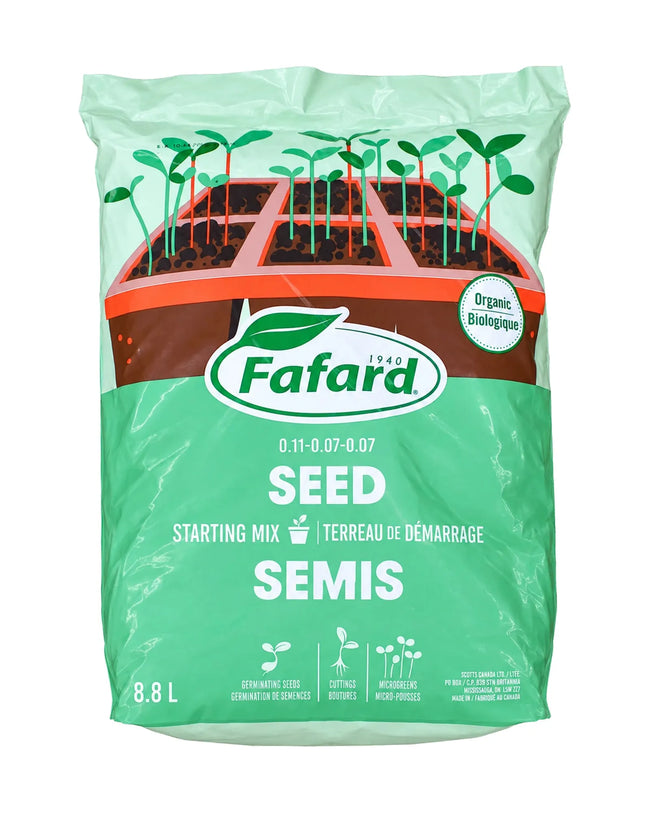
Seed Starting Soil
Shop the collectionSeed starting supplies
Shop the collection