

Sale
Sold out

Open-pollinated pickling cucumber
Cucurbitaceae
Organic cucumber and gherkin seeds
Organic ‘National Pickling’ pickling cucumber
Cucumis sativus
Product code : BIOVO-0031
Organic ‘National Pickling’ is a traditional productive versatile cucumber. Short crisp striped medium-green fruit may be picked at 5 to 8 cm for small gherkins, approximately 10 to 13 cm for conventional pickles, or slightly longer for fresh eating. Vigorous vines benefit from trellising and daily harvest. This open-pollinated variety suits sunny gardens, large containers, and frequent harvests intended for pickles, relishes, and salads. For best results, grow Organic ‘National Pickling’ pickling cucumber with the recommended light, moisture, and spacing, then observe development regularly. Harvesting at the appropriate stage preserves the desired texture, colour, and eating quality while helping the remaining crop continue growing evenly.
- Quantity
- Approximately 60 organic seeds
- Exposure
- Full sun
- Life cycle
- Warm-season annual
Discover the plant
Common name‘National Pickling’ pickling cucumber
FamilyCucurbitaceae
GenusCucumis
Speciessativus
CultivarNational Pickling
TypeOpen-pollinated pickling cucumber
Botanical nameCucumis sativus
Organic ‘National Pickling’ pickling cucumber (Cucumis sativus) is a traditional open-pollinated variety developed to produce short crisp fruit uniform enough to pack jars efficiently. Medium-green striped black-spined fruit may be harvested near 5 to 8 cm for small gherkins, approximately 10 to 13 cm for conventional pickles, or slightly longer for fresh slicing before seed hardens. Tender skin and firm flesh suit whole pickles, slices, relishes, and salads. Vigorous rambling vines produce heavily when fruit is picked frequently. Daily harvest encourages new flowers, straighter fruit, and a longer productive season.
Direct-sow after all frost risk once soil reaches at least 18 to 21°C, approximately 1.3 to 2.5 cm deep, or start plants two to three weeks before transplanting. Handle roots carefully and set plants in full sun. On a trellis, space approximately 30 to 45 cm apart; on the ground, allow 60 to 90 cm for airflow among vines. Choose fertile soil rich in mature compost that remains evenly moist and well drained. Irrigate deeply at the base, mulch after soil warms, and avoid prolonged leaf wetness. Early male flowers may naturally drop before female flowers appear.
Maturity generally falls between 52 and 60 days depending on counting point and target size. Begin inspecting daily as soon as first fruit reaches 5 cm. Cut with pruners instead of pulling the vine and do not allow yellow or oversized fruit to exhaust the plant. For preserves, use only firm fresh undamaged fruit and follow a canning recipe tested by a recognized authority; never improvise vinegar, water, and salt proportions. Monitor striped cucumber beetles, aphids, spider mites, bacterial wilt, powdery mildew, and downy mildew. Remove severely diseased plants promptly and rotate away from cucurbits.

Sowing guide
It all startswith a seed.
Sowing depth
Approximately 1.3 to 2.5 cm (1/2 to 1 in)
Spacing / density
On a trellis: 30 to 45 cm (12 to 18 in); on the ground: 60 to 90 cm (24 to 36 in)
Germination temperature
Approximately 21 to 30°C
Germination time
Approximately 3 to 10 days in warm soil
Sowing period
After all frost risk in warm soil; indoors only two to three weeks before transplanting
Propagation
Direct sowing in warm soil or indoor sowing two to three weeks before transplanting
Growing method
After frost, sow two seeds 1.3 to 2.5 cm deep in soil at least 18 to 21°C, then retain one plant. To gain time, start in pots two to three weeks before setting out. Harden, transplant without breaking the root ball, and space 30 to 45 cm on a trellis or 60 to 90 cm on the ground. Water at the base, mulch, and remove covers at flowering. Guide vines loosely, then harvest daily beginning at 5 cm. Cut fruit and remove every yellow or diseased cucumber. After emergence, thin without disturbing retained plants and keep the surface lightly moist. Mulch only after plants establish, leaving the crown uncovered. Inspect leaf undersides regularly, remove severely damaged tissue, and harvest at the recommended stage. Record the sowing date for Organic ‘National Pickling’ pickling cucumber to plan later batches more accurately and rotate the next crop with an unrelated plant family. During sowing and cultivation, inspect Organic ‘National Pickling’ pickling cucumber regularly and adjust care to its actual stage of growth. During sowing and cultivation, keep soil moist and well drained without allowing water to remain around roots. During sowing and cultivation, preserve adequate spacing so airflow, inspection, and harvest remain straightforward.
Soil and care
The right care,at the right time.
Soil pH
Approximately 6.0 to 6.8
Care level
Moderate
Watering
Maintain evenly moist soil from germination through the end of harvest. After establishment, irrigate deeply when the top 2 to 3 cm begins drying without waiting for prolonged wilting. Irregular moisture produces bitter, misshapen, or hollow fruit and may interrupt fruit set. Water at the base in the morning or use a soaker hose to keep foliage dry; 5 to 7 cm of mulch limits splashing and evaporation. During flowering and heavy production, check the row daily, especially containers. Always allow excess water to drain and prevent standing water at the crown, which promotes rot.
Soil type
Prepare fertile loose soil rich in mature compost and well drained with dependable moisture retention. Cucumbers develop relatively shallow roots that respond quickly to drying and compaction. Warm loam or sandy loam performs well; improve heavy clay with organic matter and a mound, and mulch light sand. Aim for a slightly acidic to neutral pH near 6.0 to 6.8. Avoid sites where water stands after rain and plots that recently carried severely diseased cucurbits. In containers, use rich stable free-draining potting mix.
Fertilization
Work mature compost into the bed before sowing and apply balanced fertilizer at planting only according to soil fertility and label directions. When first female flowers or fruit appear, one small side-dressing may support the extended harvest. Avoid excess nitrogen because it produces abundant vines and leaves while delaying female flowers and increasing disease susceptibility. In containers, use diluted solution at regular intervals rather than one heavy dose. Keep every product away from stems and irrigate after application. When foliage is green, flowering regular, and fruit numerous, do not fertilize merely by habit.
Moisture
Evenly moist soil with dry well-aerated foliage
Seasonal care
In spring, wait for warm soil or start plants only two to three weeks before setting out. After frost, install a trellis and protect temporarily from cucumber beetles, then remove cover at flowering. In summer, loosely guide first vines, mulch, water at the base, and harvest daily. Remove yellow fruit and severely diseased leaves without unnecessarily stripping the canopy. At season’s end, dispose of infected debris, clean the trellis, and rotate away from cucurbits for three years. In spring, prepare loose soil and remove young weeds promptly. During summer, water early, apply light mulch, and watch for stress, slugs, and insects beneath leaves. Harvest Organic ‘National Pickling’ pickling cucumber regularly at the useful stage. In fall, remove severely diseased residue, clean tools, and record results. For containers, also inspect drainage holes after heavy rain and keep every saucer empty. As the seasons progress, inspect Organic ‘National Pickling’ pickling cucumber regularly and adjust care to its actual stage of growth. As the seasons progress, keep soil moist and well drained without allowing water to remain around roots. As the seasons progress, preserve adequate spacing so airflow, inspection, and harvest remain straightforward. As the seasons progress, work during the morning when practical and use clean tools to limit injury. As the seasons progress, remove badly damaged tissue promptly and keep sound harvested portions cool.
Container growing
A garden,within reach.
Recommended pot size
At least 30 to 40 L and 35 to 45 cm (14 to 18 in) deep per plant
Choose a container providing at least 30 to 40 L per plant, 35 to 45 cm deep, with excellent drainage. Install a sturdy 1.5-to-1.8-m trellis at the outset and use rich potting mix amended with mature compost. Water until drainage whenever the surface begins drying; a full-sun pot may require morning and evening checks. Feed lightly according to label directions after fruiting begins. Harvest every day so heavy fruit does not exhaust vines or slow fruit set. Raise the container slightly so water drains freely and always empty the saucer after thorough watering. Rotate the pot weekly when light comes from one side. During heat, check moisture every morning without saturating the mix. Harvest Organic ‘National Pickling’ pickling cucumber at the indicated stage and replace the mix after a serious soil-borne disease. Keep foliage open to airflow after rain. Keep foliage open to airflow after rain. In a container, inspect Organic ‘National Pickling’ pickling cucumber regularly and adjust care to its actual stage of growth. In a container, keep soil moist and well drained without allowing water to remain around roots. In a container, preserve adequate spacing so airflow, inspection, and harvest remain straightforward.

Bloom and dimensions
Its place,in your garden.
Mature height
On a trellis, approximately 1.5 to 1.8 m (5 to 6 ft)
Width / spread
On the ground, vines may spread approximately 1.2 to 1.8 m (4 to 6 ft)
Flower color
Yellow
Foliage color
Green
Foliage type
Large rough lobed leaves on tendrilled vines
Growth rate
Fast
Growth habit
Vigorous branching climbing or trailing vine
Fragrance
Crisp fresh mild flesh when harvested young
Bloom period
Yellow male then female flowers on the same plant When Organic ‘National Pickling’ pickling cucumber reaches its reproductive stage, flower stalks emerge and carry blooms visited by small insects. For crops normally harvested before flowering, cut at the recommended culinary stage to preserve texture. If one plant is retained in bloom, keep it apart from the main harvest, maintain watering, and avoid disturbing active visitors.
Fruiting
Striped medium-green fruit with black spines is generally harvested between 5 and 13 cm depending on use. Pick at 5 to 8 cm for small whole gherkins or 10 to 13 cm for slices, spears, and relishes. An overlooked fruit quickly becomes longer, yellow, and filled with hard seed, slowing the formation of new flowers. Inspect vines every day and cut fruit with clean pruners. Incomplete pollination, water stress, or excessive heat may produce curved or irregular fruit.
Days to maturity
Approximately 52 to 60 days depending on counting point and harvest size
Harvest
Approximately 52 to 60 days; pick daily at the desired size before yellowing
Garden associations
In goodcompany.
Companion plants
Quick low crops such as radishes, lettuce, or green onions may occupy the border around ‘National Pickling’ when harvested before creating significant competition. Sweet alyssum, calendula, or phacelia may also grow nearby to diversify flowers available to pollinators. Keep vine bases open and preserve enough space for light, airflow, and harvest. These pairings mainly help organize the garden; they guarantee no protection and do not replace crop rotation, drainage, weeding, or regular pest monitoring. Water every crop according to its own needs and prevent vigorous neighbours from covering young cucumber vines.
Plants to avoid
Avoid potato and sage in the immediate area. Keep cucumber in a sunny, well-aerated, easy-to-monitor site and rotate away from other Cucurbitaceae crops to reduce soil-borne disease buildup.
Recipe idea
From the gardento your plate.
Edible parts
Young firm fruit; clean correctly identified flowers only when untreated
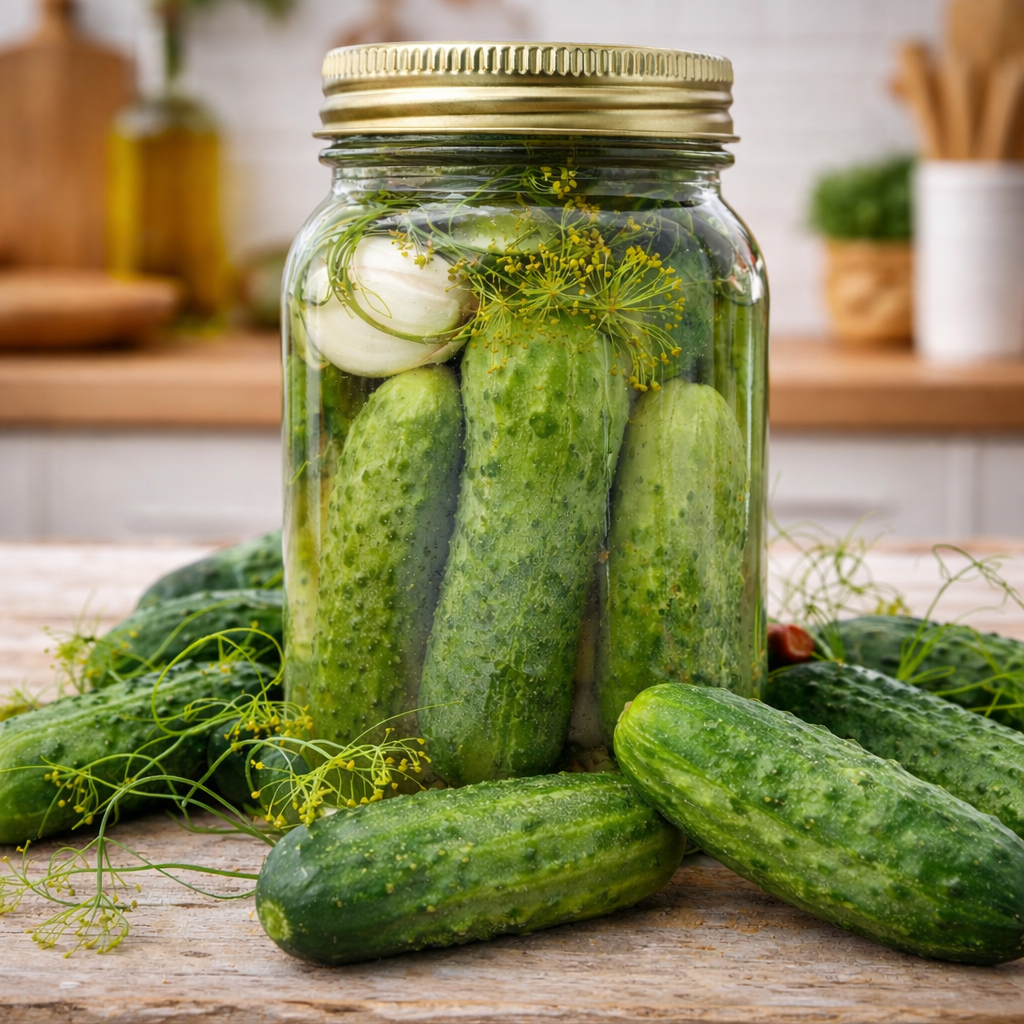
Quick refrigerator pickles — Slice 500 g very fresh firm ‘National Pickling’ cucumbers. Bring 250 ml 5% vinegar, 250 ml water, 15 ml sugar, and 10 ml pickling salt to a boil. Pack cucumbers into a clean jar with dill and one garlic clove, pour in hot brine, cool, then refrigerate. Wait at least 24 hours and consume promptly. This is a refrigerator recipe, not shelf-stable canning. For shelf-stable processing, follow a recognized authority’s tested recipe exactly. Work on a clean surface and wash the harvest carefully under cool potable water. Remove every mouldy, slimy, or abnormal-smelling part. Adjust seasoning progressively so the flavour of Organic ‘National Pickling’ pickling cucumber remains clear. Serve promptly, then refrigerate leftovers within two hours in a clean container. Prevent cross-contamination with raw animal foods and use clean knives, boards, bowls, and serving utensils throughout preparation. Remove every mouldy, slimy, or abnormal-smelling part. During preparation, inspect Organic ‘National Pickling’ pickling cucumber regularly and adjust care to its actual stage of growth.
Frequently asked questions
Your questions,answered.
At what size should ‘National Pickling’ be harvested?
Harvest near 5 to 8 cm for small whole gherkins, approximately 10 to 13 cm for conventional pickles, and slightly longer for fresh slicing while fruit remains green, firm, and minimally seeded. Size is not a fixed date: inspect plants daily during full production. A yellowing or very large fruit redirects plant energy and reduces new flowers. Cut with pruners leaving a short stem and cool promptly after harvest. Keep the growing bed evenly moist while Organic ‘National Pickling’ pickling cucumber establishes without allowing standing water. Shallow sowing, adequate spacing, and appropriate light support consistent growth. Thin early and harvest according to visible maturity rather than relying on one rigid calendar date, because temperature and weather affect development.
Why are early fruits scarce or misshapen?
Cucumbers often produce male flowers first, and these drop without fruit. Female flowers appear later and need adequate pollination; incomplete pollination creates curved fruit or fruit narrow at one end. Cold, rain, extreme heat, scarce bees, covers left over flowers, or water stress worsen the issue. Remove covers at bloom, maintain moisture, avoid insecticides on flowers, and grow attractive flowers nearby. Watch the colour, firmness, and growth of Organic ‘National Pickling’ pickling cucumber. Temperature, light, moisture, and soil fertility can advance or delay harvest. Cut or lift one test specimen, assess its size and texture, then adjust the timing for the remainder of the crop rather than waiting until everything becomes overmature.
Must ‘National Pickling’ be trellised?
No. Vines may trail on clean mulch, but a trellis offers several advantages: more visible and often straighter fruit, better airflow, easier harvest, and less ground space. Use a sturdy 1.5-to-1.8-m structure and guide young vines without tight ties. On the ground, allow wider spacing and use mulch to prevent mud. In either system, do not step on vines and harvest daily from both sides of the planting. Even moisture and reliable drainage are essential for Organic ‘National Pickling’ pickling cucumber. Water near the soil in the morning whenever the surface begins drying, then allow the excess to drain. Apply light mulch after establishment and reduce irrigation only when the crop’s normal maturation stage requires drier conditions.
How can pickling cucumbers remain crisp after harvest?
Harvest young firm well-hydrated fruit early in the morning, then cool promptly. Do not use yellow, soft, hollow, injured fruit or cucumbers left in sun. Wash immediately before preparation and follow a tested recipe using vinegar at the specified acidity; never arbitrarily reduce acid. Remove a very thin slice from the blossom end when the recipe directs because it may contain tissue-softening enzymes. Variety helps, but freshness, size, and process also determine crispness. Harvest Organic ‘National Pickling’ pickling cucumber during dry weather when practical and handle the crop gently. Remove damaged tissue, wash according to intended use, and cool fresh produce promptly. For storage, choose a clean container, stable temperature, and regular inspection, using any softening or injured portion first when it remains wholesome.
Can ‘National Pickling’ seed be saved?
‘National Pickling’ is an open-pollinated variety. For seed production, allow several fruit to grow far beyond the eating stage until fully yellow and the seeds are mature. Cucumbers cross readily with other Cucumis sativus, so isolate flowers or hand-pollinate when varietal trueness matters. Briefly ferment the pulp and seeds, rinse them, then dry them completely before labelling. Store dry seed in a cool dry place. Do not eat overripe fruit retained specifically for seed production. In containers, give Organic ‘National Pickling’ pickling cucumber a light fertile mix and numerous drainage holes. Water when the surface dries, rotate the pot if light is uneven, and never allow standing water. Adequate soil volume reduces rapid moisture changes and helps roots remain cooler during summer heat.
Wildlife and pets
Life,around your plants.
Supporting wildlife
Yellow flowers attract bees and other pollinators needed for good fruit set Organic ‘National Pickling’ pickling cucumber is grown primarily for harvest. When several plants reach bloom, their flowers may receive small bees, hoverflies, and other insects. This contribution remains secondary and varies with flowering duration, weather, and neighbouring crops. Avoid treatments while insects are actively visiting and retain only healthy flowering specimens away from the main harvest.
For a great start to your seeds
The right extras.Right here.
Platters, pots and domes
Shop the collection
Seed Starting Soil
Shop the collectionSeed starting supplies
Shop the collection




