Gaia

Organic 'Butterboy Butternut' squash Seeds

Cucurbita moschata

Productive butternut with smooth deep-orange flesh and a sweet nutty taste. Organic heirloom; maturity in 90 to 100 days. Read the packet directions before starting and keep the label so the variety remains clearly identified throughout the season. Prepare a clean, loose, well-drained growing medium and moisten it before placing the seeds so they are not displaced by the first watering. Keep the seedbed evenly moist without standing water because excess moisture reduces air around developing roots. Move seedlings into bright light as soon as they emerge and rotate containers regularly to encourage balanced growth. Where several seedlings compete for the same space, thin carefully and retain the strongest plants without disturbing their roots. squash seeds are presented here with Canadian seed starting and seasonal care guidance.
Sold as Approximately 10 seeds
4 99 $

Sold out

Pay in 4 interest-free payments withSezzle

Delivery and pickup: view conditions

Product information
Advice adapted to Canada
Secure payment
Share

Discover the plant

Common nameButterboy Butternut squash; butternut winter squash
FamilyCucurbitaceae
GenusCucurbita
Speciesmoschata
CultivarButterboy Butternut
Botanical nameCucurbita moschata
Reproducible seedsYes
Heirloom varietyYes

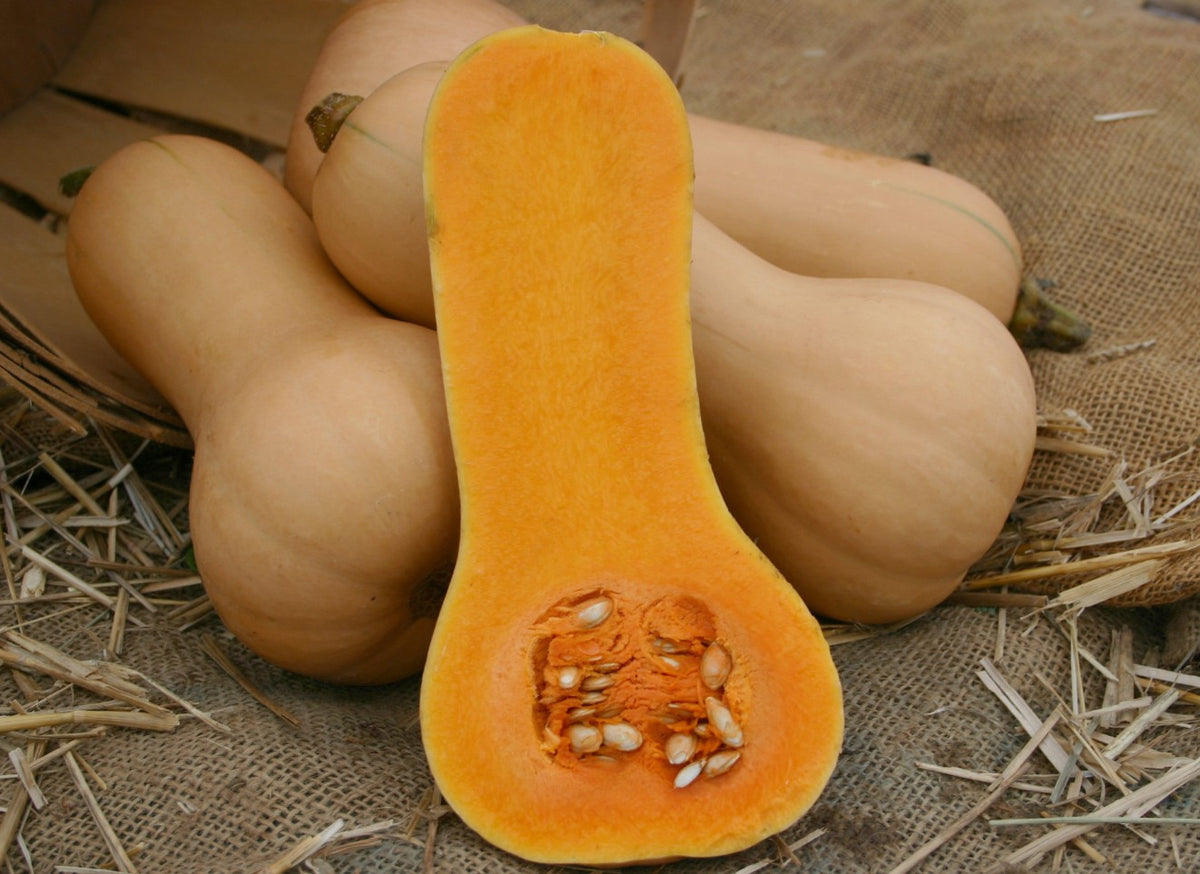
Organic 'Butterboy Butternut' squash Seeds (Cucurbita moschata). This annual butternut squash produces flavourful fruit with smooth deep-orange flesh and a sweet, nutty taste. Gaia identifies it as a productive open-pollinated heirloom. Its dense flesh suits soups, purées, gratins, curries, breads, and desserts. The packet contains approximately 10 seeds certified organic by Ecocert Canada. Kew recognizes Cucurbita moschata as the accepted botanical name in the Cucurbitaceae family and confirms its use as food. Gaia also identifies the young leaves and flowers as edible. This versatile storage squash extends the garden harvest well beyond the end of the summer growing season. For practical seed starting, growing from seed succeeds best when the verified product depth, moisture and temperature guidance is followed.

Soak seed in warm water for up to 24 hours and lightly scarify the coat to improve germination. Start seed indoors three to four weeks before the last frost. Sow 1 inch deep and maintain the medium at 25 to 32°C, preferably around 27 to 35°C; germination generally takes 7 to 10 days. Transplant only after all frost risk has passed and soil reaches approximately 25°C. Space plants 15 to 18 inches apart and rows approximately 60 inches apart. Harden seedlings gradually for several days, then water gently after planting to settle the roots without saturating the soil. Provide bright light immediately after emergence to keep seedlings compact. Use the product details as a clear guide on how to start seeds while keeping the growing medium evenly moist, never saturated. For indoor seed starting, count back from local conditions and frost dates to decide when to start indoor seeds.

Grow Butterboy Butternut in full sun and rich loose soil that remains evenly moist while draining well. Plants reach approximately 12 to 24 inches high and spread 36 to 48 inches. Maturity occurs in 90 to 100 days. Harvest when colour is rich, the rind resists a fingernail, and the ground spot becomes cream, gold, or orange. Cut fruit with approximately 2 inches of stem, then cure in a warm dry place. Store cured fruit at 10 to 12°C with 55 to 75% relative humidity and good airflow. Lift fruit from underneath so the stem remains attached, since an intact stem helps reduce the risk of storage rot.

In the garden

Exposure
Full sun
Life cycle
Warm-season annual
Hardiness
Frost-sensitive annual

Sowing guide

Sowing & germination

Sowing depth

25 mm (1 in)

Spacing / density

38 to 46 cm (15 to 18 in) between plants and approximately 152 cm (60 in) between rows

Germination temperature

25 to 32 °C (77 to 89.6 °F); ideally around 27 to 35 °C (80.6 to 95 °F).

Germination time

7 to 10 days

Sowing period

Start indoors three to four weeks before the last frost and transplant when soil reaches approximately 25°C.

Propagation

Seed propagation; open-pollinated variety

Seed scarification

Yes

Growing method

For Butterboy Butternut squash; butternut winter squash, follow these sowing and growing guidelines for the variety. Soak seed in warm water for up to 24 hours and lightly scarify the coat. Sow 1 inch deep in pots maintained at 25 to 32°C, three to four weeks before the last frost. After germination in 7 to 10 days, move seedlings into bright light. Harden them gradually and transplant into soil near 25°C after all frost risk has passed. Space plants 15 to 18 inches apart and rows approximately 60 inches apart. Read the packet directions before starting and keep the label so the variety remains clearly identified throughout the season. Prepare a clean, loose, well-drained growing medium and moisten it before placing the seeds so they are not displaced by the first watering. Keep the seedbed evenly moist without standing water because excess moisture reduces air around developing roots. Move seedlings into bright light as soon as they emerge and rotate containers regularly to encourage balanced growth. Where several seedlings compete for the same space, thin carefully and retain the strongest plants without disturbing their roots. Before outdoor planting, gradually acclimatize young plants to wind, sunlight, and changing temperatures over several days. Follow the stated spacing so air can move between plants and each plant receives adequate light, water, and nutrients. This seed starting sequence supports reliable growing from seed while preserving the product-specific depth and temperature facts.

Soil and care

Soil & care

Minimum temperature

Frost sensitive; harvest fruit before damaging frost

Care level

Moderate

Watering

Maintain even moisture without standing water, especially during flowering and fruit development. Read the packet directions before starting and keep the label so the variety remains clearly identified throughout the season. Prepare a clean, loose, well-drained growing medium and moisten it before placing the seeds so they are not displaced by the first watering. Keep the seedbed evenly moist without standing water because excess moisture reduces air around developing roots.

Soil type

Loose soil rich in organic matter, evenly moist, and well drained Read the packet directions before starting and keep the label so the variety remains clearly identified throughout the season. Prepare a clean, loose, well-drained growing medium and moisten it before placing the seeds so they are not displaced by the first watering. Keep the seedbed evenly moist without standing water because excess moisture reduces air around developing roots.

Fertilization

Incorporate mature compost before planting and provide moderate balanced feeding during growth. Read the packet directions before starting and keep the label so the variety remains clearly identified throughout the season. Prepare a clean, loose, well-drained growing medium and moisten it before placing the seeds so they are not displaced by the first watering. Keep the seedbed evenly moist without standing water because excess moisture reduces air around developing roots.

Seasonal care

For Butterboy Butternut squash; butternut winter squash, adjust seasonal care to the plant’s actual growth cycle. Water at soil level, mulch after soil warms, and guide stems to maintain airflow. Monitor cucumber beetles, squash bugs, and powdery mildew. Reduce watering as maturity approaches and harvest before damaging frost. Read the packet directions before starting and keep the label so the variety remains clearly identified throughout the season. Prepare a clean, loose, well-drained growing medium and moisten it before placing the seeds so they are not displaced by the first watering. Keep the seedbed evenly moist without standing water because excess moisture reduces air around developing roots. Move seedlings into bright light as soon as they emerge and rotate containers regularly to encourage balanced growth. Where several seedlings compete for the same space, thin carefully and retain the strongest plants without disturbing their roots. Before outdoor planting, gradually acclimatize young plants to wind, sunlight, and changing temperatures over several days. Follow the stated spacing so air can move between plants and each plant receives adequate light, water, and nutrients. Water at soil level when the surface begins to dry, then adjust frequency for weather, drainage, and container volume. A light mulch can reduce splashing and moisture swings after the soil has warmed and plants are established. Inspect foliage, stems, and leaf undersides regularly so stress or pests can be addressed early. Feed moderately according to soil fertility; steady growth is preferable to excessive or unbalanced fertilizer applications.

Container growing

Container growing

Recommended pot size

Very large container of at least 60 L for one plant
Growing Butterboy Butternut squash; butternut winter squash in a container requires suitable volume, drainage, and exposure. In-ground growing is preferable. A very large container of at least 60 L can work when drainage, watering, and room for the stems are adequate. Read the packet directions before starting and keep the label so the variety remains clearly identified throughout the season. Prepare a clean, loose, well-drained growing medium and moisten it before placing the seeds so they are not displaced by the first watering. Keep the seedbed evenly moist without standing water because excess moisture reduces air around developing roots. Move seedlings into bright light as soon as they emerge and rotate containers regularly to encourage balanced growth. Where several seedlings compete for the same space, thin carefully and retain the strongest plants without disturbing their roots. Before outdoor planting, gradually acclimatize young plants to wind, sunlight, and changing temperatures over several days. Follow the stated spacing so air can move between plants and each plant receives adequate light, water, and nutrients. Water at soil level when the surface begins to dry, then adjust frequency for weather, drainage, and container volume. A light mulch can reduce splashing and moisture swings after the soil has warmed and plants are established.
Organic 'Butterboy Butternut' squash Seeds by Gaia, product image prepared for Canadian gardeners.

Bloom and dimensions

Size, flowering & harvest

Mature height

Approximately 30 to 61 cm (12 to 24 in)

Width / spread

Approximately 91 to 122 cm (36 to 48 in)

Flower color

Yellow

Foliage color

Green

Foliage type

Large rough lobed green leaves

Growth rate

Fast

Growth habit

Trailing vine

Fruiting

Butternut fruit with tan skin and smooth deep-orange flesh Read the packet directions before starting and keep the label so the variety remains clearly identified throughout the season. Prepare a clean, loose, well-drained growing medium and moisten it before placing the seeds so they are not displaced by the first watering. Keep the seedbed evenly moist without standing water because excess moisture reduces air around developing roots.

Days to maturity

90 to 100 days

Harvest

Harvest when colour is rich, the rind resists a fingernail, and the ground spot becomes cream, gold, or orange. Cut with about 2 inches of stem, then cure warm and dry.
Organic 'Butterboy Butternut' squash Seeds by Gaia, product image prepared for Canadian gardeners.

Garden associations

Companion plants & uses

Companion plants

Gaia traditionally suggests corn, pole beans, peas, radish, sunflower, parsley, celery, buckwheat, nasturtium, marigold, and oregano. Prioritize space and airflow. Read the packet directions before starting and keep the label so the variety remains clearly identified throughout the season. Prepare a clean, loose, well-drained growing medium and moisten it before placing the seeds so they are not displaced by the first watering. Keep the seedbed evenly moist without standing water because excess moisture reduces air around developing roots. Move seedlings into bright light as soon as they emerge and rotate containers regularly to encourage balanced growth.

Plants to avoid

Gaia traditionally recommends separating it from tomato, eggplant, potato, and pepper. This list is not absolute; prioritize rotation and spacing.

Garden use

Peel or cut mature squash, remove the seeds, and roast the flesh in cubes, or add it to soups, purées, curries, gratins, breads, and desserts. Its smooth texture becomes creamy after cooking. Refrigerate cut or cooked flesh and use promptly; store whole fruit only when dry, sound, and well ventilated. Read the packet directions before starting and keep the label so the variety remains clearly identified throughout the season. Prepare a clean, loose, well-drained growing medium and moisten it before placing the seeds so they are not displaced by the first watering.

Recipe idea

From garden to table

Edible parts

Mature fruit flesh, young leaves, and flowers
For four servings with Butterboy Butternut squash; butternut winter squash, harvest about 500 g of edible material at the recommended stage. Rinse under potable water, remove damaged sections, and use a clean cutting board. Cut the crop into even pieces. Warm 30 ml of oil in a skillet or preheat the oven to 200°C, then cook until tender and lightly browned. Season with 15 ml of lemon juice or mild vinegar, a small pinch of salt, pepper, and fresh herbs. Serve with a cooked grain or pulses. Adjust cooking time to the size of the pieces and the maturity of the harvest. Eat only the parts correctly identified as edible. Refrigerate leftovers in a closed container within two hours and use them promptly. Serve promptly to preserve the texture and aromas that distinguish this harvest. Taste before adding more salt so the variety’s own character remains at the centre of the dish. Use a clean board and utensils, then refrigerate promptly any portion that will not be served immediately.
Organic 'Butterboy Butternut' squash Seeds by Gaia, product image prepared for Canadian gardeners.

Frequently asked questions

Frequently asked questions

How many 'Butterboy Butternut' squash seeds are in the packet?
For Butterboy Butternut squash; butternut winter squash, the packet information states: Approximately 10 seeds. This wording preserves the commercial approximation when one is provided and helps plan the number of containers or the length of the row without turning an estimate into a guaranteed count. Keep the packet closed in a cool, dry, dark place until sowing time. Keep the label with the seedlings so the variety remains correctly identified throughout the season. Use clean containers and write the sowing date on a water-resistant label. Avoid exposing unused seed to moisture or large temperature swings.
How should I start 'Butterboy Butternut' squash seeds in Canada?
For Butterboy Butternut squash; butternut winter squash, the stated sowing period is Start indoors three to four weeks before the last frost and transplant when soil reaches approximately 25°C. The recommended method is Seed propagation; open-pollinated variety, at a depth of 25 mm (1 in). Follow these product-specific directions and adjust timing to the average last-frost date in your area. Moisten the growing medium before placing the seed so the first watering does not displace it. Label every container and maintain even moisture without allowing standing water. Move seedlings into bright light as soon as they emerge to encourage balanced growth. Thin carefully when several seedlings compete for the same space. For seed starting, label the cultivar and use the stated sowing depth instead of a generic estimate.
How long do 'Butterboy Butternut' squash seeds take to germinate?
For Butterboy Butternut squash; butternut winter squash, the stated germination period is 7 to 10 days, with a germination temperature of 25 to 32°C; preferably around 27 to 35°C. Keep these conditions as steady as practical while allowing excess water to drain away. The temperature of the growing medium matters more than the surrounding air during this stage. Check moisture below the surface before watering again and avoid saturating the medium. Good air circulation helps young plants remain vigorous after emergence. Wait until the normal germination window has passed before assuming a seed will not emerge. When growing from seed, keep conditions stable for the full stated germination window before disturbing the mix.
Where should I grow 'Butterboy Butternut' squash in the garden?
For Butterboy Butternut squash; butternut winter squash, the recommended exposure is Full sun. The stated spacing guideline is 38 to 46 cm (15 to 18 in) between plants and approximately 152 cm (60 in) between rows. For container growing, the product record recommends: Very large container of at least 60 L for one plant. Allow for the mature habit so neighbouring plants do not restrict light or access for harvest. Choose a site that is easy to water and leave enough room for air to circulate around the foliage. In a container, make sure several holes allow excess water to drain freely. A light mulch can steady moisture after the soil has warmed and plants are established.
When and how should I harvest 'Butterboy Butternut' squash?
For Butterboy Butternut squash; butternut winter squash, the confirmed edible parts are: Mature fruit flesh, young leaves, and flowers. Harvest them at the stage stated in the product record, then sort the crop before preparation. Use only the parts correctly identified as edible for this plant. Use a clean tool and handle the harvest carefully to avoid unnecessary injury to the plant. Harvest in dry weather when practical and remove damaged portions promptly. Wash only the parts intended for the kitchen and refrigerate perishable produce promptly. Never eat a plant part whose identity or edibility is uncertain.

Seed-starting essentials

Click a product to build your selection.

Your selection

Total