


Sale
Sold out

Running winter squash with strand-forming flesh
Cucurbitaceae
Organic winter squash seeds
Organic spaghetti squash
Cucurbita pepo
Product code : BIOVO-0035
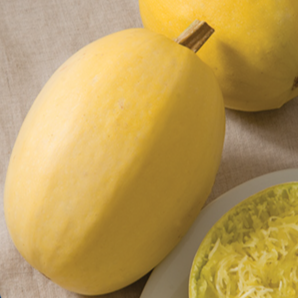
Organic spaghetti squash produces oval to oblong fruit that turns yellow at maturity. After cooking, its mild, slightly nutty flesh separates into long strands that are easy to serve with sauce, in gratins, salads, or patties. Harvest begins after approximately 88 days. Sow in full sun in fertile, well-drained soil, then maintain steady moisture through flowering and fruit enlargement. Harvest before a hard frost, cure sound fruit, and keep it in cool storage. Each selection contains approximately 25 organic seeds with an announced germination rate of 85%. The selection lists an announced germination rate of 85%. Guide long vines away from garden paths and inspect developing fruit regularly.
- Quantity
- Approximately 25 organic seeds
- Exposure
- Full sun
- Life cycle
- Warm-season annual
Discover the plant
Common nameSpaghetti squash, vegetable spaghetti squash
FamilyCucurbitaceae
GenusCucurbita
Speciespepo
CultivarSpaghetti
TypeRunning winter squash with strand-forming flesh
Botanical nameCucurbita pepo
Organic spaghetti squash (Cucurbita pepo) produces oval to oblong fruit that changes from cream to yellow at maturity. After cooking, the flesh naturally separates into long, mild, slightly nutty strands. Serve them with sauce, in gratins, warm salads, patties, or vegetable bowls. Each selection contains approximately 25 organic seeds, and harvest begins after about 88 days. A fully mature, sound, properly cured squash may be kept in cool storage, extending garden meals well beyond the end of the growing season. Its pale flesh offers an appealing contrast with colourful sauces, roasted vegetables, and fresh herbs on the plate.
Sow after all frost risk once soil reaches at least 18°C, approximately 2 to 2.5 cm deep. Plants may also be started three to four weeks before transplanting in individual pots. Keep roots intact when setting them out. Allow roughly 90–120 cm between plants and 120–180 cm between rows, with additional space for trailing vines. Choose full sun and fertile, compost-rich, loose, well-drained soil. Water deeply at the base, then mulch after the ground warms. Remove protective covers at flowering so pollinators can reach every open blossom and support complete fruit formation. Starting in pots can be useful where the outdoor growing season is short, but avoid holding seedlings indoors until they become root-bound.
Harvest when the rind is evenly yellow, hard, and difficult to mark with a thumbnail, while the stem becomes dry and corky. Cut fruit before a hard frost, leaving 5 to 8 cm of stem. Cure it for 7 to 14 days in a warm, dry, ventilated place, then store it cool without exposure to freezing. For firm strands, cook the halves until flesh yields to a fork without becoming mushy, then scrape crosswise. Monitor cucumber beetles, squash bugs, vine borers, and powdery mildew. Discard any mouldy, frozen, extremely bitter, leaking, soft, or abnormal-smelling fruit. Inspect stored fruit weekly and remove any specimen developing a soft spot, leakage, mould, or an unusual odour.

Sowing guide
It all startswith a seed.
Sowing depth
Approximately 2 to 2.5 cm (3/4 to 1 in)
Spacing / density
As a starting guide, allow 90–120 cm (35–47 in) between plants and 120–180 cm (47–71 in) between rows; increase room as needed for trailing vines and access.
Germination temperature
Approximately 21 to 35 °C (69.8 to 95 °F)
Germination time
Approximately 7 to 14 days
Sowing period
After all frost risk in warm soil, or indoors three to four weeks before transplanting
Propagation
Direct sowing in warm soil or indoor sowing three to four weeks before transplanting
Growing method
Growing 'Spaghetti' squash from seed. Direct-sow after all frost risk once soil reaches at least 18°C, 2 to 2.5 cm deep, then retain the strongest plant after emergence. Use about 90–120 cm between plants and 120–180 cm between rows, allowing more space for long vines. To gain time, start plants in pots three to four weeks before setting out and transplant without breaking the root ball. Choose full sun and fertile soil enriched with compost. Water at the base, mulch after soil warms, and remove protection when flowering begins. Guide long vines away from paths and rest developing fruit on a dry board. Monitor cucumber beetles, squash bugs, vine borer, and powdery mildew. Harvest after approximately 88 days when the rind becomes evenly yellow and hard. Cut with 5 to 8 cm of stem, cure for 7 to 14 days, then store in a cool, dry place. During hot periods, check moisture beneath the mulch and irrigate slowly rather than wetting only the surface. Do not remove healthy leaves that feed ripening fruit. As autumn approaches, stop high-nitrogen fertilizer, check frost forecasts, and harvest only fruit without soft areas. Inspect stored squash regularly and use fruit with a small dry surface scratch first.
Soil and care
The right care,at the right time.
Soil pH
Approximately 5.8 to 6.8
Care level
Moderate
Watering
The long vines and maturing fruit of spaghetti squash require a broadly moistened root zone rather than frequent surface sprinkles. Water spaghetti squash slowly at the base, widening the wetted area as it spreads, and let excess drain between irrigations. Keep spaghetti squash's leaves dry when practical and do not force the stream against stems, flowers, or fruit near the soil. Even spaghetti squash's large container can dry beneath full foliage, so inspect it daily during heat and empty its saucer. Once spaghetti squash's fruit reaches useful size, continue even watering and avoid a sudden heavy irrigation after drought.
Soil type
Spaghetti squash needs warm, deep soil that can support its vigorous running habit with long vines growth without holding stagnant water. Across spaghetti squash's planting area, incorporate mature compost without creating one wet pocket, and loosen compacted layers before planting. For spaghetti squash, the supplied pH range is approximately 5.8 to 6.8; verify it with a soil test. Give spaghetti squash a sunny raised or mounded bed where native ground warms slowly or drains poorly. Container-grown spaghetti squash needs the recommended root volume, airy vegetable mix, and drainage unobstructed beneath its canopy.
Fertilization
Spaghetti squash benefits from a fertile bed prepared before its vines spread. Incorporate mature compost where needed and follow a soil test or the fertilizer manufacturer's directions for additional nutrition. Avoid repeatedly adding high-nitrogen feed when the plant is already producing vigorous foliage. As fruit develops, maintain adequate moisture so roots can use available nutrients. If growth is poor, check temperature, drainage and root health before assuming fertilizer alone will solve the problem.
Moisture
Evenly moist drained soil during growth; dry curing conditions
Seasonal care
Seasonal care for 'Spaghetti' squash. In spring, wait for warm soil or start plants three to four weeks before setting out. Protect temporarily from cucumber beetles and remove cover once flowering begins. In summer, guide vines away from paths, mulch, water at the base, and inspect the crown for vine borer. Do not remove healthy foliage late in the season because it feeds fruit until maturity. In autumn, cut fruit before a hard frost, cure in warmth, then store. Remove infected debris and rotate away from cucurbits. Early in growth, thin extra seedlings by cutting rather than pulling them. Keep soil weeded without cultivating deeply near roots. During flowering, avoid treatments harmful to bees and hand-pollinate when young fruit repeatedly aborts. Rest fruit on a dry surface, guide vines away from paths, and remove only diseased leaves. In late summer, stop high-nitrogen fertilizer to encourage maturity. Check rind and stem before harvest, cure sound fruit, and inspect it every week during storage. Remove any squash developing soft spots, mould, leakage, or an abnormal smell. The following spring, select a new site to maintain crop rotation. Clean tools before pruning or harvest and compost only healthy debris. Record sowing, flowering, and first-harvest dates to adapt timing to your garden. These observations make future planting decisions more accurate. Water early in the day, keep fruit off wet soil, and avoid sudden vine movement after nodes have rooted. Note any recurring pest problem so protection can begin earlier the following season.
Container growing
A garden,within reach.
Recommended pot size
At least 100 L and 50 to 60 cm (20 to 24 in) deep
Growing 'Spaghetti' squash in containers. Grow one plant in a very stable container holding at least 100 L and measuring 50 to 60 cm deep. Fill it with rich, well-drained potting mix and reserve several metres of ground for the long vines. Place the tub in full sun and keep every drainage hole clear. Sow three seeds, then cut the two weaker seedlings after emergence. Check moisture daily in hot weather because large foliage quickly uses the available water. Irrigate slowly until water drains and fertilize in small doses according to label directions. Support every suspended fruit with a strong sling. Avoid small pots, which dry quickly, tip easily, and restrict maturity. Harvest before frost and move the container only when it can be handled safely. Direct vines onto an open surface where they will not be stepped on. Rest fruit on a dry board and rotate the container periodically for balanced light without moving rooted vines. Watch closely for aphids, spider mites, and powdery mildew, which are often encouraged by water stress. Remove severely affected leaves without stripping the plant. A temporary watering reserve during absences helps prevent repeated wilting cycles. Keep saucers empty after watering and protect the container from strong wind. Harvest with clean pruners rather than twisting the heavy fruit from its vine.

Bloom and dimensions
Its place,in your garden.
Mature height
Foliage generally 45 to 75 cm (18 to 30 in)
Width / spread
Vines often 2.4 to 3.6 m (8 to 12 ft), sometimes longer depending on the strain
Flower color
Yellow
Foliage color
Green
Foliage type
Large rough lobed leaves on sturdy petioles
Growth rate
Fast
Growth habit
Vigorous running habit with long vines
Fragrance
Mild delicate slightly nutty flesh separating into strands after cooking
Bloom period
'Spaghetti' bears separate male and female flowers. Keep the root zone evenly moist during bloom. For spaghetti squash, female blossoms carry a swelling resembling young fruit. Support stems before the developing harvest adds weight. Bees move this vigorous running habit cucurbit plant bearing smooth oval to oblong's pollen between the flower types. Check moisture before blaming poor set on fertility. For 'Spaghetti', its female flowers need pollinator access during bloom. Good light and airflow help reproductive growth continue. Remove row cover when spaghetti squash begins flowering. For this vigorous running habit cucurbit plant bearing smooth oval to oblong, poor pollination can make young fruit stop enlarging.
Fruiting
Oval to oblong fruit changes from cream to evenly yellow at maturity. The rind becomes firm and protects pale flesh that separates into long strands after cooking. Incomplete pollination may deform young fruit or cause early yellowing. Maintain steady moisture, avoid standing water around the crown, and rest fruit on a dry surface. Harvest when a thumbnail barely marks the rind and the stem becomes dry and corky.
Days to maturity
Approximately 88 days
Harvest
Approximately 88 days; harvest when the rind is evenly yellow and hard and the stem is dry
Garden associations
In goodcompany.
Companion plants
Beet, celery, onion, potato, and thyme are the suggested companions for this squash. Position them far enough from the crown to preserve airflow and limit immediate competition for water. Thyme can edge the bed, while taller vegetables are best kept on the north side so they do not shade the vines. Companion planting does not replace crop rotation, weeding, or pest monitoring. Water each crop according to its own needs and guide long vines so they do not cover young plants or block access for inspection and harvest.
Recipe idea
From the gardento your plate.
Edible parts
Cooked flesh, which separates into spaghetti-like strands
'Spaghetti' squash in the kitchen. Herb-roasted spaghetti squash — Cut one sound mature squash in half on a stable surface, then remove the seeds and central fibres. Brush cut sides with 10 ml oil and place them face down on a tray. Roast at 190°C for approximately 35 to 50 minutes, until a fork enters easily without turning the flesh into mash. Rest for five minutes, then scrape crosswise to form strands. Toss with 15 ml oil or butter, one garlic clove, parsley, thyme, salt, and pepper. Add lentils or white beans for a more substantial meal. Serve immediately and refrigerate leftovers within two hours. Freeze extra portions in labelled containers. For a variation, add Parmesan or nutritional yeast immediately before serving. Keep strands separate from the sauce until mealtime to preserve firmness. A spoonful of toasted seeds adds crunch, while lemon juice brightens the mild flavour. Reheat gently so the strands remain distinct and do not release excessive moisture.
Frequently asked questions
Your questions,answered.
How many seeds are included and when should harvest begin?
The product contains approximately 25 organic spaghetti squash seeds. Maturity is listed at about 88 days, and the stated germination rate is 85% under suitable conditions. Temperature, sowing date, watering, and pollination may still advance or delay harvest. Check visible signs as well: the rind should be evenly yellow, firm, and difficult to mark with a thumbnail, while the stem becomes dry and corky. Cut before a hard frost, leaving 5 to 8 cm of stem. Never carry fruit by this handle. Cure it for 7 to 14 days in a warm, dry, ventilated place before storage, then inspect it regularly.
How can ripe spaghetti squash be identified?
Wait for an evenly yellow colour rather than pale green. The rind should be difficult to mark with a thumbnail, the stem should become dry and corky, and the ground spot usually changes from white to cream or gold. Look for several of these signs before cutting the fruit. Harvest before a hard frost, leaving 5 to 8 cm of stem. Fruit picked too young may remain bland, store for less time, and produce flesh that is softer than strand-like. Handle it without lifting by the stem, then cure it for 7 to 14 days in a warm, dry, ventilated place.
Why does the flesh fail to form long strands?
Immature fruit, undercooking, or overcooking may all interfere with strand formation. Harvest when the rind is yellow and hard, then cure the fruit before cooking it. Cut crosswise when seeking the longest circular fibres. Cook until a fork enters the flesh easily, but stop before it becomes mushy. Rest for several minutes and scrape gently with a fork. If strands remain very moist, let them drain before adding sauce. Avoid stirring them vigorously. Each fruit may require a slightly different cooking time according to its size and maturity, so check early rather than relying on one fixed time. Check texture often.
Is spaghetti squash nutritionally equivalent to pasta?
No. The strands look like noodles and hold sauce well, but their composition, energy, protein, carbohydrate, and texture differ from wheat or legume pasta. Serve spaghetti squash as a versatile vegetable rather than an automatic nutritional equivalent. To build a complete meal, add a protein source such as lentils, beans, tofu, eggs, or meat, along with fat and other vegetables suited to your needs. Substitutions related to allergies, diabetes, or another medical condition should be discussed with a qualified health professional. Portion sizes and preparation methods can also change the nutrition of the finished meal. Preparation and toppings also change the finished meal.
Can seed be saved from this spaghetti squash?
Cucurbita pepo may cross with many zucchini, pumpkins, and other squash of the same species. To keep offspring as true as possible, isolate plants from other C. pepo or hand-pollinate a female flower, then close and label it. Let the fruit mature completely on the vine and cure it after harvest. Extract the seeds, rinse away all pulp, and dry them for several weeks in an airy place without direct heat. Store only hard, thoroughly dry seed in a dated envelope in a cool, dry location. Perform a germination test before the next sowing and plant extra seeds when the result is low.
Wildlife and pets
Life,around your plants.
Supporting wildlife
Spaghetti squash flowers need insect visits to develop a full crop of mature fruit. Give bees access as soon as female blossoms appear, especially if young vines were protected by covers. A nearby flowering border can offer forage beyond the squash bloom period; avoid crowding that border into the spreading vines.
For a great start to your seeds
The right extras.Right here.
Seed Starting Soil
Shop the collectionSeed starting supplies
Shop the collection





