

Crocus bleu naturalisant à floraison printanière
Crocus FF Sativus - Saffron Crocus
Crocus sativus
Product code : VAN-145-140-01
- Quantity
- 5 cormes
- Exposure
- Full sun
- Life cycle
- Perennial
Discover the plant
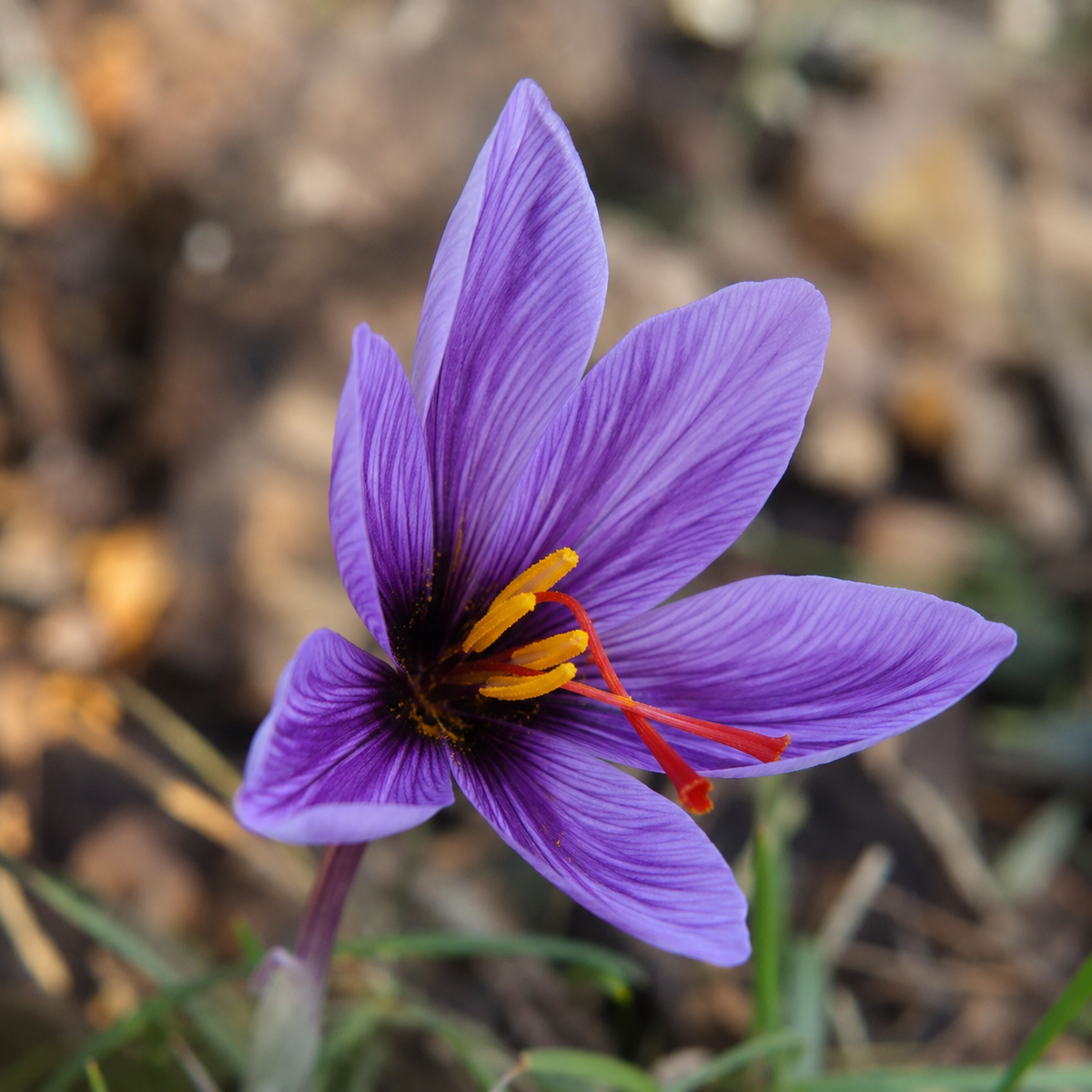
Saffron crocus (Crocus sativus) is a fall-blooming perennial grown from corms and prized for its delicate lilac to violet flowers and bright orange-red stigmas, which are harvested and dried as culinary saffron. Its fine, grassy foliage appears around flowering and continues through the cool season before the plant enters dormancy. Compact and elegant, it is well suited to rock gardens, sunny borders, herb gardens, raised beds and well-drained containers. It should not be confused with autumn crocus (Colchicum autumnale), which is a different plant.
Plant Crocus sativus corms from late summer to early fall in a warm, sunny and very well-drained location. Light sandy, gravelly or loamy soil is ideal, especially where water does not sit during winter. Plant the corms about 10 to 15 cm deep, spacing them around 10 cm apart so they have room to settle in and slowly form small groups over time. In colder or wetter regions, choose a protected spot near a warm wall, in a raised bed or in a container with excellent drainage.
Water moderately after planting, then keep watering limited once the plant is established or dormant, as soggy soil can cause corm rot. A light addition of mature compost or bulb fertilizer is usually enough; avoid too much nitrogen. In the garden, saffron crocus combines beautifully with thyme, sedum, lavender in warm sites, miniature iris, low-growing perennials and fine ornamental grasses. Plant in small groups for a natural effect, and avoid aggressive spreading plants that could smother the foliage.
The flowers may attract late-season pollinators when fall weather is mild. Harvesting is done flower by flower by carefully removing only the long red stigmas, then drying them gently before storing them away from light. With its refined fall bloom and culinary value, Crocus sativus brings both ornamental beauty and a small touch of homegrown saffron to the garden.

Planting guide
Plant well.Grow beautifully.
Planting depth
Spacing / density
Best planting time
Propagation
Growing method
Soil and care
The right care,at the right time.
Soil pH
Minimum temperature
Care level
Watering
Soil type
Fertilization
Moisture
Seasonal care
Container growing
A garden,within reach.
Recommended pot size

Bloom and dimensions
Its place,in your garden.
Mature height
Width / spread
Growth rate
Growth habit
Bloom period
Harvest
Garden associations
In goodcompany.
Companion plants
Recipe idea
From the gardento your plate.

Frequently asked questions
Your questions,answered.
When to plant Crocus sativus bulbs in Canada?
How to plant Crocus sativus bulbs?
What growing conditions does Crocus sativus need?
Can Crocus sativus be grown in pots?
When does Crocus sativus bloom and how do you harvest saffron?
Wildlife and pets