Sale
Sold out

F1 hybrid spinach with upright lightly blistered leaves
Amaranthaceae
Organic leafy-vegetable seeds
Organic 'Regiment F1' spinach
Spinacia oleracea
Product code : BIOVO-0040
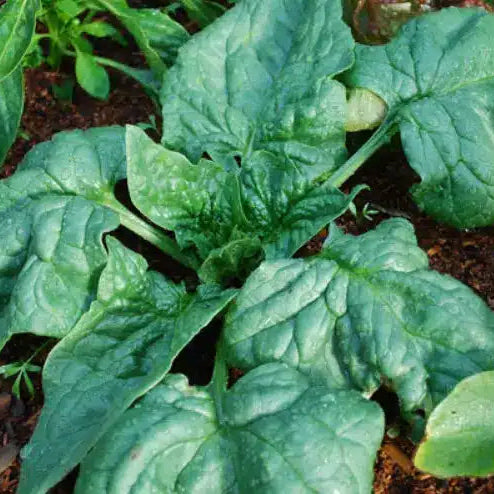
'Regiment F1' is an organic hybrid spinach designed for fresh autumn and winter harvests. Vigorous uniform plants carry large triangular to lance-shaped medium- to dark-green lightly blistered leaves on an upright habit that simplifies cutting. First harvest begins in approximately 37–43 days according to the desired size. Its documented high resistance covers downy mildew Pe/Pfs 1–7, 11, 13, 15, 16, and 18 plus Stemphylium vesicarium. Sow very early in spring or from late July through September, keep soil cool, and harvest in the morning. Because this is an F1 hybrid, saved seed will not reproduce the variety faithfully. Harvest promptly for tender flavour.
- Exposure
- Full sun to partial shade
- Life cycle
- Cool-season annual
Discover the plant
Common nameSpinach
FamilyAmaranthaceae
GenusSpinacia
Speciesoleracea
CultivarRegiment F1
TypeF1 hybrid spinach with upright lightly blistered leaves
Botanical nameSpinacia oleracea
Organic 'Regiment F1' spinach (Spinacia oleracea) is a vigorous Bejo hybrid intended mainly for fresh autumn and winter harvests. It quickly forms uniform upright rosettes with large triangular to lance-shaped medium- to dark-green leaves that are lightly blistered or semi-savoyed. Their substantial texture, bright colour, and mild flavour suit baby greens, mature bunches, salads, sautés, soups, and creamed dishes. Upright habit simplifies cutting, keeps foliage farther from soil, and makes damaged leaves easy to spot. This organic hybrid is a practical choice for gardeners seeking dependable cool-season spinach rather than seed that breeds true.
Direct-sow approximately 1–2 cm deep in cool, fertile, well-drained soil. To take advantage of its cool-season qualities, favour one very early spring series and especially sowings from late July through September. Space plants 5–10 cm apart for large leaves or sow more closely for baby greens, then keep the surface moist until emergence. Full sun suits cold weather; light afternoon shade helps as days warm. 'Regiment F1' tolerates cold soil well, but heat and long days may still accelerate bolting. Thin with clean scissors to protect neighbouring roots, and eat the tender seedlings instead of discarding them.
Harvest generally begins in approximately 37 to 43 days depending on conditions and the desired leaf size; mature rosettes may take longer when growth slows. Cut outer foliage or whole rosettes in the morning, chill immediately, and use within five or six days. The hybrid has documented high resistance to downy mildew races Pe/Pfs 1–7, 11, 13, 15, 16, and 18, plus Stemphylium vesicarium. Resistance does not replace ventilation, rotation, or base watering. Also monitor slugs, leaf miners, aphids, and root rots. Remove severely affected leaves promptly and avoid handling wet plants.

Sowing guide
It all startswith a seed.
Sowing depth
Approximately 1 to 2 cm (3/8 to 3/4 in)
Spacing / density
Sow 2.5 cm (1 in) apart, thin to 5 cm (2 in), and keep 5–7.5 cm (2–3 in) between rows
Germination temperature
Approximately 4 to 20 °C (39.2 to 68 °F); best germination in cool conditions
Germination time
Approximately 7 to 14 days
Sowing period
Very early spring and late July through September; under protection to extend autumn Adjust these dates to your local frost dates and soil conditions; Canadian growing seasons vary by region.
Propagation
Direct sowing recommended; small seedlings may be transplanted with an intact root ball
Growing method
Growing 'Regiment F1' spinach from seed. Direct-sow 1–2 cm deep in cool, loose, well-drained soil. Begin very early in spring, then favour sowing from late July through September for autumn and winter crops. Keep the surface moist until emergence, which generally occurs in 6 to 16 days according to temperature. Thin with scissors to 5–10 cm for large leaves; retain greater density for baby greens. Weed shallowly to avoid damaging roots, then add fine mulch without covering rosette centres. Water at the base in the morning whenever the top few centimetres begin drying. Harvest outer leaves or cut whole rosettes in approximately 37–43 days according to the desired stage. Floating cover or a cold tunnel extends autumn, but ventilate on mild days to reduce condensation. Inspect leaf undersides for aphids and miners. Remove affected foliage, pause sowing during persistent heat, and restart as nights cool. Record every sowing, emergence, and harvest date to refine timing for your location. Rotate away from spinach and related crops for approximately four years. Clean scissors between diseased and healthy rows. During rainy periods, keep covers raised for airflow and avoid working among wet plants. Cool harvested leaves promptly, then remove crop residue before starting another spinach succession elsewhere.
Soil and care
The right care,at the right time.
Soil pH
Approximately 6.0 to 7.5
Care level
Moderate
Watering
Keep soil evenly moist through emergence, then water at the base when the top few centimetres begin drying. Roots benefit from regular moisture rather than alternating drought and saturation. Irrigate in the morning so foliage dries quickly. Add fine mulch without covering rosettes. Check containers daily in hot weather, empty saucers, and reduce watering during cool or rainy periods. Always feel the mix before watering.
Soil type
Give 'Regiment F1' spinach loose, fertile soil with enough organic matter to hold moisture while surplus rain drains away. For 'Regiment F1' spinach, blend mature compost through the upper root zone, level the surface, and remove hard clods before planting. Use approximately 6.0 to 7.5 as 'Regiment F1' spinach's supplied pH target, testing before attempting to change it. Keep 'Regiment F1' spinach's crown at soil level, avoiding a low pocket where water could collect inside the large triangular to lance-shaped lightly blistered leaves. For container-grown 'Regiment F1' spinach, use the recommended soil volume, fresh vegetable mix, and open drainage holes.
Fertilization
'Regiment F1' responds best to moderate fertility and even moisture. Let a soil test guide any corrective amendment. For 'Regiment F1' spinach, its leafy harvest should grow steadily without becoming soft. Never place fertilizer directly against young roots. Heavy feeding makes Spinach more vulnerable to stress. Use new growth to judge whether nutrition is adequate. For 'Regiment F1', its leaf rosette benefits from cool, consistently moist soil. Apply every fertilizer at its labelled rate. Stop feeding 'Regiment F1' spinach well before the intended harvest.
Moisture
Cool evenly moist soil, never saturated
Seasonal care
Seasonal care for 'Regiment F1' spinach. In spring, sow as soon as soil can be worked and protect emergence from very cold nights with light fleece. Thin promptly so air circulates around rosettes. Maintain consistent moisture, weed shallowly, and remove yellow leaves touching the ground. As days lengthen and heat arrives, provide light afternoon shade, monitor watering more closely, and harvest before central stalks elongate. Pause sowing during the hottest periods. In late summer, pre-moisten furrows, sow several short successions, and use light shade cloth until emergence when necessary. In autumn, install protection before persistent freezes but ventilate on mild days to limit condensation and downy mildew. Water less whenever soil stays cool and monitor slugs beneath mulch. Avoid handling wet foliage after prolonged rain. In winter, harvest beneath a tunnel during a thaw and close protection before cold returns. At crop end, remove diseased plants, discard affected residue, wash reusable covers, and store them dry. Record sowing, first cut, and bolting dates to improve the following season. In containers, keep drainage open and refresh compacted surface mix before each new succession. Always cool harvested leaves promptly and clean scissors between diseased and healthy rows. Throughout the season, keep labels readable and clean scissors between diseased and healthy areas. Monitor the protected bed after every temperature swing, because warm sunny days beneath plastic may stress foliage even when outdoor air remains cool. Cool every harvest promptly.
Container growing
A garden,within reach.
Recommended pot size
At least 15 to 20 L and 20 to 25 cm (8 to 10 in) deep
Growing 'Regiment F1' spinach in containers. Choose a container with drainage holes that is at least 20 to 30 cm deep. Fill it with vegetable potting mix enriched with mature compost, avoiding heavy mixtures that remain waterlogged. Sow 1–2 cm deep in short rows, then thin with scissors and eat the baby greens. Place the container in sun during cool weather and provide light shade on hot afternoons. Water slowly until drainage appears, always empty the saucer, and check moisture daily because wind dries containers rapidly. A thin mulch keeps the surface cool without touching rosettes. Feed lightly with a balanced product only when foliage pales despite proper watering. Rotate the container for even light and harvest outer leaves with clean tools. Promptly remove plants that bolt or remain diseased. Before another sowing, clear roots, refresh several centimetres of mix, and wash the container. Beneath a covered balcony, maintain strong airflow so foliage dries quickly. Keep the pot away from walls that reflect intense afternoon heat, and label successive sowings so the oldest row is harvested first. Keep drainage holes clear throughout the season. Label every sowing, harvest the oldest usable row first, and move the container away from reflective walls during sudden warm spells. Cool cut leaves immediately.
Bloom and dimensions
Its place,in your garden.
Mature height
Approximately 20 to 40 cm (8 to 16 in) before or during bolting
Width / spread
Approximately 15 to 25 cm (6 to 10 in)
Flower color
Greenish
Foliage color
Medium to dark green
Foliage type
Upright broad lightly blistered to semi-savoy leaves
Growth rate
Fast
Growth habit
Vigorous upright rosette
Fragrance
Rich vegetal slightly sweet cool-season flavour, stronger after heat or bolting
Bloom period
As days lengthen or heat stresses plants, a central stalk rises and carries small inconspicuous greenish flowers. Bolting makes leaves firmer and sometimes more bitter. Harvest rosettes promptly when stalks begin rising, then sow again as temperatures cool. Several male and female plants may flower separately to observe the life cycle or feed small insects. Wind carries much of the pollen between plants.
Fruiting
Spinach does not produce fleshy fruit. After flowering, pollinated female plants form small dry seed structures along the stalks. Culinary leaf quality declines during this process. Remove bolting stalks when growing for the table. Seed from 'Regiment F1' may germinate, but its offspring will not reproduce this hybrid faithfully. Label any saved seed as experimental offspring. Test germination before relying on stored offspring.
Days to maturity
Approximately 37 to 43 days for early harvest or baby leaves; longer for mature rosettes
Harvest
Harvest baby leaves at approximately 37–43 days once they reach the desired size, or let rosettes enlarge. For repeated cuts, take outer leaves with clean scissors and keep centres intact. For one uniform bunch, cut whole rosettes just above soil. Pick in the morning, discard spotted leaves, and chill immediately. Store unwashed or perfectly dried in a ventilated container for five or six days. In protected winter culture, harvest during a thaw rather than while leaves are frozen and brittle.
Garden associations
In goodcompany.
Companion plants
Cucumber and lettuce may share the area when every crop retains enough air, water, and light. Place cucumber on a trellis to the north so it does not completely shade spinach, then harvest lettuce before it crowds the rosettes. These crops have similar moisture needs without guaranteeing freedom from pests or disease. Preserve a path for watering and harvest, promptly remove diseased foliage, and rotate afterward away from other Amaranthaceae. Keep cucumber vines from resting directly on spinach leaves. Clean tools between crops.
Plants to avoid
Mainly avoid a short rotation with other spinach and hot drying sites
Recipe idea
From the gardento your plate.
Edible parts
Baby leaves and mature leaves
'Regiment F1' spinach in the kitchen. Sautéed 'Regiment F1' spinach — For approximately four servings, wash 400 g of sound leaves in several changes of water, remove tough petioles, and dry thoroughly. Heat 15 ml oil in a large pan. Add one minced garlic clove for 30 seconds, then add foliage in batches so it wilts evenly without boiling. Cook for 2 to 4 minutes while stirring, until tender yet still green. Season lightly with salt and pepper and finish with 10 ml lemon juice. Serve immediately with eggs, pasta, rice, or legumes. Cool leftovers in a shallow container within two hours and refrigerate. Wash the board and utensils after any contact with garden soil. Discard slimy, mouldy, or abnormal-smelling foliage. Clean leaves can also be blanched briefly, chilled in ice water, drained, and frozen in dated portions for cooked dishes. Serve immediately after cooking for the freshest texture and colour. During preparation, inspect Organic 'Regiment F1' spinach regularly and adjust care to its actual stage of growth.
Frequently asked questions
Your questions,answered.
Why does the name 'Regiment F1' include F1?
The F1 suffix identifies a first-generation hybrid. This breeding provides very uniform plants, upright habit, and a specific resistance package. Seed harvested from the plants may germinate, but its offspring will segregate genetically and will not reproduce the same characteristics faithfully. To obtain the qualities of 'Regiment F1', use fresh certified seed for each crop. You may still let several plants flower to observe their life cycle, but label any resulting seed as experimental offspring rather than 'Regiment F1'. This distinction also helps gardeners choose between a uniform hybrid and an open-pollinated variety intended for seed saving. Clearly identify any saved offspring with its harvest year.
Which diseases does 'Regiment F1' have high resistance to?
'Regiment F1' has high resistance to spinach downy mildew, coded Pe or Pfs, races 1–7, 11, 13, 15, 16, and 18, plus Stemphylium vesicarium. High resistance does not mean immunity or protection from every future race. Maintain proper spacing, ventilate covers, water at the base in the morning, and follow an approximately four-year rotation. Promptly remove severely affected leaves and avoid working in the row while foliage is wet to reduce overall disease pressure. Continue inspecting leaf undersides regularly, especially after several cool humid days. Clean cutting tools before moving from an affected row to a healthy one. Inspect every succession carefully.
Why favour late-summer sowing?
'Regiment F1' is documented as an autumn-winter variety. Emergence from late July through September benefits from gradually cooler temperatures and shortening days, reducing bolting and improving texture. Sow after rain or pre-moisten the furrow, then keep the surface cool during germination. Light shade cloth may protect the first August sowing. Established rosettes then tolerate cold, particularly beneath fleece, a cold tunnel, or reliable snow cover. Always ventilate protection during mild days to limit excess humidity. Harvest during a thaw rather than while foliage is frozen and brittle. Close the tunnel again before temperatures drop after sunset. Keep row labels visible throughout winter.
Can 'Regiment F1' be harvested as both baby and full-sized leaves?
Yes. Close spacing supports a baby-leaf cut in approximately 37–43 days, while thinning to 5–10 cm lets each rosette produce large leaves for bunches or cooking. For repeated cutting, take outer foliage first without injuring centres and allow regrowth before the next pass. Whole rosettes provide a more uniform harvest and immediately release the bed. Do not mix diseased leaves with sound foliage. Harvest in the morning, keep the basket shaded, and chill the entire crop promptly. Use bruised leaves first and discard every slimy or severely spotted portion. Store sound foliage loosely so it is not crushed. Wash leaves only before use.
Can seed be saved from 'Regiment F1'?
Seed may be produced when male and female plants flower, but F1-hybrid offspring segregates genetically and will not remain true 'Regiment F1'. It may lose uniformity, speed, upright habit, or part of its resistance. Obtain fresh certified seed to retain the variety's characteristics. A home-selection experiment remains possible but requires several generations, many plants, isolation from other spinach, and honest labelling as Regiment descendants rather than the identical cultivar. Let stalks brown in dry weather, finish drying seed under cover, then store only firm, thoroughly dry seed in a dated envelope. Run a small germination test before sowing this experimental offspring.
Wildlife and pets
Life,around your plants.
Supporting wildlife
Spinach harvested before flowering offers little wildlife value. When several male and female plants bolt, their small greenish flowers may attract tiny bees and pollinating flies. Leave them in a separate area, avoid insecticides on blossoms, and prevent tall stalks from shading new sowings. Wind also carries much of the pollen.
For a great start to your seeds
The right extras.Right here.
Seed Starting Soil
Shop the collectionSeed starting supplies
Shop the collection