Sale
Sold out

Vegetable
Fabaceae
Pole Bean 'Northeaster' (Phaseolus vulgaris)
Common bean
Product code : JAREC-0105
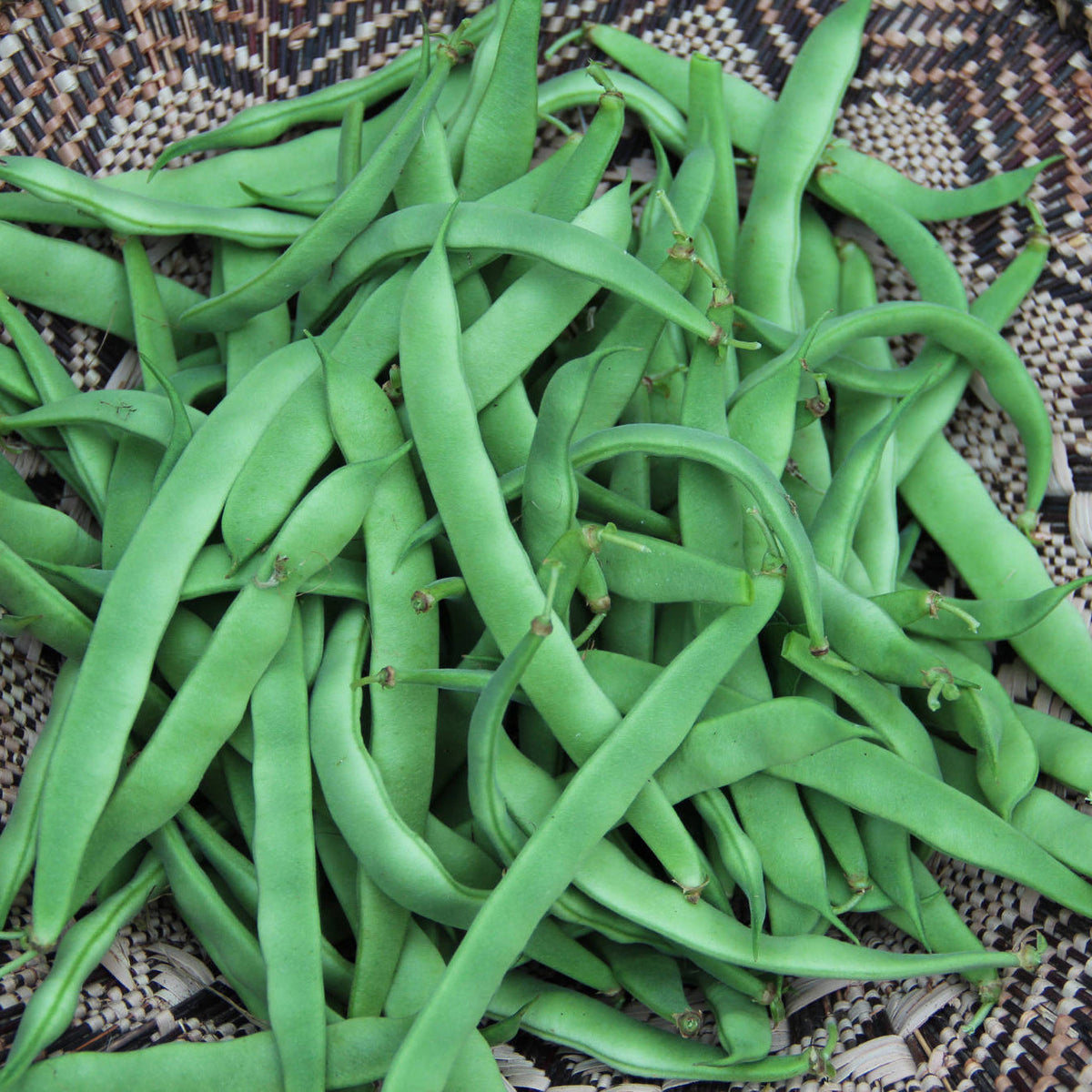
The organic 'Northeaster' climbing bean is a variety of Phaseolus vulgaris particularly appreciated for its vigor, early maturity, and ability to yield good harvests even where summer seems to pass too quickly. In the vegetable garden, its long, twining stems quickly climb stakes, creating a productive green screen that enlivens the space while optimizing growing area. Its pale green pods, clearly visible among the foliage, make harvesting easy and allow for regular picking, almost daily during peak season. Tender and flavorful, they lend themselves to a wide variety of culinary uses, from stir-fries to soups, and can also be frozen to extend the joys of the garden.
- Quantity
- About 20 seeds
- Exposure
- Sun
- Life cycle
- Annual
Discover the plant
Common nameClimbing bean ‘Northeaster’
FamilyFabaceae
GenusBean
Speciescommon
CultivarNortheaster
TypeVegetable
Botanical nameCommon bean
Reproducible seedsYes
‘Northeaster’ Pole Bean (Phaseolus vulgaris). The organic ‘Northeaster’ pole bean is a variety of Phaseolus vulgaris particularly appreciated for its vigor, early maturity, and ability to yield good harvests even where summer seems to pass too quickly. In the garden, its long, twining stems quickly climb stakes, creating a productive green screen that enlivens the space while optimizing growing area. Its pale green pods, highly visible among the foliage, make harvesting easier and allow for regular picking, almost daily during peak season. Tender and flavorful, they lend themselves to a wide variety of culinary uses, from stir-fries to soups, as well as freezing to extend garden delights.
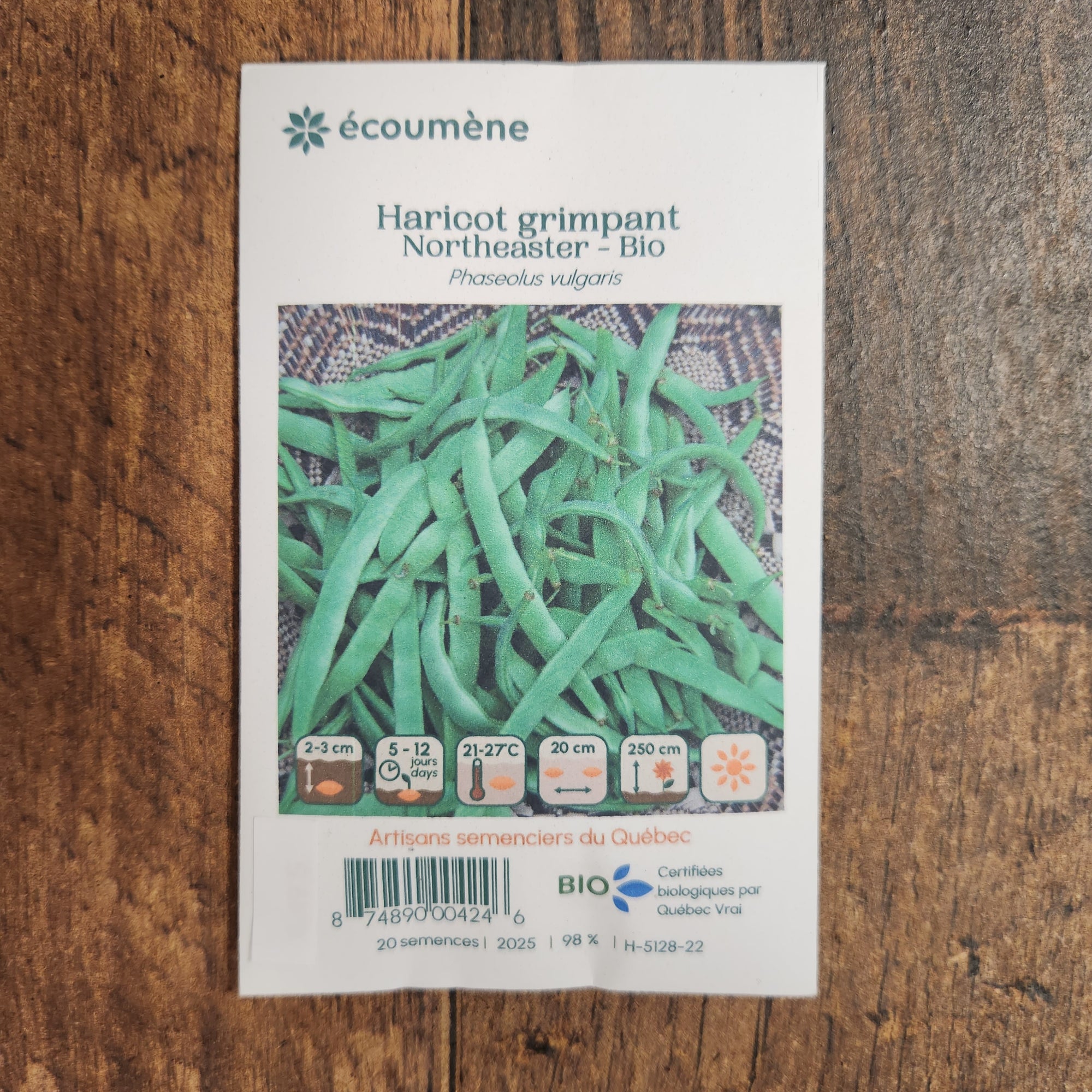
Recommended sowing period: May to July. The depth to respect is 2.5 to 4 cm (1 to 1.6 in). Germination usually takes 7 to 14 days. For germination, keep the potting mix at 18 to 30 °C (64 to 86 °F). Direct sowing of peas, broad beans, and beans preserves their root system. Prepare the locations and supports for climbing varieties before emergence. Do not let the seeds sit in waterlogged soil. Label each row to distinguish between pod-harvested types and those intended for seeds.
Northeaster pole beans require a support installed from the beginning of cultivation. Distribute the young shoots on the trellis and pick accessible pods before they become too developed. Organize legumes according to their growth habit. Dwarf forms are easily harvested in rows accessible from both sides; climbing forms need an anchored support before the foliage becomes heavy. Orient stakes to limit shade cast on low-growing vegetables. Maintain a pathway near the pods and avoid moving supports once the roots are established. In the garden, its long, twining stems quickly climb stakes, creating a productive green screen that enlivens the space while optimizing growing area.

Sowing guide
It all startswith a seed.
Sowing depth
2.5 to 4 cm (1 to 1.6 in)
Germination temperature
18 to 30 °C (64 to 86 °F)
Germination time
7 to 14 days
Sowing period
May to July
Propagation
Sowing
Growing method
Recommended sowing period: May to July. The depth to respect is 2.5 to 4 cm (1 to 1.6 in). Germination generally takes 7 to 14 days. For germination, maintain the potting soil at 18 to 30 °C (64 to 86 °F). Direct sowing of peas, fava beans, and common beans preserves their root system. Prepare the locations and supports for climbing varieties before emergence. Do not let the seeds stay in waterlogged soil. Identify each row to distinguish between types harvested as pods and those intended for seeds. Thin only when emergence shows real competition between young plants. Pick the pods by supporting the stem with one hand to avoid tearing off the ramifications. Young harvests require frequent passes, while seeds intended for drying remain longer on the plant. Avoid handling the foliage when it is wet. For climbing forms, guide the first shoots and check that the stems do not entwine around neighboring crops. Leafy vegetables require harvesting adjusted to the type of plant. An outer picking preserves the heart when you want to continue production.
Soil and care
The right care,at the right time.
Care level
Regular during establishment, then adapted to growing conditions
Watering
Regular
Soil type
Friable and well-drained
Fertilization
Fertilization supports growth and takes into account nutrients already present in the soil or potting mix. Use mature compost or a fertilizer suited to the crop, following the dosage instructions. Avoid using multiple products, especially in a container where roots occupy a limited volume. Water as needed after application and observe foliage development before re-fertilizing.
Moisture
Keep soil moist during germination, without standing water; adjust thereafter according to crop needs
Seasonal care
Northeaster climbing beans require support installed at the beginning of cultivation. Distribute young stems on the trellis and pick accessible pods before they become overdeveloped. Direct sowing of peas, fava beans, and beans preserves their root system. Prepare the locations and supports for climbing varieties before emergence. Do not let seeds sit in waterlogged soil. Identify each row to distinguish between types harvested for pods and those for seeds. Thin only when emergence shows real competition between young plants. Pick pods by supporting the stem with one hand to avoid tearing off ramifications. Young harvests require frequent passes, while seeds intended for drying remain on the plant longer. Avoid handling foliage when it is wet. For climbing forms, guide the first shoots and ensure that the stems do not entwine around neighboring crops. Leafy vegetables require harvesting adjusted to the type of plant. An outer harvest preserves the heart when you want to continue production. Very old leaves do not offer the same tenderness as young shoots. Rinse the harvest just before use or dry it carefully before a short stay in the refrigerator. The organic 'Northeaster' climbing bean is a variety of Phaseolus vulgaris particularly appreciated for its vigor, precocity, and its ability to offer good harvests even where summer seems to pass too quickly.
Container growing
A garden,within reach.
Suitable for containers
Yes
Recommended pot size
A pot that is pierced and stable, with sufficient width for the plant to spread out and enough depth for its roots
Choose this exposure: full sun. Reserve this spacing around the plant: 30 to 45 cm (12 to 18 in). Growing peas or beans in pots depends on the variety's growth habit. Dwarf varieties mainly require a well-distributed surface, while climbing varieties need a firmly fixed support. The roots require well-drained soil that maintains consistent moisture during flowering. Harvest the pods by holding the stems to avoid unbalancing the plant in the container. Organic 'Northeaster' climbing bean is a variety of Phaseolus vulgaris particularly appreciated for its vigor, early maturity, and ability to yield abundant harvests even where summer seems to pass too quickly. In the garden, its long, twining stems quickly climb stakes, creating a productive green screen that enlivens the space while optimizing growing area. Its pale green pods, clearly visible among the foliage, make harvesting easy and allow for regular harvests, almost daily in peak season. Tender and flavorful, they lend themselves to a wide variety of culinary uses, from stir-fries to soups, as well as being suitable for freezing to extend garden enjoyment.
Bloom and dimensions
Its place,in your garden.
Mature height
6.5 to 8 ft (2 to 2.5 m)
Width / spread
30 to 45 cm (12 to 18 in)
Foliage type
Seasonal foliage
Growth habit
Climbing
Bloom period
July to September
Fruiting
Organic climbing bean 'Northeaster' is a variety of Phaseolus vulgaris particularly valued for its vigour, earliness and ability to produce good harvests even where summer seems to pass too quickly. Its pale green pods, clearly visible among the foliage, make harvesting easy and allow for regular picking, almost daily in high season. Tender and flavourful, they lend themselves to a wide variety of culinary uses, from stir-fries to soups and harvests to freeze to extend the pleasures of the garden.
Harvest
60 days after sowing
Garden associations
In goodcompany.
Companion plants
In a diversified plantation, you can reserve neighboring sections for these plants: corn, squash, radishes. The association here serves to organize space and harvests. Respect the height, light, and water needs of each plant, without crowding the foliage. Maintain an aisle for watering and picking, then remove finished crops to free up space. This organization facilitates maintenance without promising protection against pests. Organize legumes according to their growth habit. Dwarf varieties are easily harvested in rows accessible from both sides; climbing varieties need support anchored before the foliage becomes heavy.
Recipe idea
From the gardento your plate.
Edible parts
Pods or seeds depending on the harvest stage
Recipe idea with ‘Northeaster’ climbing beans: sautéed pods for four servings. String 400g of young, tender pods and remove any tough strings. Cook them in boiling water until tender, then drain. For green beans, allow about eight to ten minutes; snap peas require a shorter cooking time. Reheat in a pan with 15 ml of oil, one minced garlic clove, and a few drops of lemon juice. Season to taste and serve hot. Choose pods that are still pliable, before they become fibrous. Prepare ingredients with clean utensils and adjust cutting to the size of your harvest. This recipe highlights freshly picked parts: remove any damaged pieces before preparation. If doubling quantities, ensure enough space in the dish for even mixing or cooking. Promptly refrigerate leftovers in a sealed container and consume within two days. For a meal for two people, simply halve all quantities.
Frequently asked questions
Your questions,answered.
How to successfully sow 'Northeaster' climbing beans?
Recommended sowing period: May to July. Sow at a depth of 2.5 to 4 cm (1 to 1.6 in). Germination usually takes 7 to 14 days. For germination, maintain the potting mix at 18 to 30 °C (64 to 86 °F). Direct sowing of peas, fava beans, and common beans preserves their root system. Prepare locations and supports for climbing varieties before germination. Do not let seeds sit in waterlogged soil. Identify each row to distinguish between pod-harvested types and those grown for seeds. Thin only when germination shows actual competition between young plants.
Can you grow 'Northeaster' pole beans in pots?
Choose this exposure: full sun. Reserve this spacing around the plant: 30 to 45 cm (12 to 18 in). Growing peas or beans in pots depends on the variety's growth habit. Dwarf varieties mainly require a well-distributed surface area, while climbing varieties need a securely fastened support. The roots need well-drained potting mix that maintains regular moisture during flowering. Harvest the pods by holding the stems to avoid unbalancing the plant in the container. Organic 'Northeaster' pole bean is a variety of *Phaseolus vulgaris* particularly appreciated for its vigor, early maturity, and ability to provide good harvests even where summer seems to pass too quickly.
When to harvest 'Northeaster' pole beans?
Organic 'Northeaster' climbing bean is a variety of Phaseolus vulgaris particularly valued for its vigor, early maturity, and ability to yield good harvests even where summer seems to pass too quickly. Its pale green pods, clearly visible among the foliage, make harvesting easier and allow for regular picking, almost daily during peak season. Tender and flavorful, they lend themselves to a wide variety of culinary uses, from stir-fries to soups, as well as being suitable for freezing to extend garden enjoyment. Leafy greens require harvesting adjusted to the type of plant. Outer picking preserves the heart when you want to continue production.
How to grow Northeaster Pole Bean in your garden?
Northeaster climbing beans require support installed from the very beginning of cultivation. Distribute the young shoots over the trellis and pick accessible pods before they become over-developed. The organic 'Northeaster' climbing bean is a variety of Phaseolus vulgaris particularly appreciated for its vigor, its earliness, and its ability to provide good harvests even where summer seems to pass too quickly. In the vegetable garden, its long, voluble stems quickly climb up stakes, creating a productive green screen that enlivens the space while optimizing the growing area. Its pale green pods, easily visible among the foliage, facilitate picking and allow for regular harvests, almost daily during peak season.
How to plant 'Northeaster' climbing beans?
Organize legumes according to their growth habit. Dwarf varieties are easily harvested in rows accessible from both sides; climbing varieties need support anchored before the foliage becomes heavy. Orient stakes to limit shade on low-growing vegetables. Keep a path near the pods and avoid moving supports once roots are established. Pick pods by supporting the stem with one hand to avoid tearing off branches. Young harvests require frequent visits, while seeds for drying remain on the plant longer. Avoid handling foliage when wet.
For a great start to your seeds
The right extras.Right here.
Seed Starting Soil
Shop the collectionSeed starting supplies
Shop the collection