


Trees and shrubs
Hortensia Kimono 'Hokomabebos'
Bigleaf hydrangea
Format
Products and available quantities may vary between Brossard and Laval. To check a store’s inventory, please contact us directly.
Even better: visit us in store to discover the full selection available!
- Exposure
- Partial shade, morning sun
- Hardiness
- Zone 5
Discover the plant
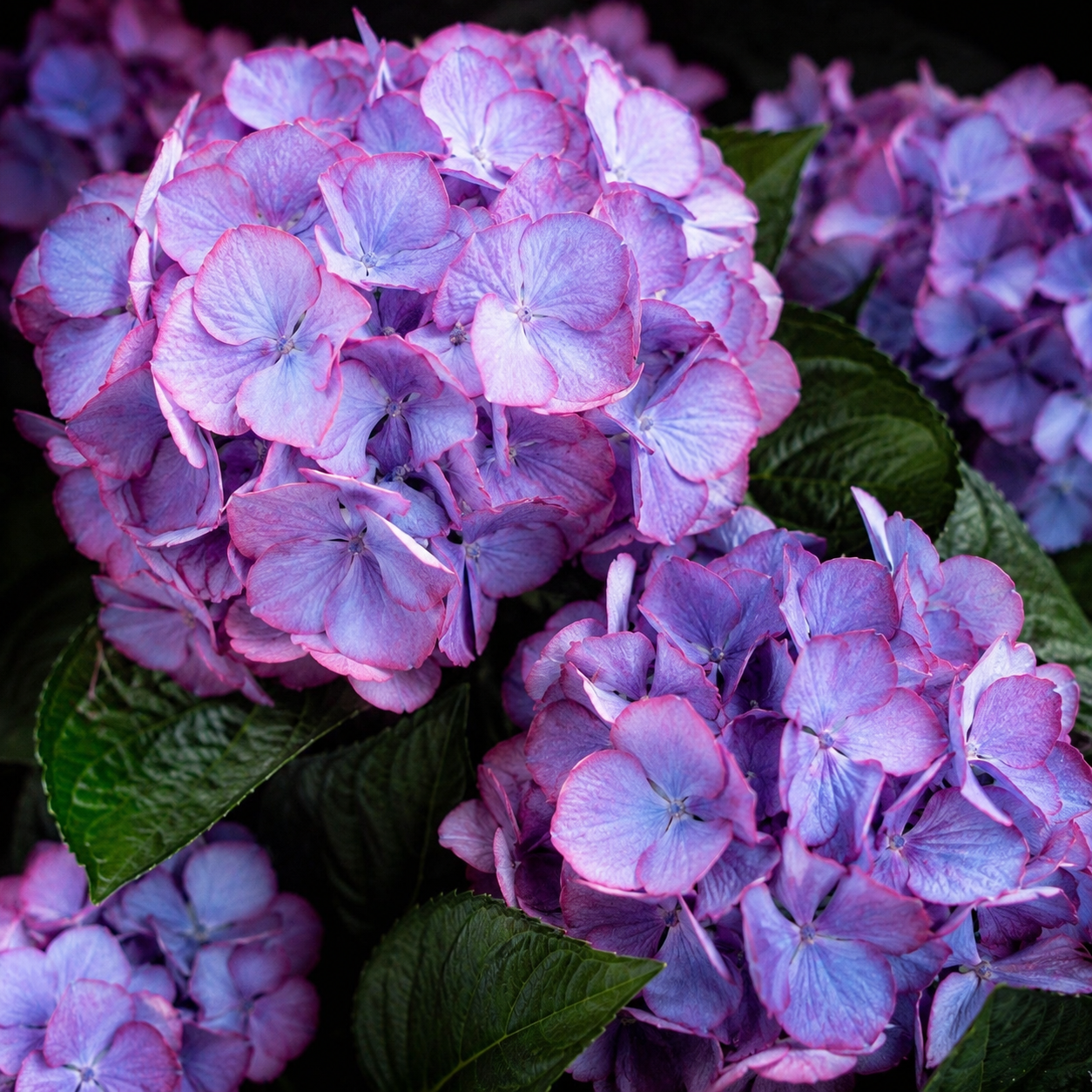
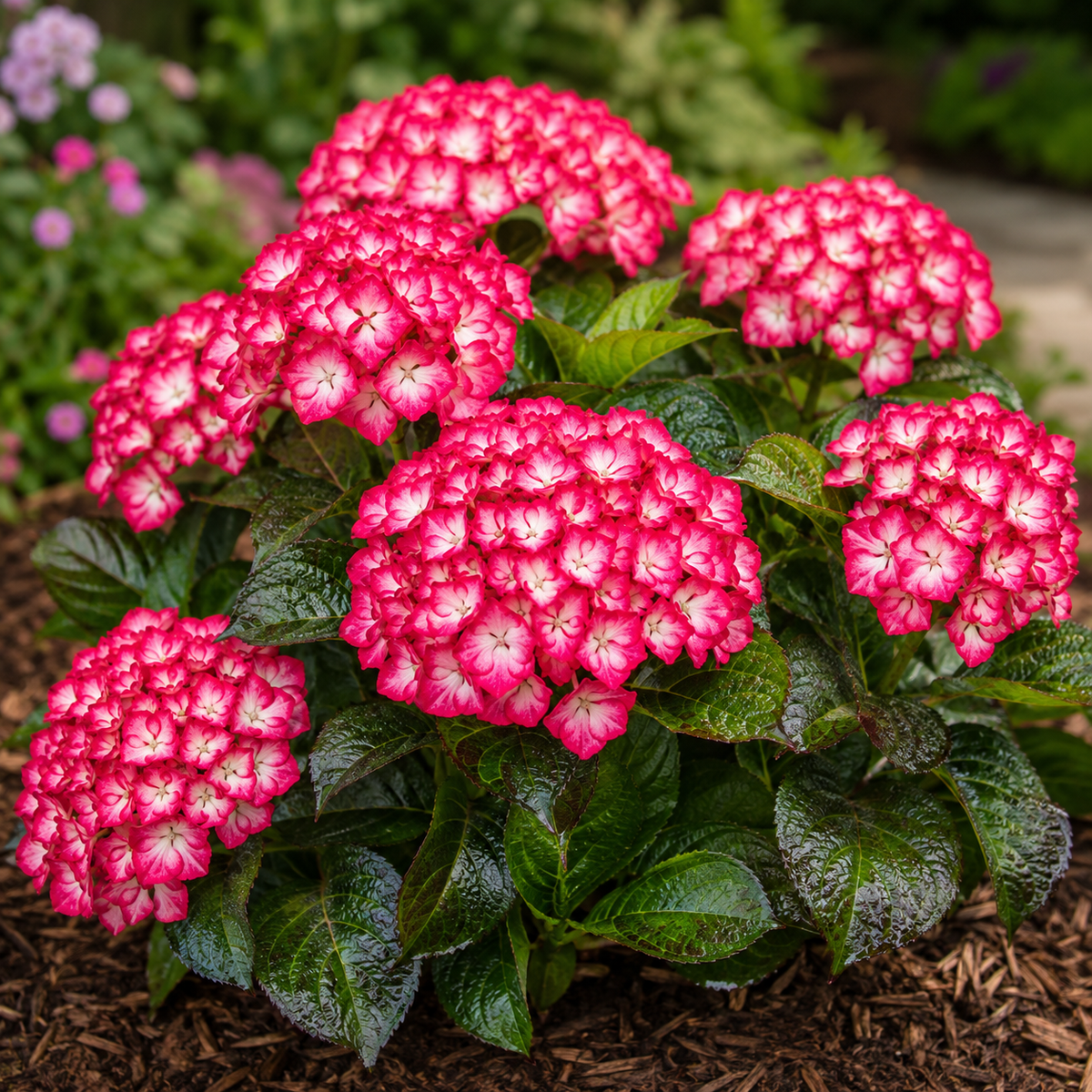
Kimono Hydrangea ‘Hokomabebos’ (Hydrangea macrophylla ‘Hokomabebos’). Kimono hydrangea is a compact bigleaf hydrangea, sought after for its very distinctive bicolour blooms. Its flowers feature a light, white to pink centre, edged with wine red tones in neutral soil, which can turn blue in more acidic soil. Its dense, rounded habit makes it an elegant ornamental shrub for small gardens, neat borders, and landscaping near the house. This variety is sold under the trade name Kimono, while its recognized botanical cultivar is Hydrangea macrophylla 'Hokomabebos'.
To plant Kimono hydrangea ‘Hokomabebos’, choose a suitable exposure: partial shade, morning sun. The recommended soil is as follows: rich, humus-rich, fresh, and well-drained. Maintain regular moisture around the roots, as soil that dries out suddenly can cause the foliage to wilt. Avoid repeated pruning to artificially maintain a small silhouette; instead, choose a space suitable for the variety's development. Water the root ball before planting and check that water can drain after planting. During establishment, check the moisture by hand before watering again.
It is used in partial shade beds, in borders near an entrance, in an urban garden, or in a decorative pot on a bright terrace. It pairs well with cool-soil perennials, textured foliage, and light shade plants, while adding an elegant floral touch during summer. Allow for a width of 60 to 90 cm (24 to 36 in) when planning this plant's placement in the garden. The indicated height of 60 to 90 cm (24 to 36 in) helps in choosing its position relative to neighbouring plants.

Planting guide
From planting to establishment.
Soil and care
The right care,at the right time.
Soil pH
Minimum temperature
Care level
Watering
Soil type
Fertilization
Moisture
Seasonal care
Container growing
A garden,within reach.
Bloom and dimensions
Its place,in your garden.
Mature height
Width / spread
Flower color
Foliage color
Foliage type
Growth rate
Growth habit
Bloom period
Fruiting
Garden associations
In goodcompany.
Companion plants
Wildlife and pets