Sale
Sold out

Deeply frilled red leaf lettuce
Asteraceae
Organic leafy vegetable seeds
Organic 'New Red Fire' red leaf lettuce
Lactuca sativa
Product code : BIOVO-0046
'New Red Fire' is red leaf lettuce forming compact uniform heavy rosettes of deeply frilled crisp sweet leaves. Colour ranges from bright to dark red over a green base and generally intensifies with cool nights. It tolerates heat, light cold, tipburn, and bolting. Maturity generally takes 43 to 55 days; the variety has resistance to bottom rot, downy mildew, and lettuce mosaic virus. Sow small amounts every two or three weeks to maintain young rosettes from spring into fall. Harvest in the morning, keep foliage shaded, wash carefully, and chill promptly. Documented resistances improve reliability without replacing airflow, rotation, splash-free watering, or removal of diseased plants.
- Exposure
- Full sun to partial shade
- Life cycle
- Annual vegetable
Discover the plant
Common nameRed frilled leaf lettuce
FamilyAsteraceae
GenusLactuca
Speciessativa
CultivarNew Red Fire
TypeDeeply frilled red leaf lettuce
Botanical nameLactuca sativa
Reproducible seedsYes
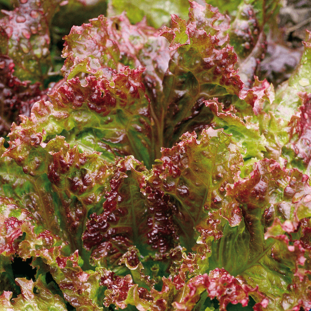
Organic 'New Red Fire' red leaf lettuce (Lactuca sativa) forms uniform compact heavy rosettes of deeply frilled leaves ranging from bright to dark red over a green base. Colour generally intensifies with cool nights and good light. The variety is recognized for tolerance to heat, light cold, bolting, and tipburn. Crisp sweet foliage may be harvested young, leaf by leaf, or as a full rosette for salads, sandwiches, and garnishes. Its looseleaf form also allows progressive outer-leaf harvest while the central growing point remains intact for continued production. Morning harvest helps preserve colour and crisp texture.
Direct-sow as soon as soil can be worked or start plants three to four weeks before transplanting. Barely cover seed and keep it cool because lettuce germinates poorly in overly warm soil. Space plants 20–25 cm apart for mature rosettes or sow more densely for baby leaves. Choose loose fertile soil enriched with mature compost, moisture-retentive, and well drained. Grow in sun during cool seasons; in summer, light afternoon shade and regular watering reduce bitterness and stress. Water transplants immediately, mulch lightly after establishment, and keep the shallow root zone evenly moist. Keep the crown above soil level.
Maturity generally ranges from 43 to 55 days depending on conditions and desired size. Harvest in the morning and chill immediately. The variety has resistance to bottom rot, downy mildew, and lettuce mosaic virus. This protection is not immunity and may depend on strains or races present. Maintain airflow, water without splashing, remove severely affected plants, and rotate with unrelated crops. Wash harvested foliage carefully, dry it, and refrigerate promptly in a clean ventilated container. Keep the basket shaded outdoors and discard every slimy or mouldy leaf before kitchen preparation.

Sowing guide
It all startswith a seed.
Sowing depth
Barely cover, approximately 0.3 to 0.5 cm (1/8 to 1/4 in)
Spacing / density
Thin to approximately 25 to 30 cm (10 to 12 in), with 30 to 45 cm (12 to 18 in) between rows
Germination temperature
Approximately 10 to 20 °C (50 to 68 °F); germination declines sharply in warm soil
Germination time
Approximately 5 to 10 days at 10–20°C; temperatures above 24°C can reduce or delay germination.
Sowing period
Early spring as soon as soil can be worked; late summer for an autumn harvest
Propagation
Direct sowing or indoor sowing three to four weeks before transplanting
Growing method
Growing 'New Red Fire' lettuce from seed. Sow on the surface of fine moist soil and cover only 0.3–0.5 cm. Harden indoor starts gradually and protect them from severe frost or drying wind. Give 'New Red Fire' full sun to partial shade. Choose the site before committing the final planting position. Feed moderately; soft, overfed leaves are harder to cool and store. At final planting, follow this layout for 'New Red Fire': thin to approximately 25 to 30 cm (10 to 12 in), with 30 to 45 cm (12 to 18 in) between rows. Mark positions before roots are placed. Thin or transplant gently to preserve airflow around the developing compact dense uniform open rosette. Good access around the crop makes inspection and harvest easier, given its habit: compact dense uniform open rosette. Choose sun in cool weather and light afternoon shade when heat would hasten bolting. For this lettuce, watch for bright- to dark-red deeply frilled crisp leaves with a green base and confirm maturity from colour, firmness, or size as appropriate. Inspect leaf undersides and the centre of each plant before deciding on treatment for the rosette. Harvest after dew dries, shade the leaves promptly, and remove bolting plants before the next succession. Harvest the planting at the leaf, rosette, or head stage described for the product. Cut with a clean tool after dew dries, shade the harvest immediately, and remove bolting or diseased plants before they affect the next succession.
Soil and care
The right care,at the right time.
Soil pH
Approximately 6.0 to 6.8
Care level
Easy
Watering
'New Red Fire' red leaf lettuce has a compact, shallow root system, so keep the soil evenly moist while its bright- to dark-red deeply frilled crisp leaves with a green base develop. Water 'New Red Fire' red leaf lettuce gently at soil level, let the surface begin drying before the next irrigation, and never leave its crown in standing water. Direct 'New Red Fire' red leaf lettuce's water beside the rosette so it does not remain trapped in the forming head. Check container-grown 'New Red Fire' red leaf lettuce daily in warm wind, but empty its saucer promptly.
Soil type
'New Red Fire' grows best in loose, fertile, aerated soil enriched with finished compost. Prepare the bed before sowing or transplanting rather than disturbing established roots. In the 'New Red Fire' planting, the shallow root zone must stay evenly moist without becoming saturated while the bright- to dark-red deeply frilled crisp leaves with a green base develops. Break surface crusts, improve heavy drainage, and avoid fresh manure or beds carrying recent disease in related greens. Containers for 'New Red Fire' need fine moisture-retentive mix from which surplus water can escape freely. Rotate away from related crops where soil-borne problems have occurred.
Fertilization
Prepare 'New Red Fire' with finished compost and moderate fertility before sowing. When tending 'New Red Fire', in an already fertile bed, one light balanced application is more useful than repeated feeding while the bright- to dark-red deeply frilled crisp leaves with a green base develops. In containers, divide necessary feeding into smaller applications because drainage removes nutrients. For 'New Red Fire' red leaf lettuce, heavy or late nitrogen can produce soft leaves that are harder to cool after harvest. Read leaf colour and new growth before repeating an application. Stop or reduce feeding when 'New Red Fire' already shows balanced growth.
Moisture
Evenly moist soil without saturation
Seasonal care
Seasonal care for 'New Red Fire' lettuce. 'New Red Fire' red leaf lettuce begins with season-aware timing—early spring as soon as soil can be worked; late summer for an autumn harvest—so compare that guidance with the actual spring or autumn at your site. Label the tray or row after sowing and barely cover with approximately 0.3 to 0.5 cm of mix; seed generally emerges in 5 to 10 days in approximately 10 to 20 °C (50 to 68 °F); germination drops sharply in warm soil, and slower seeds should not be disturbed. Prepare a fine, fertile, well-drained seedbed and keep the shallow root zone evenly moist from emergence onward. Once true leaves form, remove crowding and watch the centre for trapped moisture or early pest feeding. Water at soil level in the morning, avoiding both a dry crust and standing moisture inside the developing crown. For container-grown 'New Red Fire' red leaf lettuce, use the supplied guidance—at least 25 to 30 cm (10 to 12 in) deep and approximately 5 to 7 L per plant—and check drainage before growth hides the surface. During warm weather, afternoon shade and renewed sowings can preserve leaf quality, but no placement prevents bolting indefinitely. Check for slugs, chewing insects, and damaged outer leaves, using barriers and sanitation before considering any treatment on an edible crop. Follow the supplied harvest cue—approximately 43 to 55 days—then cut while leaves are crisp and before the centre elongates or flavour turns strongly bitter. For an autumn crop, sow only when local summer heat is easing and enough growing time remains before persistent freeze. Remove bolted or diseased plants promptly, chill sound leaves after harvest, and leave the bed clean for the next succession.
Container growing
A garden,within reach.
Recommended pot size
At least 25 to 30 cm (10 to 12 in) deep and approximately 5 to 7 L per plant
Growing 'New Red Fire' lettuce in containers. For 'New Red Fire', choose a container matching this guide: at least 25 to 30 cm (10 to 12 in) deep and approximately 5 to 7 L per plant. Keep several drainage holes unobstructed. Place the container in sun during cool weather and use light afternoon shade as heat increases. Match 'New Red Fire' to full sun to partial shade and observe the actual hours of unobstructed light at the site. Sow this lettuce thinly or transplant a sturdy seedling without burying the crown. Because its habit is compact dense uniform open rosette, the crop needs enough room for routine care and neighbouring plants. Use fresh, fine potting mix that holds steady moisture while allowing surplus water to escape. The planting develops the expected harvest form: bright- to dark-red deeply frilled crisp leaves with a green base. Use visible changes in the crop rather than the calendar alone to judge harvest. Check the shallow root zone often and water before it dries deeply, always emptying the saucer. Keep thin to approximately 25 to 30 cm (10 to 12 in), with 30 to 45 cm (12 to 18 in) between rows around the rosette, especially where neighbouring foliage could shade or trap moisture. For this lettuce, harvest clean outer leaves while preserving the centre, or cut the whole plant at its intended stage with a clean knife. Cut clean leaves before bolting, cool them promptly, and remove diseased potting debris from reuse. Succession-sow another labelled container instead of keeping bolting the crop. Remove diseased mix from reuse, wash the pot, and cool every edible harvest promptly.
Bloom and dimensions
Its place,in your garden.
Mature height
Approximately 20 to 30 cm (8 to 12 in)
Width / spread
Approximately 25 to 35 cm (10 to 14 in)
Flower color
Yellow
Foliage color
Green to blue-green
Foliage type
Broad blue-green leaves borne on long petioles
Growth rate
Fast
Growth habit
Compact dense uniform open rosette
Fragrance
Mild fresh crisp flavour typical of leaf lettuce
Bloom period
'New Red Fire' flowers only after shifting away from harvest growth. Keep the root zone evenly moist during bloom. As 'New Red Fire' red leaf lettuce bolts, leaf or root harvest quality changes. Support stems before the developing harvest adds weight. Lengthening days or stress can hasten Red frilled leaf lettuce's bolting. Check moisture before blaming poor set on fertility. For 'New Red Fire', its seed stalk becomes taller and less harvest-focused. Good light and airflow help reproductive growth continue. Remove 'New Red Fire' red leaf lettuce before seed disperses if volunteers are unwanted. For Red frilled leaf lettuce, leave selected blooms only when seed or insects matter.
Fruiting
New Red Fire supplies loose lettuce leaves before bolting. The crop does not need to flower or set seed to become harvestable. Cut a young whole plant or take suitable outer leaves while protecting the centre, according to the desired harvest style. Once the central stalk stretches, assess flavour promptly; flowering is a transition away from the tender salad stage, not a sign that the leaves need more time.
Days to maturity
Approximately 43 to 55 days
Harvest
Harvest baby leaves at 8–12 cm or pick a few firm well-coloured unblemished outer leaves weekly. For whole rosettes, begin checking at approximately 43 days and generally allow up to 55 days according to temperature and desired size. Cut at soil level early in the morning, chill immediately, and wash only before use. Refrigerate in a perforated bag. Harvest promptly once the central stem elongates or flavour becomes more bitter.

Garden associations
In goodcompany.
Companion plants
New Red Fire can add a coloured leaf row beside green lettuce, but keep labels and spacing clear so one does not overtake the other. A nearby radish row offers a different harvest rhythm without requiring permanent interplanting. In a bed that will later hold summer vegetables, remove the lettuce while still tender rather than forcing it to persist beneath expanding foliage. Companion planning is most useful here as a sequence of crops: reserve enough light and water for the lettuce while it is actually in production.
Plants to avoid
Celery parsley
Recipe idea
From the gardento your plate.
Edible parts
Leaves and tender centre, thoroughly washed; avoid very bitter bolted plants
'New Red Fire' lettuce in the kitchen. Crisp 'New Red Fire' salad — Separate the frilled leaves, rinse them in cold water, and spin completely dry. Whisk 15 mL cider vinegar with 5 mL Dijon mustard, 30 mL olive oil, black pepper, and a small pinch of salt. In a large bowl, combine one sliced apple, 100 g cooked chickpeas, and 30 g toasted walnuts. Add half the dressing and toss. Fold in the lettuce at the last moment, using only enough remaining dressing to lightly coat the leaves. Finish with chopped chives and serve immediately with soup, an omelette, or crusty bread. The red-edged leaves provide colour, so avoid heavy dark dressings that hide them. Keep harvested heads chilled and dry after washing. Discard leaves that are slimy, mouldy, or badly bruised, and keep the clean salad bowl away from unwashed garden produce. Refrigerate unused leaves in a covered container lined with a clean towel. Store dressing and toppings separately because an assembled salad quickly loses its crisp texture.
Frequently asked questions
Your questions,answered.
Why does 'New Red Fire' colour vary?
Red pigmentation depends on genetics as well as light, temperature, and leaf age. Cool nights and good exposure generally create darker red, while dense shade or very rapid growth may leave more green near the base. This variation is normal and does not indicate mixed seed. Still avoid suddenly exposing tender protected plants to intense sun because foliage may scorch. Harvest in the morning after dew dries and chill promptly. Wash the folds carefully, use slightly marked leaves first, and discard every slimy, mouldy, or abnormal-smelling portion. Colour differences between outer and inner leaves are normal. Cool nights often deepen red pigmentation noticeably.
What does its heat and bolting tolerance mean?
The variety generally retains a marketable rosette longer and better resists premature stem elongation than less adapted lettuce. It may still bolt during prolonged heat, warm nights, root-zone drying, or excessive plant age. Maintain steady moisture, provide light afternoon shade, sow small batches, and harvest once the centre begins rising. Harvest rosettes whose centre begins elongating and replace them with a younger series. Shade cloth should remain high enough to preserve airflow and never trap heat around foliage. Keep containers away from heat-reflecting walls and check moisture daily. Harvest early in the morning and chill every rosette promptly after cutting.
Which resistances are documented for 'New Red Fire'?
'New Red Fire' has documented resistance to bottom rot, downy mildew, and lettuce mosaic virus. These resistances do not guarantee protection against every race or strain and never mean immunity. Good airflow, splash-free watering, crop rotation, and removal of severely affected plants remain useful. No other disease resistance is confirmed for this variety. Clean tools thoroughly before moving from an affected bed to a healthy one and avoid carrying contaminated soil on footwear. Continue monitoring foliage and roots because other diseases may still appear. Water near the soil early in the day so leaves dry quickly after rain or irrigation.
How can poor summer germination be avoided?
Improve New Red Fire germination in summer by keeping the seed zone cool. Sow during a cooler weather window or in the evening, barely cover seed, and shade the bed from strong afternoon sun until emergence. Pre-moisten the soil and maintain gentle, even moisture without saturating it. A container can be moved away from heat reflected by walls or pavement. Make small successive sowings instead of using all seed during one hot spell. After emergence, thin to approximately 25 to 30 cm so the open red rosettes do not compete for moisture. If a sowing fails while the soil remains hot, wait for cooler conditions and try again rather than repeatedly flooding the bed. Harvest is listed at roughly 43 to 55 days, so late-summer sowings can still mature in a cooler period.
Can 'New Red Fire' be grown in a container?
Yes. Use a well-drained pot or box at least 20–25 cm deep and allow approximately 25–30 cm per mature rosette. A light, fertile mix enriched with compost limits waterlogging while retaining steady moisture. Place the container in sun during cool weather, then light partial shade during strong heat. Check moisture daily, water when the surface begins to dry, and never allow standing water. Pick outer leaves regularly and remove bolting plants to make room for a new sowing. During heat waves, move the pot out of intense afternoon sun and harvest promptly to maintain tender leaves. Sow again when temperatures cool.
Wildlife and pets
Life,around your plants.
Supporting wildlife
New Red Fire is harvested for leaves, well before its eventual flower stems become a feature. Allowing a spare lettuce to bolt changes its kitchen quality and space requirements. For reliable summer flowers around the salad bed, use a separate flowering border instead of depending on the lettuce crop itself.
For a great start to your seeds
The right extras.Right here.
Seed Starting Soil
Shop the collectionSeed starting supplies
Shop the collection